
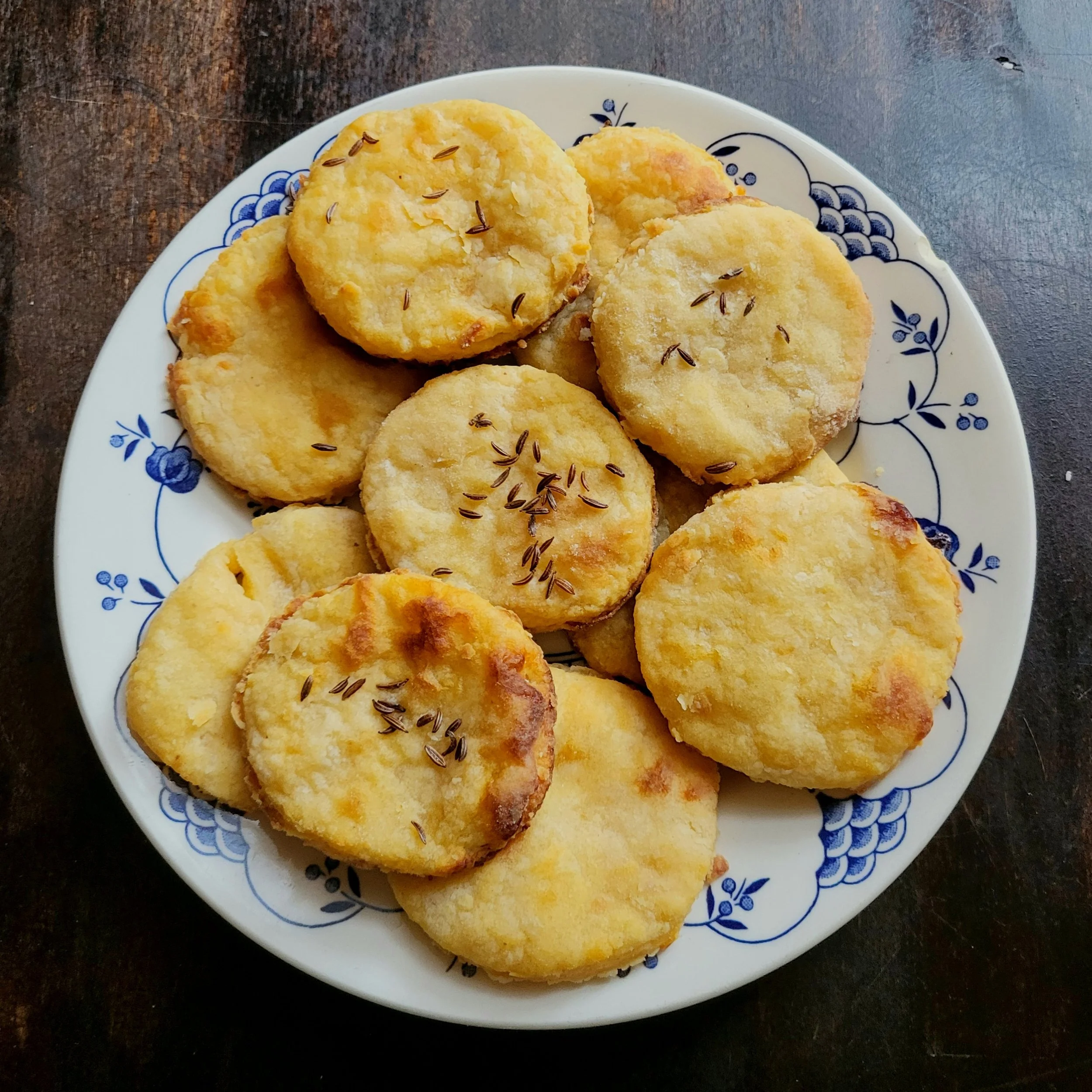
Cheese Cookies
March 31st is the anniversary of this blog – and in honour of my first recipe, Cayenne Cheese from Mrs. Beeton’s Book of Household Management, which is the first written recipe for Cheese Straws, I’ve been making recipes that feature flour, butter, cheese, salt and cayenne pepper each year to mark the occasion. This Cheese Cookie recipe is from the 1940s edition of the Joy of Cooking.
You’ll find this recipe in:
The Joy of Cooking
by Irma S. Rombauer
Toronto, 1945 - (my copy is a Canadian reprint of the 1943 edition)
CHEESE COOKIES
Good to serve with a soup or salad course.
Sift:
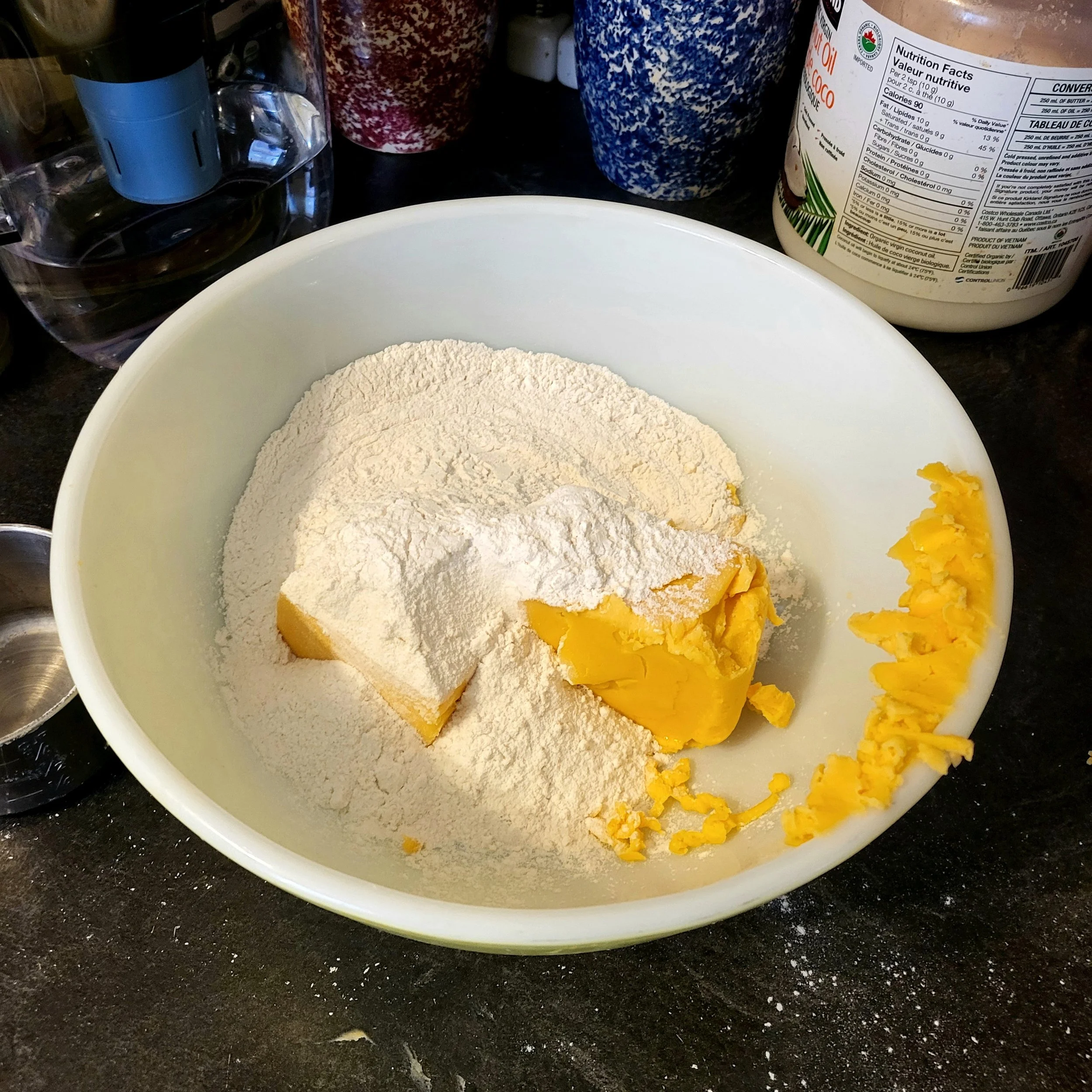
2 cups bread flour
Resift with:
1 ¼ teaspoons salt
¼ teaspoon cayenne pepper
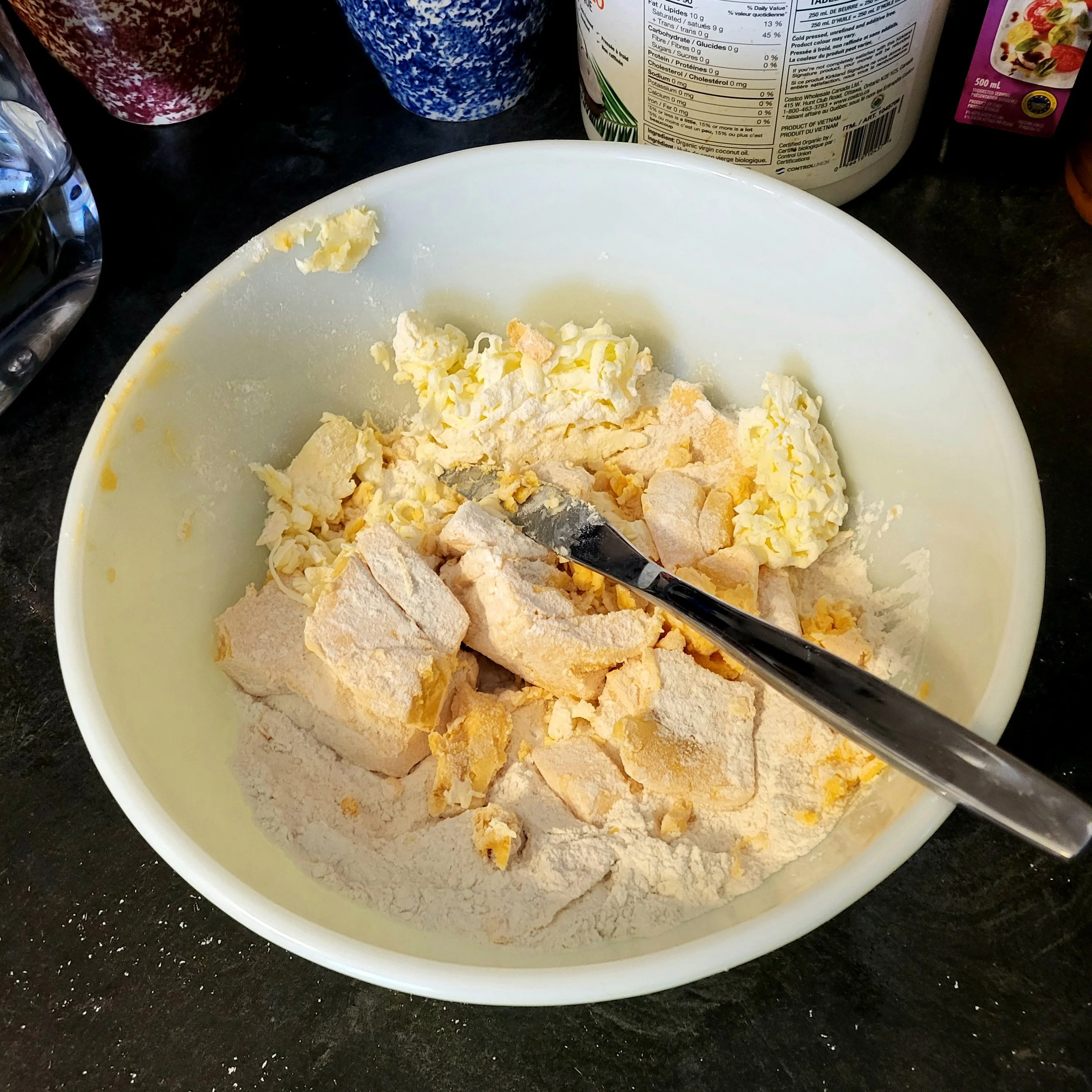
And cut in with a pastry blender:
½ cup butter
Grate and work in:
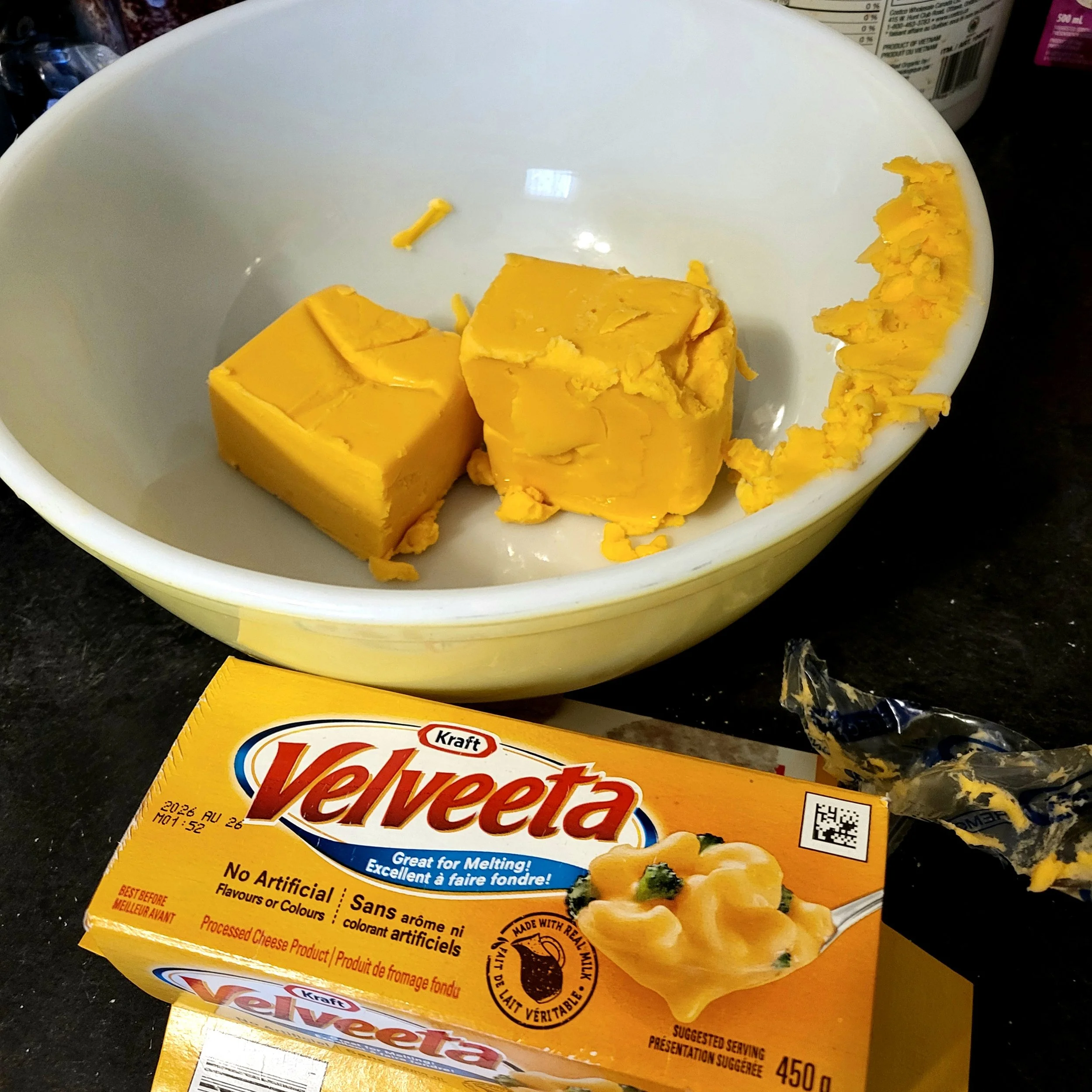
½ pound American Cheese (2 cups)
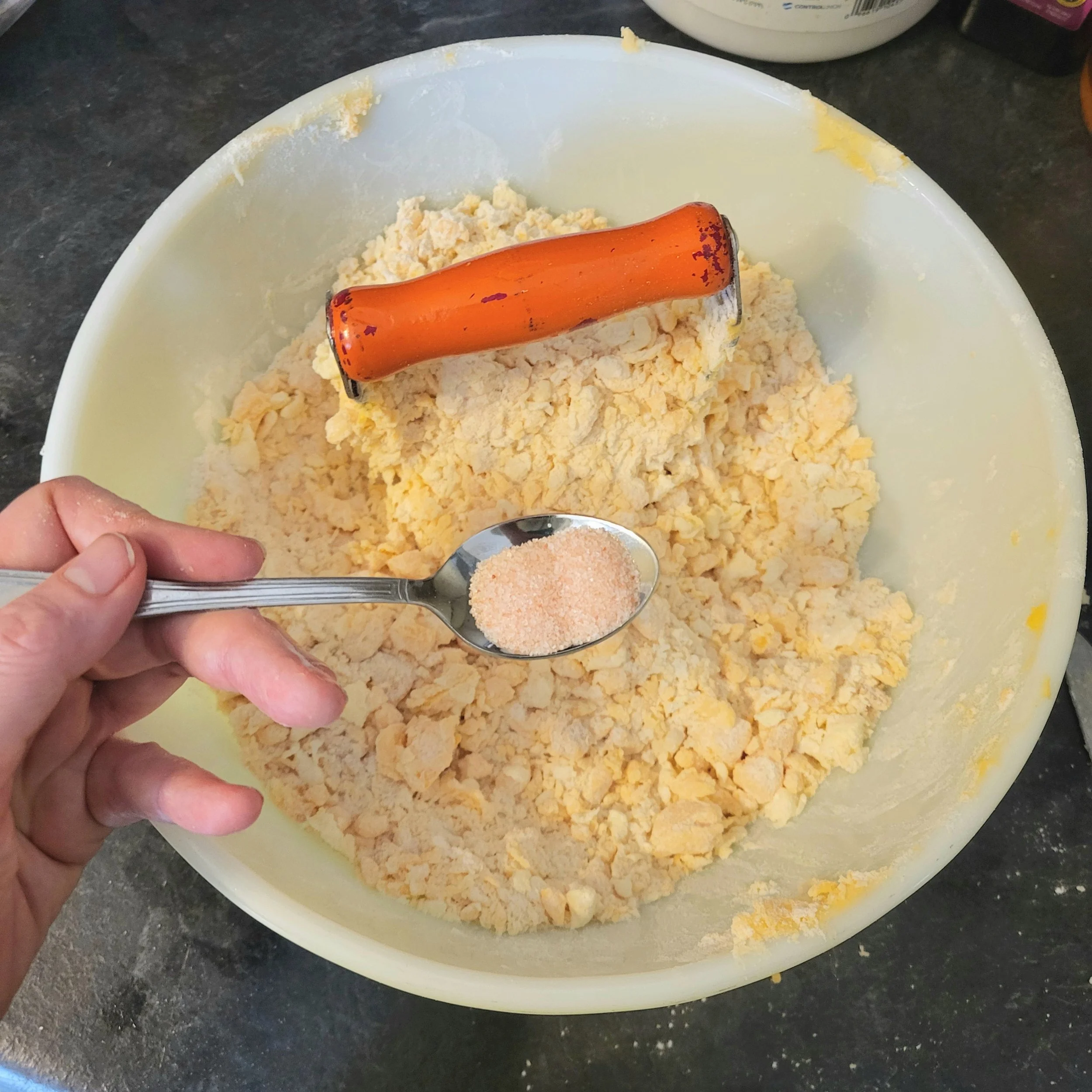
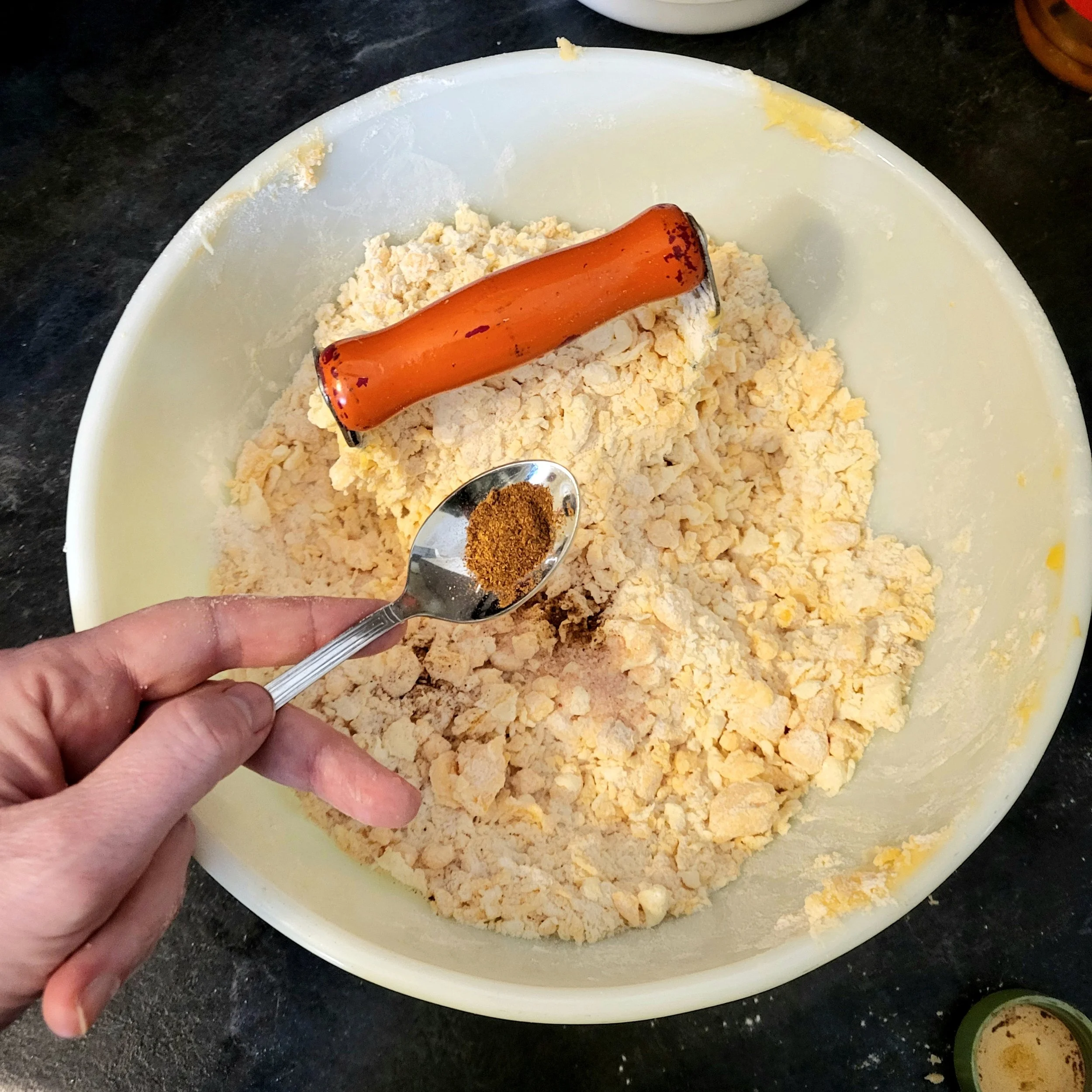
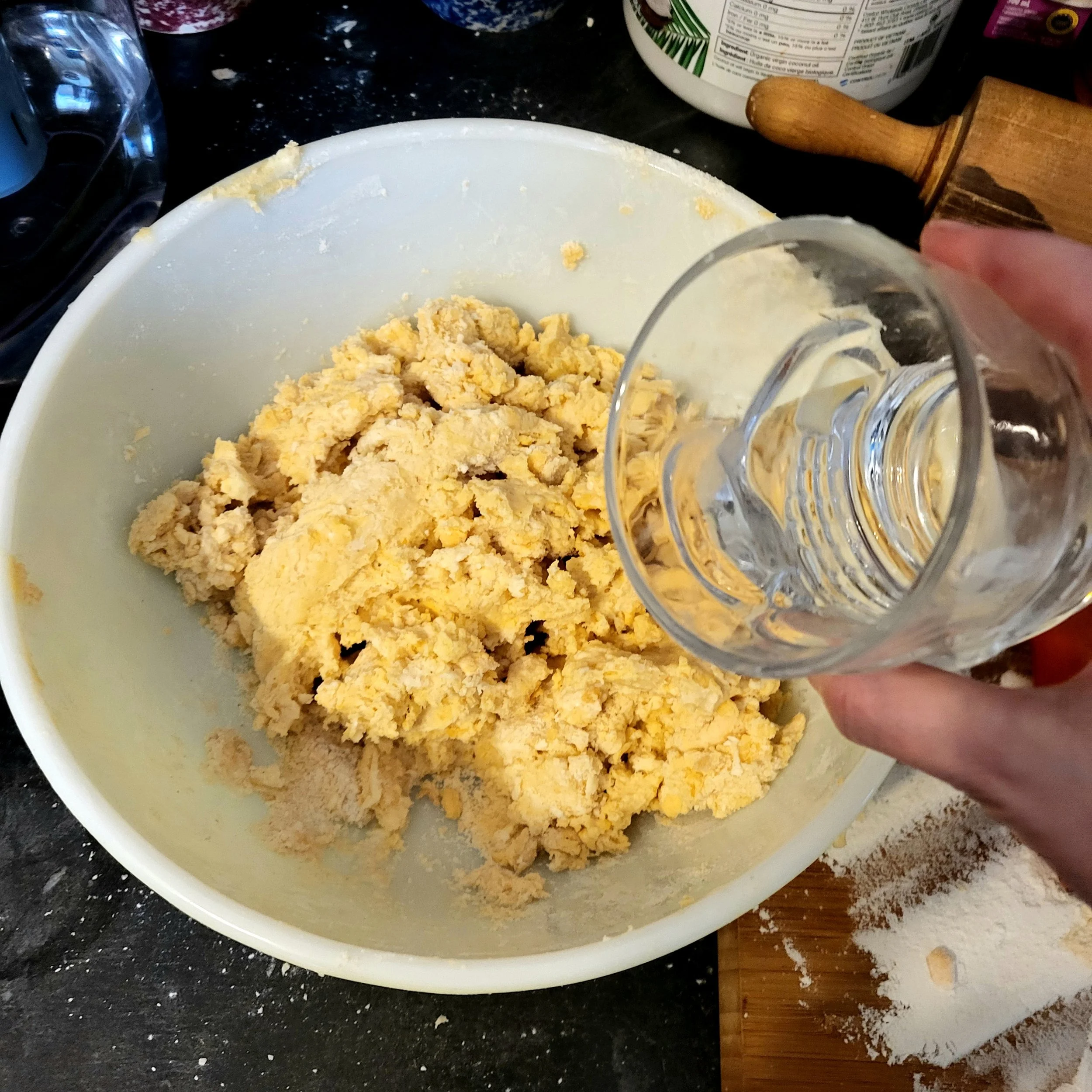
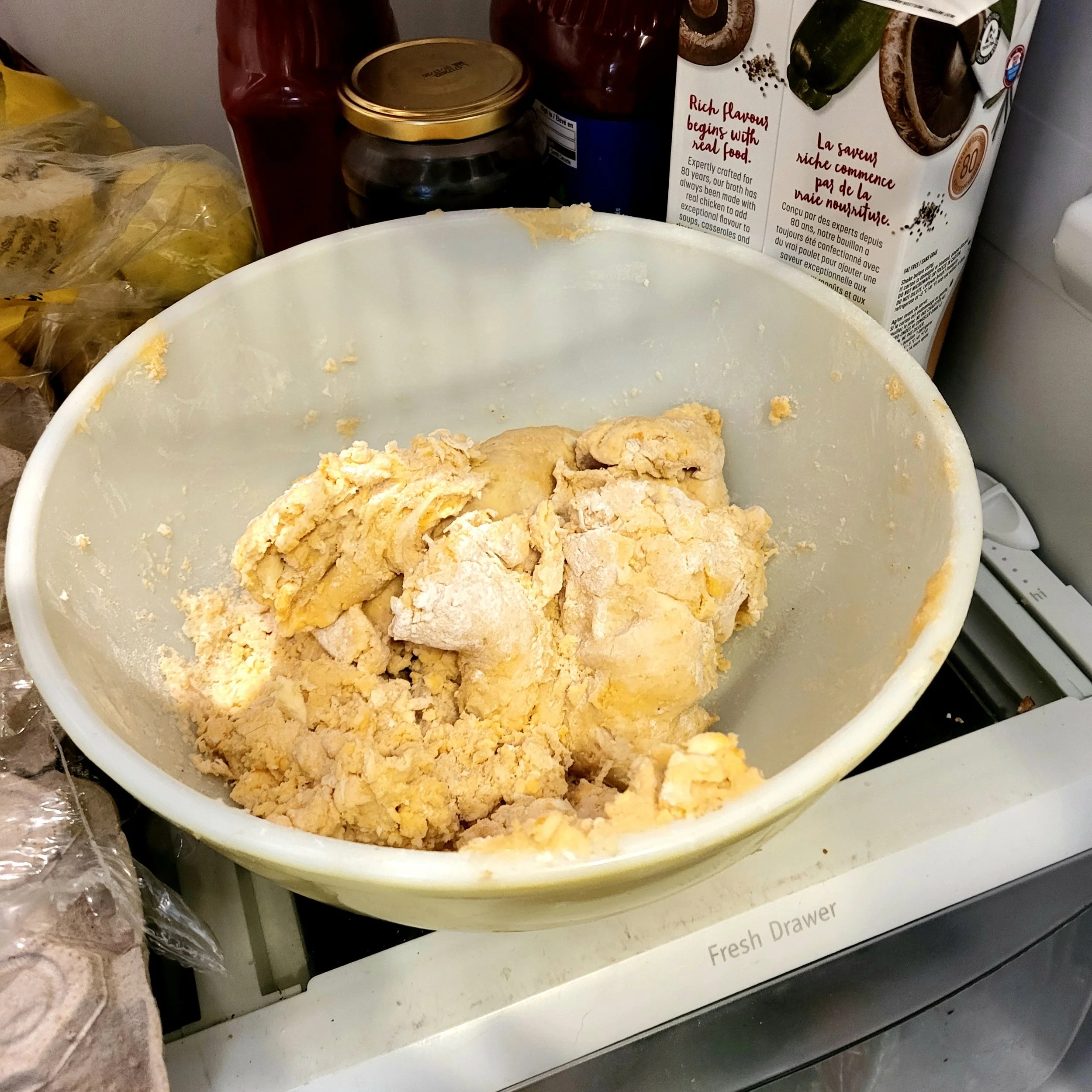
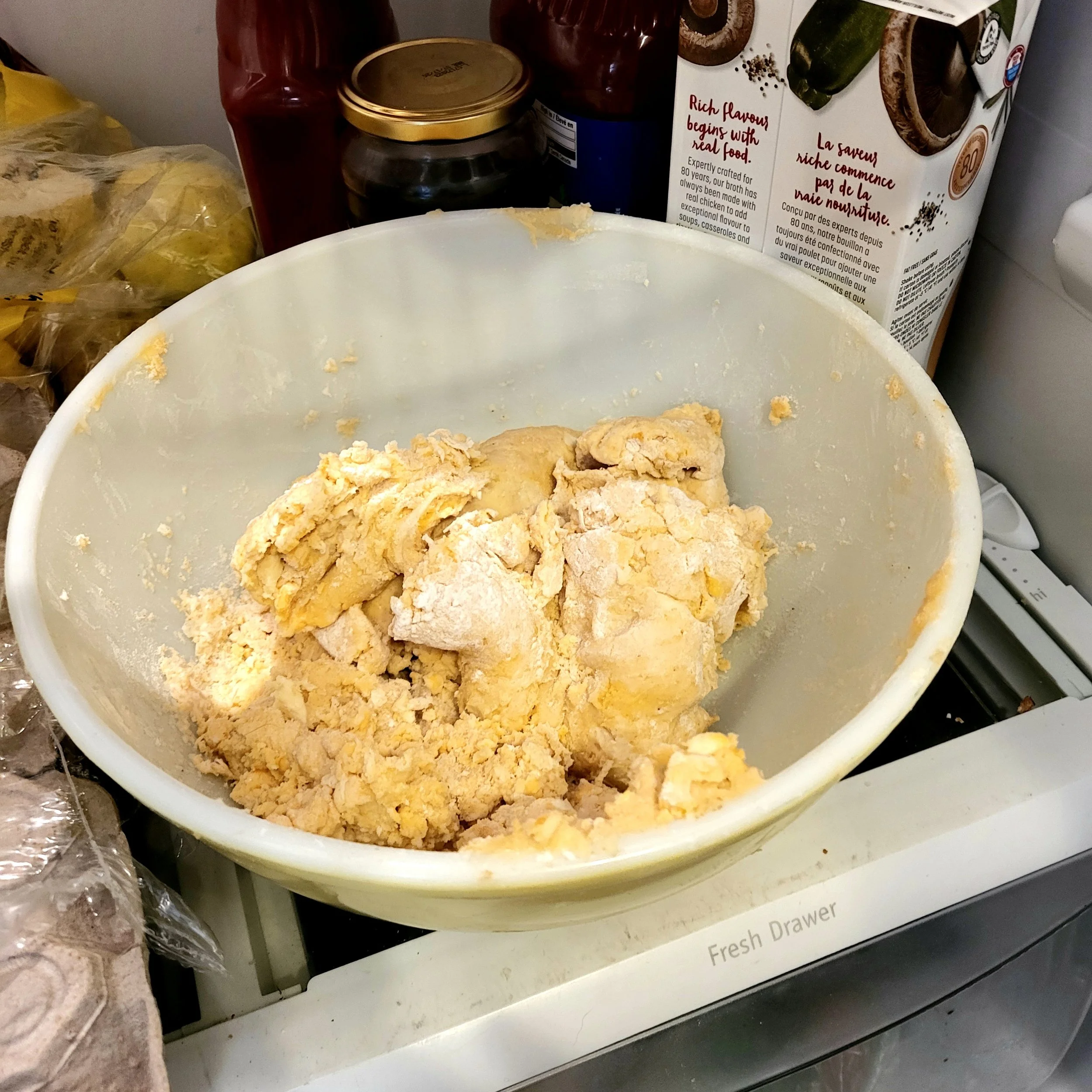
Chill the dough for several hours. Roll it until it is very thin. Cut it into rounds Sprinkle the tops with:
Caraway seeds (optional)
Bake the cookies in a hot oven 400° for about 10 minutes.
March 31st is the anniversary of this blog – and in honour of my first recipe, Cayenne Cheese from Mrs. Beeton’s Book of Household Management, which is the first written recipe for Cheese Straws, I’ve been making recipes that feature flour, butter, cheese, salt and cayenne pepper each year to mark the occasion. This Cheese Cookie recipe is from the 1940s edition of the Joy of Cooking.
The only modifications that I made to this recipe is to add about a cup of water to create a dough, and since I’m not a huge fan of carraway, I only sprinkled the top of some. This recipe made 75 cookies.






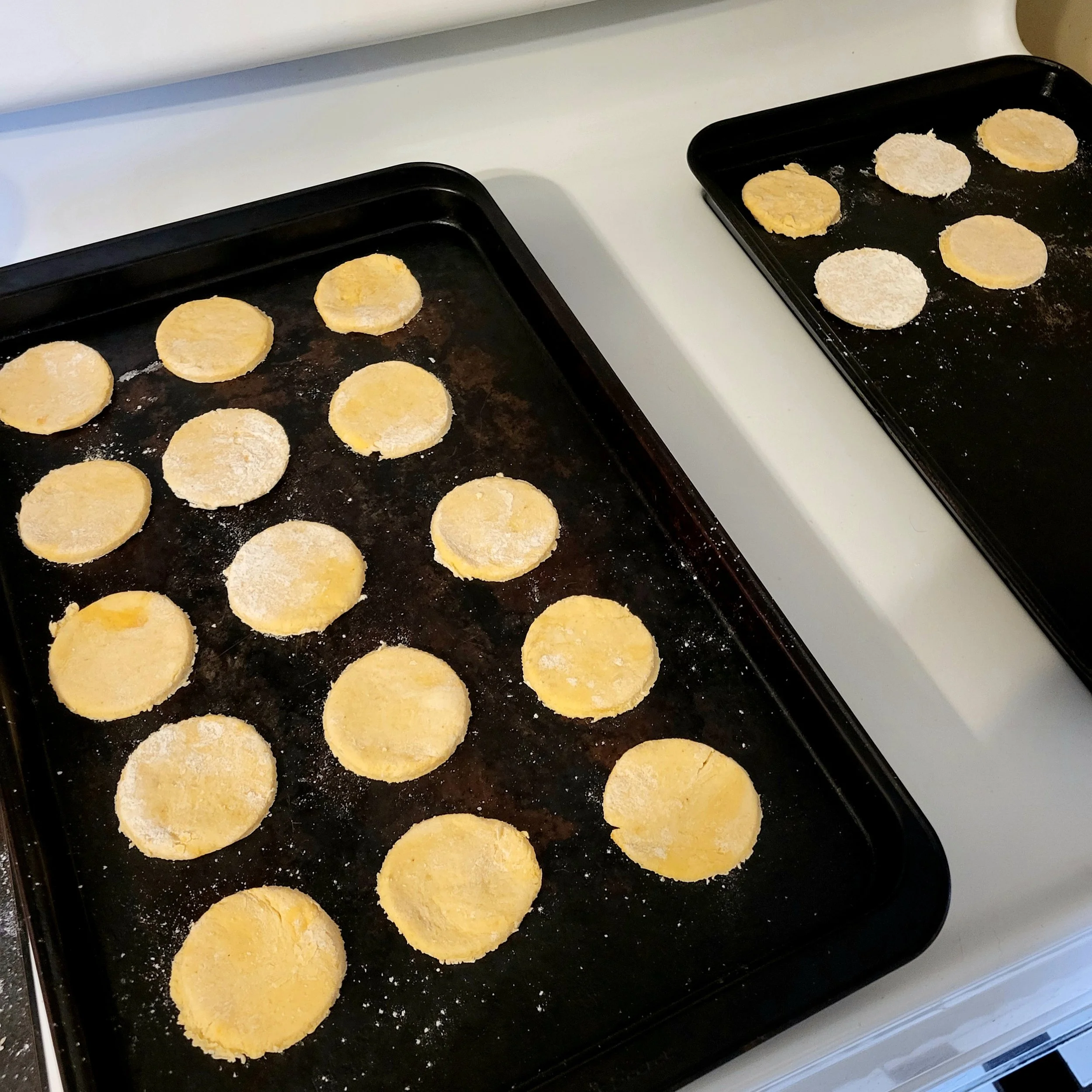
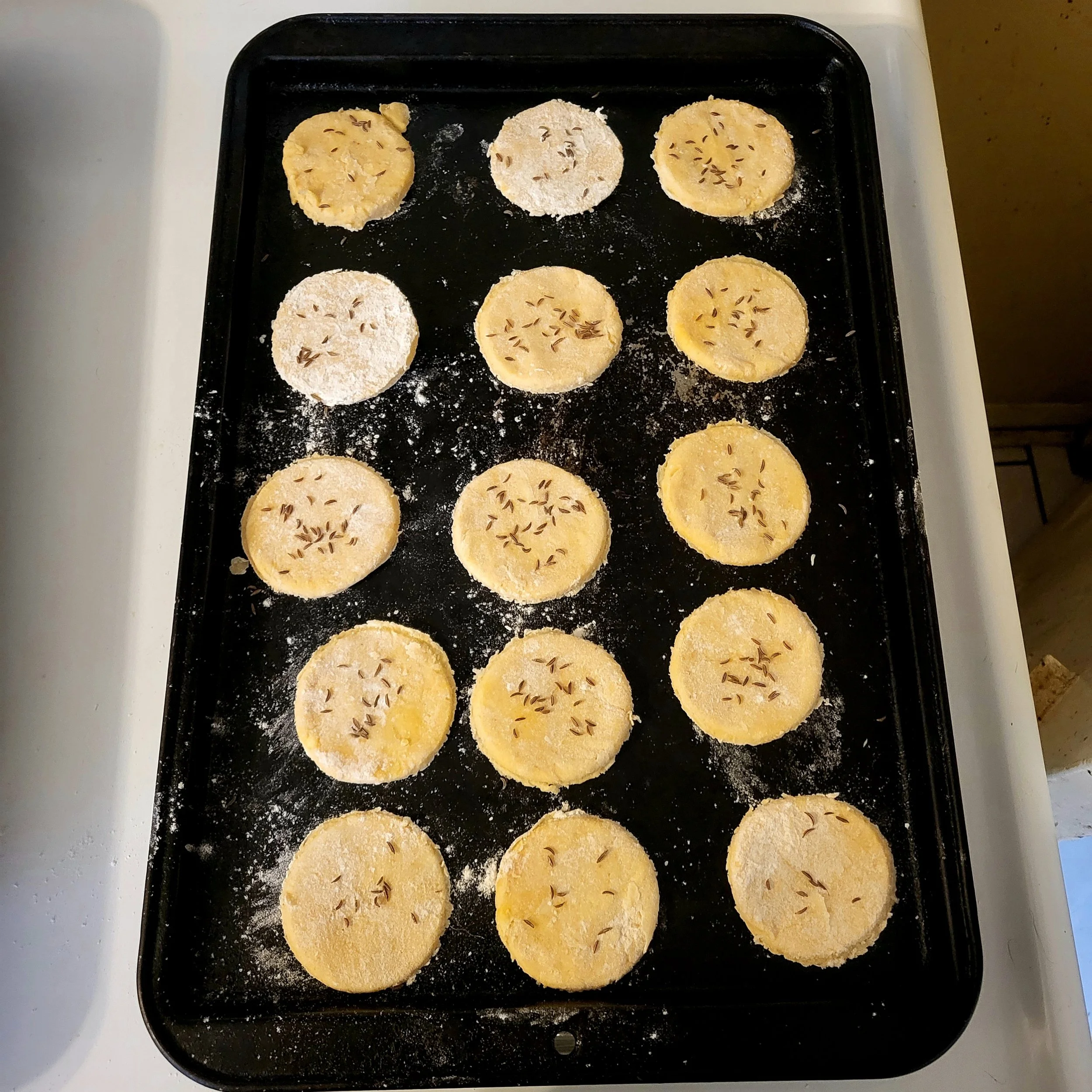
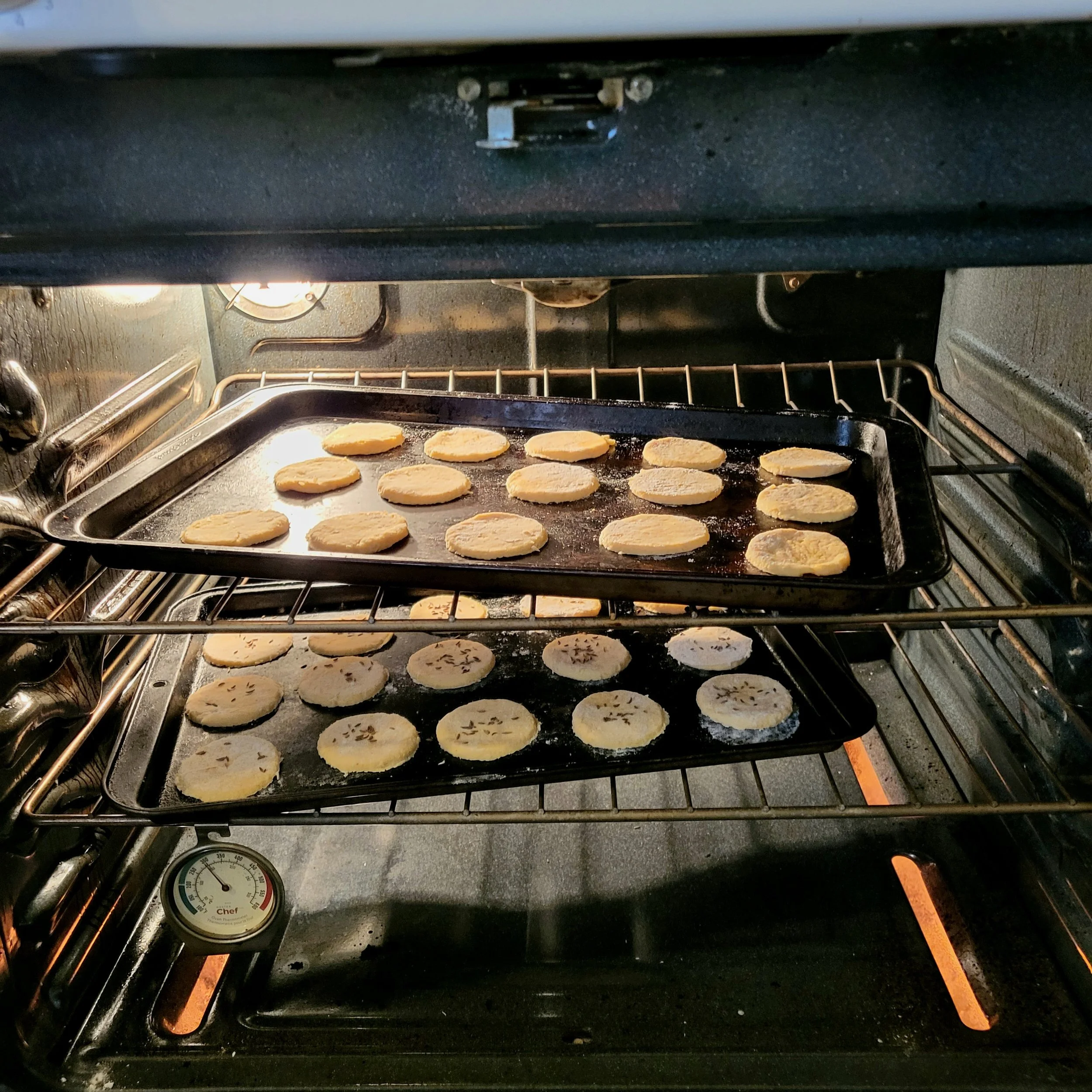
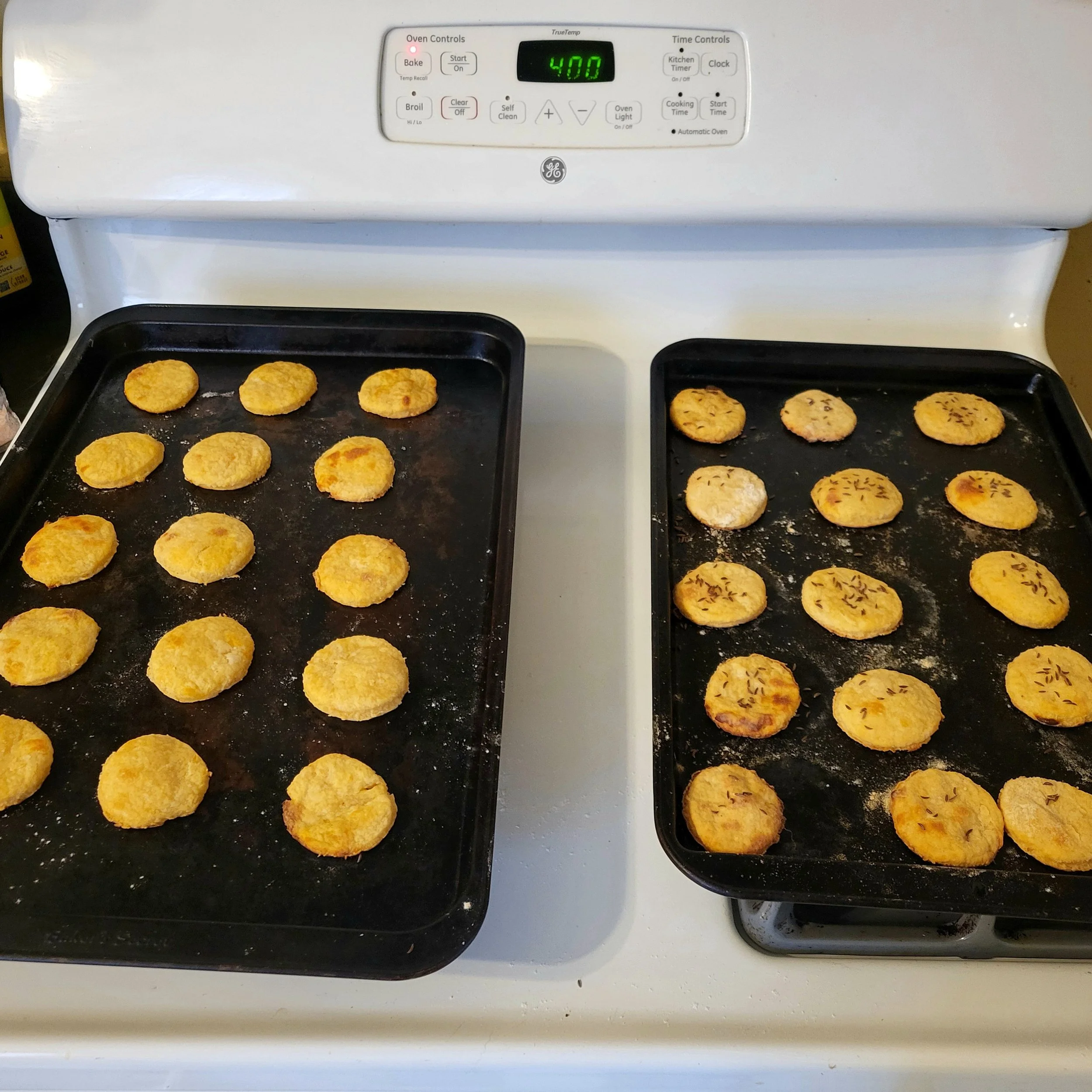
My review is that the Velveeta didn’t pack enough cheesy flavour. Here’s my ranking on my Cheese Straws recipes so far:
Cayenne Cheeses from 2018
Cheese Straws from 2021
Cheese Hooies from 2019
Cheese Cookies from 2026

Cup Cookies
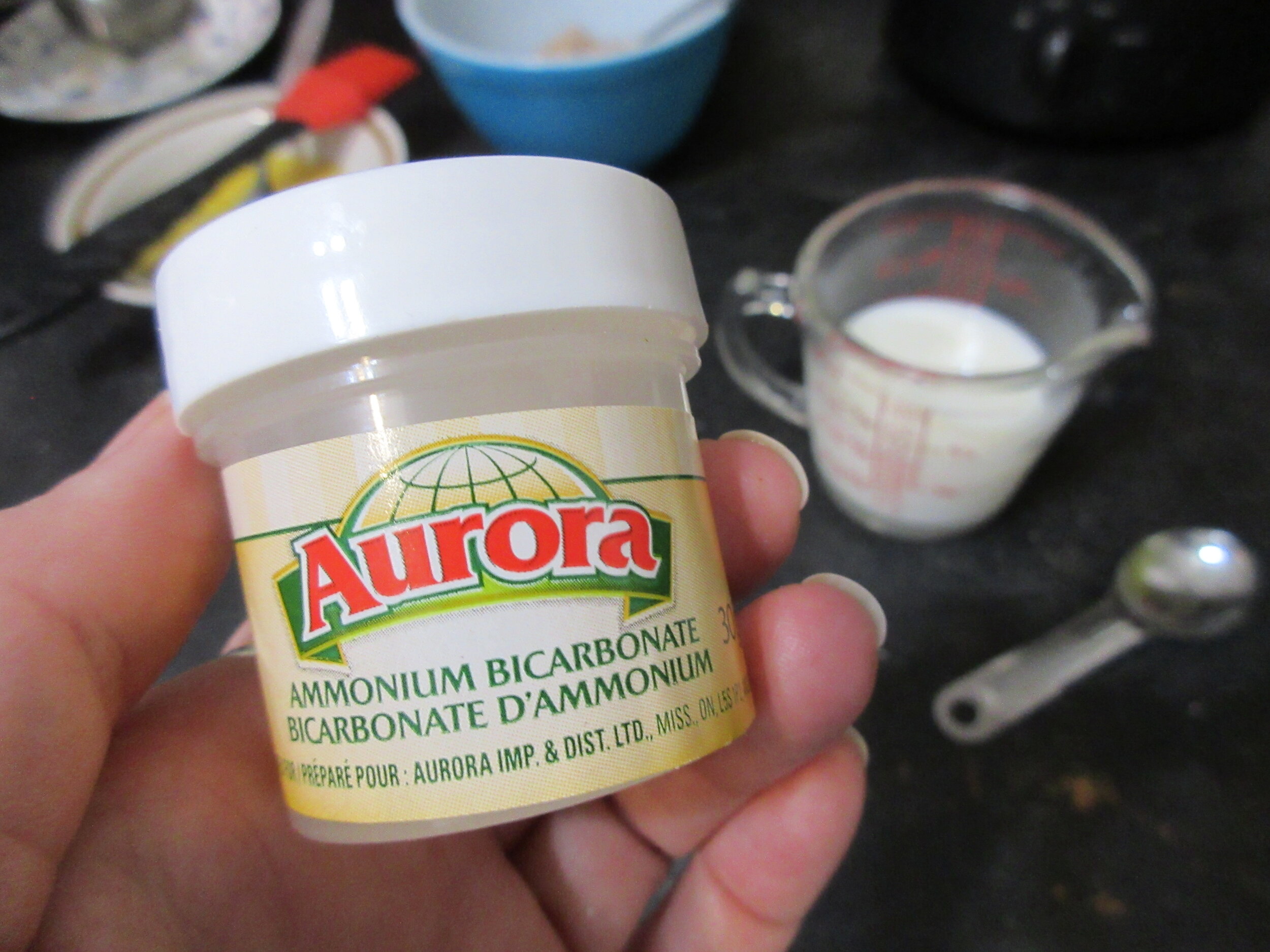
Cup Cookies are a mild lemon sugar cookie with an almond, sugar & cinnamon topping sprinkled on top. This recipe is from Aunt Babette’s Cook Book from 1889, and its leavening agent is Ammonium Bicarbonate or Baker’s Ammonia.
I’ve chosen this recipe because for the last 2 years, my Ammonia Cakes recipe has been my most popular blog post by far. That shows me that there’s an appetite for information about and recipes using Baker’s Ammonia, but I’m torn, because Ammonia Cakes is not a delicious recipe at all! I had to make a second recipe, Icing for Cake to save the Ammonia Cakes so they were edible and they didn’t end up in the compost.
Cup Cookies are a much more delicious ammonium bicarbonate cookie. Stick with this recipe for the deliciousness, but head over to Ammonia Cakes for background and history about Baker’s Ammonia.

You’ll find this recipe in:
“Aunt Babette’s” Cook Book
By “Aunt Babette” (Bertha F. Kramer)
1889, Cincinnati & Chicago
Historic Recipe:
CUP COOKIES.
Rub to a cream three-quarters of a cup of butter and one cup of sugar; add four eggs, one at a time, and the grated peel of a lemon. Then dissolve a lump of ammonia, about the size of a bean, in a quarter of a pound of lukewarm milk; add this and just enough sifted flour to enable you to roll out on the baking-board. Roll quite thin. Beat up an egg and brush over the cookies, sprinkle with sugar, cinnamon and pounded almonds. These are very nice. Be careful not to add too much flour. Omit the almonds if you are not fond of them.
My Recipe:
The cookies:
¾ cup softened butter – 170 g
1 cup sugar – 225 g
4 eggs
grated peel of a lemon
1 tsp baker’s ammonia (ammonium bicarbonate)
½ cup lukewarm milk – 120 mL
3 ½ cups flour - 700 g
The toppings:
1 egg, beaten
¼ cup sugar – 55 g
1 tsp cinnamon
20 ground almonds - ¼ cup or 30 g when chopped
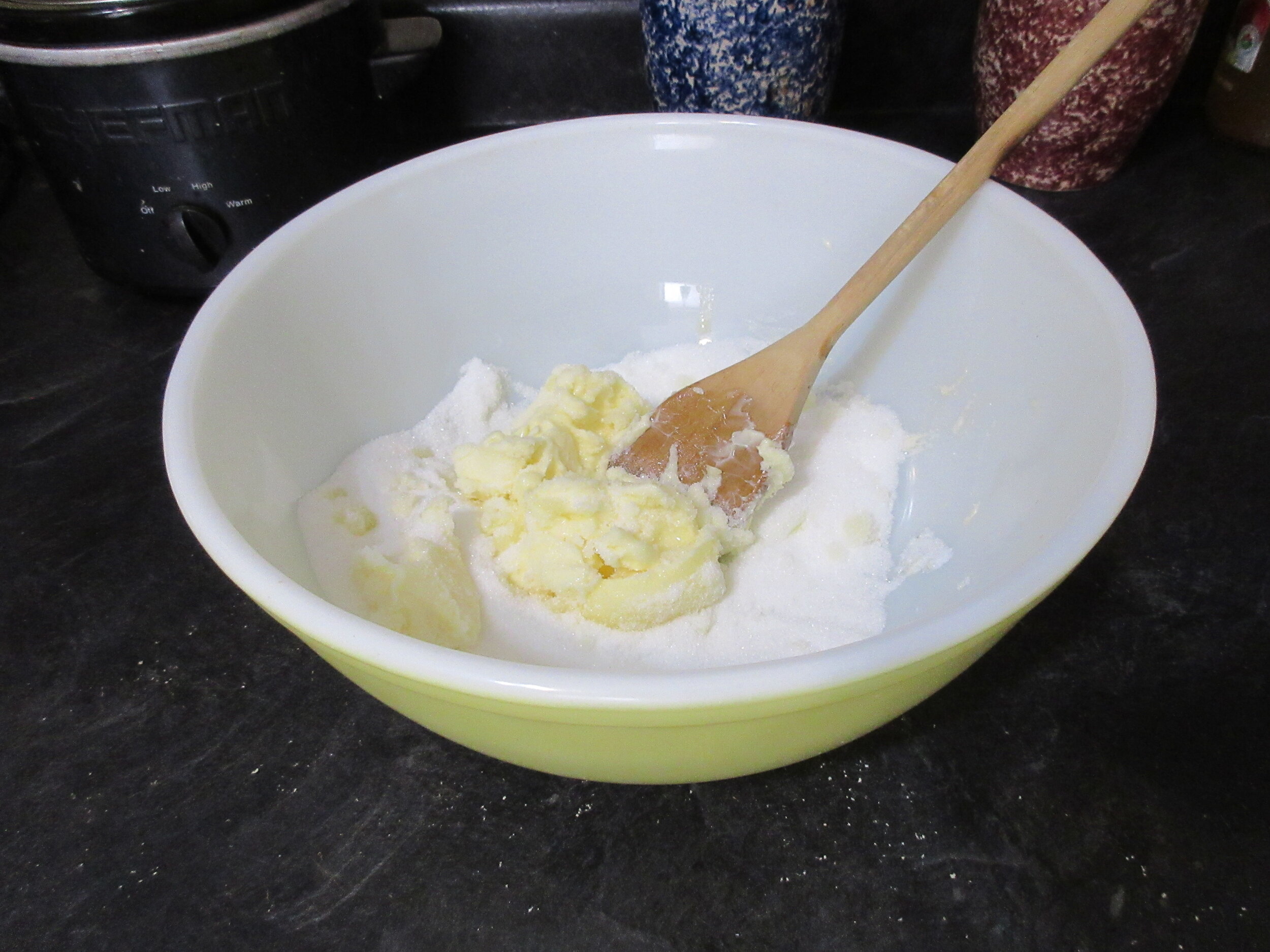
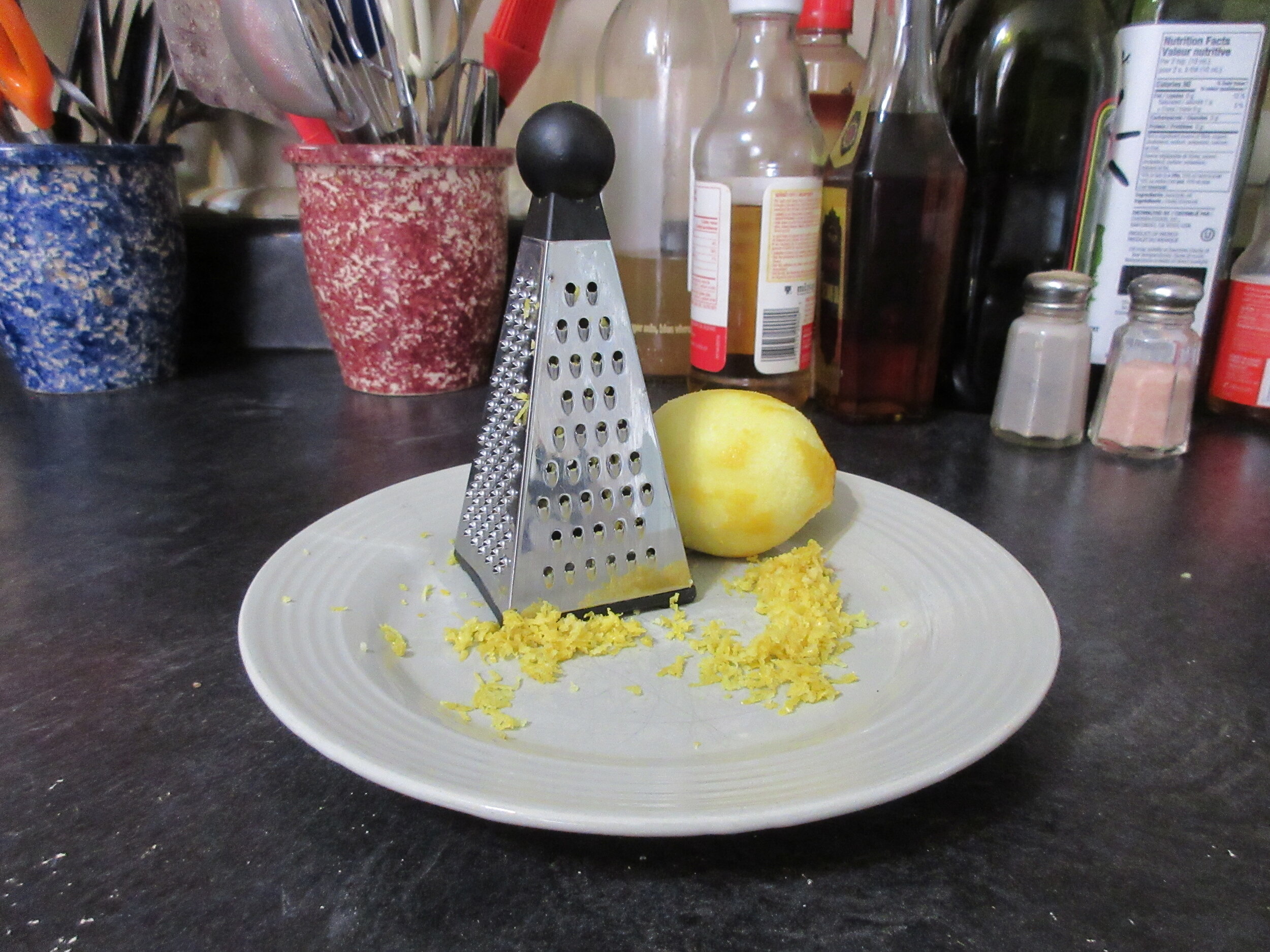
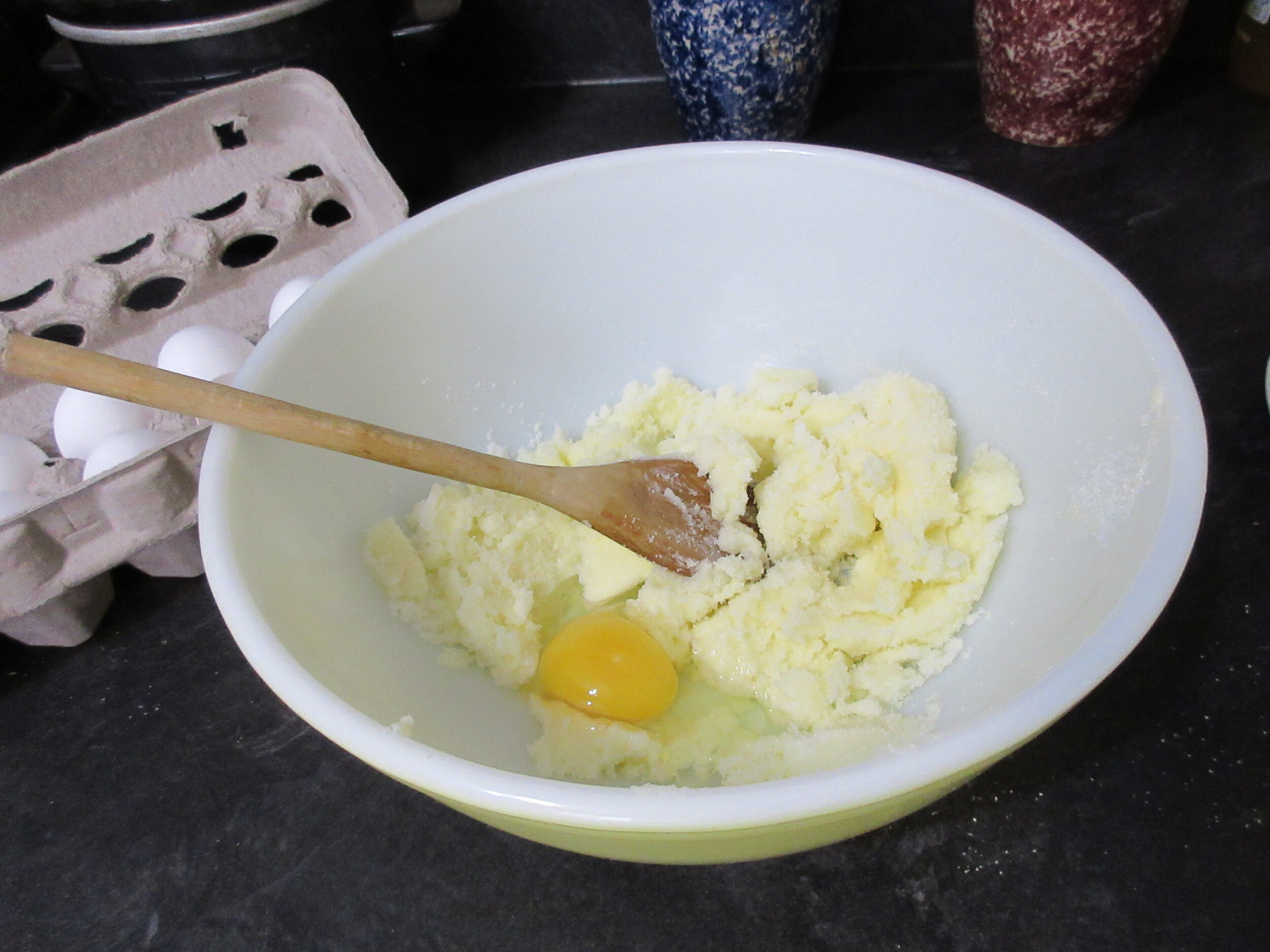
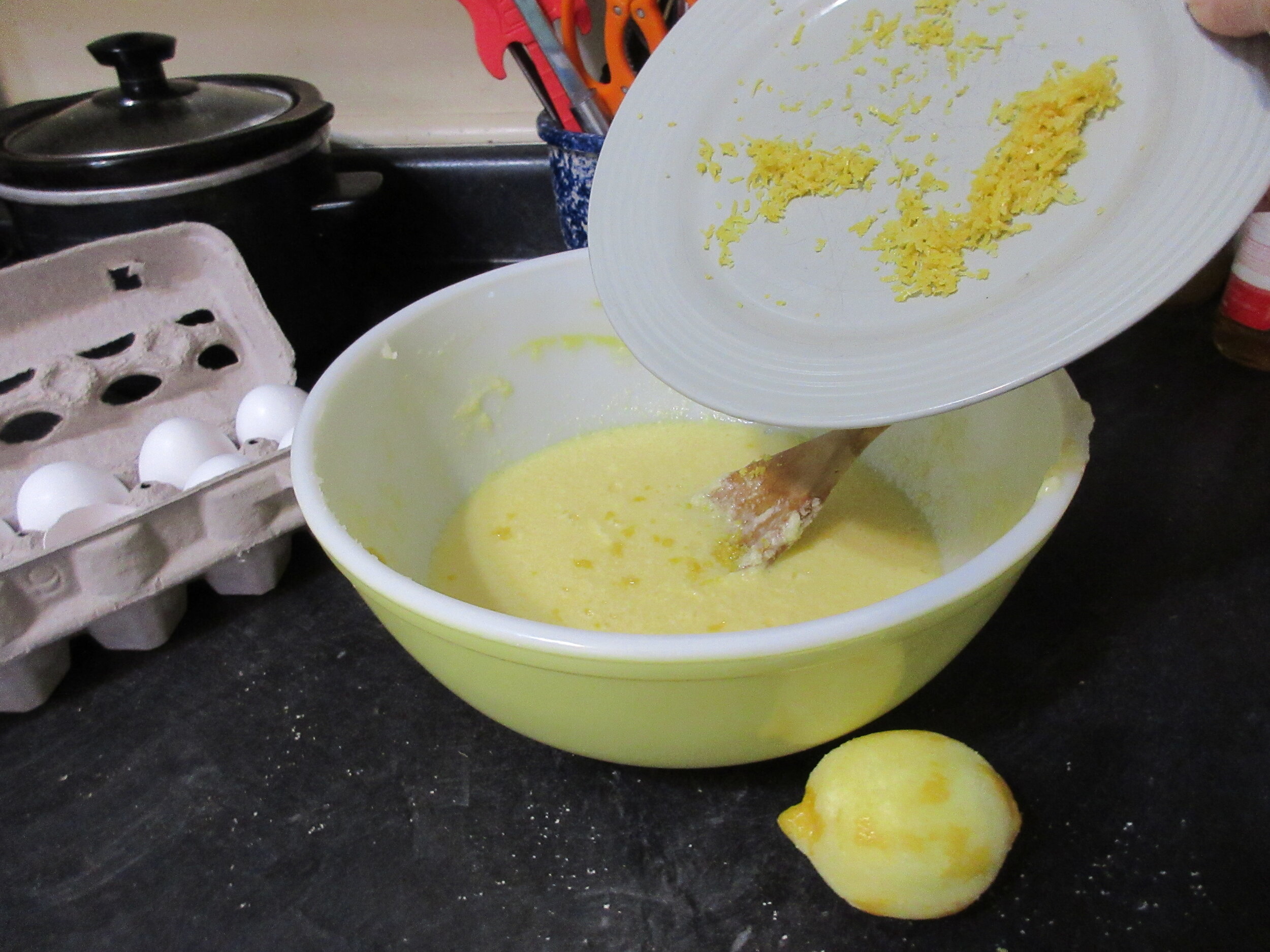
1. Cream together the butter and sugar and grate the zest of one lemon. Mix in the 4 eggs, one at a time, and the lemon zest. Warm the milk, then add the baker’s ammonia to the lukewarm milk. Add to the mixing bowl, then stir in the flour.
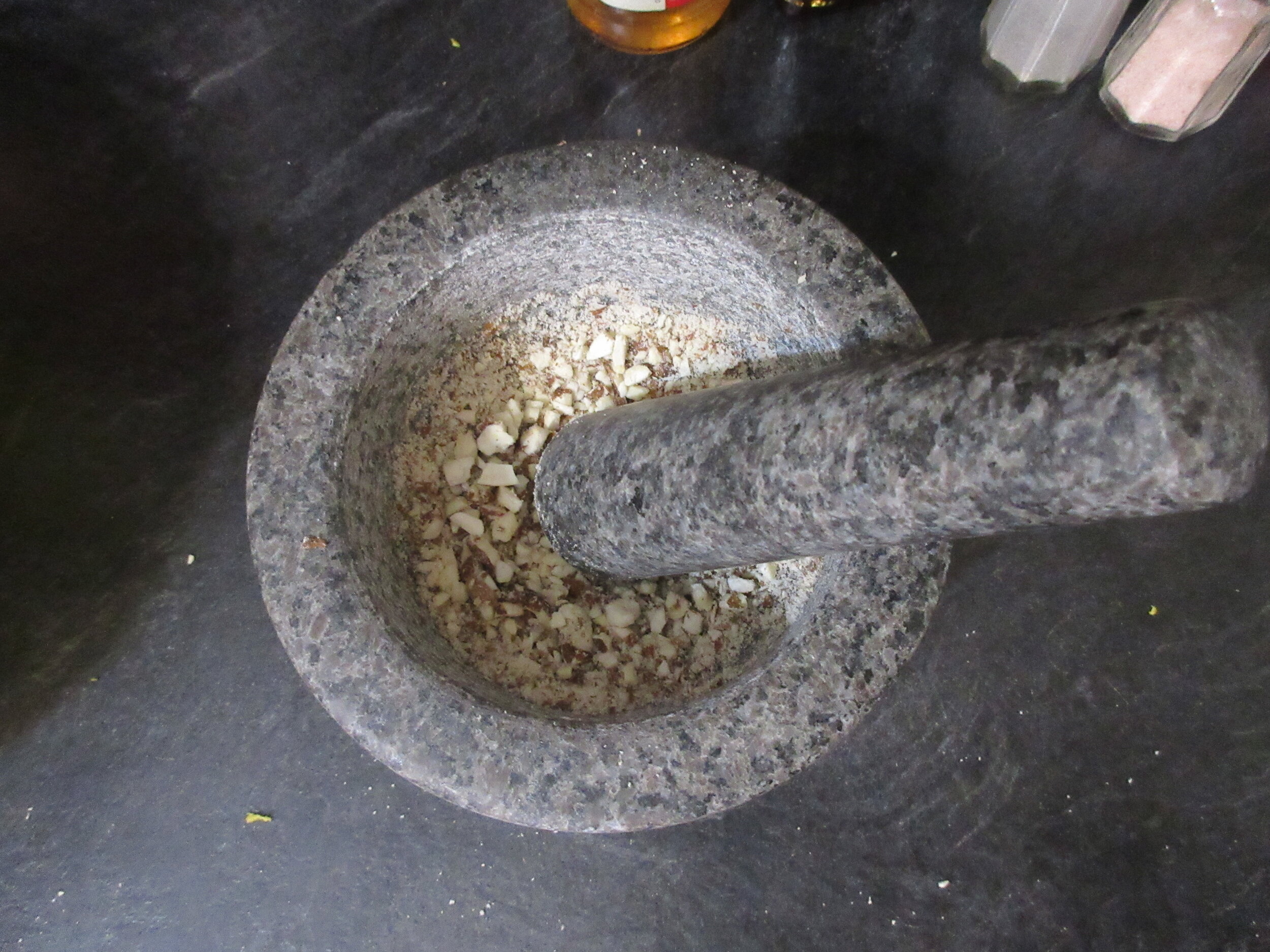
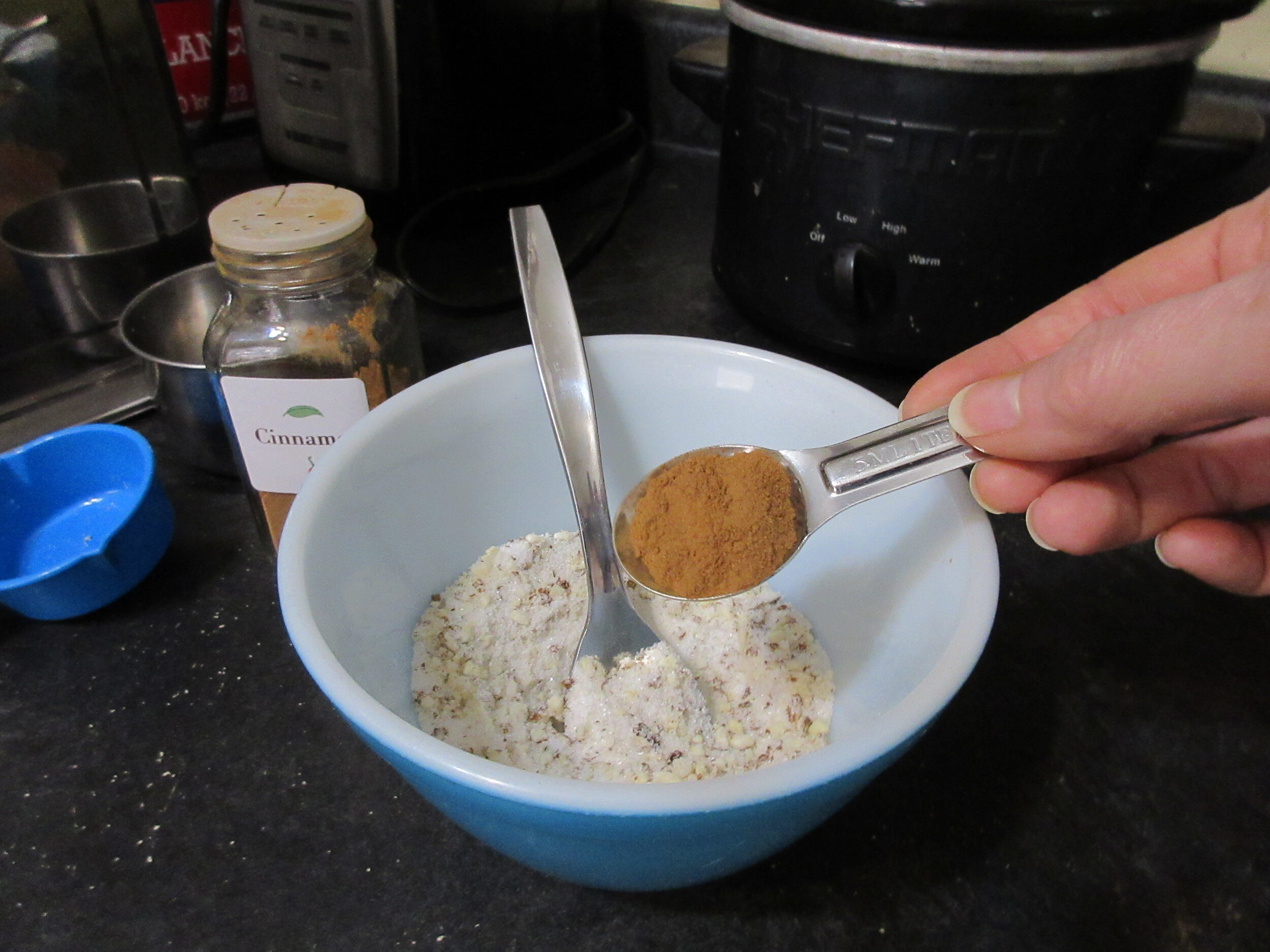
2. Preheat the oven to 350 F. Grind the almonds in a mortar and pestle, or use a nut grinder or blender to chop the nuts. Mix the almonds in a bowl with the ¼ cup sugar and cinnamon. Beat one egg in a separate small bowl.
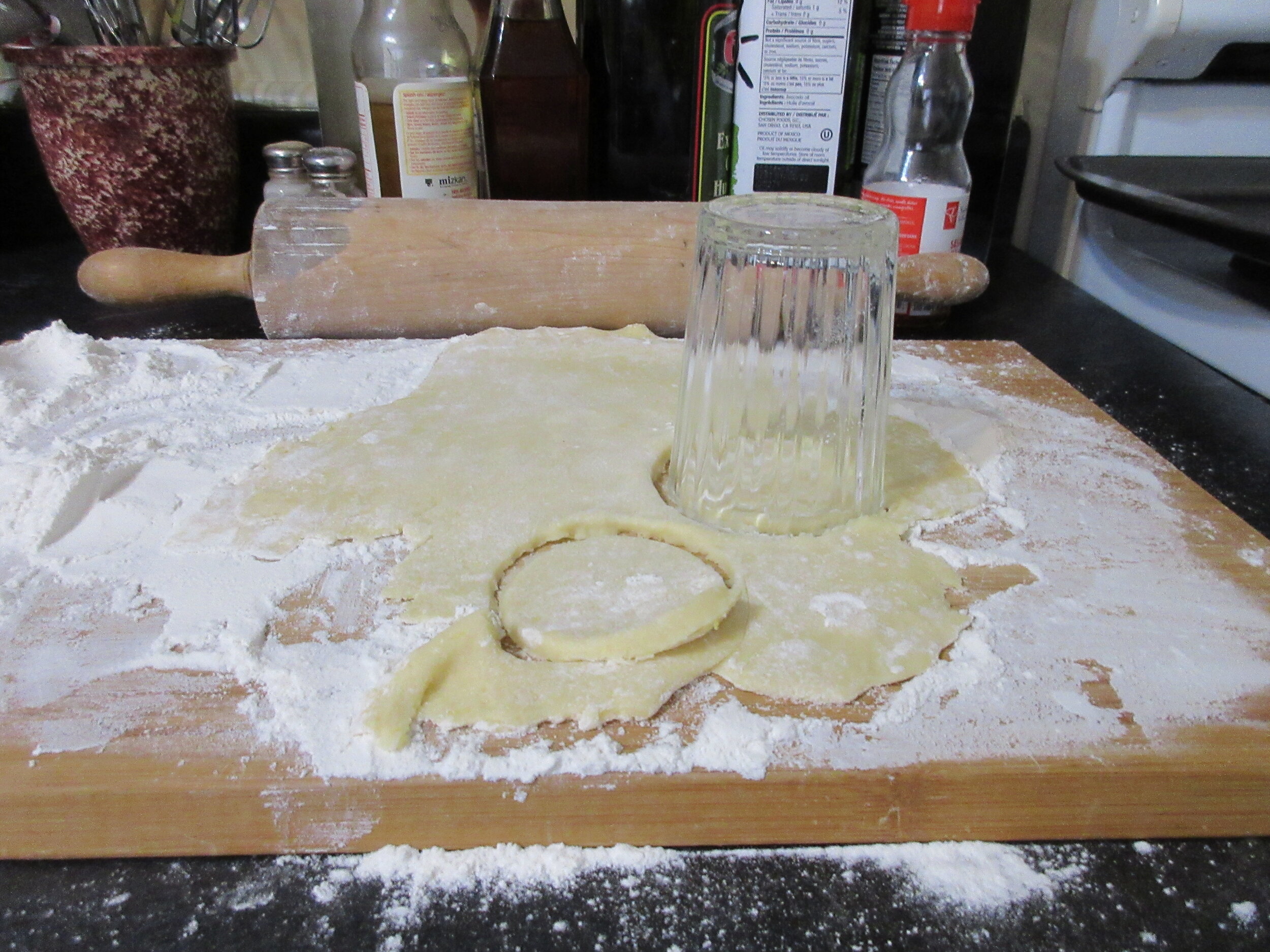
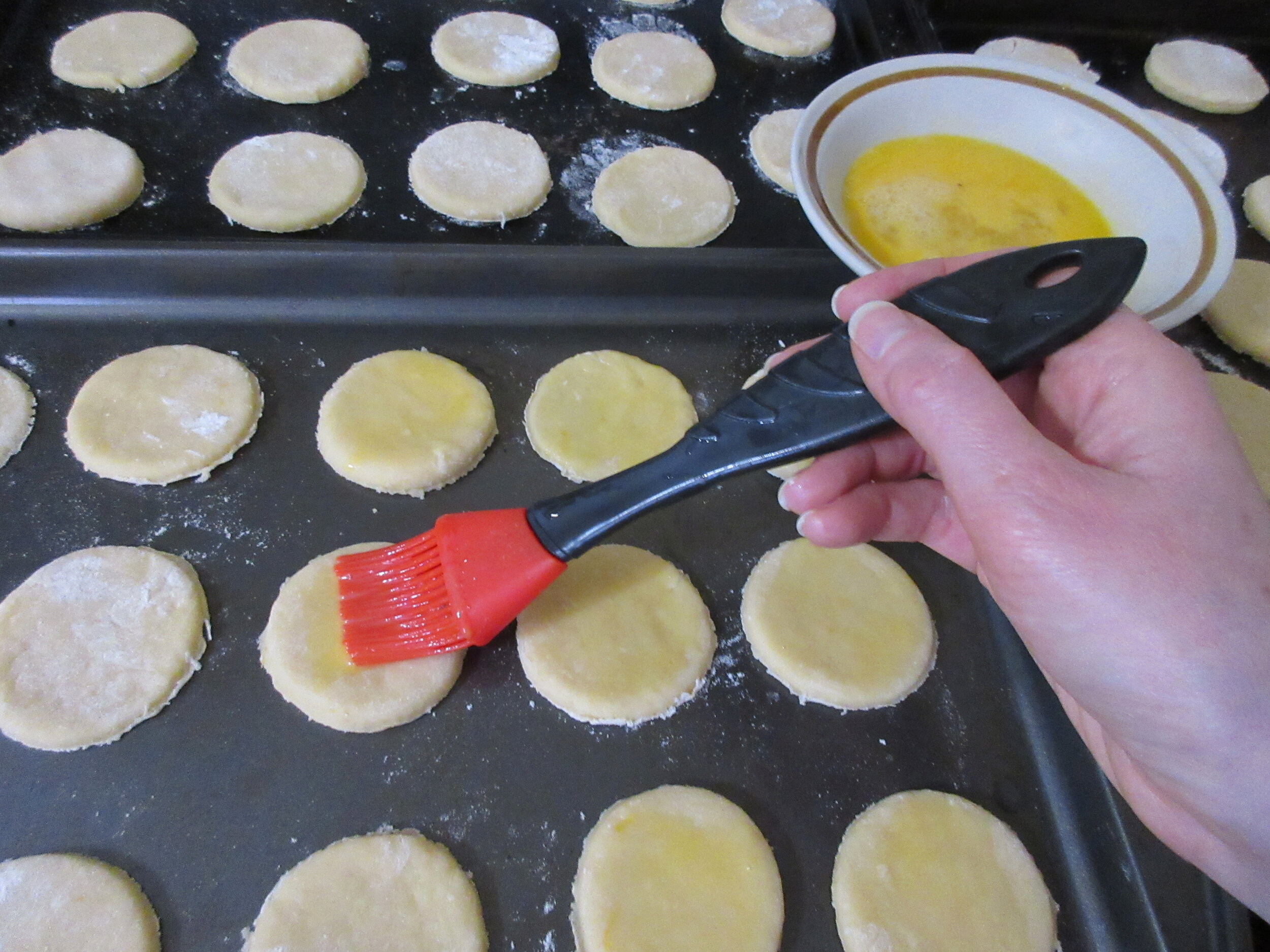
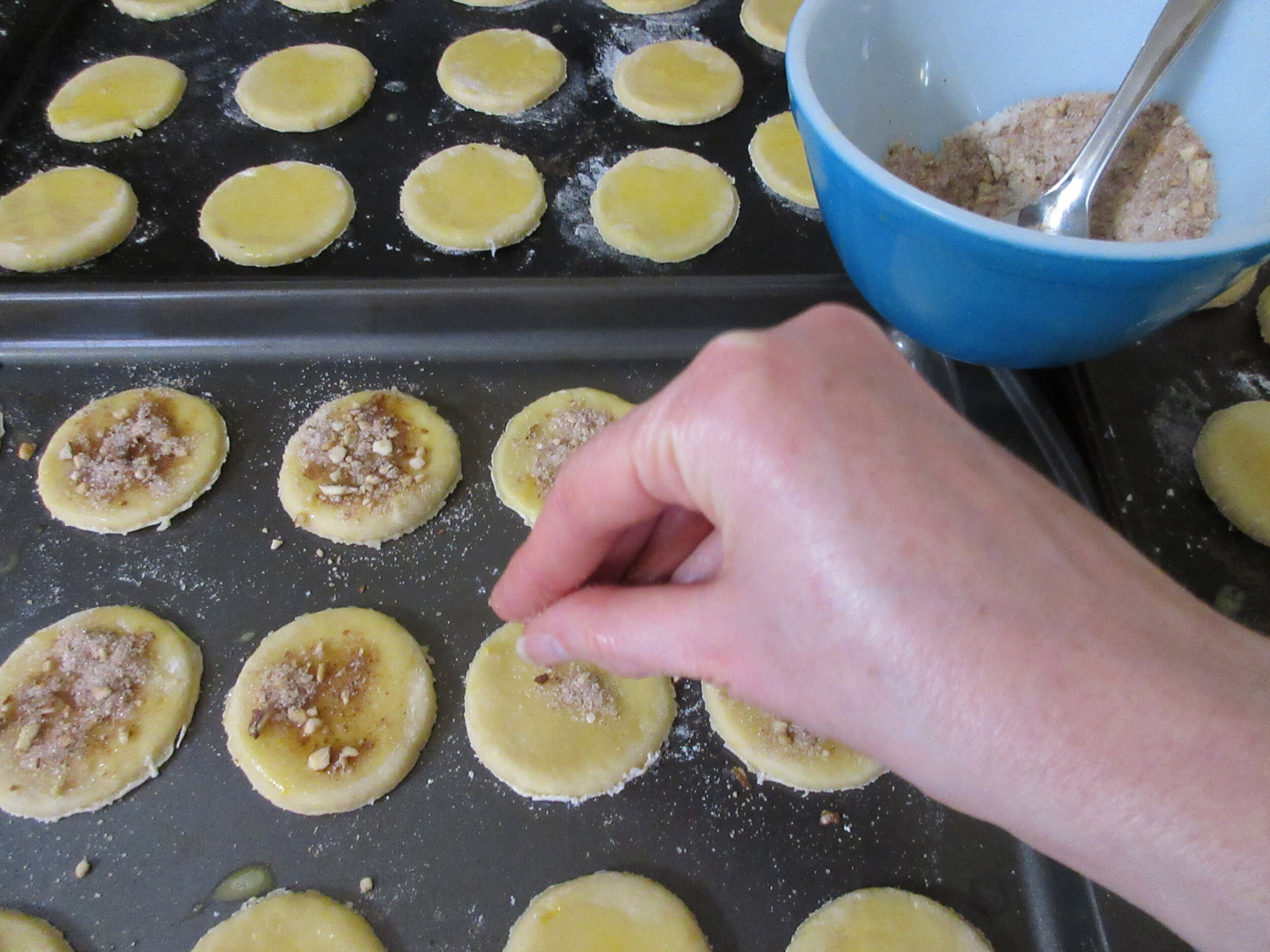
3. Roll the dough out thinly on a well-floured board. The dough will “bounce back” so roll it thinner than you desire. Cut out the cookies and lay out on baking sheets. Brush the top of each cookie with egg, then sprinkle with the almond, sugar & cinnamon topping.
4. Bake for about 15 minutes. Ammonium bicarbonate or baker’s ammonia will make the oven smell horrible like ammonia while the baking process is incomplete. I’m not exaggerating, your oven will smell like cat urine! But once you open the oven around the 15 minute mark and you smell the sweet aroma of cookies baking, that’s how you’ll know that your cookies are finished.
This recipe made 84 round cookies, 6 cm (2 1/4”) in diameter. The flavour is quite mild, so if you’re looking for a tastier cookie, try using 2 grated lemons and 2 tsp cinnamon.

Cup Cookies are a mild lemon sugar cookie with an almond, sugar & cinnamon topping sprinkled on top. This recipe is from Aunt Babette’s Cook Book from 1889, and its leavening agent is Ammonium Bicarbonate or Baker’s Ammonia.
I’ve chosen this recipe because for the last 2 years, my Ammonia Cakes recipe has been my most popular blog post by far. That shows me that there’s an appetite for information about and recipes using Baker’s Ammonia, but I’m torn, because Ammonia Cakes is not a delicious recipe at all! I had to make a second recipe, Icing for Cake to save the Ammonia Cakes so they were edible and they didn’t end up in the compost.
Cup Cookies are a much more delicious ammonium bicarbonate cookie. Stick with this recipe for the deliciousness, but head over to Ammonia Cakes for a bit of history about Baker’s Ammonia.

Baking with Ammonium Carbonate is really not the comforting, scrumptious and aromatic experience that we’re used with most baking. Your baking will actually smell horrible and repulsive most of the time when they’re in the oven! It’s not until your cookies are fully baked that you’ll smell the delicious aromas of homemade cookies. To find out why, head over to my blog post about Ammonia Cakes.
I filmed myself when I was baking Cup Cookies, so enjoy this short video and my revolted reaction when I was checking if the cookies were done after being in the oven for 10 minutes.
Read “Aunt Babette’s” Cook Book:

Ammonia Cakes
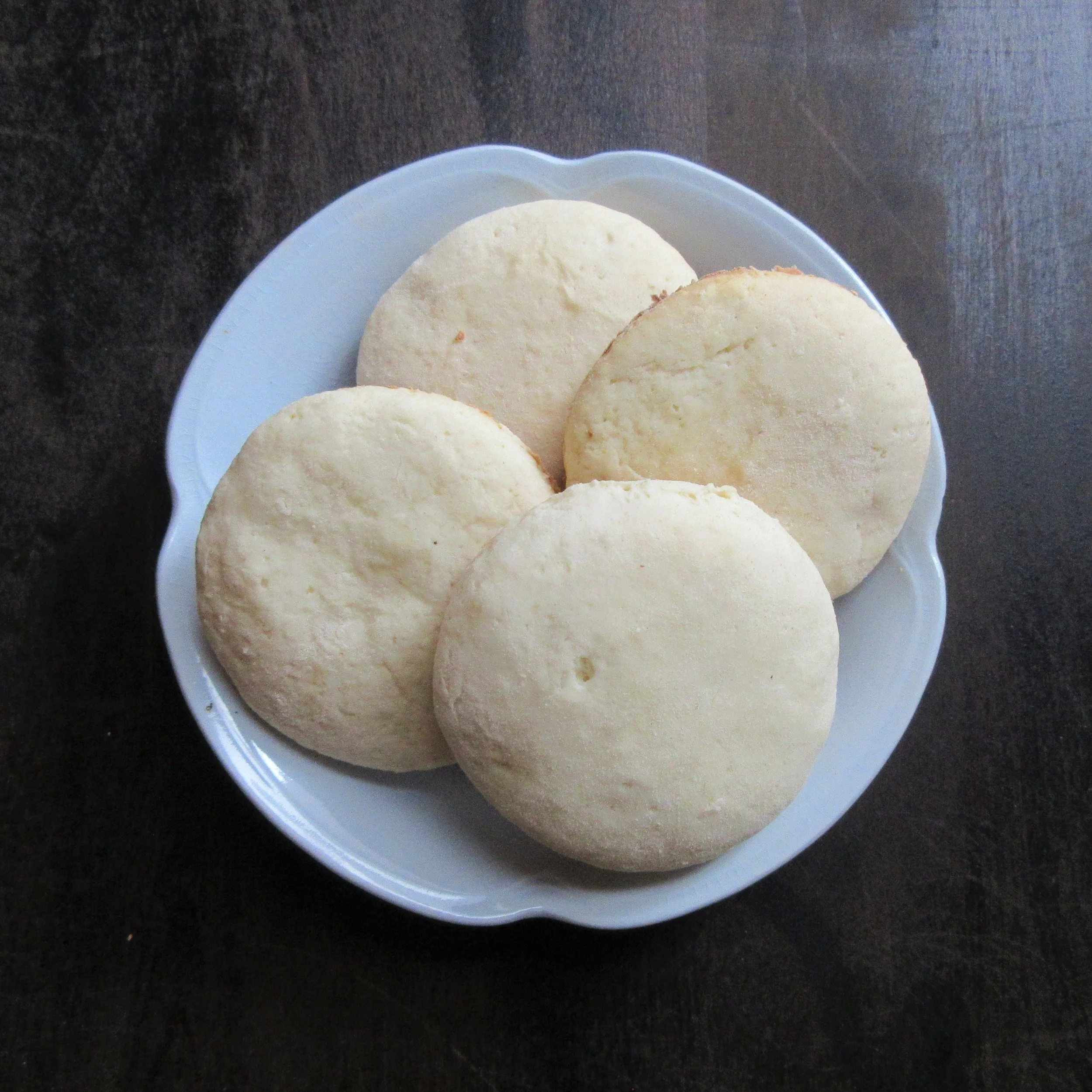
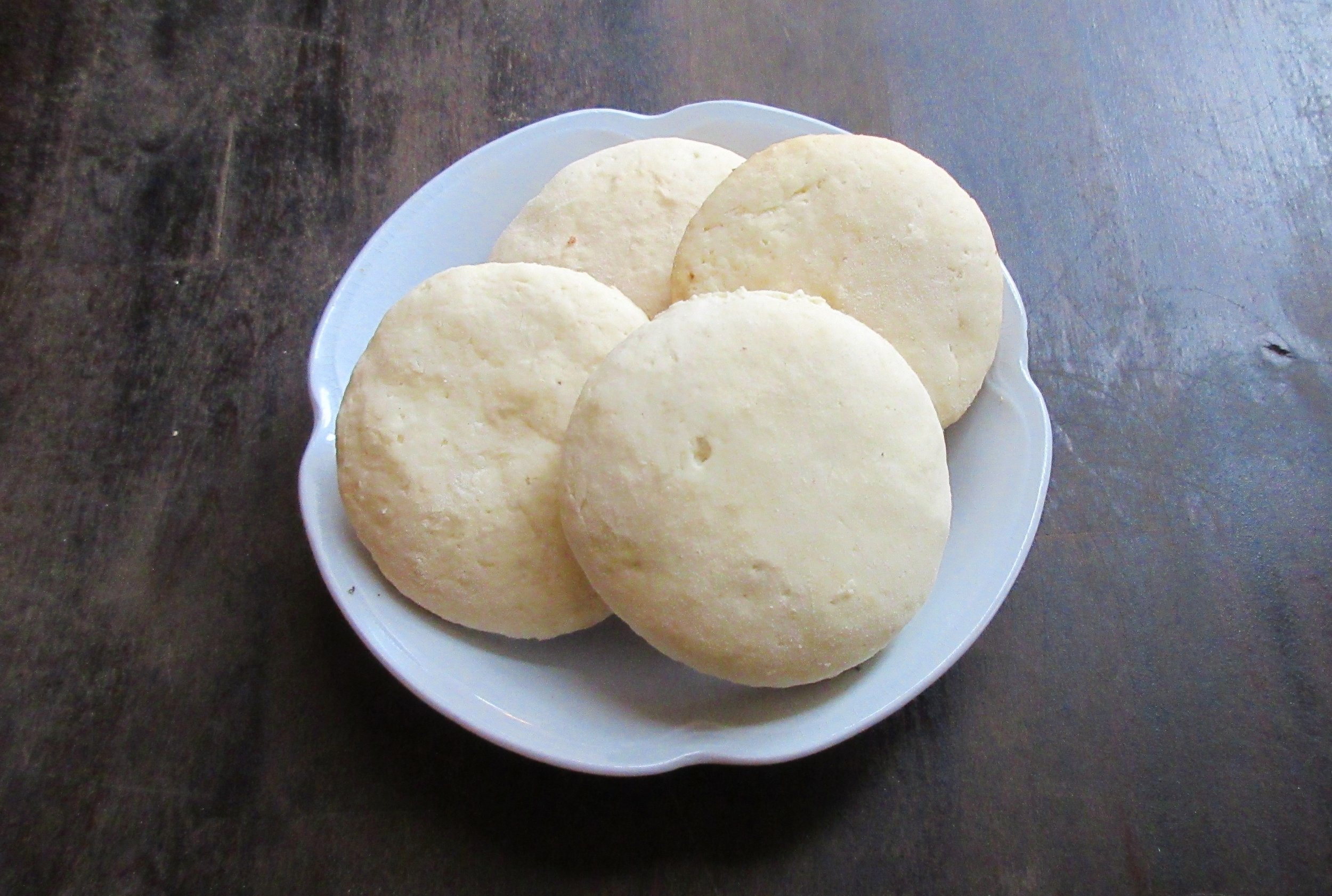
Ammonia Cakes: probably the least appetizing cookie name that I’ve ever come across. These cakes use ammonium bicarbonate (baker’s ammonia) as the leavening agent and I assure you that they don’t taste like ammonia, but they will temporarily stink up your kitchen while they bake! Ammonia Cakes fall on the bland side of the cookie spectrum, so I was lucky to find the recipe Icing for Cake in the same recipe book and I iced them the next day.
Added later: If you’re interested in learning more about Baker’s Ammonia or Ammonium Bicarbonate, continuing reading after this recipe to find out some history and background about this leavening agent.
If you’re more interested in baking a delicious cookie that uses Baker’s Ammonia, head over to my Cup Cookies recipe (I don’t recommend baking Ammonia Cakes).
You’ll find this recipe in:
The New Galt Cook Book
Compiled and Edited by: Margaret Taylor and Frances McNaught
Toronto, 1898
Added later: If you’re interested in learning more about Baker’s Ammonia or Ammonium Bicarbonate, continuing reading after this recipe to find out some history and background about this leavening agent.
If you’re more interested in baking a delicious cookie that uses Baker’s Ammonia, head over to my Cup Cookies recipe (they taste better than this Ammonia Cakes recipe).
Original Recipe:
AMMONIA CAKES.
MISS ROOS, WATERLOO.
Half pound white sugar, half a pint sweet cream, one egg, half ounce ammonia, a small piece of butter (half the size of an egg). Flour enough to roll out.
My Recipe:
1 cup white sugar
1 cup cream
1 egg
3 tbsp softened butter
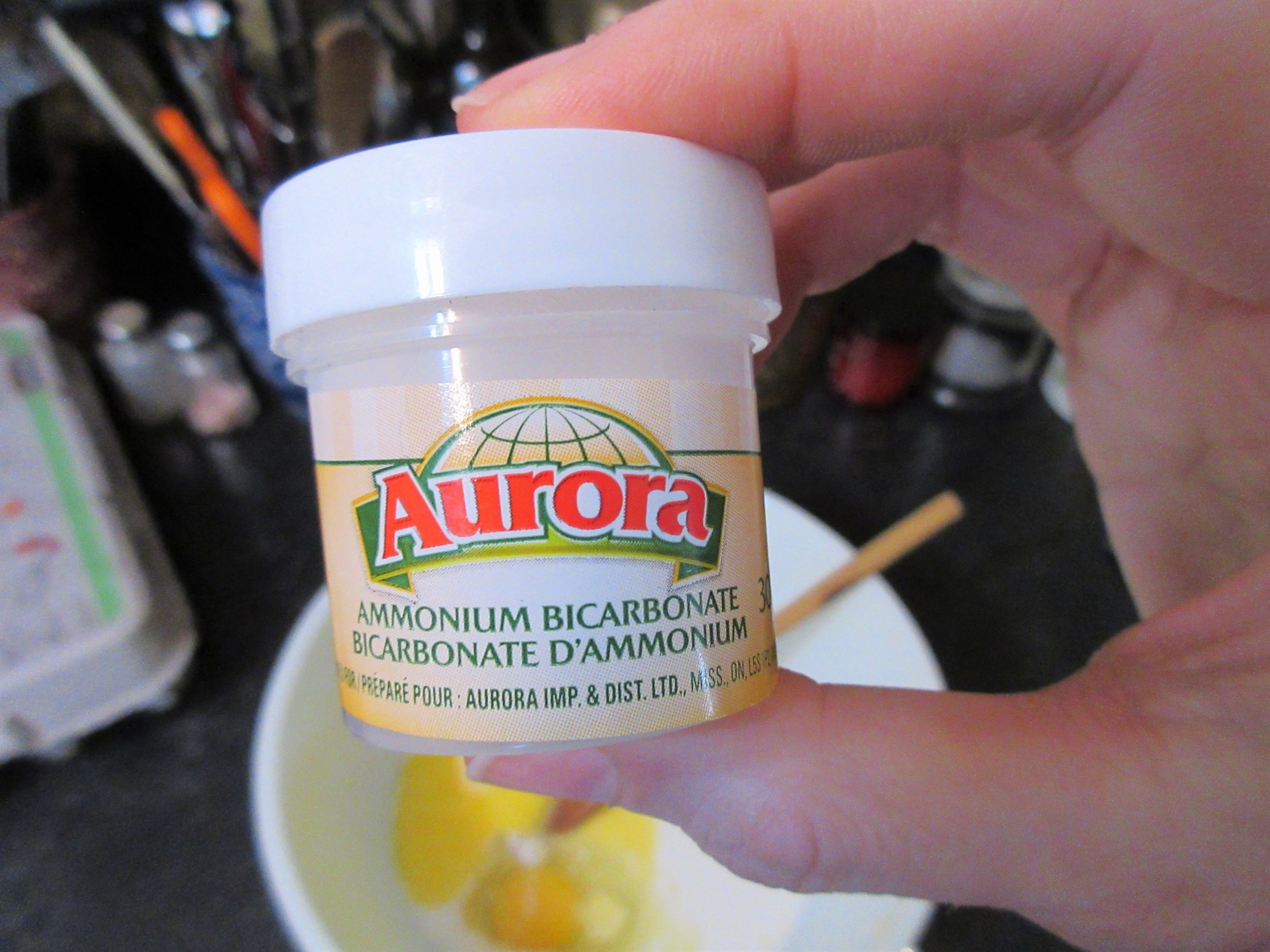
1 tbsp + 1 tsp baking ammonia*
3 ½ cups flour
* Baking ammonia is a white powder and it is also sometimes called ammonium bicarbonate, hartshorn or hirschhornsalz
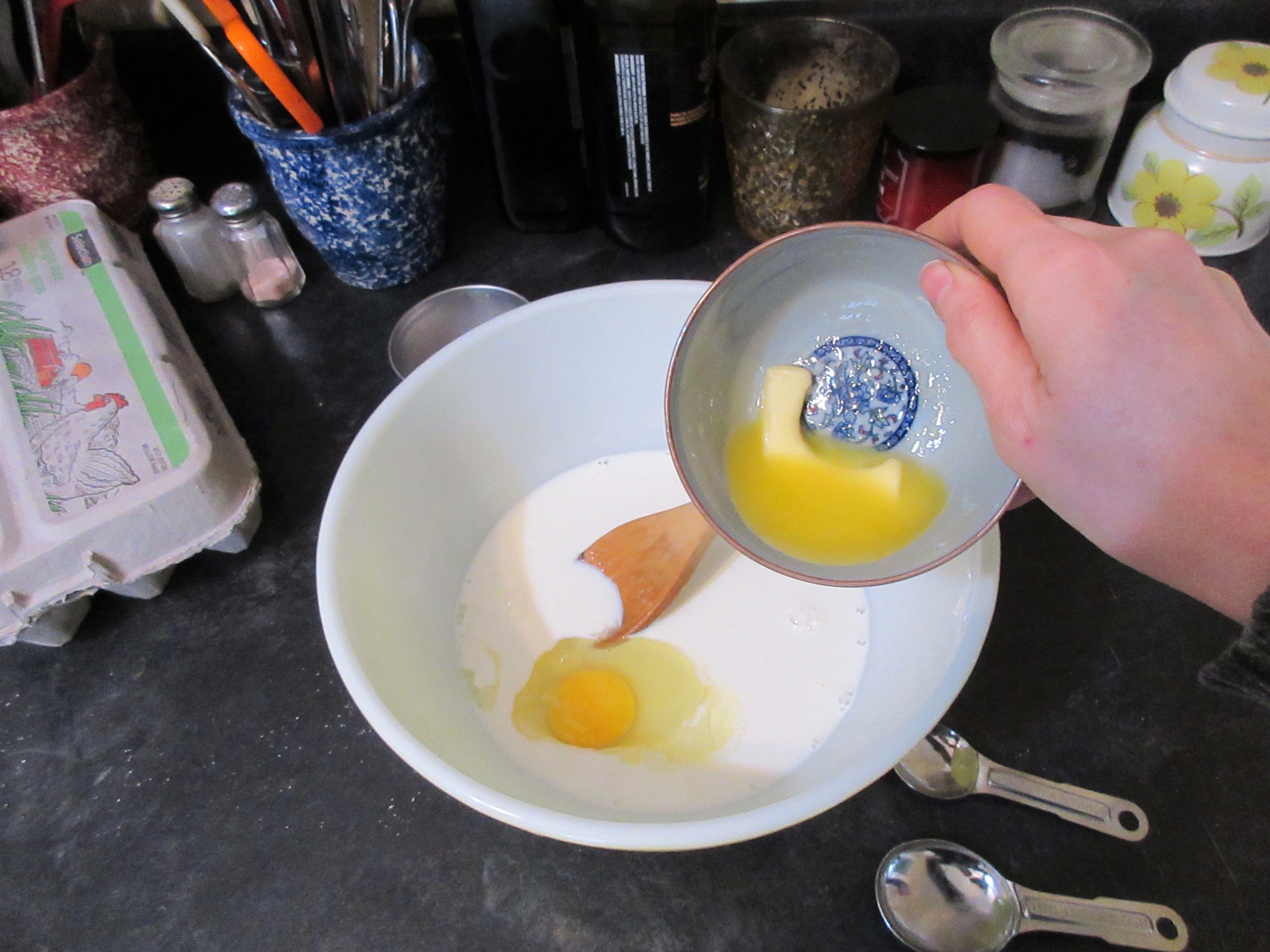
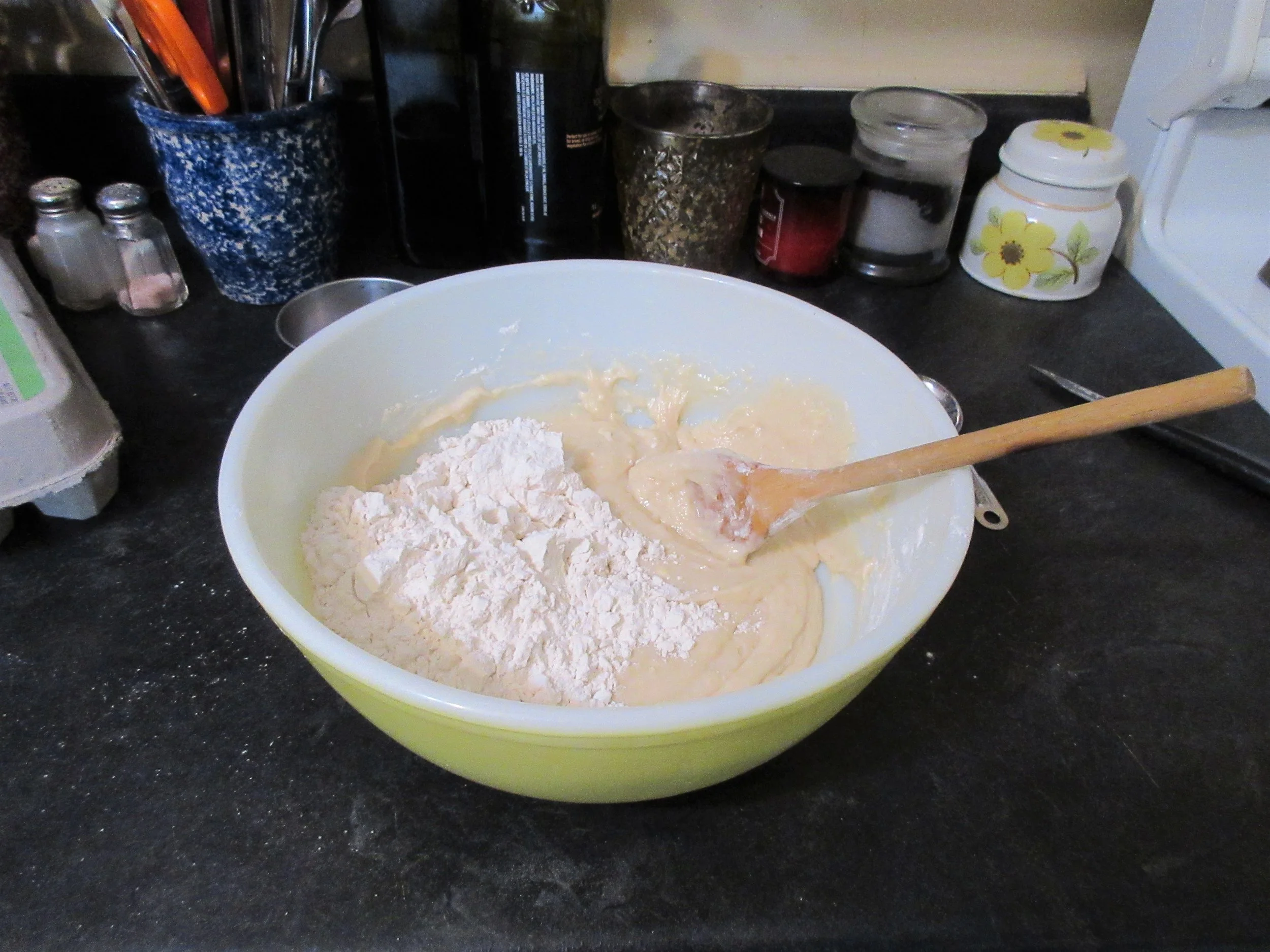
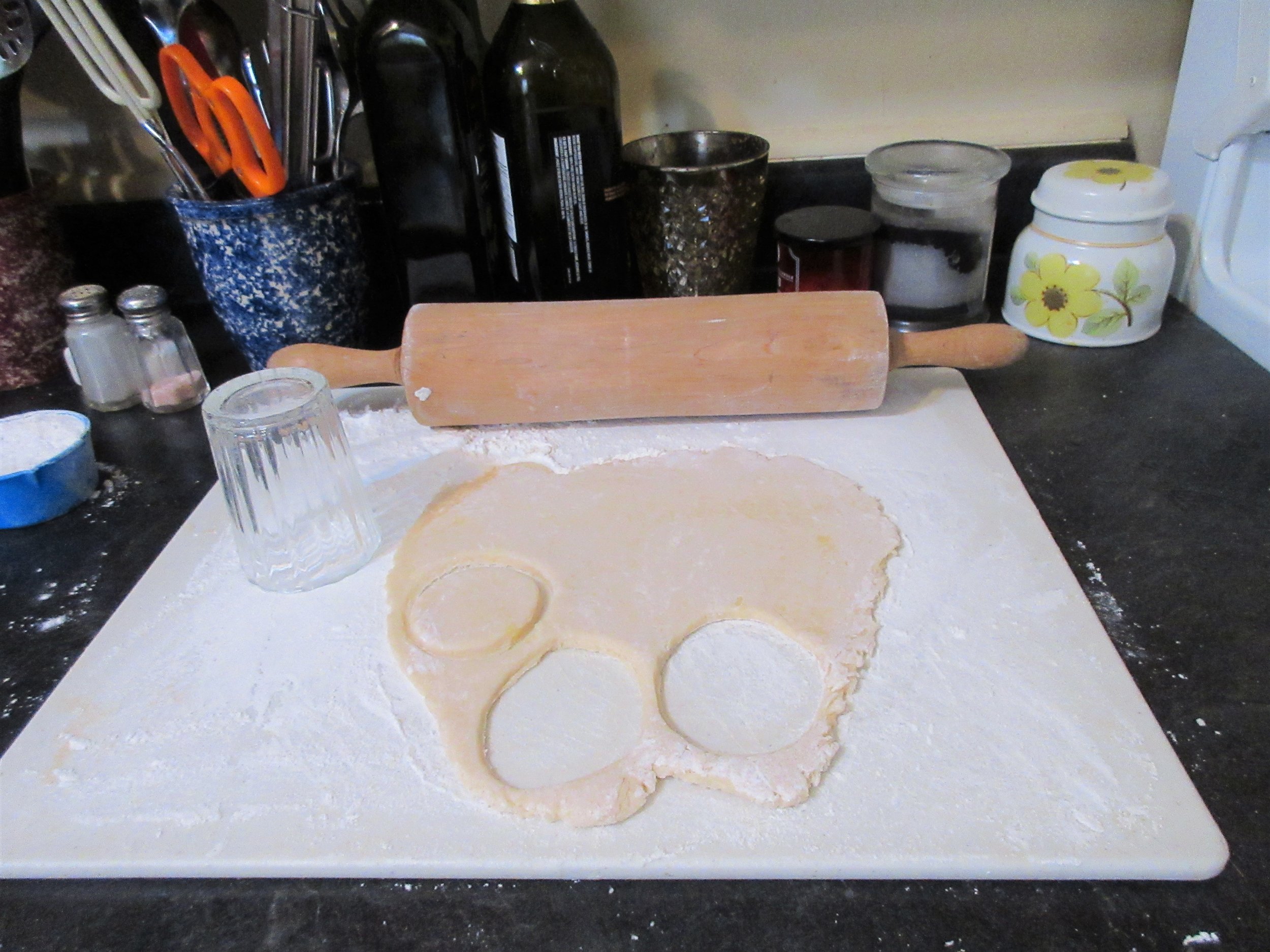
1) Mix together the sugar, cream, egg and butter, then add the baking ammonia and the flour. You may need to use your hands to fully combine the ingredients.
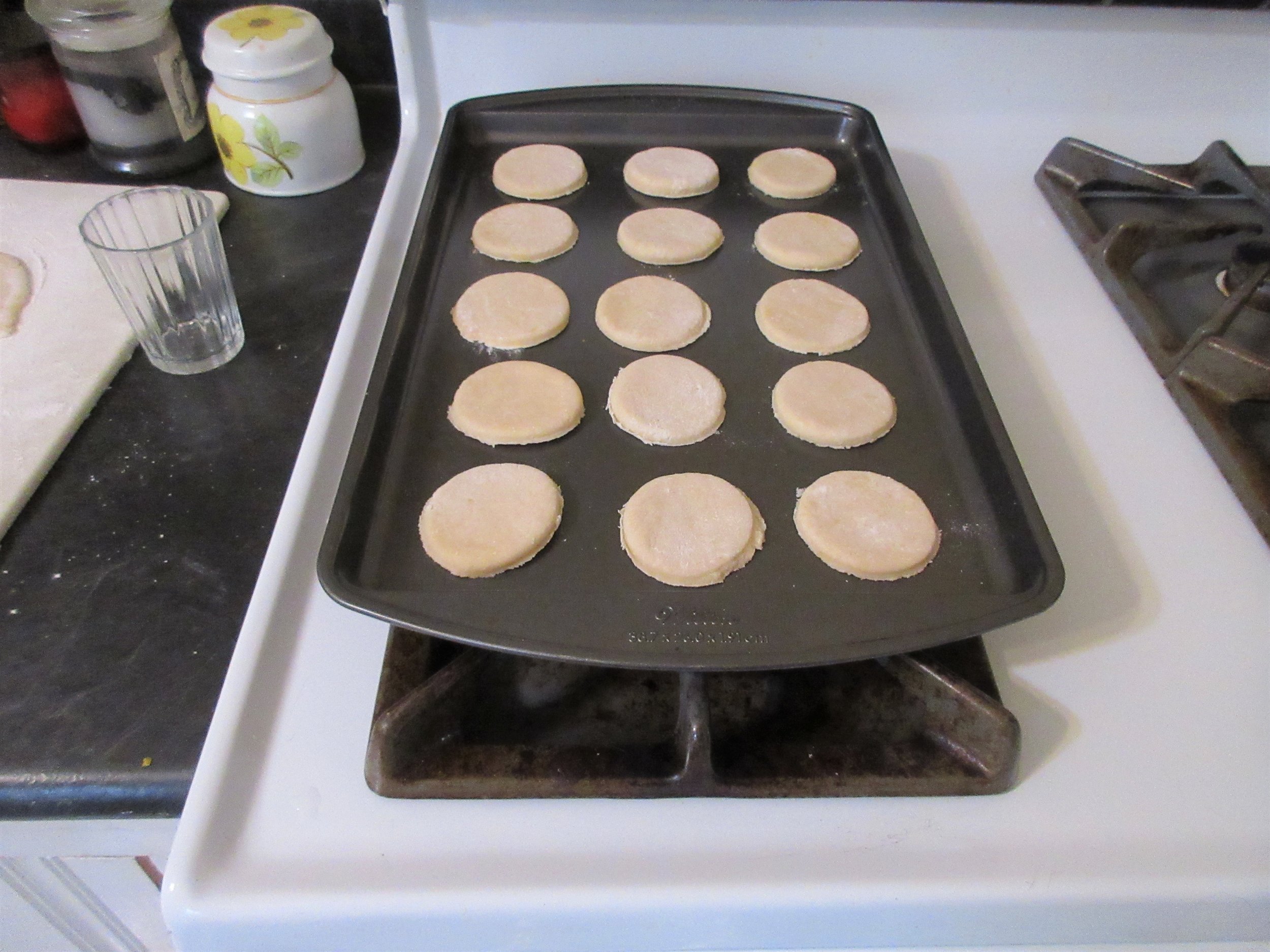
2) Preheat the oven to 350 F (175 C) while you roll and cut out all the cookies. Place the cakes on cookie sheets, then put them all in the oven at once. After a few minutes, you’ll start to smell a strong ammonia odour. The cakes are done when you open the oven door and smell cookies instead of ammonia, which should be about 15 minutes. This recipe made about 5 dozen 2 inch (5 cm) cookies.

A couple of weeks ago, I prepared the food served at a Victorian Tea held at the Fashion History Museum in Cambridge, Ontario. All of the recipes served came from The New Galt Cookbook, a Cambridge-area community cookbook published in 1898. Food Historian Carolyn Blackstock spoke during the Tea about her experience in 2014 when she made a recipe a day for a year from The New Galt Cookbook. Yes, amazingly she made 365 recipes and wrote about each one. I sometimes struggle with pulling off 2 or 3 blog posts a month.
Ammonia Cakes were on the menu, and to be honest, it’s one of my least favourite recipes served at the Victorian Tea. I certainly wasn’t planning to make them again, but when everyone was packing up afterwards, things changed. Johnathan, the Curator at the Fashion History Museum, said to me: “Julia, we’d like to present you with a parting gift.” He handed me the rest of the baking ammonia and announced that he would absolutely never make anything with it in the future!
I had never baked with Ammonium Bicarbonate as a leavening agent before, but thankfully Carolyn Blackstock explained the basics in her blog post about Ammonia Cakes. As I noted in my modern interpretation of this recipe submitted by Miss Roos, you will know when the cakes are in the process of being baked because your oven will stink like ammonia or cat urine. Eventually, you’ll open the oven door and only smell the aroma of delicious cookies. That’s how you know when Ammonia Cakes are baked.
After we had three trays of Ammonia Cakes in the oven when we were baking for the Victorian Tea, we realized that we wouldn’t be able to smell when they were done because we had put in the cookie sheets at different times. We solved the problem by firing up all the ovens and placing one tray in each oven. I suggest that you put all your trays in the oven at once, then you’ll be able to accurately follow your nose.
This form of ammonia is sometimes called Baking Ammonia, Baker’s Ammonia, Ammonia Carbonate, Ammonia Bicarbonate, Hartshorn or Hirschhornsalz. Not being familiar with baking with ammonia, I did some research about its history. These days, it is commonly found in traditional German or Scandinavian baking such as cookies, biscuits or crackers. In other words, any baking that is thin. If ammonia bicarbonate is used in something with more depth like a cake, the ammonia created when baking occurs wouldn’t be able to escape from the centre and the baking would taste disgusting. Baking risen with ammonia is light, crisp and keeps its form, so it’s especially good for moulded cookies like Springerle.
Baker’s Ammonia first started being used in the Middle Ages, but it rose in popularity during the seventeenth and eighteenth centuries. Originally, deer antlers were ground down and dry distilled in kilns. A British term for a stag is “hart” and “hart’s horn” eventually transformed into Hartshorn. In German, Hirschhornsalz translates to staghorn salt. Hartshorn was used as a smelling salt for fainting and was also used medicinally for diarrhea, fevers and a variety of bites.
The area surrounding Kitchener-Waterloo (which is next door to Cambridge) has a large German immigrant population and each October, Kitchener-Waterloo hosts the largest Oktoberfest celebration outside of Bavaria. Our Ammonia Cakes recipe was submitted by a Miss Roos of Waterloo, who most likely had German roots. One of the fascinating aspects of Carolyn Blackstock’s New Galt Cook Book project is that she not only made a recipe a day, but she also did research about the women who submitted the recipes. Many days, she provides details and pictures about that woman’s life, but unfortunately without knowing her first name, the identity of Miss Roos remains a mystery. Carolyn does present a few possibilities in her blog post, though.
If you’ve read all this and are wondering why anyone would use ammonia bicarbonate instead of sodium bicarbonate, baking soda wasn’t produced as a leavening agent until 1846. This Smithsonian Magazine article about the history of Baking Powder is a great place to start if you want to find out more.
I’ll end by clarifying why I’m not in love with Ammonia Cakes. It’s not because they taste bad. I assure you that they don’t taste like ammonia! They aren’t my favourite because they don’t have much flavour. Aside from historic baking, I don’t eat much refined sugar in my regular life so if I’m eating something with sugar in it, I want it to taste GOOD and Ammonia Cakes just tasted bland and boring to me. I also had almost 5 dozen of them and I prefer to give delicious food to others, rather than feeling like I need to apologize for the recipe.
I thought that if I could find a recipe for a thin icing that hardens from the 1890s, that would improve the taste and it turned out to be a very successful solution. I didn’t have to look far for this icing recipe. I just looked at Carolyn Blackstock’s blog and found Icing for Cake, also from The New Galt Cook Book. I made the icing and iced the Ammonia Cakes the next day, which transformed them from bland to shablam!

Have a look at Carolyn Blackstock’s Cooking with the Galt Cook Book blog project and try out some of the recipes.
Read the Cook Book:

Honeycomb, or Roll Gingerbread
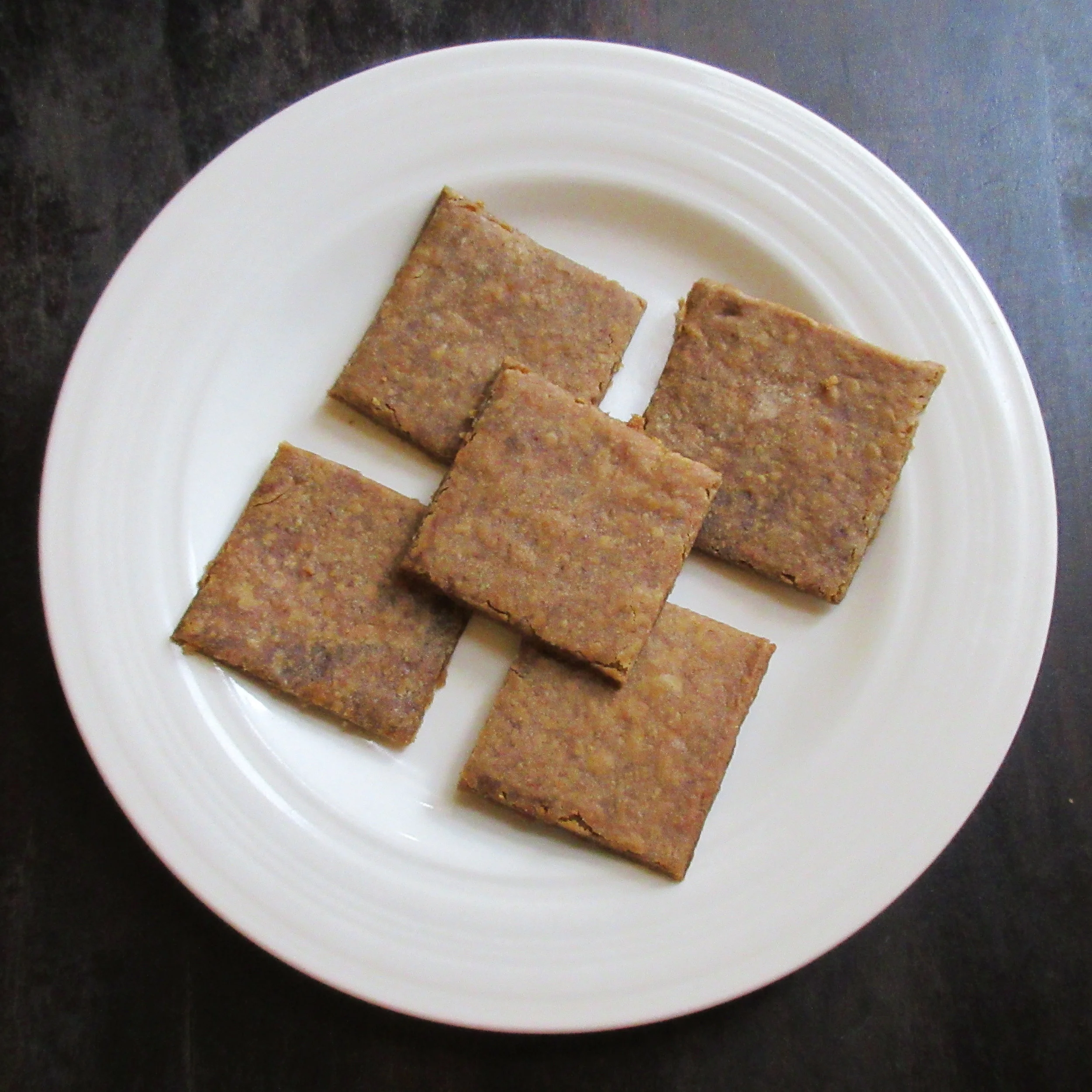
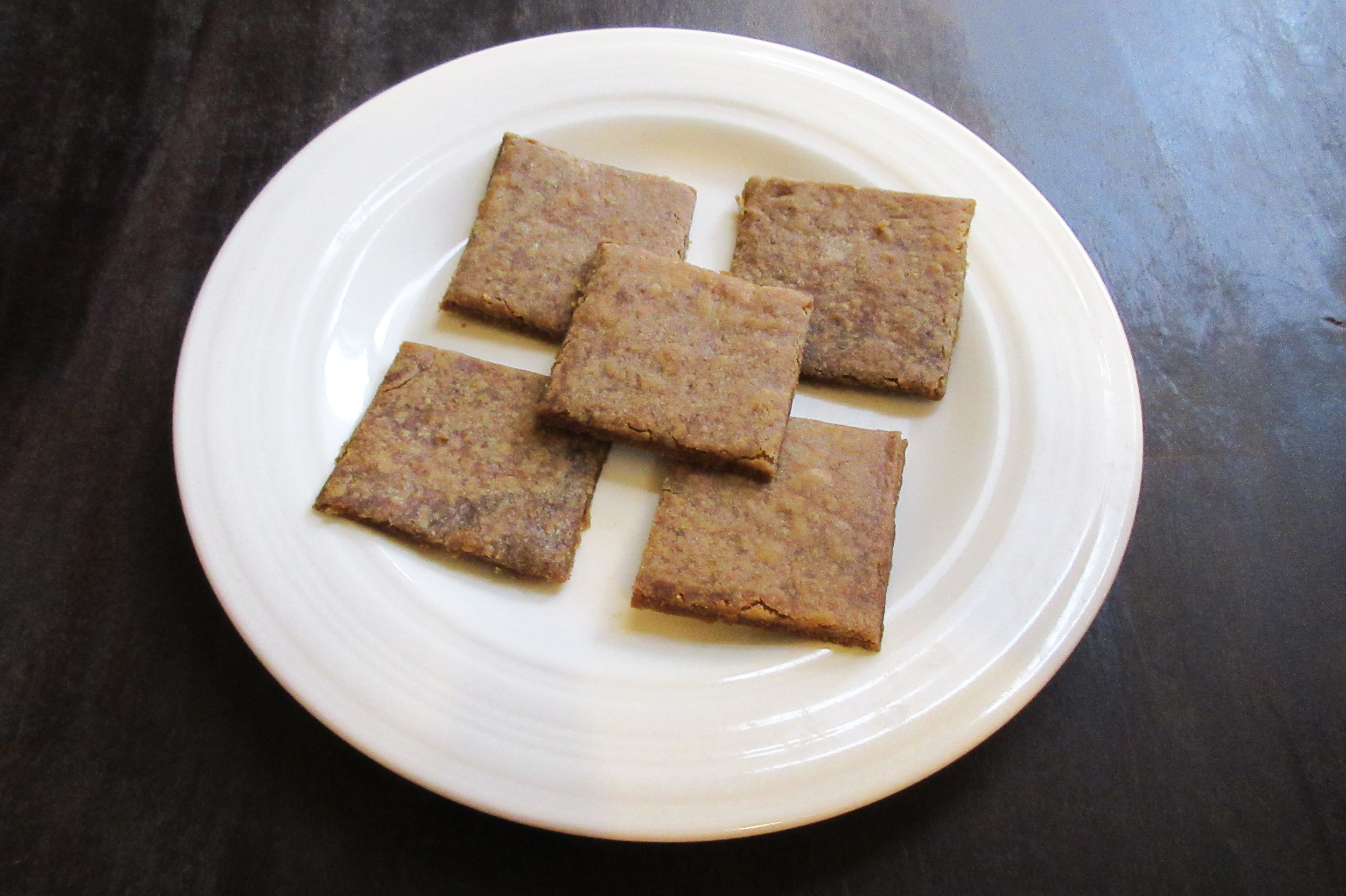
I was intrigued by this gingerbread cookie recipe from The Cook's Complete Guide (1810): gingerbread cookies rolled like wafers! The historic recipe instructs us to "bake it gently; when hot cut it in squares, and while warm roll it over a stick, like wafers, till cold". But yet, my gingerbread cookies that I ended up with are flat squares. This is one of those occurrences when a historic recipe doesn't turn out as expected the first time around (they instantly cracked and broke when I tried to bend them). This is a delicious lightly flavoured Lemon Gingersnap, so I recommend it, whether it is rolled or flat.
You’ll find this recipe in:
The Cook's Complete Guide, on the Principals of Frugality, Comfort, and Elegance
By A Lady (Esther Copley)
London, 1810
Historic Recipe:
Honeycomb, or Roll Gingerbread.
Rub together half a pound of flour, a quarter of a pound of butter, a quarter of a pound of fine moist sugar, a teaspoonful of ground ginger, ditto of allspice, ditto of cinnamon, in powder, the rind of one lemon, grate, and as much treacle as will make it in a paste to spread on tins very thin, bake it gently; when hot cut it in squares, and while warm roll it over a stick, like wafers, till cold; keep it in a dry place.


My Recipe:
Grated zest of 1 lemon
1½ cups white flour – 225 g
1 tsp ginger
1 tsp allspice
1 tsp cinnamon
½ cup softened butter – 113 g
¾ cup packed brown sugar – 113 g
¼ cup molasses
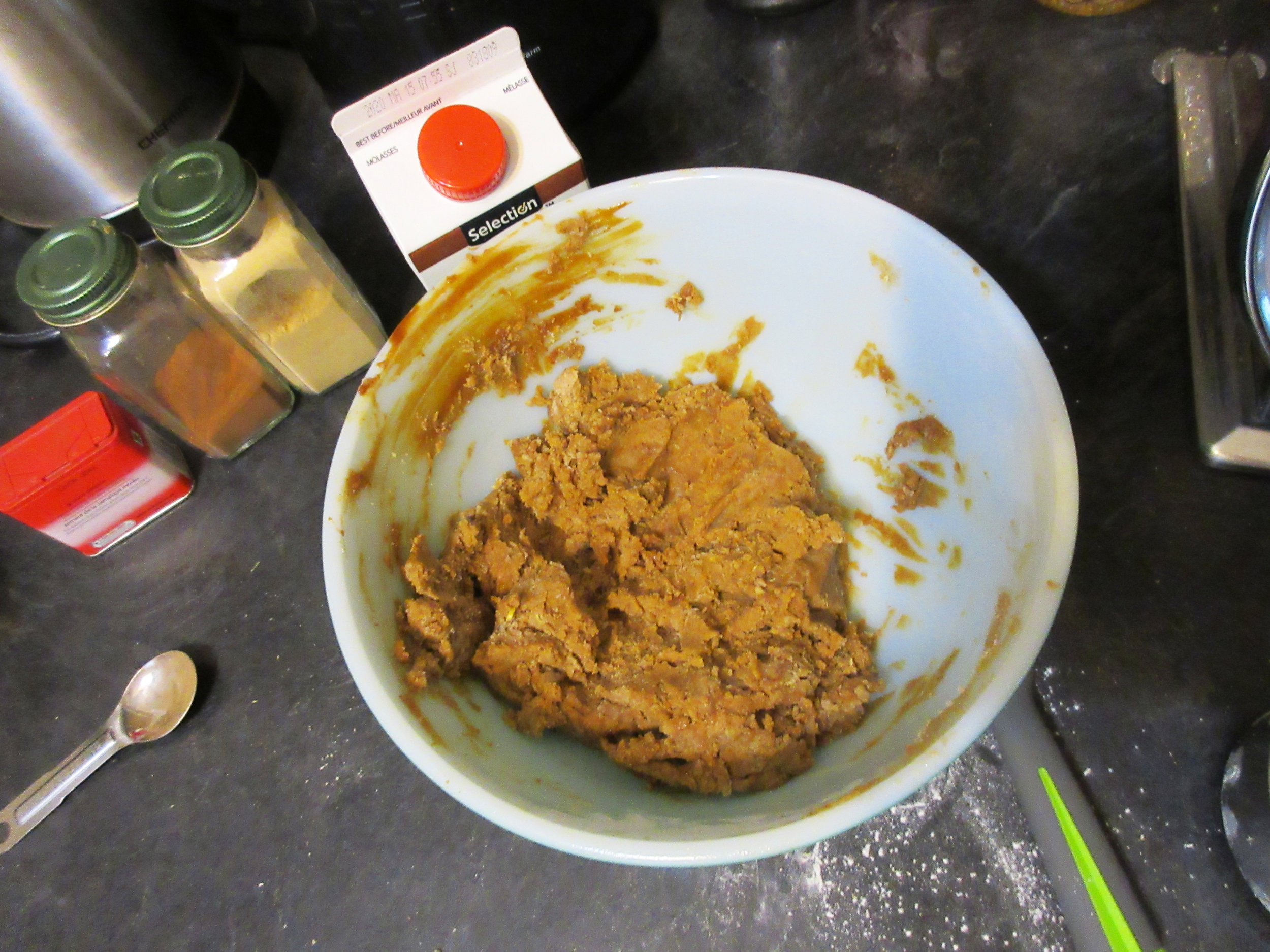
In a large bowl, combine the flour, ginger, allspice, cinnamon and grated lemon zest. In a smaller bowl, cream together the sugar and softened butter. Add the butter & sugar to the dried ingredients and mix. Add the molasses and mix until combined.
Lightly flour your rolling surface and rolling pin. Roll out thin, cut out into shapes and bake at 275 F/135 C until slightly browned on the bottom. This recipe made 44 2" square cookies.

After I made the dough, that's when things started to go wrong...
You've probably noticed that the recipe is called Roll Gingerbread, and the historic recipe instructs us to "bake it gently; when hot cut it in squares, and while warm roll it over a stick, like wafers, till cold". But yet, my gingerbread cookies are flat squares. What happened?
I rolled out the gingerbread thinly directly onto the cookie sheets and cut it into large square or rectangle shapes. Once baked, I cut it into squares roughly 2"x 2" and then I rolled it around various round stick-like items that I had around the house. The cookies instantly crumbled and cracked!
I had a small window of time before the cookies were cool, so that's when I gave up and decided that these gingerbread cookies were destined to be flat squares. This recipe makes a delicious lightly flavoured Lemon Gingersnap, so I recommend it, either rolled or flat.
When I make this recipe again, I'm going to try changing up some aspects of this recipe and I'll see if I can get the Honeycomb, or Roll Gingerbread to bend without cracking. If you try it out, take a moment to share your experiences in the comments and we'll figure it out together!
I can think of a short list of reasons why this recipe may have not behaved as expected, and solving mysteries such as this one is part of the joy of working from historic recipes. It is very satisfying when, after an arduous series of attempts, a finally recipe comes together and I'm eating the food that I imagined when I first read the recipe. Going through this process always makes me a better cook.
1) Add more or less molasses. Every other ingredient has a very specific measurement, especially for a recipe from 1810. But when it comes to the molasses, we're just told to add "as much treacle as will make it in a paste to spread on tins very thin".
2) Bake it at a higher temperature. I chose to bake it 275 F/135 C because our original recipe tells us to "bake it gently". Most contemporary recipes tell us to bake gingerbread at 350 F/175 C, so maybe the higher temperature will give the gingerbread more structural integrity?
3) Roll it out thinner.
4) Use white sugar, not brown sugar.
5) Try to roll the gingerbread around a stick directly out of the oven. The historic recipe instructs us to cut it in squares after it comes out of the oven, then roll the cookies. Maybe this takes up too much cooling time, and the way to go is cut out the gingerbread before baking. Then you'll be able to bend the cookies around a stick ASAP when it's hot.
6) Perhaps the historic recipe just doesn't work! I have searched for a contemporary recipe for a similar rolled gingerbread cookie for reference, and couldn't find one. The closest I could find is someone creating a slightly curved gingerbread house roof by allowing it to cool while draped over a swooped cardboard structure. Maybe rolled gingerbread cookies only stands up on paper and not in reality.

Read the Cookbook:

Albany Cake
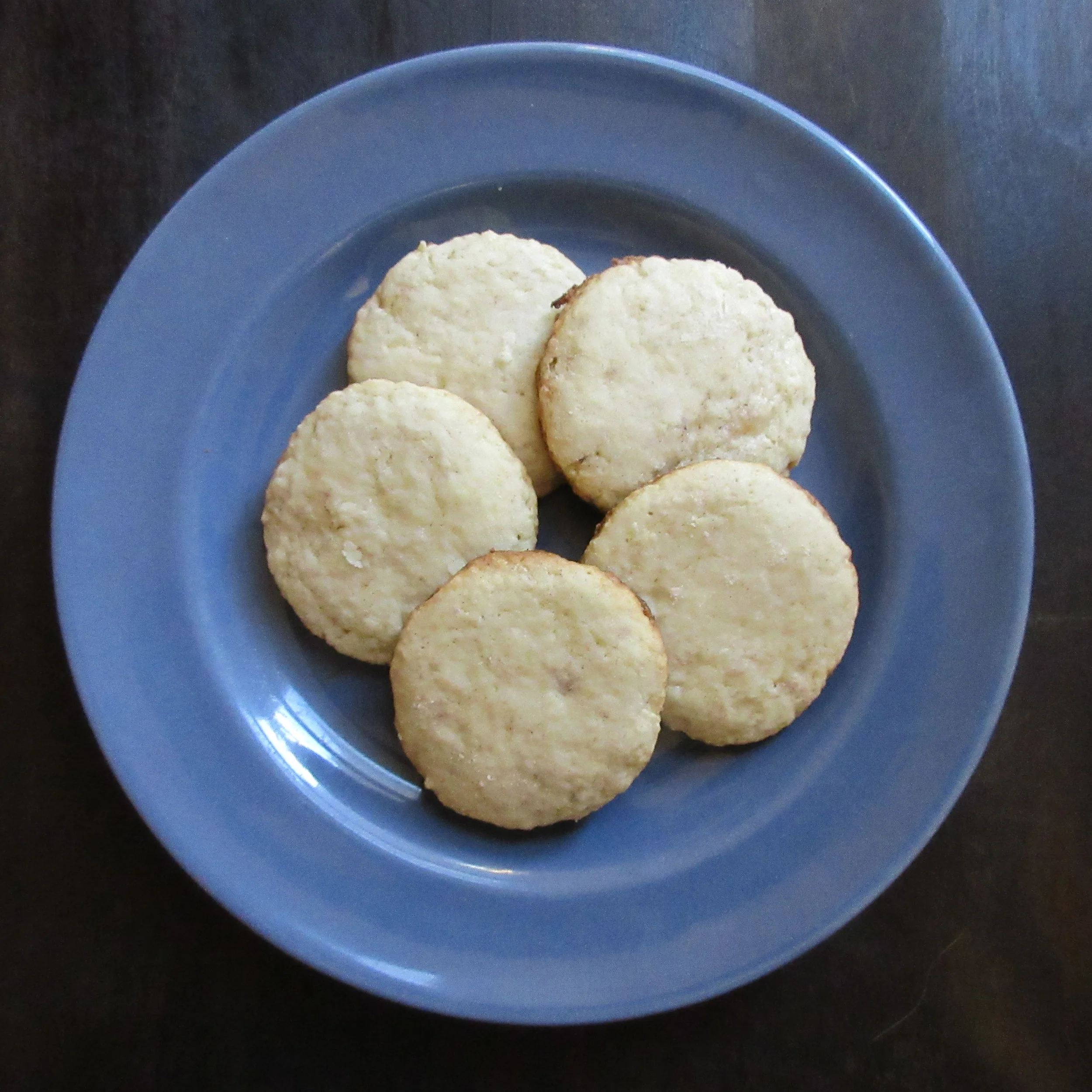
If a sweet scone and a cookie got married and had a baby, that baby would be Albany Cakes. However you classify Albany Cakes, this sweet bit of bakery with cinnamon and rose water flavours is deelish! This was another recipe that we made at the cooking classes that I taught this autumn at Nelles Manor Museum in Grimsby. Our Albany Cakes recipe comes from The Frugal Housewife's Manual, published in Toronto in 1840, but written by “A.B.”, a mysterious resident of Grimsby who likely would have known the Nelles family.

You'll find this recipe in:
The Frugal Housewife's Manual
By “A.B. of Grimsby”
Toronto, 1840
Historic Recipe:
12. Albany Cake.
Take one pound and a half of flour, one of sugar, half a pound of butter, a tablespoon-ful of lard, two-tablespoonsful of rose water, a little cinnamon, one egg; a teaspoonful of saleratus, put in a tea cup of cream. Cut them out, and bake them on tin.


My Recipe:
½ lb (1 cup) softened butter
2 cups white sugar - 450 g
4 1/3 cups white flour - 450 g
2 tbsp rose water
1 tsp cinnamon
1 egg
1 tsp baking soda
1 cup (236 mL) cream
1) Preheat oven to 350 F (175 C). Cream softened butter and sugar together, then stir in the flour.
2) Add rose water, cinnamon and egg. Stir the baking soda into the cream to dissolve before adding the cream to the dough and stirring well until all the flour is incorporated.
3) This is a wet dough, so flour your rolling pin and rolling surface well. Roll out to your desired thickness and cut out into rounds. Bake for about 15 minutes, or until slightly golden on the bottom.
This recipe makes about 7 dozen 2-inch thin Albany Cakes.


If a sweet scone and a cookie got married and had a baby, that baby would be Albany Cakes. However you classify Albany Cakes, this sweet bit of bakery with cinnamon and rose water flavours is deelish! This was another recipe that we made at the cooking classes that I taught this autumn at Nelles Manor Museum in Grimsby. Our Albany Cakes recipe comes from The Frugal Housewife's Manual, published in Toronto in 1840, but written by “A.B.” a mysterious resident of Grimsby who likely would have known the Nelles family.
The historic recipe doesn't stipulate how thickly to roll the Albany Cakes, or even that you need to roll out the dough. It does tell you to “Cut them out”, so I read between the lines that the dough should be rolled out first.
I rolled the Albany Cakes that I baked in my oven at home quite thinly, and these Albany Cakes were more cookie-like. At the cooking classes, the attendees rolled them out thicker (about 1 cm), so those Albany Cakes ended up being more like a scone. This worked out great for everyone because we made fresh butter together at the class, so everyone was able to enjoy using the Albany Cakes as vessels to get butter into their mouths!
I was often asked at the classes where to get Rose Water and in Canada at least, I'm able to just go to my regular grocery store to buy it. You'll find it either in the baking aisle, or sometimes in the International section with the Middle Eastern food.

Our Albany Cake recipe was found in The Frugal Housewife's Manual, which became the first English-language cookbook to be both published & compiled in Canada in 1840. The author was credited as “A. B. of Grimsby”, and as far as I've heard, the identity of A. B. hasn't been sorted out yet. Maybe this is a future blog post?
Canadians slowly eased themselves into the cookbook game. In 1825, the first cookbook published in the colony was La cuisinière bourgeoise, but it wasn't actually printed in Quebec. This cookbook was printed in France, but bore the nameplate of Quebec City bookseller Augustin Germain. This Quebec version captured the third edition of La cuisinière bourgeoise. The first edition of the cookbook was printed in 1746 in France and was written by Menon, the pseudonym of a very popular, but anonymous, eighteenth-century French cookbook author.
In English Canada, The Frugal Housewife's Manual was preceded by The Cook Not Mad; or Rational Cookery, being published in Kingston, Ontario in 1831. It was almost an exact replica of the cookbook of the same name that was printed the year before in Watertown, New York, with the word “American” changed to “Canadian”.
The first French-language cookbook to be written and published in Canada was La cuisinière canadienne, which was printed in Montreal in 1840 (the same year as The Frugal Housewife's Manual). The author of La cuisinière canadienne still remains anonymous today, but this cookbook became a Quebeçois classic, with eleven editions produced well into the twentieth-century.
Unfortunately for “A. B. of Grimsby”, The Frugal Housewife's Manual didn't enjoy the same wildfire popularity. This slim volume is comprised of 66 pages and roughly the first half of the book contains 72 food recipes. Then the book morphs into a gardening manual, filled with “Practical Directions for Cultivation of Vegetables”.
Despite the fact that only one edition was ever produced, I recommend both the recipes I've made from this cookbook so far: Albany Cake (recipe #12) and Shrewsbury Cake (recipe #10). I hear there's a rare original copy of The Frugal Housewife's Manual at the McMaster University Archives here in Hamilton, and the two of us may have a date sometime in the future.
Read the Cookbook:

Shrewsbury Cake
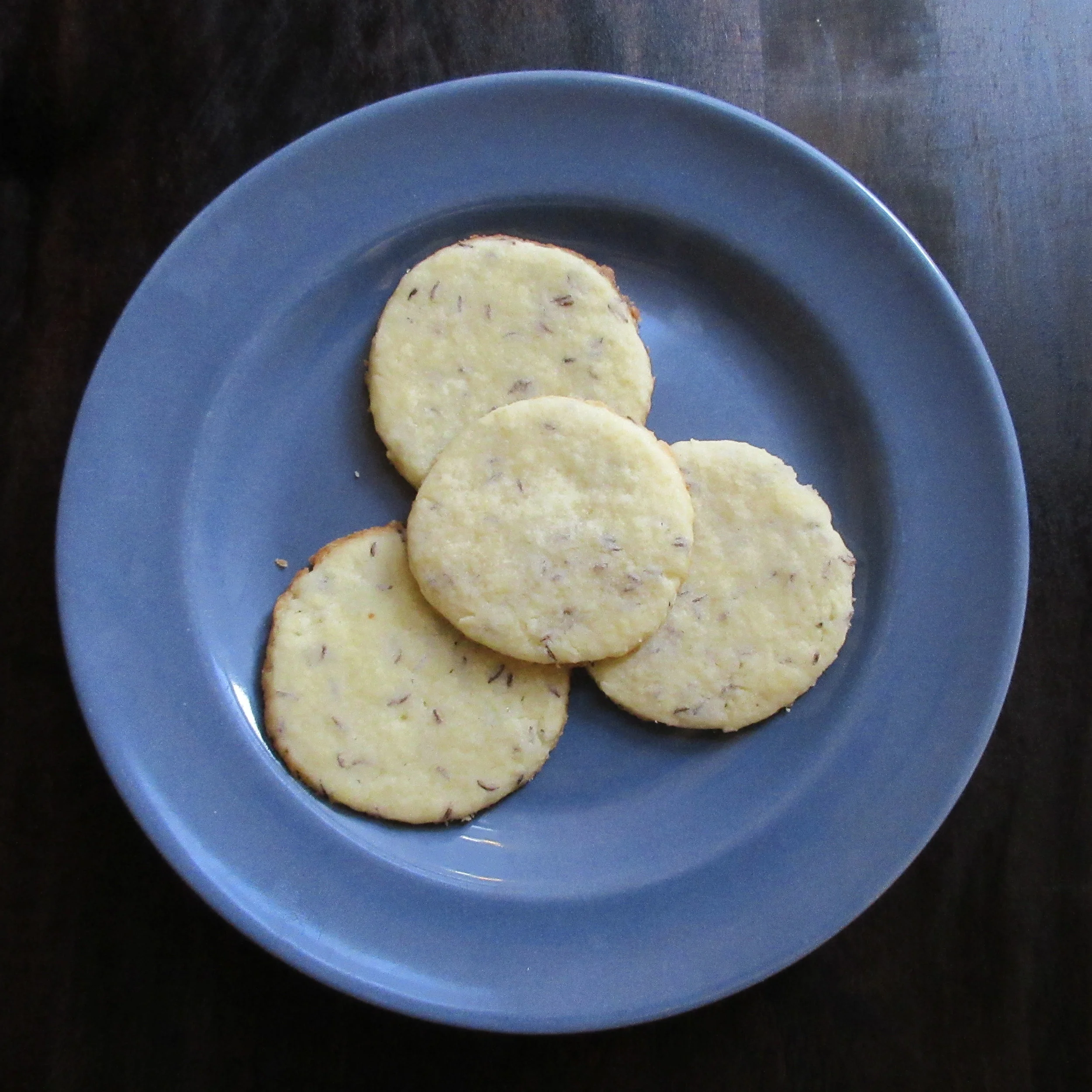
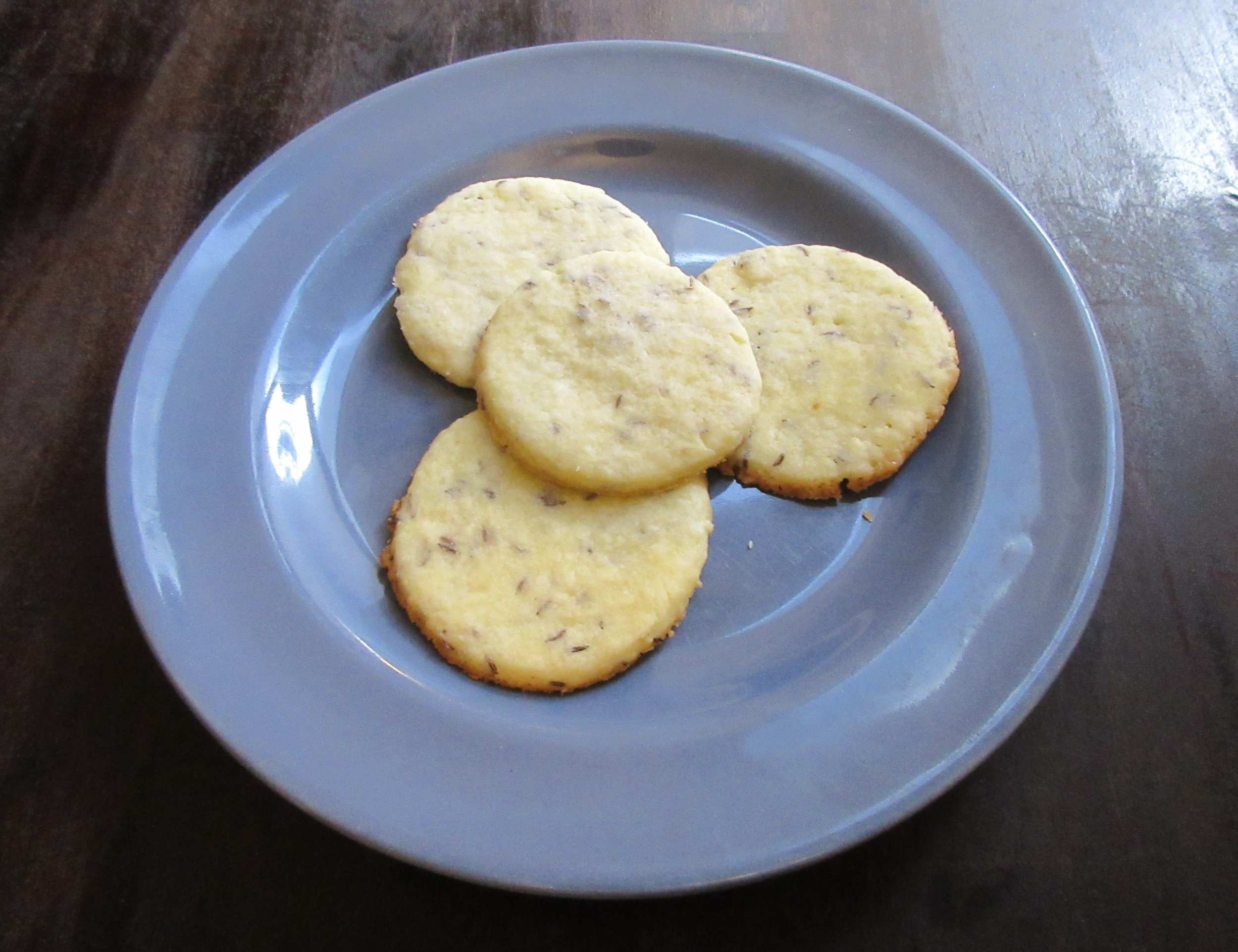
Shrewsbury Cake is one of first recipes that I tested out for the Open Hearth Cooking Classes that I'm teaching at Nelles Manor in Grimsby, Ontario in September. They are crisp & buttery, and the flavour of caraway seeds balances out the sweetness of these cookies. Shrewsbury Cake is from the first English-language cookbook that was both compiled & printed in Canada. The Frugal Housewife's Manual was published in Toronto in 1840, but the cookbook author is credited as “A. B. of Grimsby”. I love this connection to the Nelles family, since they likely would have known the mysterious A. B. who wrote the book.
You'll find this recipe in:
The Frugal Housewife's Manual
By “A.B. of Grimsby”
Toronto, 1840
Original Recipe:
10. Shrewsbury Cake.
Mix half a pound of butter well beaten, and the same weight of flour, one egg, six ounces of sifted loaf sugar, and half an ounce of carraway seeds; form these into a paste, roll them thin, and cut them out. Bake on tin, in a moderately heated oven.


My Recipe:
1 cup (½ lb) softened butter
¾ cup white sugar – 170 g
1 ½ cups white flour – 225 g
1 egg
3 tbsp caraway seeds
1) Cream the butter and sugar together, then incorporate the flour, egg and caraway seeds to form a dough. You may be thinking: “There isn't enough flour” or “This is WAY too much caraway”, but there's no need to worry.
2) Since this is a very wet and buttery dough, you'll need to use a lot of flour on the rolling pin & rolling surface when you roll it out. Roll the Shrewsbury Cakes thin, then bake in a 350F/175C oven for about 15 minutes, until they are slightly golden on the bottom.
This recipe makes about 3 dozen 2 inch/5 cm cookies.

These Shrewsbury Cakes are one of first recipes that I tested out for the Open Hearth Cooking Classes that I'm teaching at Nelles Manor in Grimsby, Ontario on September 9th (Grimsby is close to Niagara Falls).
Open hearths are like people – they've all got their own idiosyncrasies - so I thought it would be wise to spend some time getting acquainted with the 230 year-old hearth in the Nelles Manor kitchen before teaching the cooking workshop. Open hearth cookery is much more exciting than using my regular old oven, anyway. Check out these photos of the Shrewsbury Cakes on the griddle!


My aim for this workshop is to prepare some seasonal autumn recipes that will highlight a variety of open hearth cooking techniques, one of those being using a griddle over the fire. I selected this recipe and another from the same cookbook to test out on the griddle, one of which we'd make at the workshop and the other would be destined for my blog.
Shrewsbury Cakes are so buttery that, even though the griddle at Nelles Manor is very well balanced, they tended to slide off the griddle! I actually lost one into the fire, but after that I was able to shepard them back onto the griddle when they slid. In the end, slipperiness was the deciding factor for which recipe we'd be making at the class.
There's a very good reason why I selected these two recipes: they are both from the first English-language cookbook that was both compiled & printed in Canada. The Frugal Housewife's Manual was published in Toronto in 1840, but the cookbook author is credited as “A. B. of Grimsby”. I love this connection to the Nelles family, since they likely would have known this mysterious A. B.. As far as I know, the author's identity is still unknown, but the folks at Nelles Manor seemed intrigued by the puzzle. Perhaps we'll have a short list of possible authors soon.
Read the Cookbook:

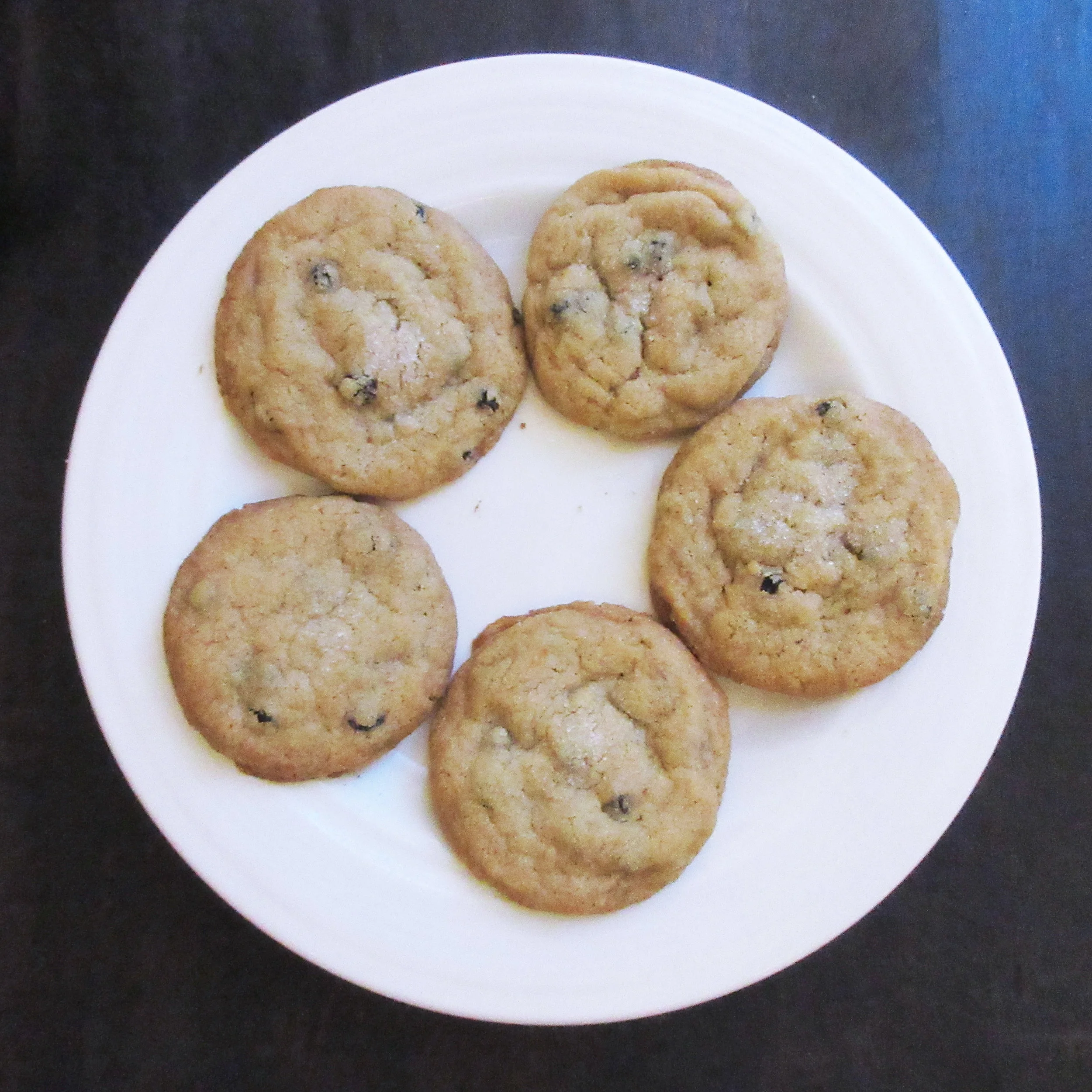
Queen's Drops
Queen's Drops are a basic sugar & spice cookie with a hint of dried currants. The recipe is found in The Cook Not Mad from 1831, which has the distinction of being the first English-language cookbook to be published in Canada! They are delicious with both white or brown sugar, but I prefer the extra flavour that comes with using brown. The dried currants provide little intense sweet flavour pops, and our recipe suggests using "any agreeable spice", so feel free to customize and add your favourite baking spices.

You'll find this recipe in:
The Cook Not Mad
Kingston, Ontario
1831
Original Recipe:
No. 162. Queen's Drops
One pound of sifted sugar, one pound flour, one of butter, quarter of a pound of currants, any agreeable spice, put drops on a tin about as large as a dollar, sift on sugar, to be baked quickly.


My Recipe:
2 cups softened butter (1 lb) - 450 g
2 cups sugar (I used brown) – 450 g
2 ¾ cups flour – 450 g
¾ cup dried currants – 225 g
white sugar to sift on top
Spices:
I've used 2 tsp cinnamon & 1 tsp nutmeg in the past and loved it!
This time, I tried this very delicious spice combo:
1 ½ tsp cinnamon
1 tsp ginger
1 tsp nutmeg
a few shakes of allspice
1) Preheat your oven to 350F/175C. Cream the sugar and softened butter together, then add in the currants & spice, and once mixed, stir in the flour.
2) Form the dough into balls and place onto cookie sheets. The cookies will spread a fair bit while they're being baked, so be sure to give them space. For kicks, I followed the historic recipe's direction to make these balls "about as large as a dollar". Our Canadian $1 coin, the "Loonie", is about 2.5 cm/1" in diameter, so that's what I aimed for. I ended up with nicely sized cookies!
3) Before you pop your cookie sheet into the oven, sprinkle some white sugar on top of each cookie. Bake for 15-20 minutes, until the cookies are golden on the bottom and will move easily when shifted with a lifter. This recipe makes about 5 – 6 dozen cookies.

The "LOONIE: if my childhood memory is accurate, the name came from a) the obvious fact that the bird depicted is a Loon, but also b) that many people thought replacing the dollar bill with a coin was ludicrous!
Queen's Drops is my favourite historic cookie, so of course I've picked Queen's Drops as the inaugural cookie recipe on my blog! I've brought the recipe with me as I moved from historic house museum to historic house museum. The first time I made this recipe in my new historic kitchen, word spread to the Curator's office. Our Curator would never try the food, but would venture into the kitchen sometimes to critique how we were displaying the dishes. This day, when he came to kitchen, he said: "I hear you're making Queen's Drops" and after he ate one, gave the cookie a glowing review of being "Not bad".
Queen's Drops are found in The Cook Not Mad (possibly the best cookbook title ever), and the author of this cookbook remains anonymous to this day. It was first published in 1830 in Watertown, NY, and was reprinted the following year as well by the same publisher. The Cook Not Mad was also published across the border in 1831 in Kingston, Upper Canada (Ontario), giving it the distinction of being the first English-language cookbook to be published in Canada! The content in the Canadian version of The Cook Not Mad is identical to the original, with only the word "American" changed to "Canadian".
Queen's Drops are a basic sugar & spice cookie with a hint of dried currants. They are delicious with both white or brown sugar, but I prefer the extra flavour that comes with using brown. The dried currants provide little intense sweet flavour pops, and our recipe suggests using "any agreeable spice", so feel free to customize and add your favourite baking spices.
If you're wondering why Queen's Drops feature dried currants instead of chocolate chips, that's because our Queen's Drops recipe was published in the 1830s, and Chocolate Chip Cookies didn't come into being until the 1930s! In the 1830s, if you told someone that you were serving "Chocolate", they would probably automatically know that you were serving a hot chocolate beverage. The origin story of the Chocolate Chip Cookie is an interesting one, so I'm sure I'll do a post about it someday.

Read the Cookbook:
1931 Canadian The Cook Not Mad:

A more readable scan of the 1831 American The Cook Not Mad:
