
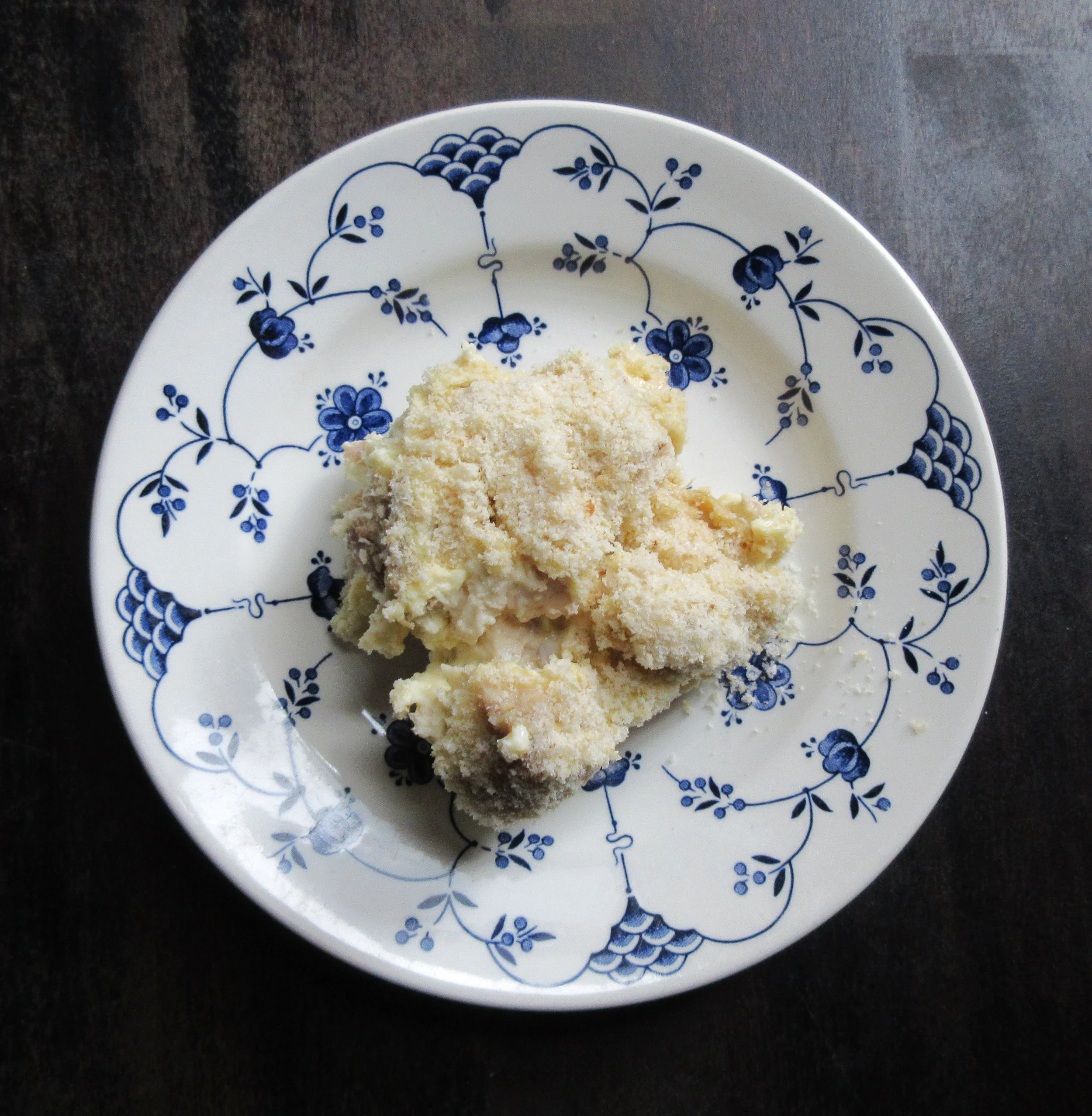
Chicken Terrapin
Chicken Terrapin, from the 1903 Good Housekeeping Everyday Cook Book, is a creamy and decadent casserole dish, perfect for using up leftover chicken. After selecting this recipe, my research began with the question "Why is this dish called Chicken TERRAPIN?" and quickly descended down a rabbit hole. Literally. Before beginning to piece together what I learned about Terrapin recipes, I had pulled my childhood copy of Alice in Wonderland off my bookshelf!
The chicken meat in this recipe is meant to take the place of Terrapin Turtle meat and I'll be delving into how one prepares Terrapin meat, the popularity of Turtle recipes, specialized Turtle Soup Tureens and the replacement of dishes featuring turtle meat with Mock Turtle recipes. I'll also explain the appearance of the Mock Turtle character in Alice in Wonderland, and why he is so melancholy in the story.

You'll find this recipe in:
Good Housekeeping Everyday Cook Book
New York, 1903
By: Isabel Gordon Curtis, Associate Editor of Good Housekeeping
Historic Recipe:
Chicken Terrapin
Make a sauce with two level tablespoons of butter, two of flour and one cup of cream, or half cream and chicken stock. Season with salt and pepper. When boiling hot remove from the fire, add two well-beaten eggs and one pint of chopped cold chicken. Butter individual dishes or one baking dish, pour in the chicken mixture and place the dishes in a pan of hot water. Spread crumbs on the top and bake in a moderate oven for twenty minutes. Serve at once.
My Recipe:
2 cups chicken meat, chopped - 350 g
2 tbsp butter
2 tbsp flour
1 cup (236 mL) cream, or 1/2 cup cream & 1/2 cup chicken stock
2 eggs
breadcrumbs
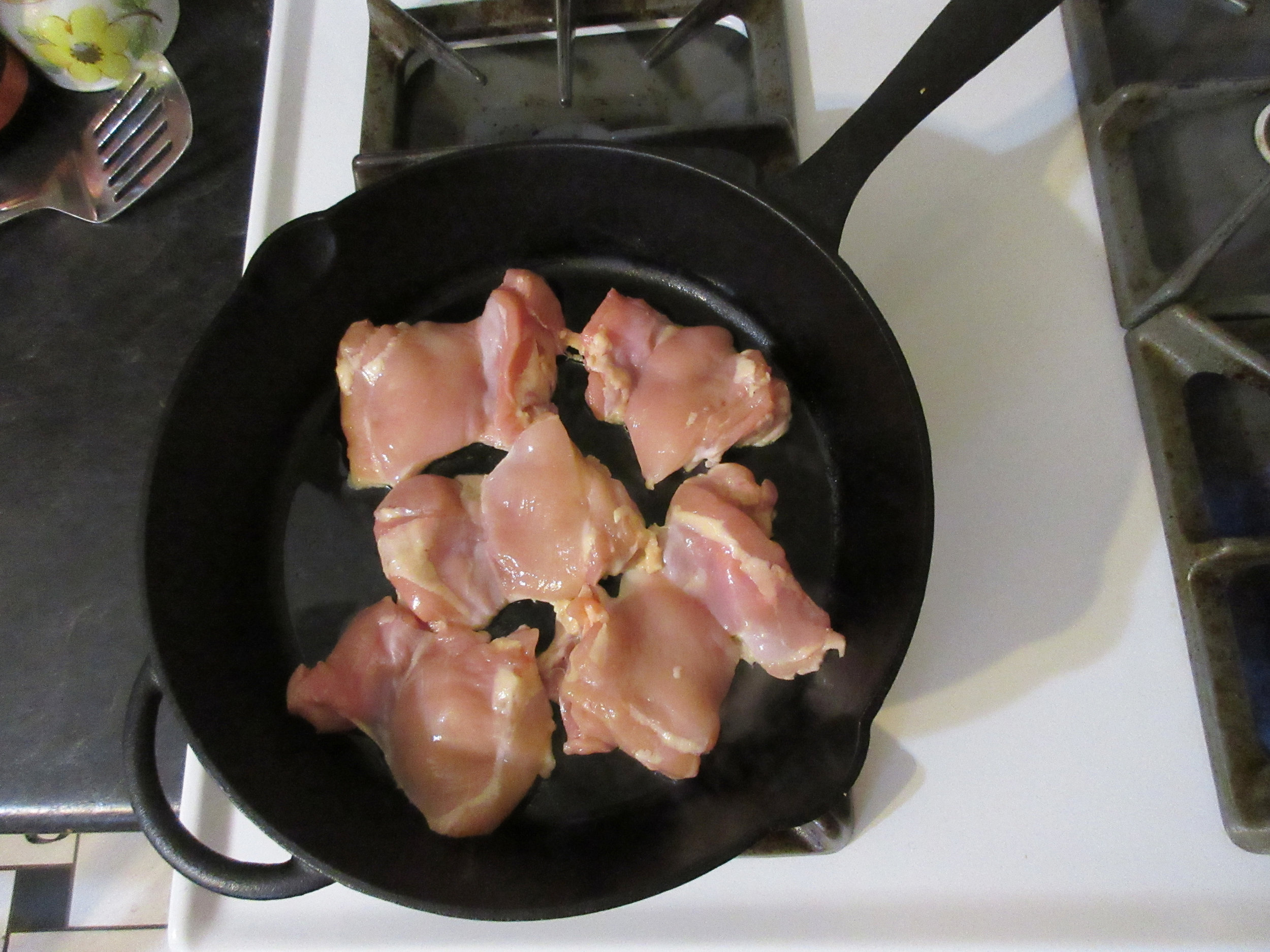
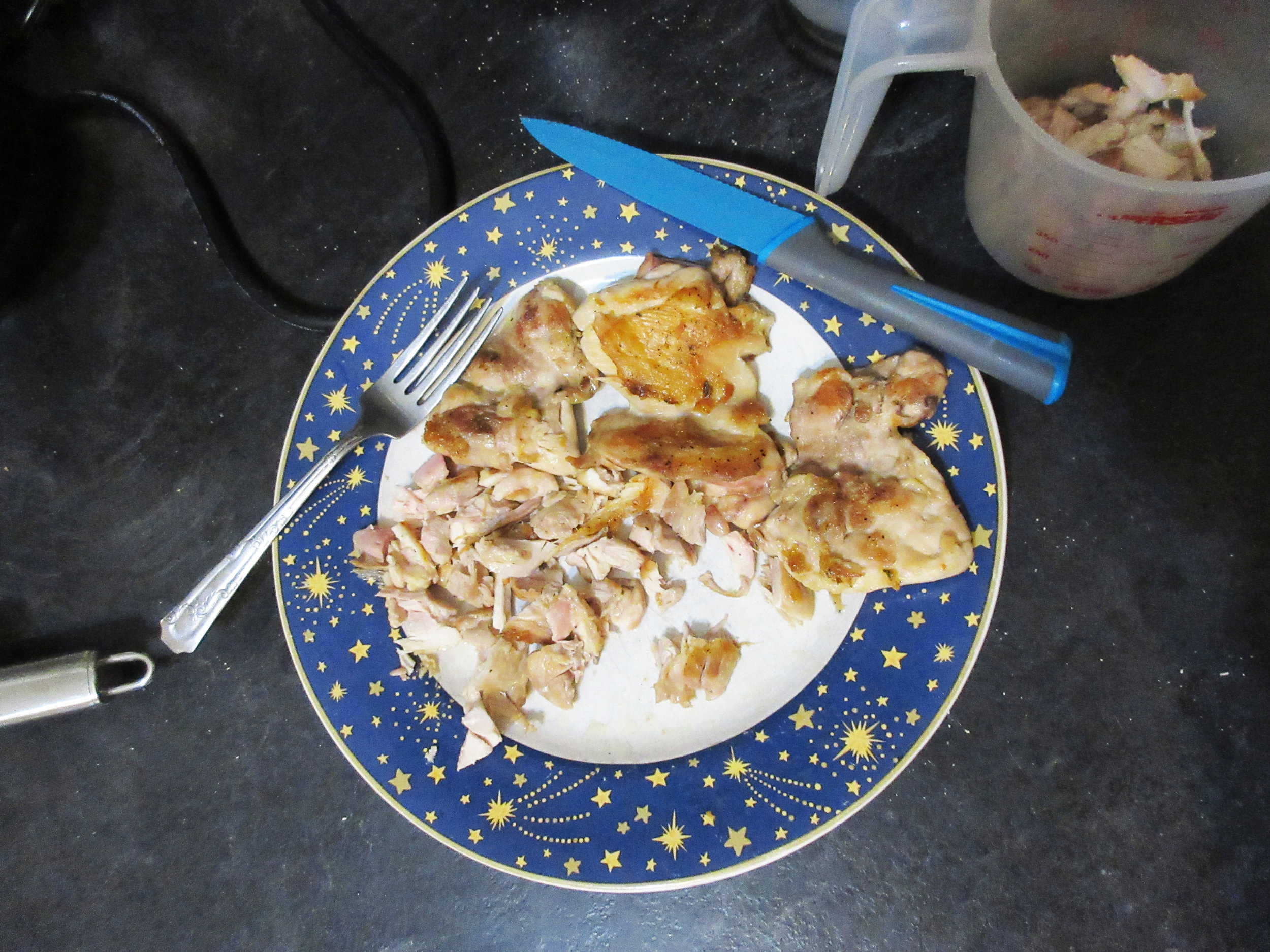
If you don't already have leftover chicken, begin by cooking and chopping the chicken meat. I fried chicken thighs in a frying pan.
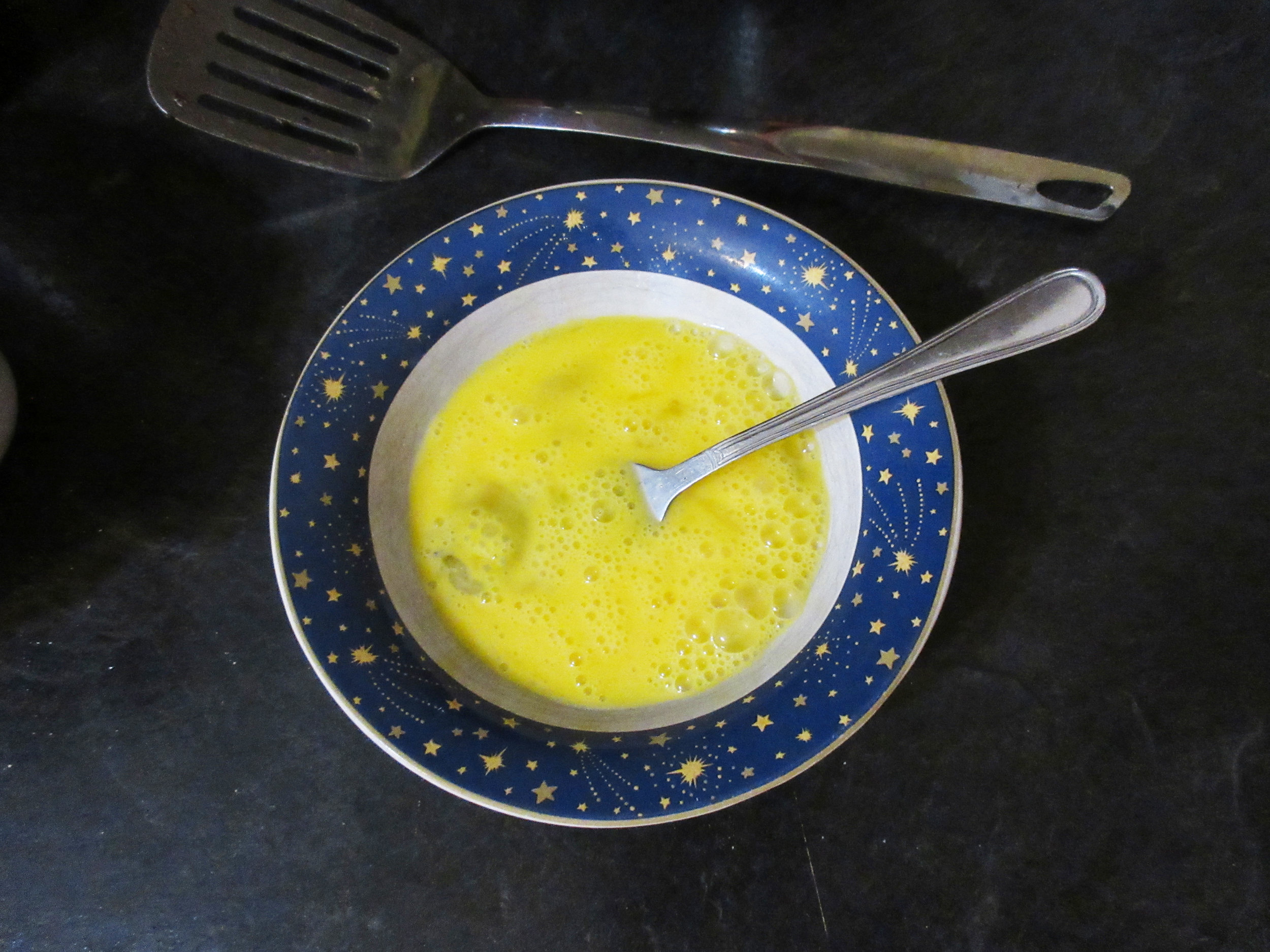
Preheat oven to 350 F/175 C. This recipe recommends either using one large casserole dish or individual ramekins. Grease your baking dish(es) and select a large baking dish or pan for your water bath that will fit the casserole dish or ramekins. Heat water in a kettle. Beat two eggs in a bowl.
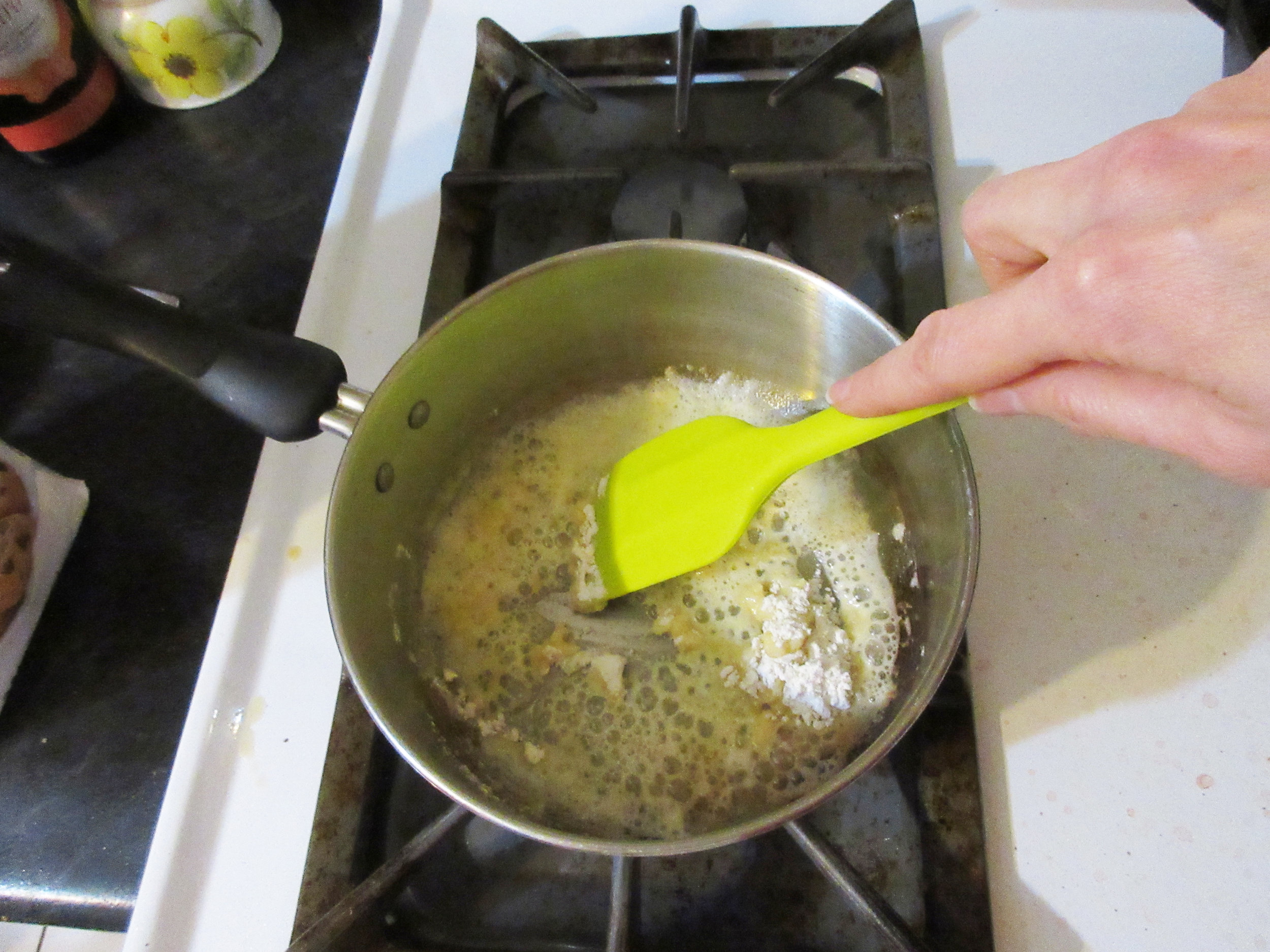
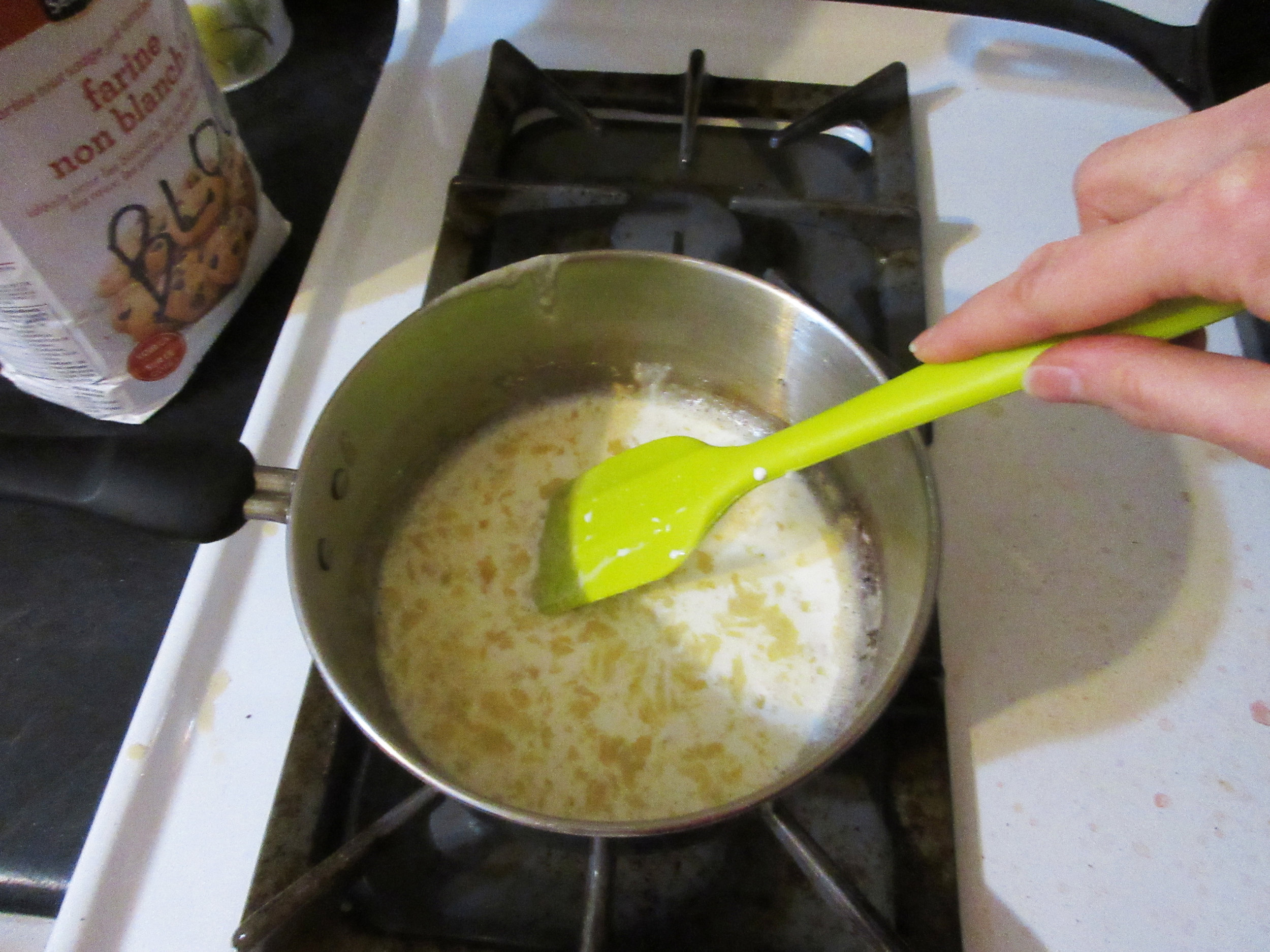
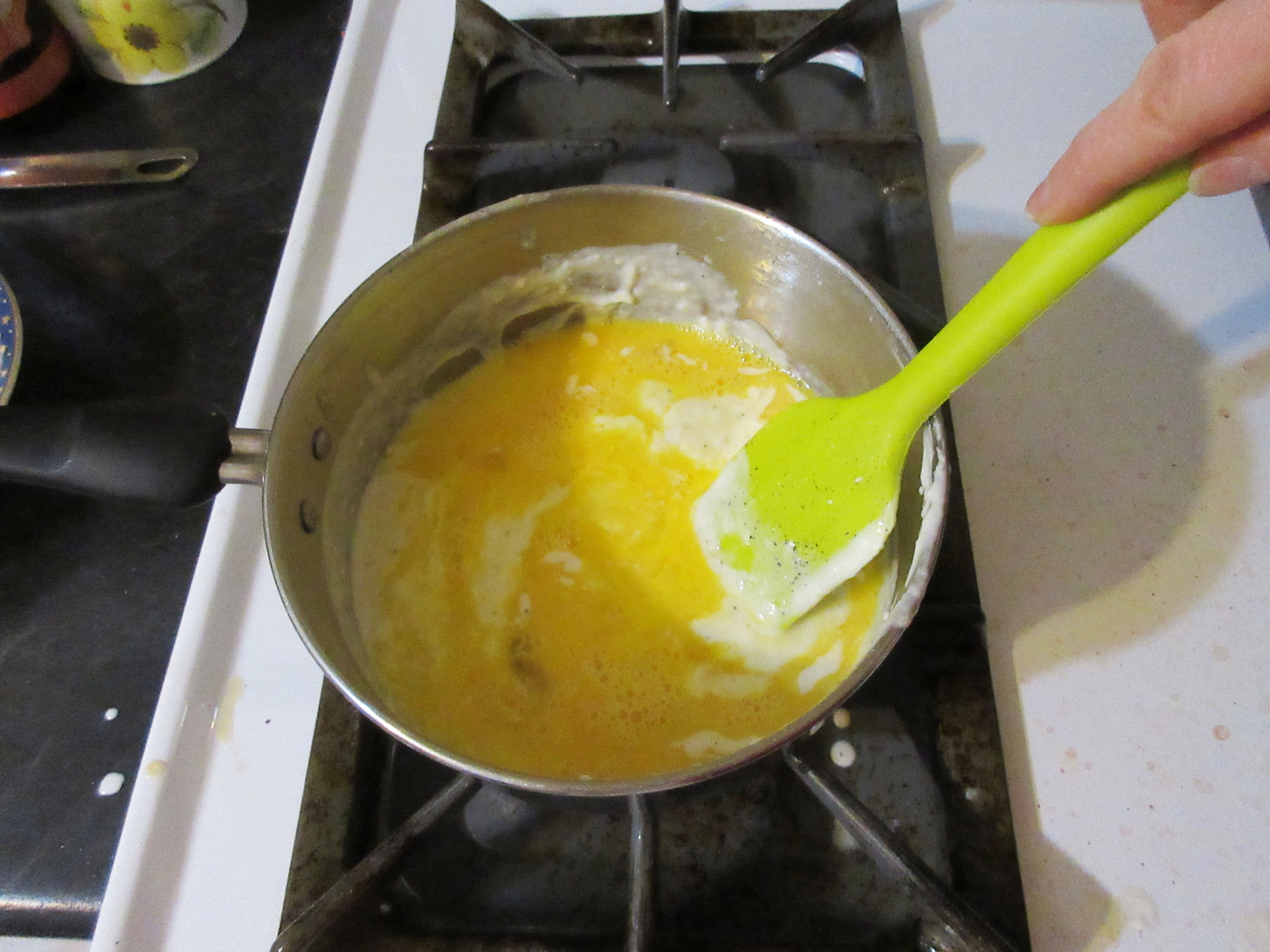
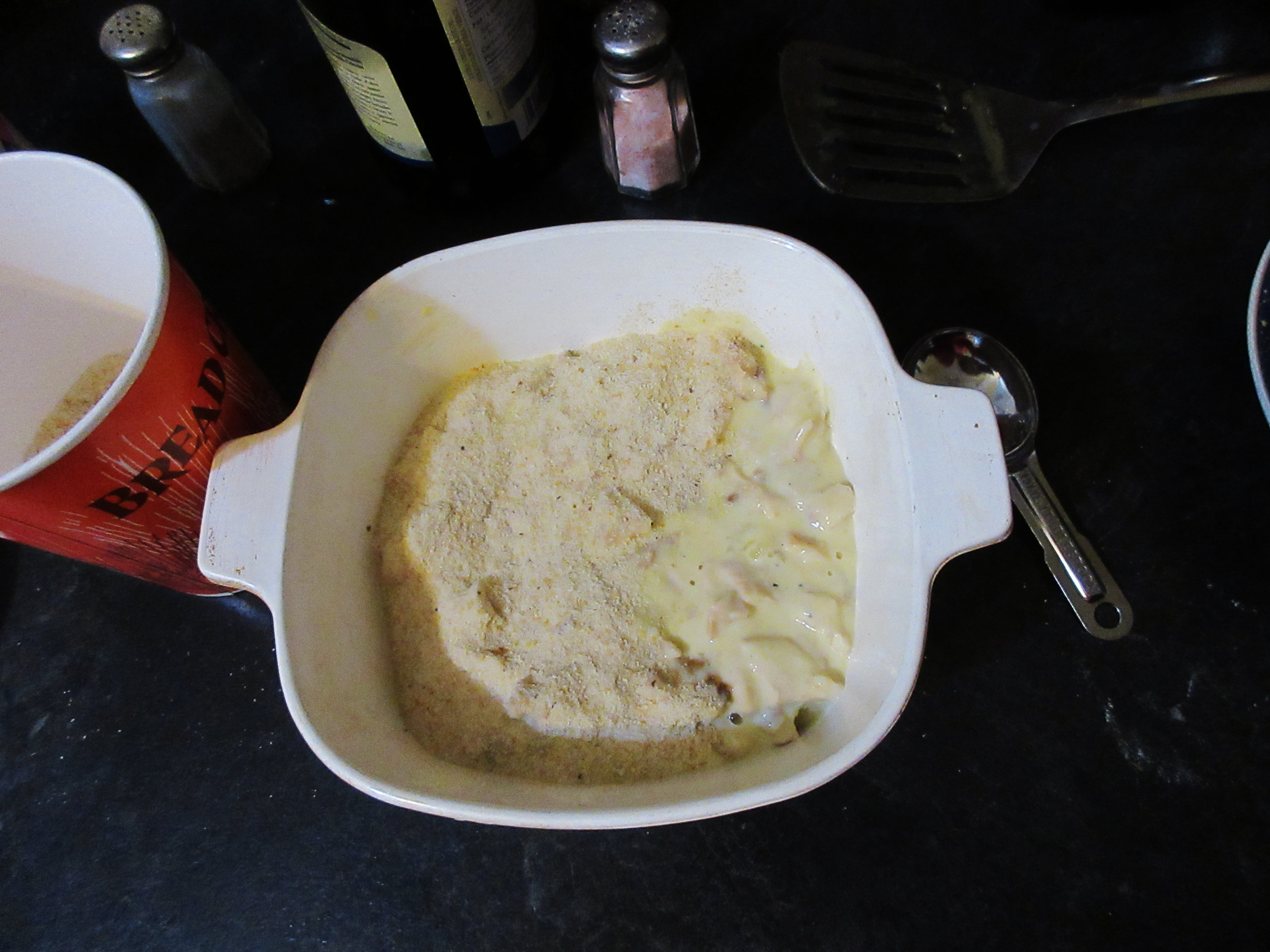
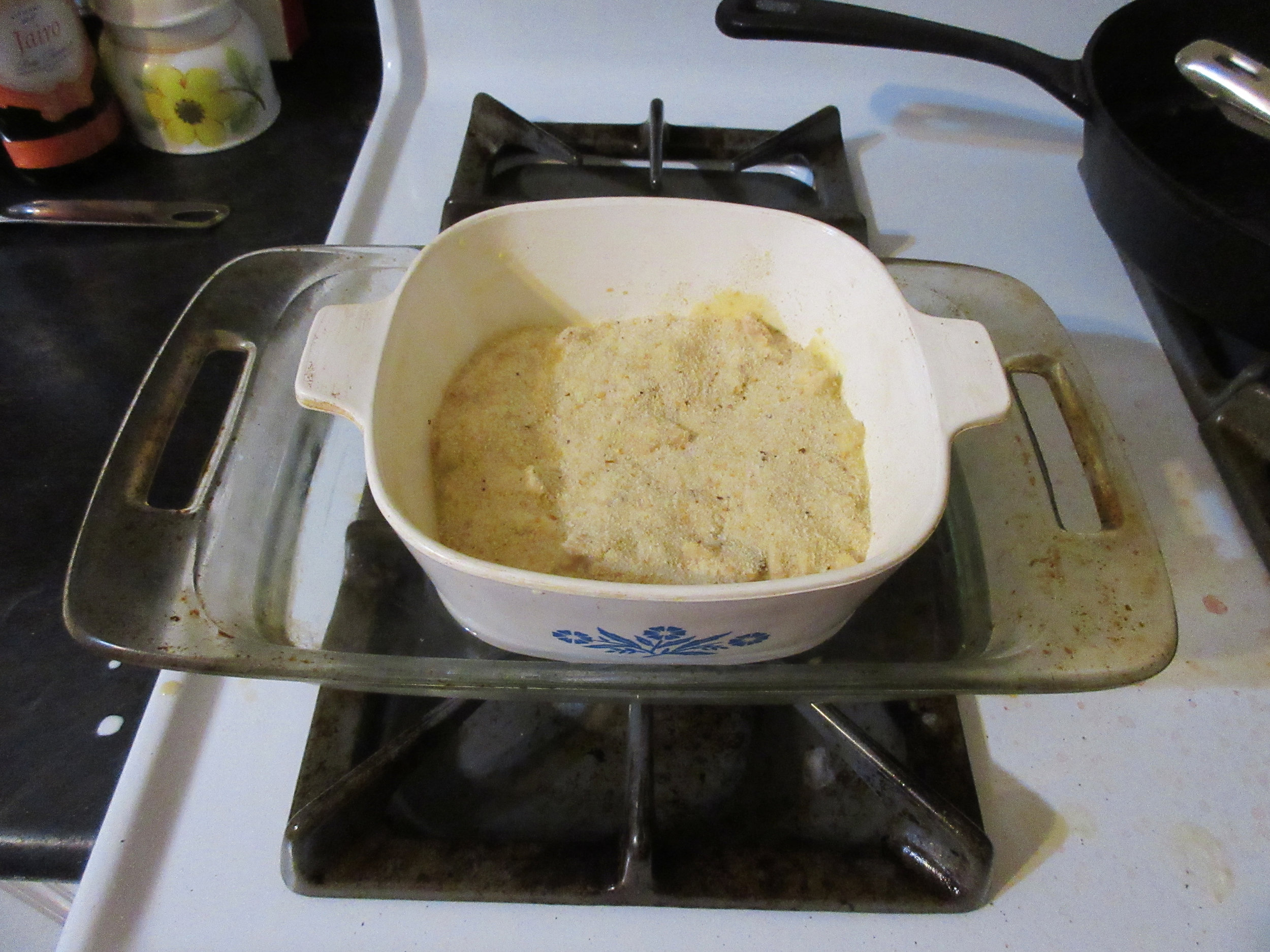
To make the sauce, melt the butter in a saucepan, add the flour while stirring constantly, then gradually stir in the cream or cream and chicken stock. Stir until bubbling, then remove from heat. Stir in the eggs and chopped chicken. Pour the chicken mixture into your baking dish(es) and spoon breadcrumbs on top.
Place the casserole dish or ramekins in the water bath pan and pour about 1 inch (2.5 cm) of hot water from the kettle into the pan surrounding your baking dish(es). Ideally, you want to fill the water bath to cover roughly the bottom half of the chicken mixture in your casserole or ramekins. The water bath will prevent the eggs from curdling and will also prevent browning.
Bake for about 20 minutes. I lost track of time, so my Chicken Terrapin was cooked for about half an hour, and it turned out just fine.

After selecting this recipe, my research began with the question "Why is this dish called Chicken TERRAPIN?" and quickly descended down a rabbit hole. Literally. Before beginning to pull together what I learned about Terrapin dishes, I had pulled my childhood copy of Alice in Wonderland off my bookshelf!
The chicken meat in this recipe is meant to take the place of Terrapin Turtle meat. Turtle recipes were especially popular from the mid nineteenth-century to the early twentieth-century and partially fell out of popularity because the turtle population couldn't support the demand due to over-hunting and lost habitat.
Turtle recipes were also replaced with mock turtle recipes such as Chicken Terrapin because turtles were expensive, tricky to source and very difficult to cook! In the 1851 Miss Leslie's Directions for Cookery , Eliza Leslie writes at the end of her Mock Turtle Soup recipe that "We omit a receipt for real turtle soup, as when that expensive, complicated, and difficult dish is prepared in a private family, it is advisable to hire a first-rate cook for the express purpose. An easy way is to get it ready-made, in any quantity you please, from a turtle-soup house."
How does one prepare Terrapins? Eliza Leslie tells us in the same cookbook. She instructs us to put them alive in a pot of boiling water "and let them remain in until quite dead". The cook would then remove them from the water to pull off the skin and toenails, then boil them again in a pot of salted water until "the flesh becomes quite tender so that you can pinch it off". Once out of the water, the cook should "take them off the shell, remove the sand-bag, and the gall, which you must be careful not to break, as it will make the terrapin so bitter as to be uneatable."
Miss Leslie suggests seasoning the chopped terrapin meat with cayenne pepper, nutmeg and mace, then continues on to suggest serving the terrapin with sauce made with butter, flour, Madeira wine and two beaten eggs. Sound familiar?
300 ways to cook and serve shellfish : terrapin, green turtle, snapper, oysters, oyster crabs, lobsters, clams, crabs and shrimp , 1901, is a source closer to the 1903 publishing date of the Good Housekeeping Everyday Cookbook, and author H. Franklyn Hall gets quite specific about preparing all the shellfish listed in the title. Terrapins have their own chapter in this cookbook.
If boiling terrapins alive makes you feel squeamish, you'll be relieved to find out that Hall suggests killing them in advance. In fact, he advises that cooks leave the slaughtered terrapins "in clear running water from twelve to thirty-six hours" before cooking.
"Wash them in luke-warm water, then dip them in scalding hot water several times; place them one at a time on their back on a table and take a small clean towel and quickly but gently, so as not to tear the flesh, rub all of the outer skin from the head, neck, legs and tail. After all are prepared in the above manner, place them in a pot of boiling water and boil steadily until the legs can be easily separated from the body without any effort. It usually takes from thirty to seventy-five minutes to boil terrapin, sometimes a little longer it all depends upon the age and condition of the terrapin."
Our Chicken Terrapin recipe is similar to the Stewed Terrapin a la Virginia recipe in 300 ways to cook and serve shellfish, and it is suggested that stewed terrapin dishes should use "salt water or diamond back terrapin only...providing they are fat". Stewed Terrapin a la Virginia features a sauce made of butter, broken crackers, cream and chopped parsley. Hall suggests serving the Stewed Terrapin in individual silver tureens or fine china dessert plates. Turtle recipes were popular enough that specific turtle-inspired tureens were created for those who could afford that bit of whimsy. Have a look below at a couple of gorgeous turtle tureens, as well as a photograph of a diamondback terrapin before meeting its end in somebody’s kitchen.


Left to right: Diamondback Terrapin and Turtle Soup Tureens from the Collections of Colonial Williamsburg (c. 1815) and Cooper Hewitt, Smithsonian Design Museum (c. 1880-90)
Then the Queen left off, quite out of breath, and said to Alice, "Have you seen the Mock Turtle yet?"
"No," said Alice, "I don't even know what a Mock Turtle is."
"It's the thing Mock Turtle Soup is made from," said the Queen.
"I never saw one or heard of one," said Alice.
"Come on then," said the Queen, "and he shall tell you his story."
I've heard of Mock Turtle Soup since i was a girl, thanks to the Mock Turtle character in Alice in Wonderland, but I never was fully in on the joke until I started my career in museums. I clearly remember the shock I felt the first time I flipped through a historic cookbook and came across a recipe for Mock Turtle Soup, and suddenly this character made much more sense to me!
Lewis Carroll doesn't actually physically describe the Mock Turtle in the book, other than the fact that he has flappers and is constantly sobbing because "Once...I was a real Turtle." Illustrations depict the Mock Turtle with the body of a sea turtle, hooved hind legs and the head & tail of a calf.

Alice in Wonderland illustration by John Tenniel (1865), depicting the Gryphon, Alice and the Mock Turtle
Let's return to Miss Leslie's Directions for Cookery for a sample Mock Turtle Soup recipe, shall we? I can't imagine how complicated making Turtle soup is, if Mock Turtle Soup is supposed to be simpler. Miss Leslie begins the recipe by stating that "This soup will require eight hours to prepare."
The cook begins with a large calf's head, which she will have prepared by cleaning and soaking. The calf's head, bacon, a knuckle of veal and a ham hock are covered in water in a large pot. The meats are boiled slowly for about four hours, making sure to skim the foam off the top regularly.
Then root vegetables and herbs are added and the pot is boiled for three more hours: "As soon as no more scum rises, put in six potatoes, and three turnips, all sliced thin; with equal proportions of parsley, sweet marjoram, and sweet basil, chopped fine; and cayenne pepper to your taste. The ham will salt it sufficiently."
At hour seven, the cook is instructed to make veal meatballs, which she rolls in flour and fries in butter. After the meatballs are completed, she removes all the meat from the pot and "Cuts the meat from the head in small pieces, and return it to the soup", along with the meatballs. When the soup is close to completion, stir in some Madeira wine, the juice of a lemon and about a dozen egg balls "in the form and size of boy's marbles", made of hard boiled egg yolks held together with raw egg yolks. Bring to a boil again and serve in a soup tureen. What a marathon!
The Mock Turtle sighed deeply and began, in a voice sometimes choked with sobs, to sing this:
"Beautiful Soup, so rich and green,
Waiting in a hot tureen!
Who for such dainties would not stoop?
Soup of the evening, beautiful Soup!"
I remember that day about a decade ago when I was sitting in the museum office, flipping through reprints of Victorian cookbooks to find recipes to make with campers at our Day Camp. When I came across my first Mock Turtle Soup recipe, before reading it I thought that it would be very interesting to make with the campers, knowing that some of them would be familiar with Alice in Wonderland. Then I read the ingredients and how long it would take to prepare and that idea went out the window! How many crying children and complaining parents would be born out of cooking with a calf's head at Day Camp?
Once I understood the Mock Turtle Soup recipe, I understood the Mock Turtle's appearance and why he felt melancholy. With time, the Turtle transformed into a Mock Turtle with body parts of the livestock that came to replace turtle meat in soups. Between tears, the Mock Turtle regales Alice with songs, stories and dance about the better days when he was a Real Turtle - his studies in school, the glorious Lobster Quadrille and finally a ballad about a Beautiful Soup idealized in his memory. Maybe this character mirrors Lewis Caroll's sentiments about a better time when Turtle Soup was available in abundance, and had mostly been replaced by a soup that sadly and vaguely mirrored the original.

Read the Cookbook:


Pumpkin Soup
This Pumpkin Soup recipe comes from The Canadian Housewife's Manual of Cookery, which was compiled & published in my hometown of Hamilton, Ontario in 1861. It is hearty & flavourful, and I think the reason for this can be found in a one-word answer: butter. Expect a creamy robust soup with small chunks of pumpkin (or squash, if you can't find pumpkin). This soup is so rich that it might make a better side dish rather than the main component of your meal, but if you do try this recipe out, I highly recommend the historic recipe's suggestion of adding croutons made of fried bread to your bowl!

You'll find this recipe in:
The Canadian Housewife's Manual of Cookery
Henry & Elizabeth Richards
Hamilton, 1861
Historic Recipe:
Pumpkin Soup.
16. Is a favourite dish in many parts of France, especially with the juveniles; and when, in season, there is not a school, college, hospital, convent or monastery, where it is not made; a proof that it must be very wholesome. The Vegetable Marrow, the American Butter Squash, and the Mammoth Gourd, are good substitutes.
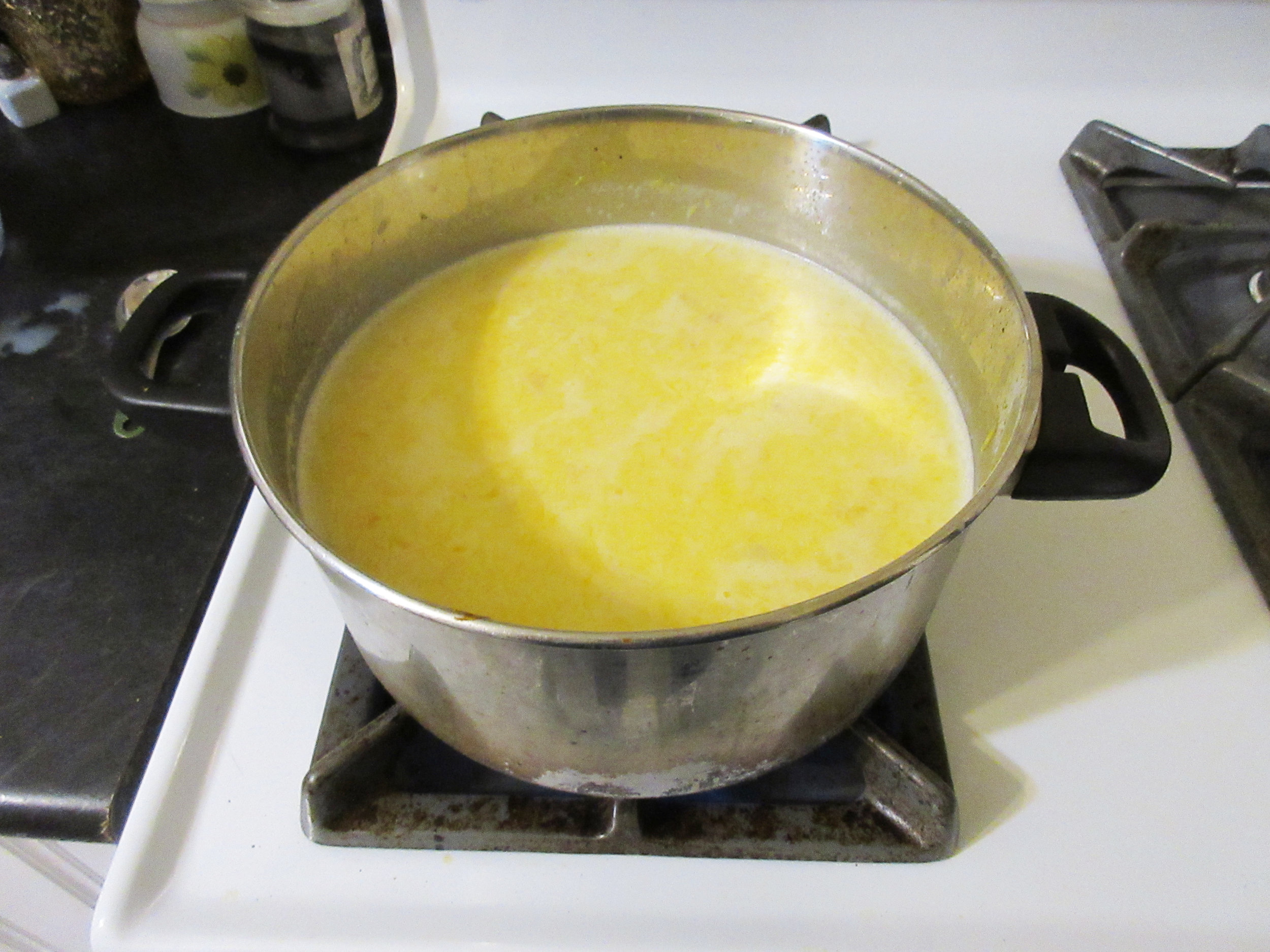
Cut about two pounds of the flesh of the pumpkin into large dice, put it into your pan, with three ounces of butter or fat; add two teaspoonfuls of salt, the same of sugar, a little pepper, and half a pint of water; set on the fire, and stew gently for twenty minutes. When in pulp, add two table-spoonfuls of flour, stir round, and moisten three pints of either milk, skim-milk, or water, boil ten minutes longer, and serve with fried or toasted bread, cut in dice.
☞This soup is on the list of meagre soups, and freely partaken by Catholics during Lent, the word meagre meaning, want of strength. But this soup, and many others in the same category, are well worth the attention of the middle class of this country, it only being meagre in name, and not in fact, as it possesses a large quantity of farnaceous matter; bread also being served with it.
My Recipe
2 lbs (907 g) pumpkin or squash – 8 cups when chopped
1/3 cup butter, oil or fat – 3 oz
2 tsp salt
2 tsp sugar
Dash of black pepper
1 cup water – 236 mL
2 tbsp flour
6 cups milk and water – 1.4L
(I like 3 cups milk & 3 cups water)
Optional:
Bread
Butter
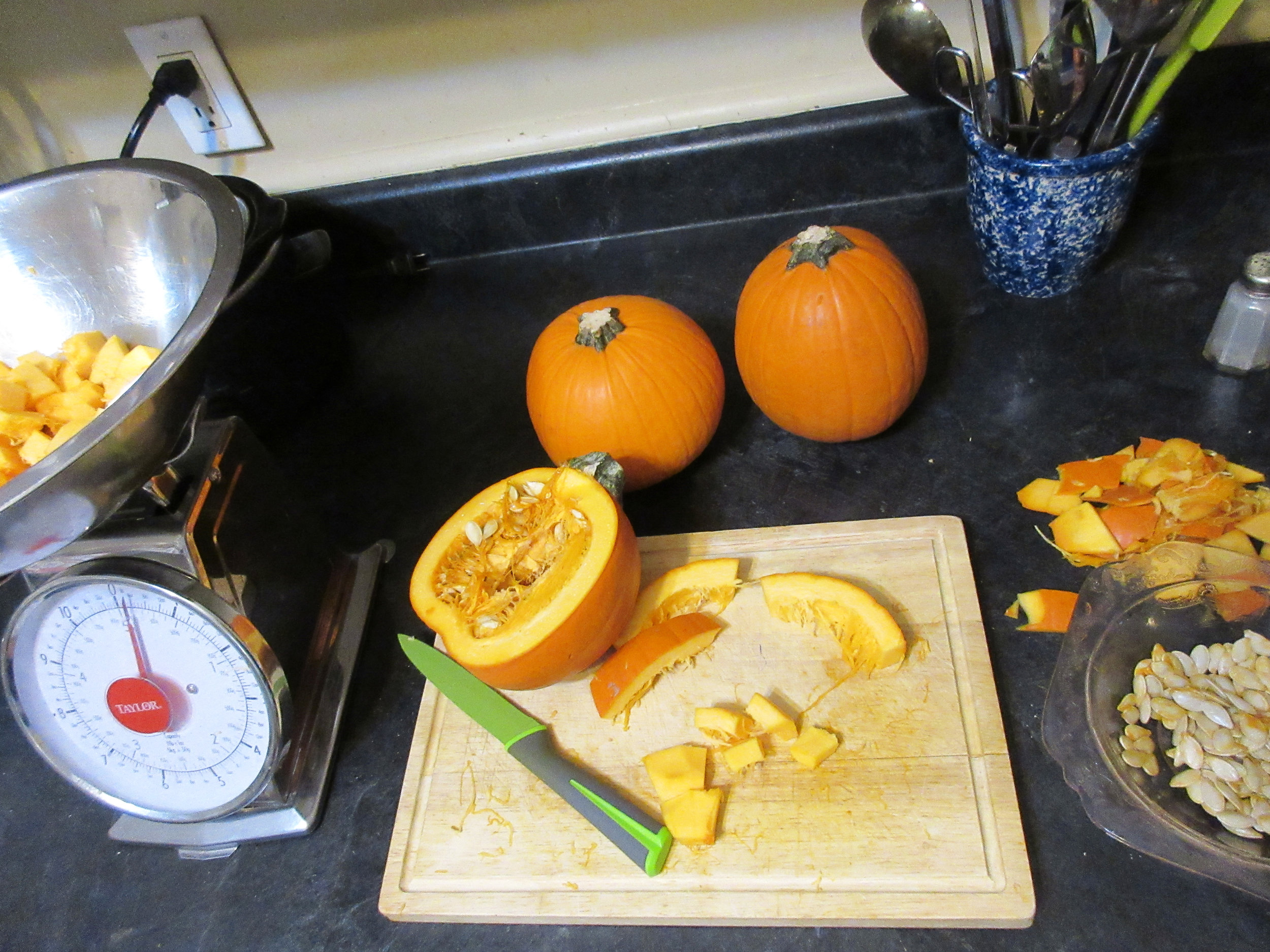
1) Peel, seed and chop the pumpkin or squash into small pieces. I've made this recipe with both pumpkin and butternut squash and both are delicious.
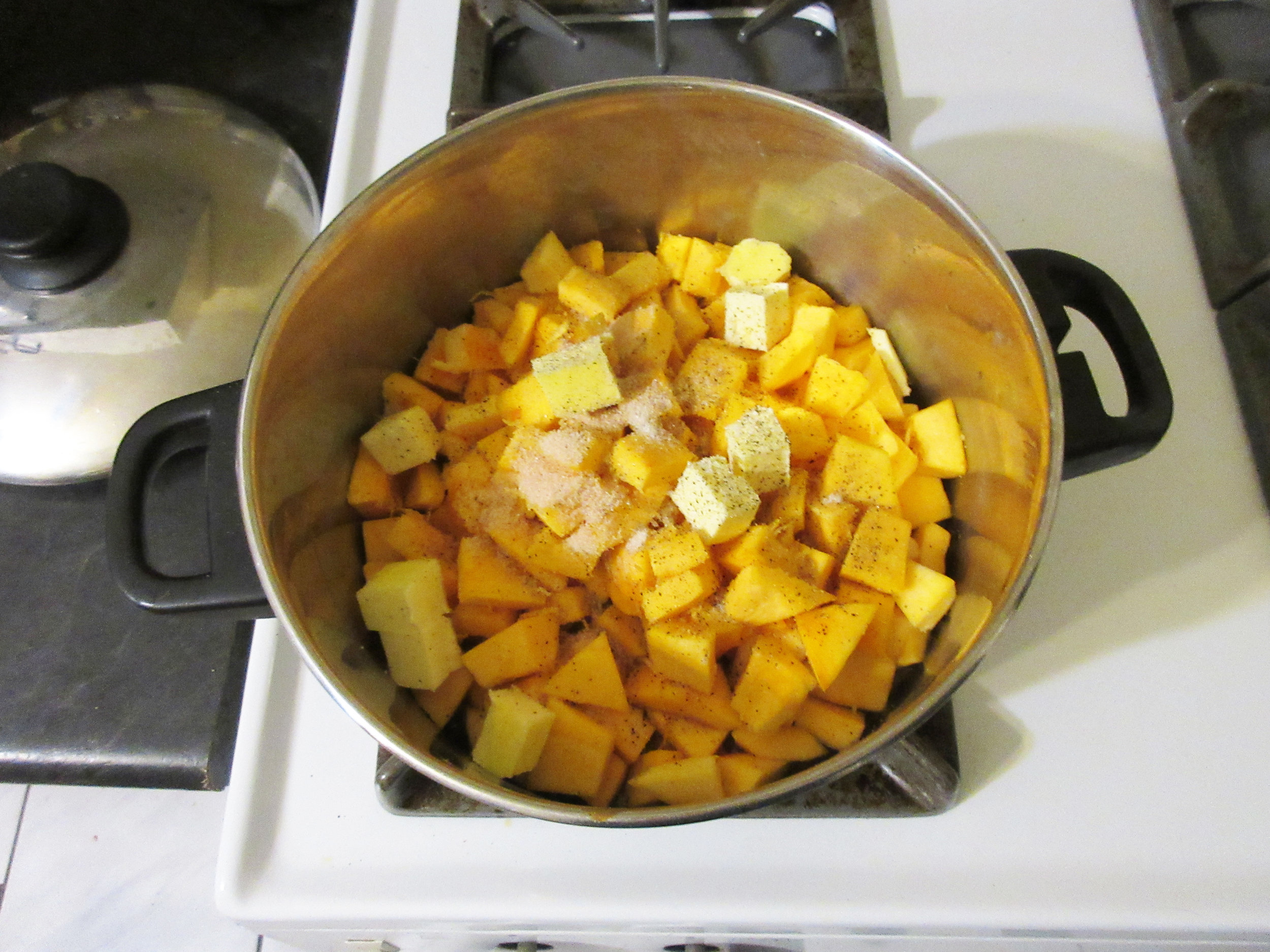
2) Put the chopped squash in a large soup pot with the butter, salt, sugar, pepper and 1 cup water. Put on the lid and simmer until soft and mushy, stirring often. 1 cup probably won't seem like enough water to you, at least it didn't to me, but I've made this recipe 5 times (once at my house and 4 times at cooking classes) and it's just the right amount.
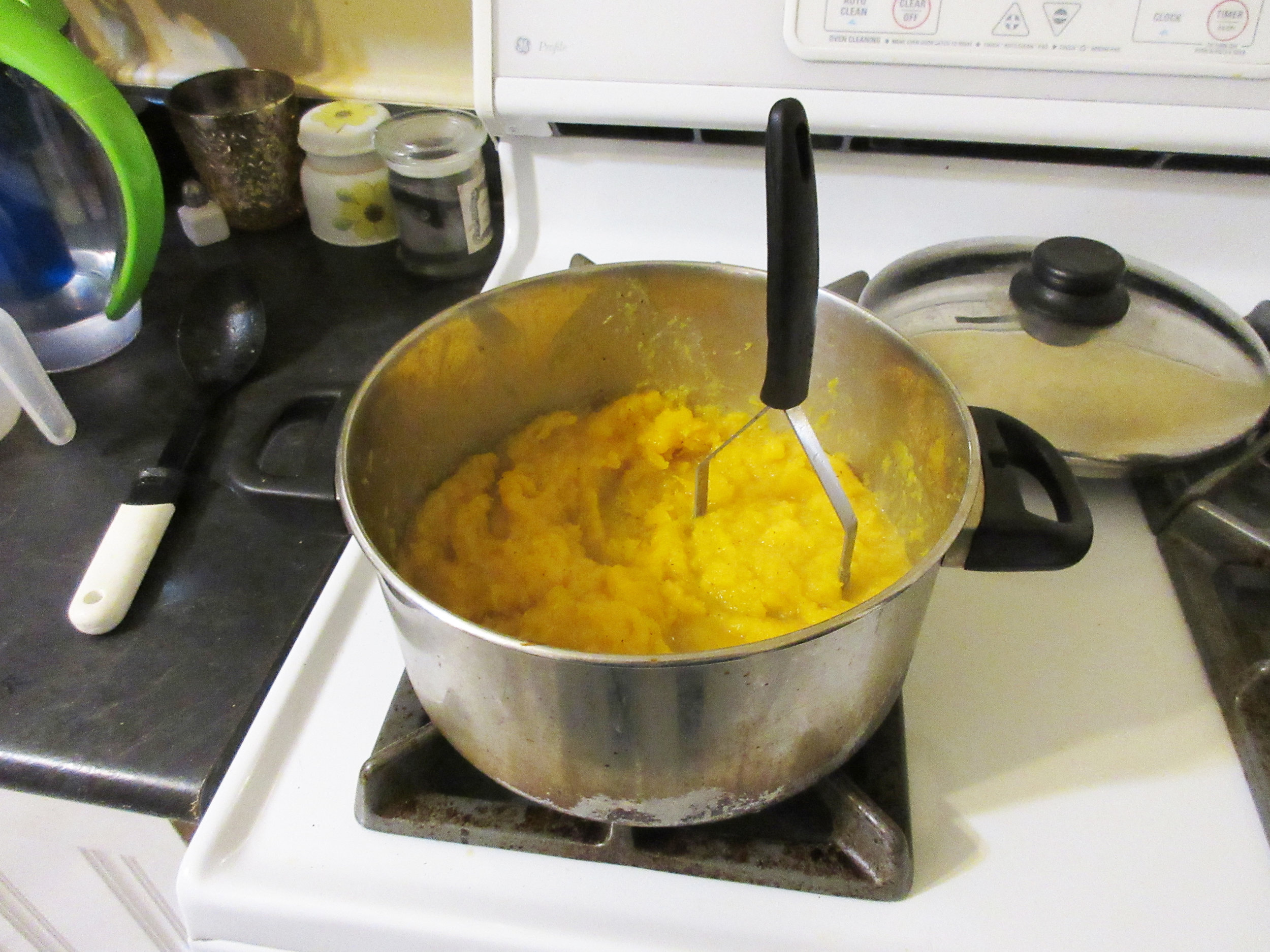
3) Once the squash is mushy, mash with a potato masher, then stir in the flour. Add the milk & water, mix well and reheat.
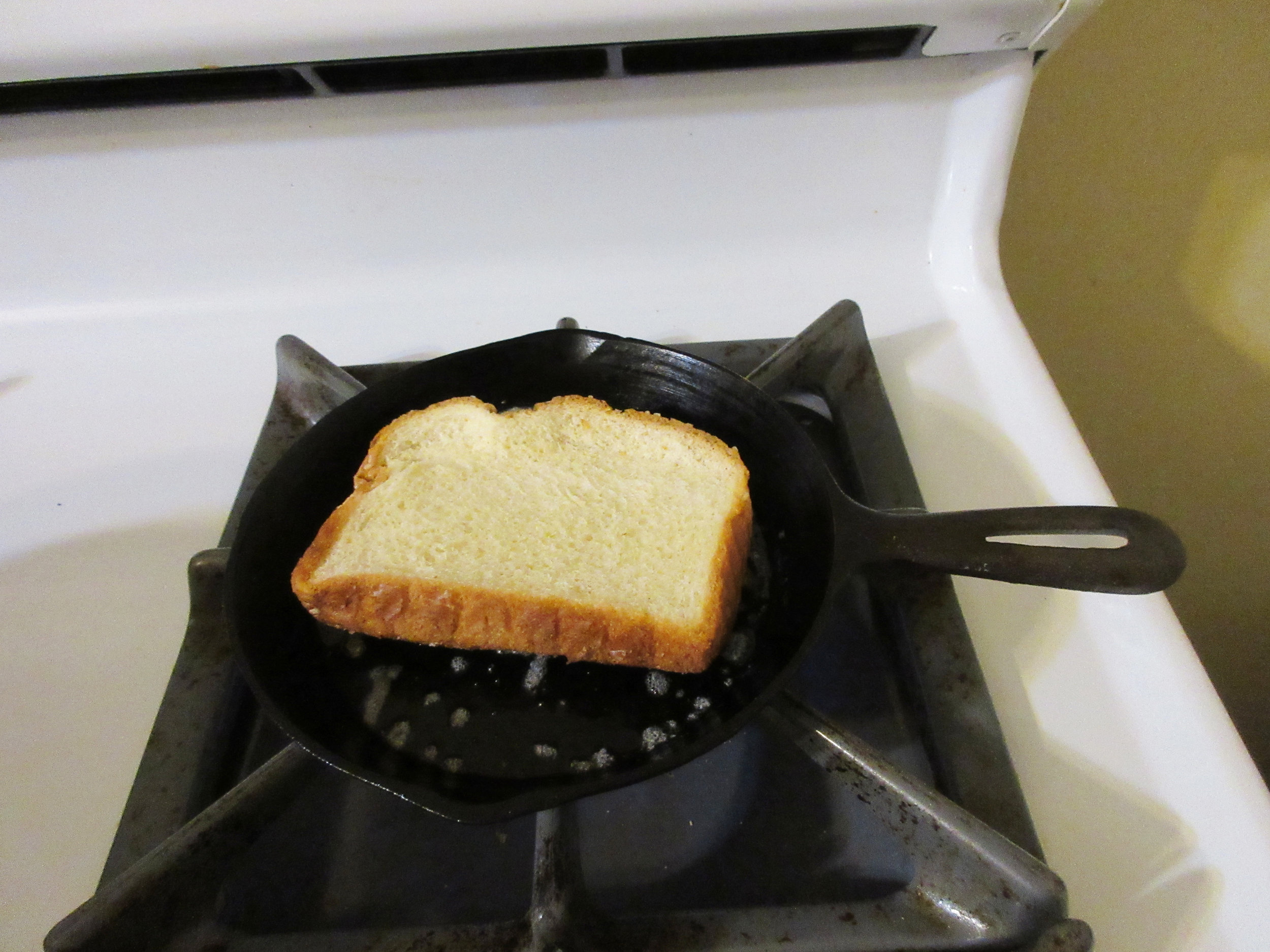
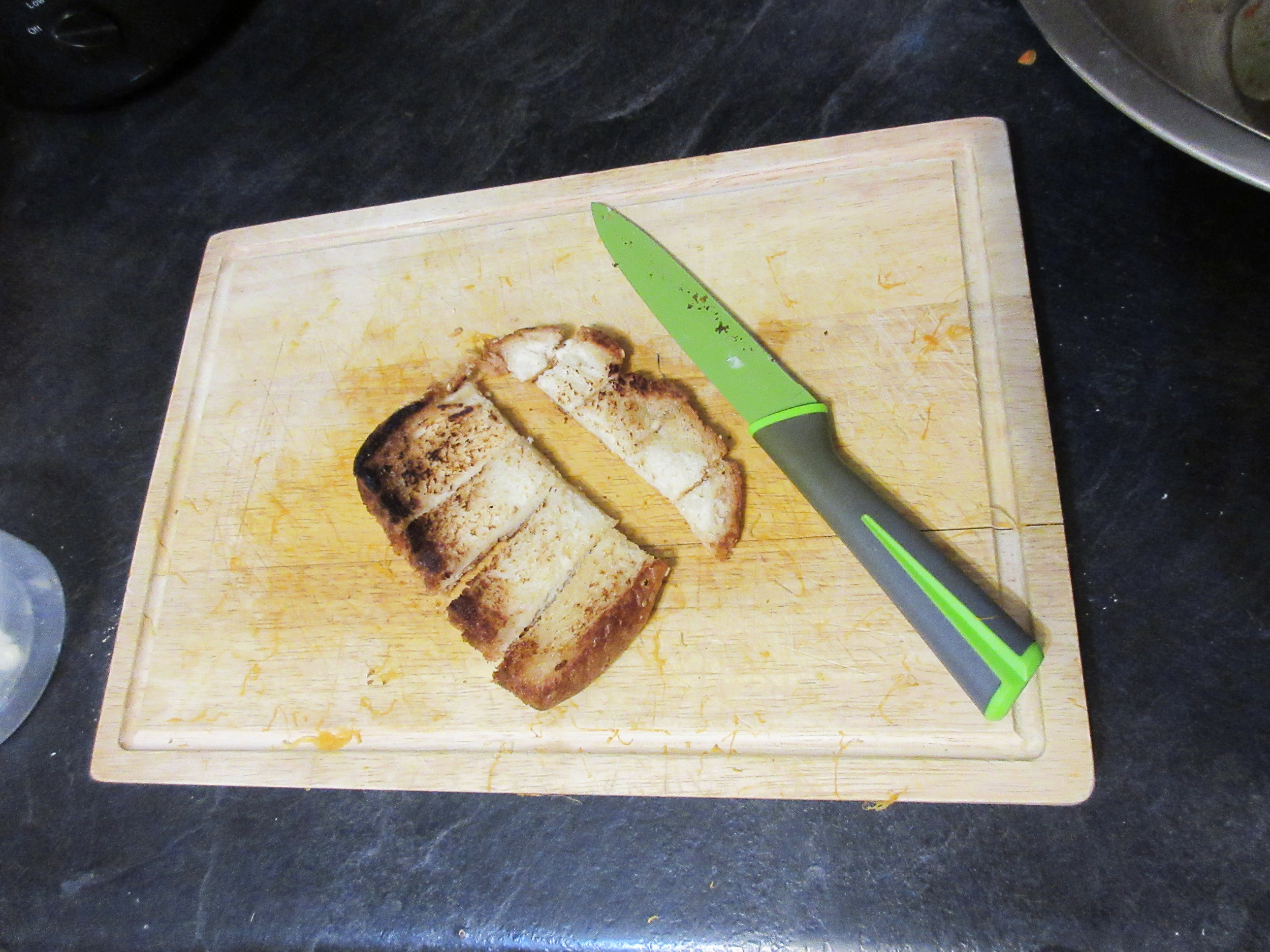
Optional: the historic recipe suggests "serve with fried or toasted bread, cut in dice". Instead of popping my bread in the toaster, I fried it in a pan of butter before I diced the bread. Recommended!

This Pumpkin Soup is hearty & flavourful, and I think the reason for this can be found in a one-word answer: butter. Expect a creamy robust soup with small chunks of pumpkin (or squash, if you can't find pumpkin). This soup is so rich that it might make a better side dish rather than the main component of your meal, but if you do try this recipe out, I highly recommend the historic recipe's suggestion of adding croutons made of fried bread to your bowl!
We made Pumpkin Soup at the open hearth cooking classes I taught at Nelles Manor Museum in Grimsby this fall. I really wanted to make some recipes with a local connection at these classes, so I perused a scan of The Canadian Housewife's Manual of Cookery online to find a seasonable autumn recipe and Pumpkin Soup is what I found.
The Canadian Housewife's Manual of Cookery was compiled by Henry & Elizabeth Richards and published in my hometown of Hamilton, Ontario in 1861, which is about a 30 minute drive to Grimsby these days (unless the highway is jammed with traffic going to Niagara Falls). Henry Richards was was a printer and was employed at the time of The Canadian Housewife's Manual of Cookery's publication at the Hamilton Spectator, which is still Hamilton's local newspaper today.
In his Preface, Richards writes that "the compiler has been somewhat indebted to a late work by M. SOYER's, the celebrated French Cook, as well as to some of the latest English, French, and American works on the same subject; and having thus carefully culled and collated from these sources all that was valuable and applicable to this country, he most respectfully admits the same for the approval and patronage of the Canadian Housewife".
Considering Canada's social identity as a quilt assembled from many cultures, I find it fitting that Henry and Elizabeth Richards turned to recipes from other countries and put them together to create a cookbook for Canadians. The Canadian Housewife's Manual of Cookery features some ingredients native to Canada, such as pumpkin, but also has an unusual number of tomato recipes for that era, sections on cooking wild fowl, rabbit & hare and a chapter on "Ale, Beer, Wines and Summer Drinks".
Read the Cookbook:


Asparagus Soup
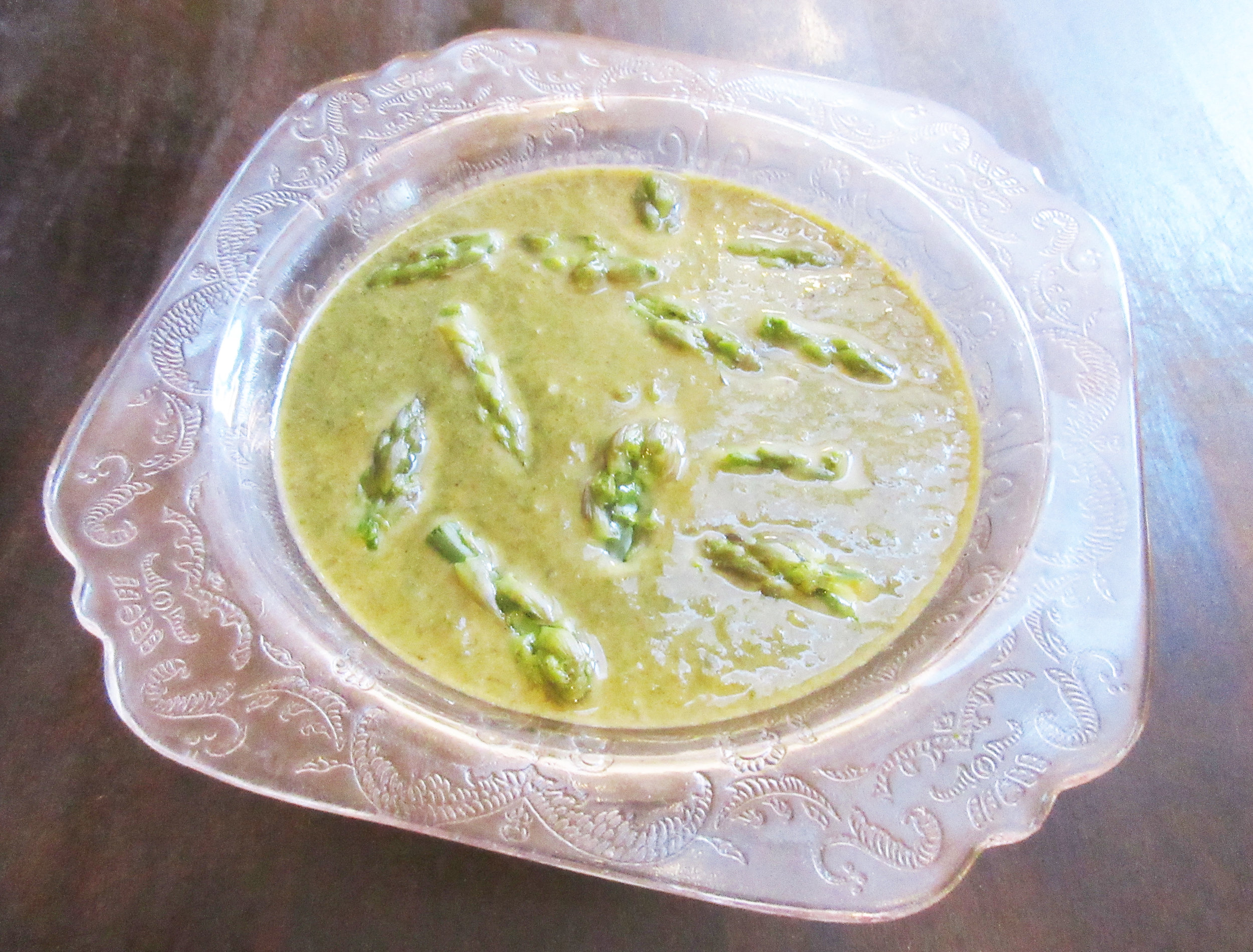
This Asparagus Soup recipe comes to us from a 1920s copy of Mrs. Beeton's Cookery Book that I picked up at an antiques market. Our soup recipe contains asparagus, of course, and also a lot of spinach. The spinach in this soup provides the vibrant green colour, but most of the flavour comes from the asparagus. The puréed creamy soup is offset nicely with the tender asparagus tips, that provide a nice variety in the texture and a flavour pop to boost.
You'll find this recipe in:
Mrs. Beeton's Cookery Book
London, 1920s (?)
The Original Recipe:
ASPARAGUS SOUP.
INGREDIENTS. - 1 ½ pints of white second stock or water, ½ a pint of milk, 25 heads of asparagus, ½ lb. of spinach, ½ oz. of butter or good fat, ½ oz. of flour, 1 tablespoonful of cream or milk, salt and pepper.
METHOD. - Cut off the points of the asparagus and put them aside, trim the stalks and cut them into small pieces; wash and pick the spinach. Put the stock or water into a stewpan; and when it boils add the asparagus and spinach, and cook until tender (about 40 minutes); then rub through a fine sieve. Have ready a small saucepan of boiling water, put in a little salt and the asparagus points, and cook for about 10 or 15 minutes. Melt the butter or fat in the stewpan, sprinkle in the flour, add the milk and stir until it boils, then put in the stock and purée of asparagus and spinach, salt and pepper to taste, and simmer gently for about 10 minutes. Place the asparagus points into the tureen, add the cream or milk and necessary seasoning to the soup, and serve as quickly as possible.
TIME.- From 1 to 1 ½ hours.
SEASONABLE from March to July.
SUFFICIENT for 4 or 5 persons.

My Recipe:
25 asparagus stalks
10 cups loosely packed spinach (225 g)
3 ½ cups (825 mL) vegetable stock, chicken stock or water
1 tbsp butter or oil
1 ½ tbsp flour
1 tbsp cream or milk
3 ½ cups (825 mL) milk
salt and pepper to taste (I tried ½ tsp salt and a few shakes of pepper)
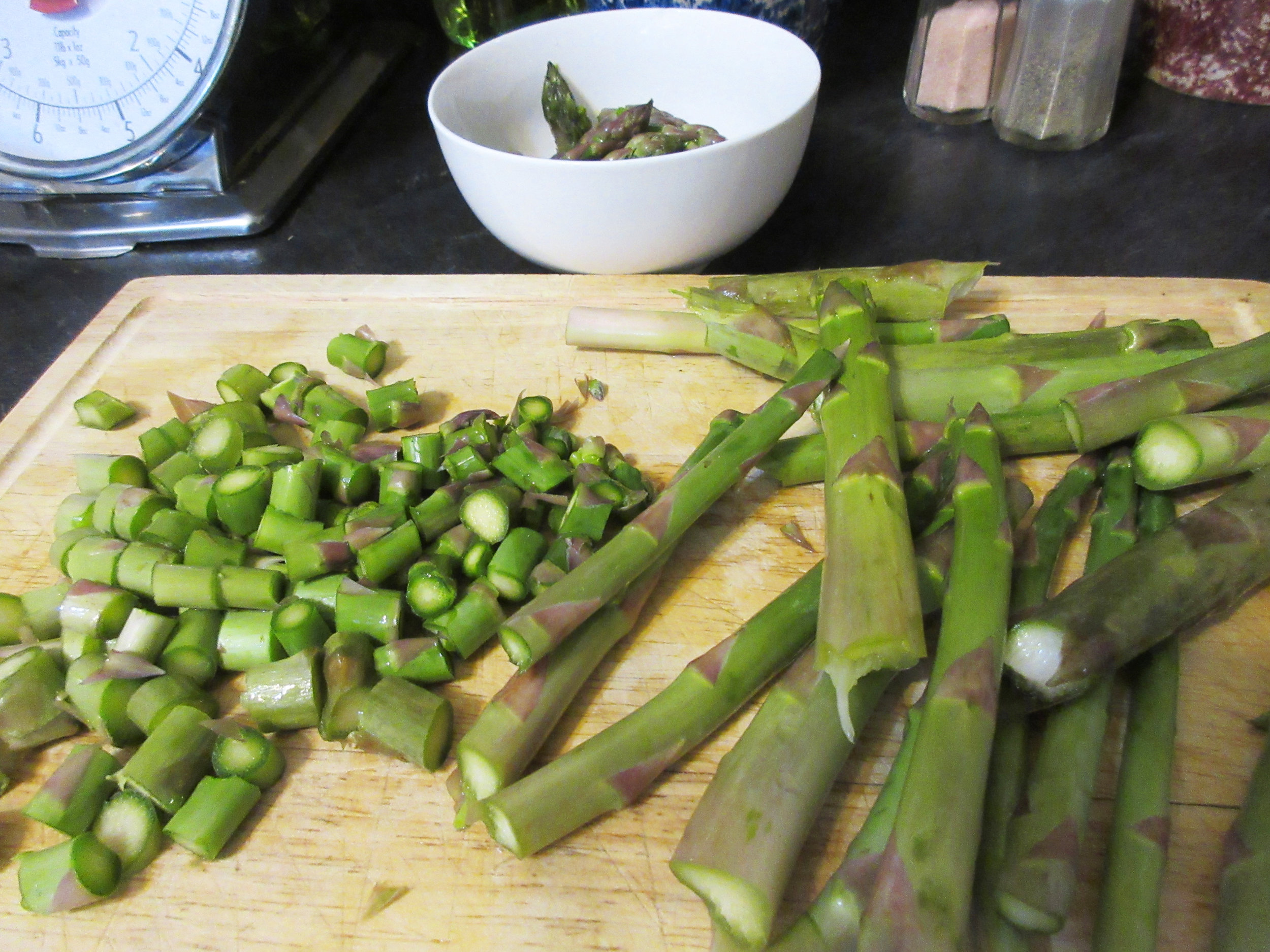
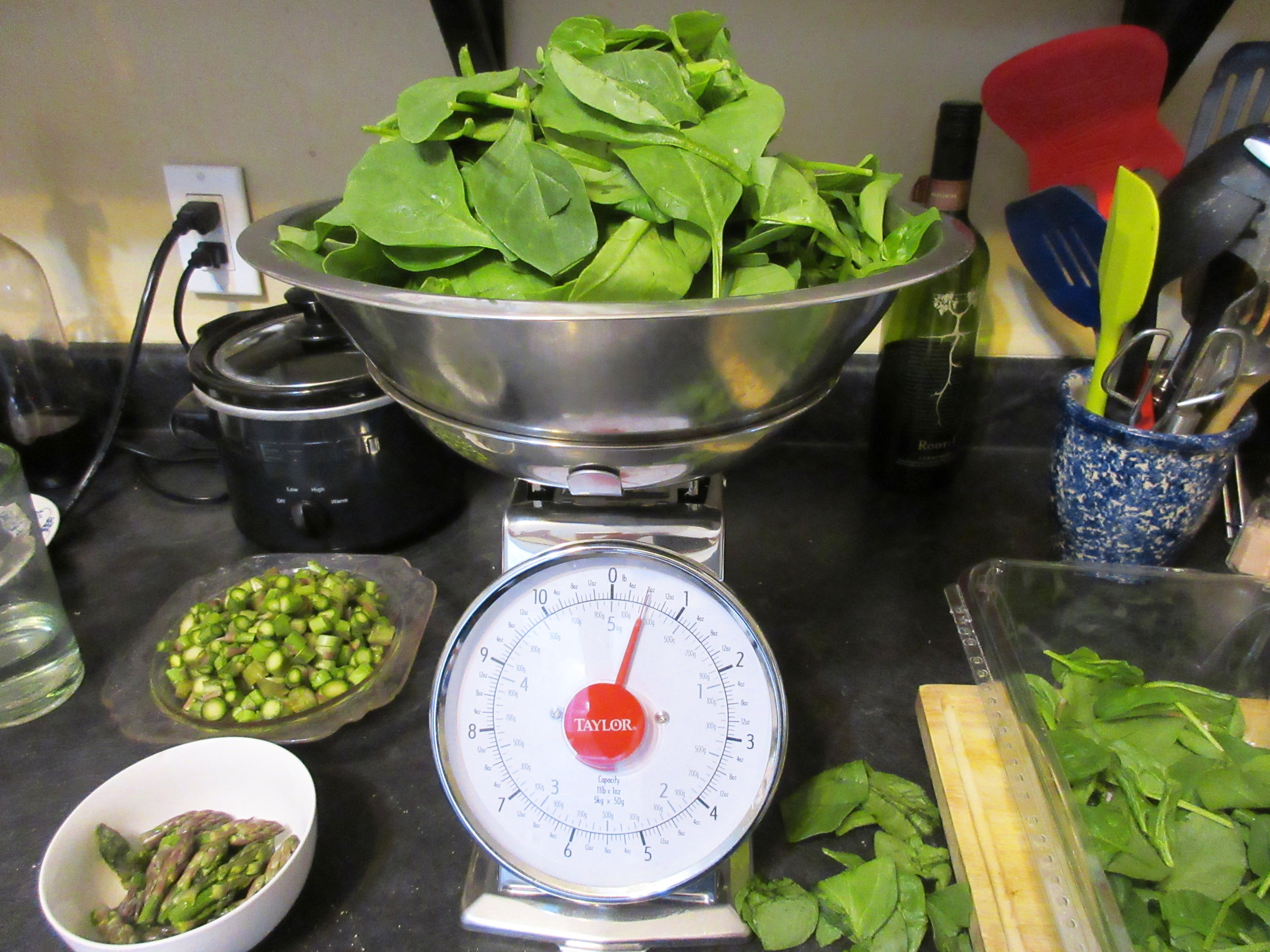
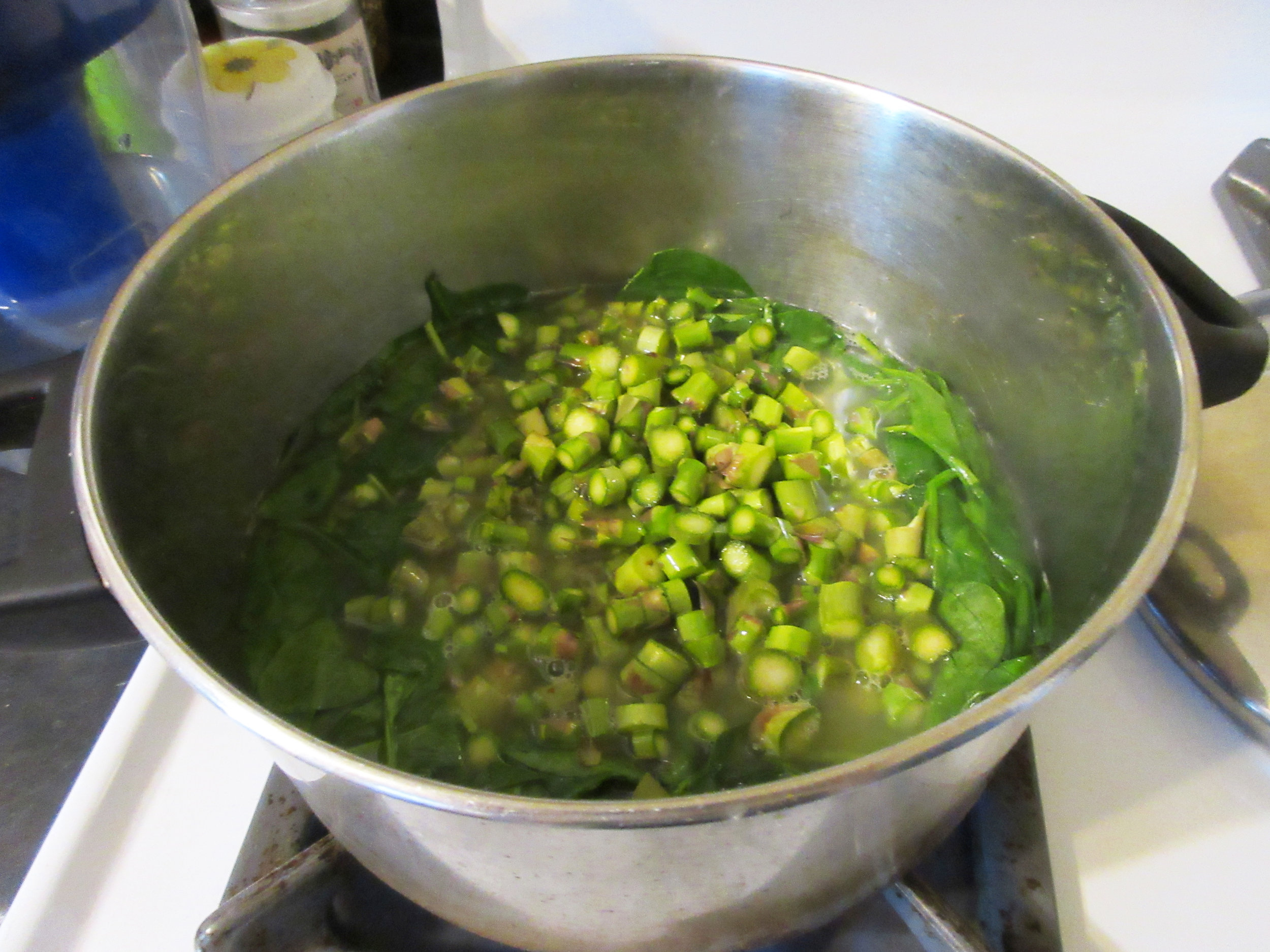
1) Wash the spinach and asparagus. Cut off the asparagus tips and set them aside, then snap off the tough bottoms of the stalks. Chop the remaining asparagus into small pieces. Bring the stock or water to a boil in a large pot, then add the asparagus slices and spinach. Reduce heat and simmer until tender in a covered pot.
2) In the meantime, boil or steam the asparagus tips in a small pot. Drain and set aside when tender.
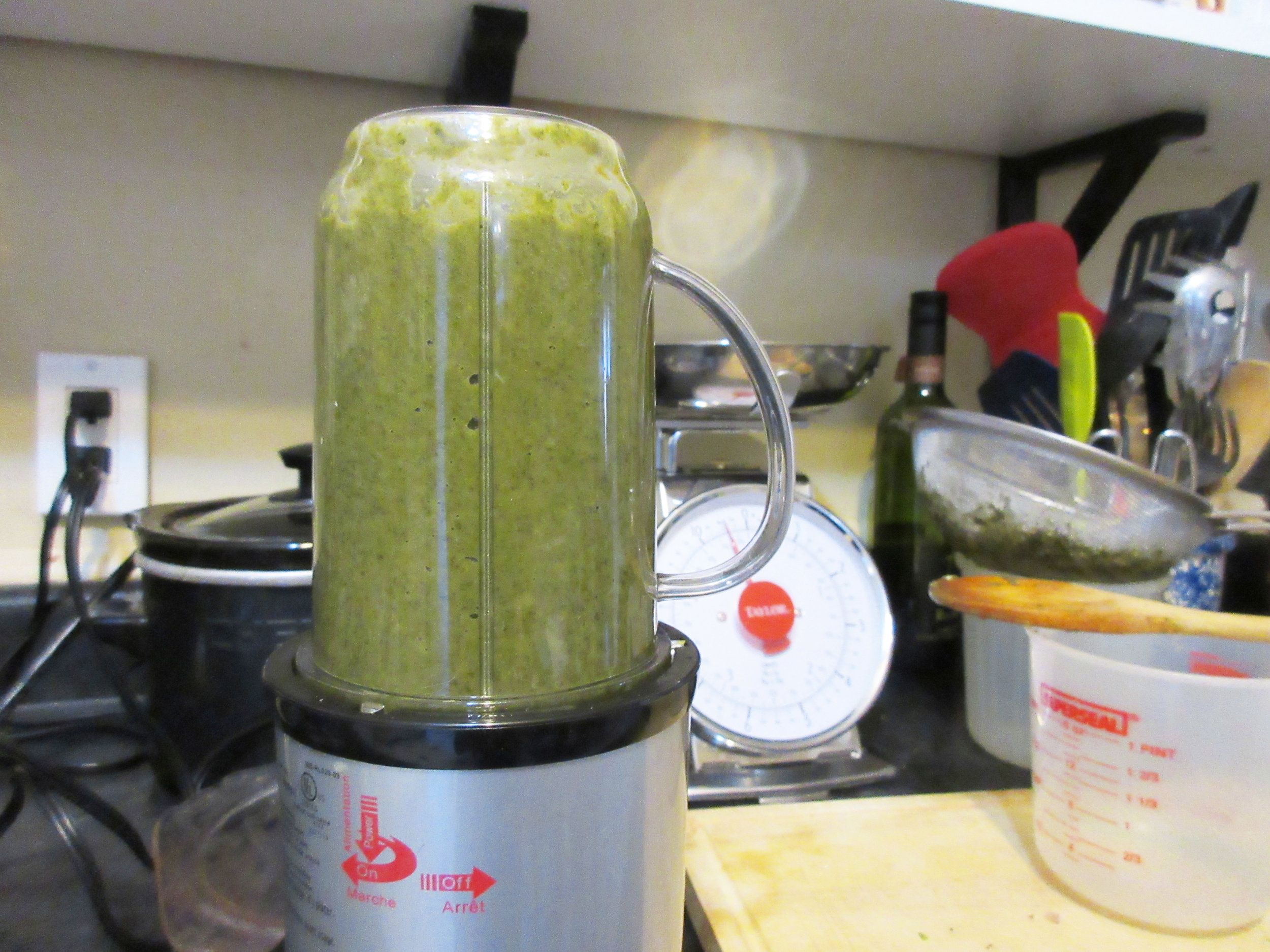
3) Once the spinach and asparagus slices are cooked, transfer these vegetables and the remaining stock or water from the pot to a blender and purée.
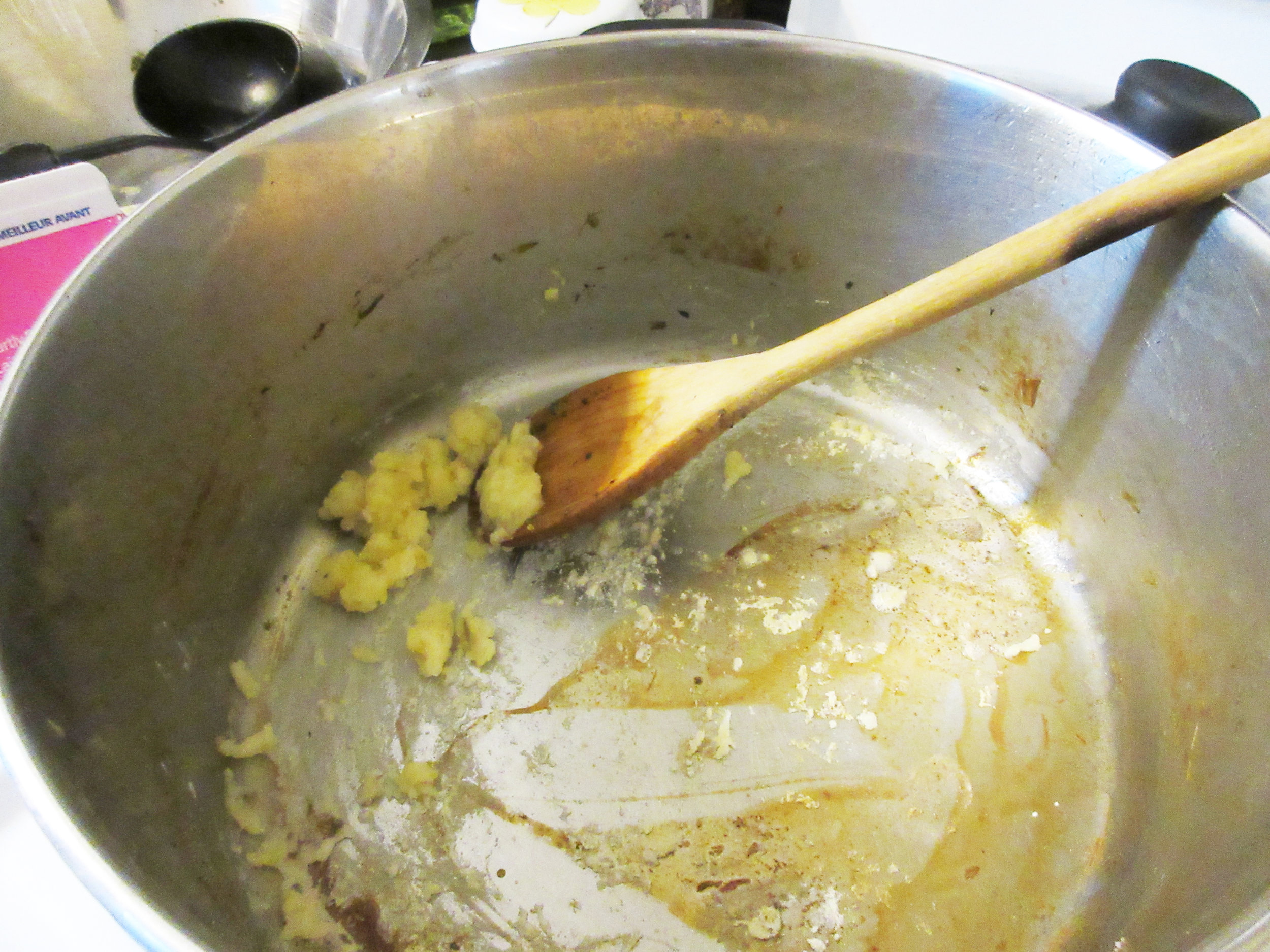
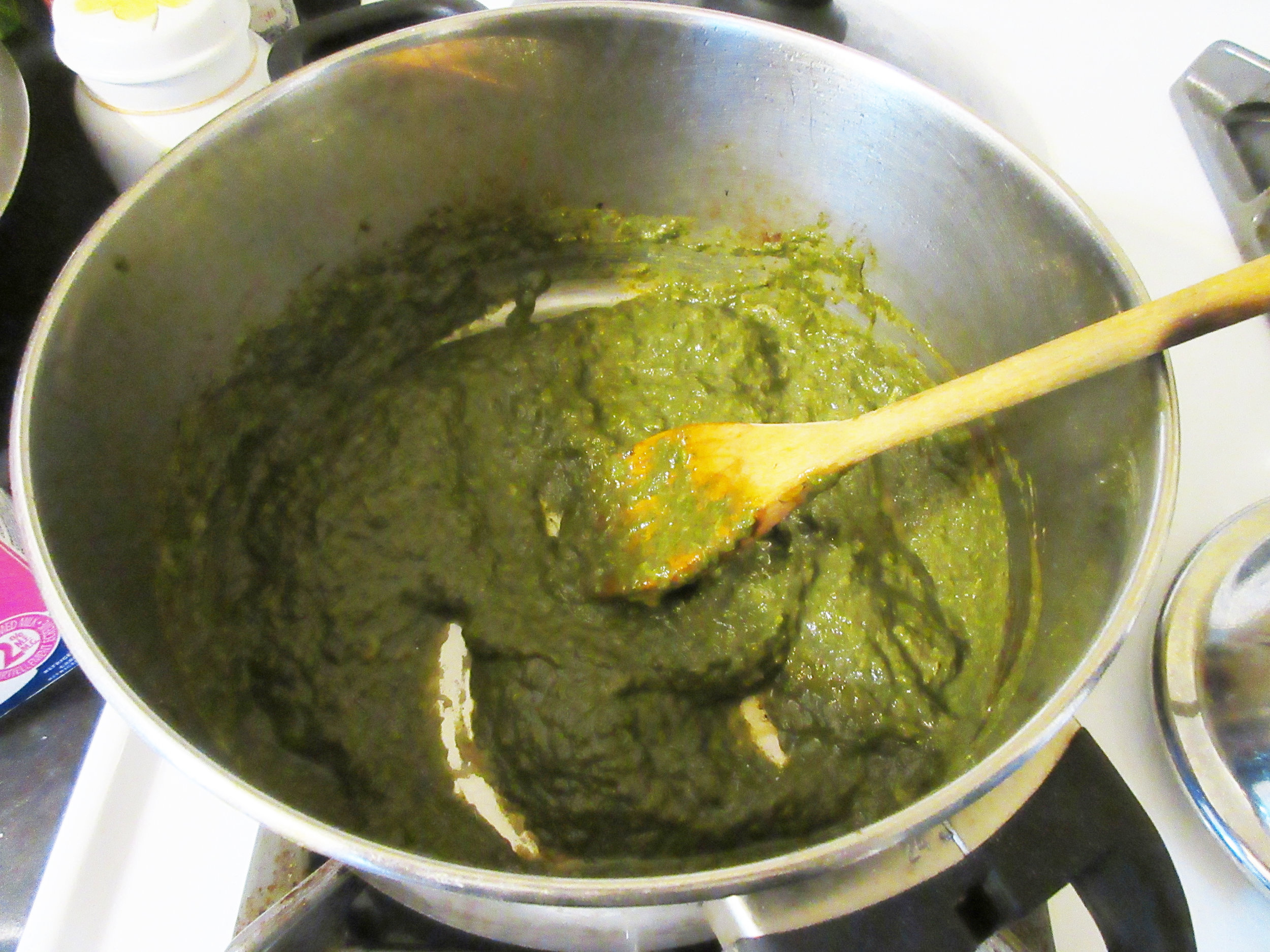
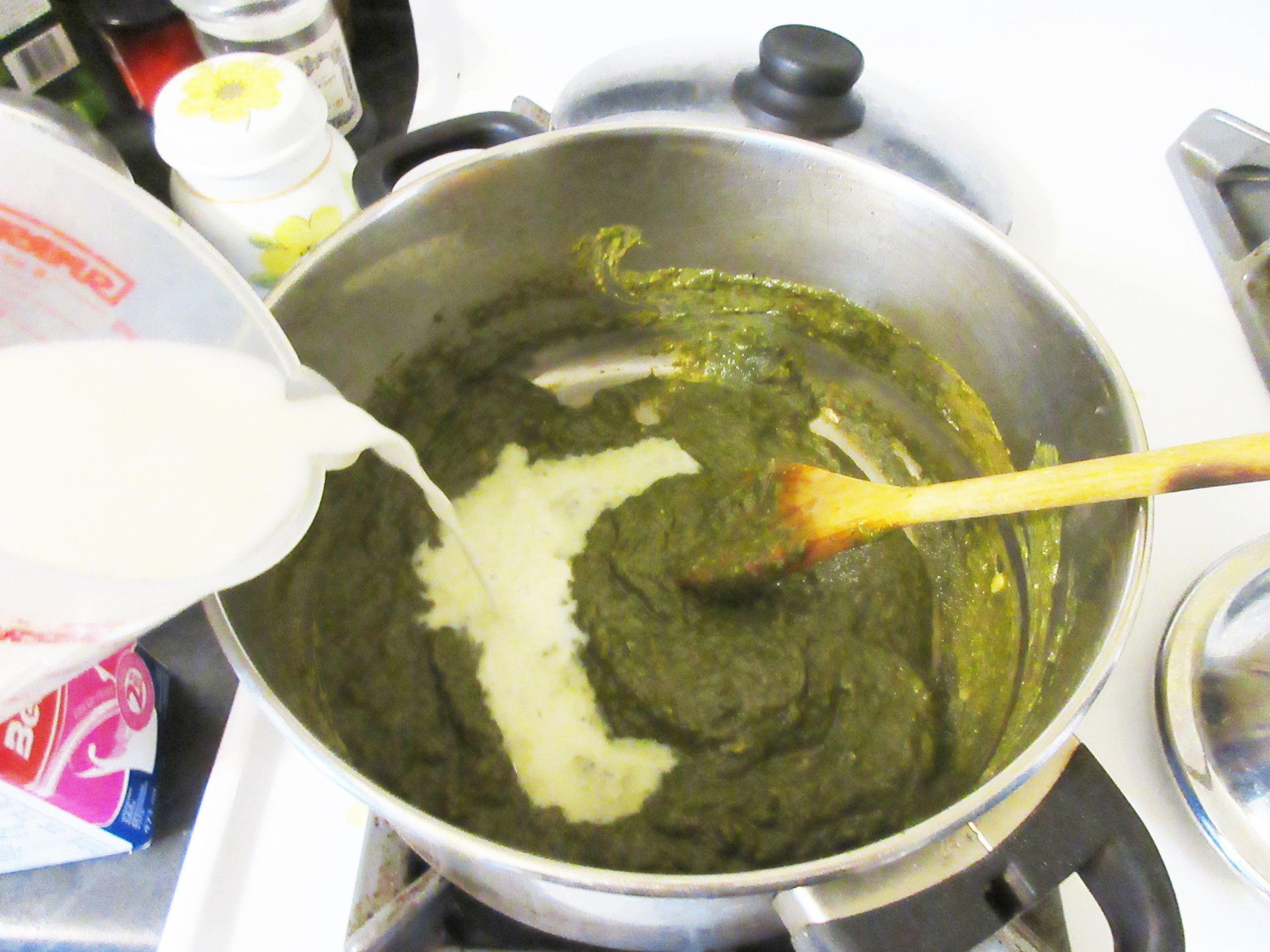
4) Melt the butter in the large pot over low heat, mix in the flour, then stir in 1 tbsp of milk or cream. Slowly add the spinach and asparagus purée, stirring well to avoid flour lumps. Once all the purée has been added to the pot, gradually stir in the milk, then season to taste with salt and pepper.
5) Bring the soup back up to temperature, then serve. If you're serving the soup directly into bowls, you can divvy up the asparagus tips between the bowls, or you can just add the tips to the soup.
My notes: I've made contemporary soup recipes where I pushed cooked vegetables through a sieve, so I followed the historic recipe fairly closely. I boiled the stock, asparagus and spinach for the advised 40 minutes, then tried pushing it through my "fine sieve" with a spatula and wooden spoon. It didn't work very well at all! Most of my vegetables stayed on the inside of the sieve and only a green liquid passed through. Maybe my fine sieve is finer than sieves of the 1920s? I thought it was a huge waste of nutrients and flavour to only use the green liquid, so I opted for blenderizing the vegetables and stock instead.
The spinach in this soup provides the vibrant green colour, but most of the flavour comes from the asparagus. Having the tender asparagus tips floating in the puréed soup provides a nice variety in the texture and a flavour pop to boost. The original recipe states that it makes enough soup for 4 or 5 people, but I'd say that it makes enough soup for you and a couple of friends to enjoy a soup course before your meal.
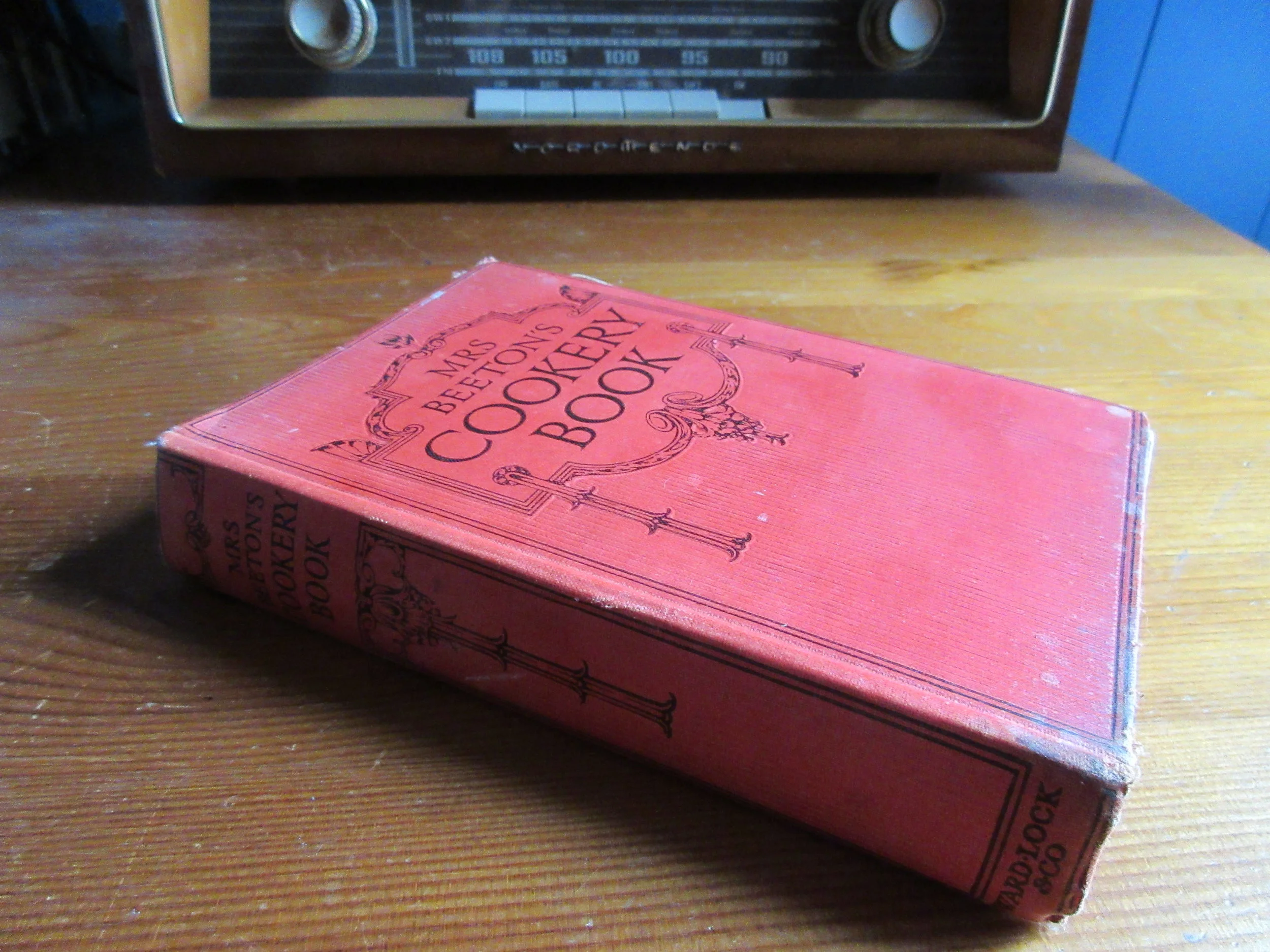
The strange thing about this edition of Mrs. Beeton's Cookery Book is there's no publication date printed inside! The internet mostly agrees that my copy is from the 1920s, generally either 1923 or 1925. Asparagus Soup is on page 69.
