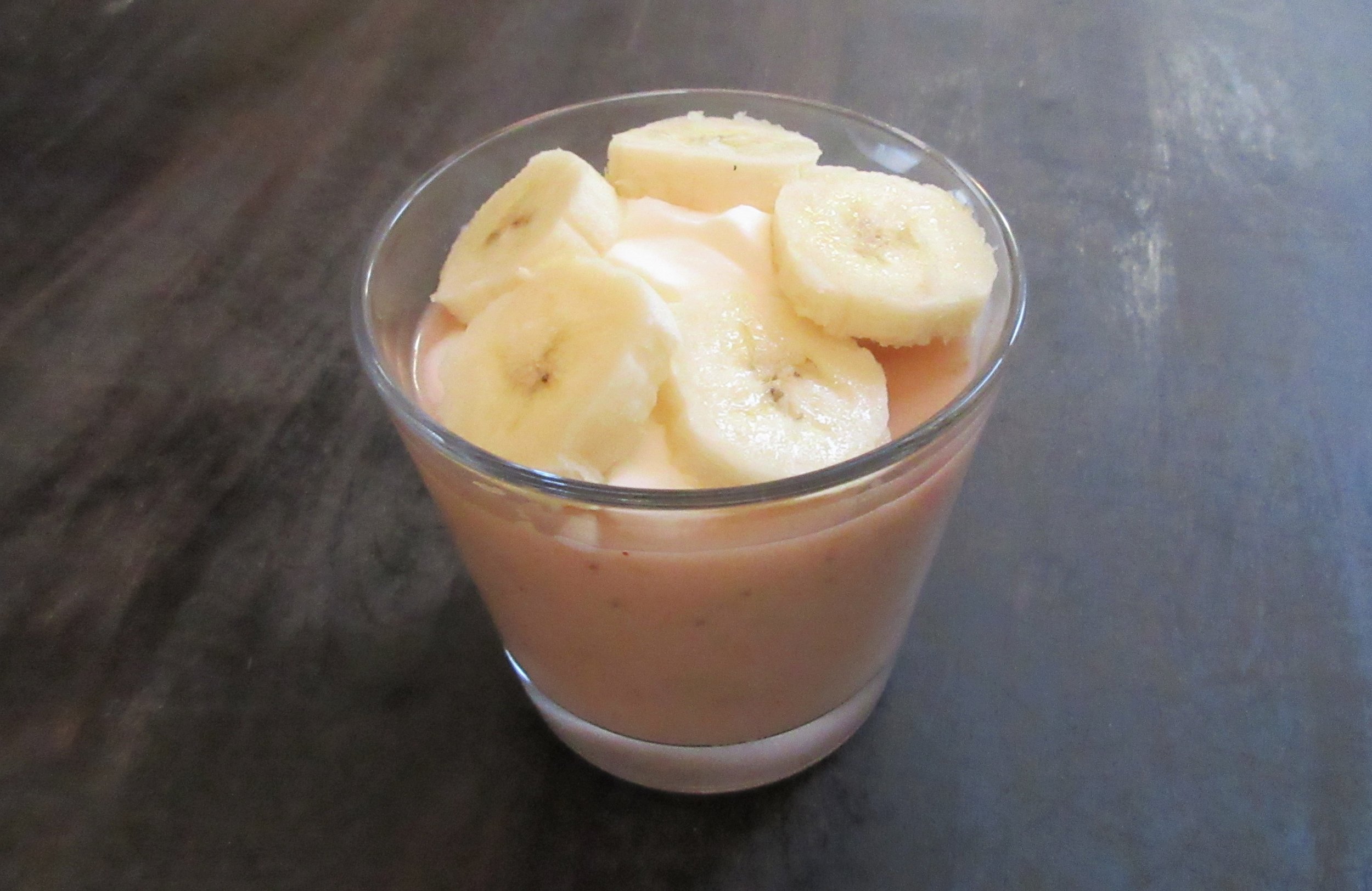
You’ll find this recipe in:
London, 1900
Historic Recipes:
STEWED FRUIT.
To 1 lb. Of fruit allow 4 oz. Of sugar and ½ a pint of water. Sufficient for 3 or 4 persons.
Apples and pears intended for stewing should be peeled, quartered and cored. Gooseberries should have the tops and tails cut off; rhubarb is usually sliced, and if at all old the stringy outer skin is stripped off. Other fruit, such as cherries and plums, should have the stalks removed, but the stones may be taken out or not, as preferred. Bring the water and sugar to the boil, add the fruit, and stew very gently until tender. Or, place the fruit, water and sugar in a jar, stand the jar in a saucepan of boiling water, and cook until tender.
RHUBARB AND BANANA FOOL.
Have ready 5 or 6 bananas, ½ a pint of stewed rhubarb purée or pulp, about 1 gill of cream, or custard may be used if preferred, cochineal, and sugar to taste. Sufficient for 5 persons.
Peel the bananas, and rub them through a fine sieve. Add to this the rhubarb purée, and the cream or custard. Sweeten to taste, and colour with a little cochineal. Serve in a glass bowl or in custard-glasses. Decorate the surface with whipped cream and thin slices of bananas.
5 or 6 bananas
½ cup cream- 118 mL
1 cup stewed rhubarb – 236 mL
A few drops red food colouring
White sugar to taste (I added ¼ cup – 40 g)
35% whipping cream
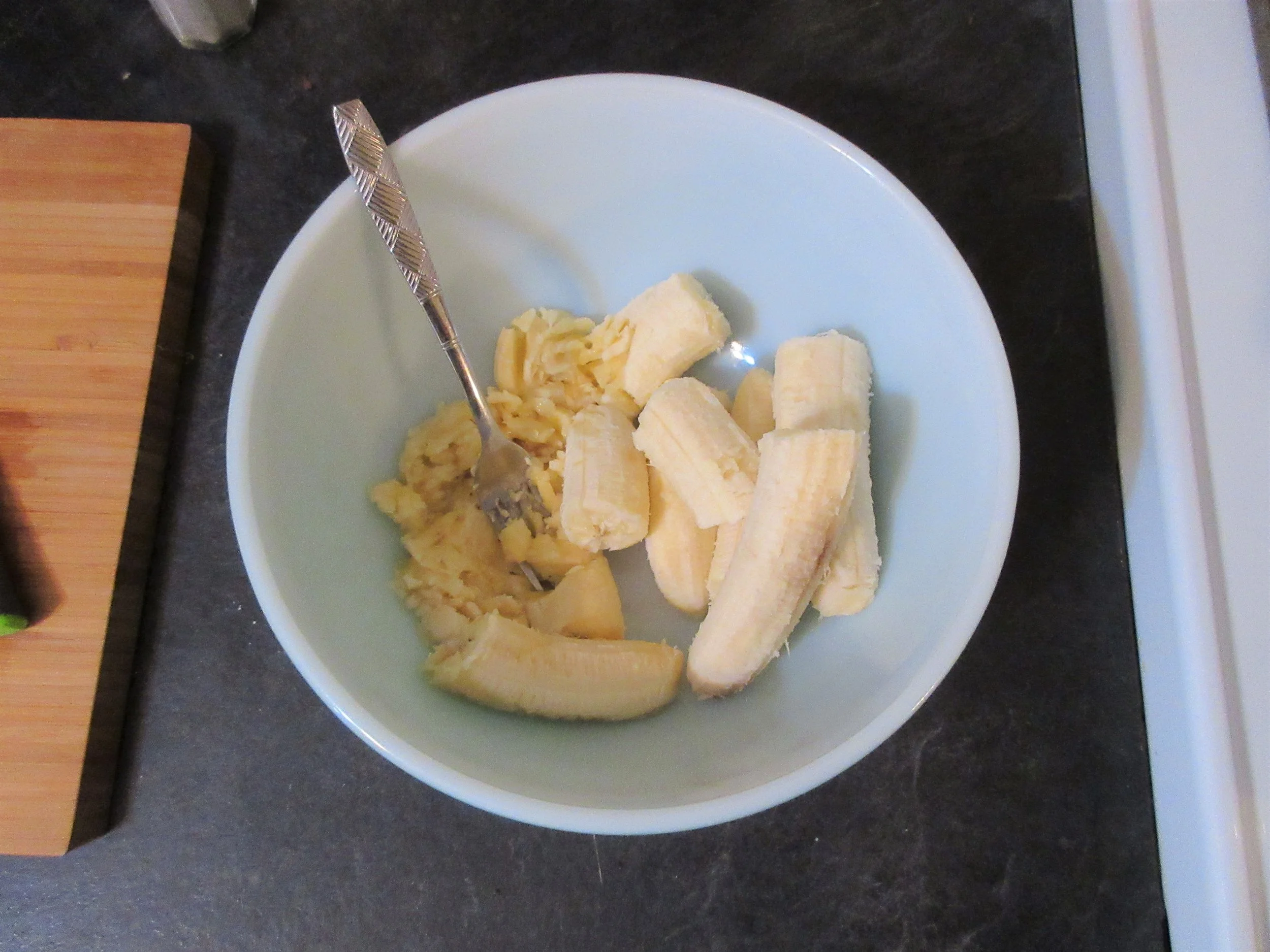
1) Slice a portion of one banana for garnishing if desired, then roughly mash the bananas in a bowl. I only had 5 bananas, so that’s what I used (minus the slices) and it was a tad on the thin side, but still delicious.
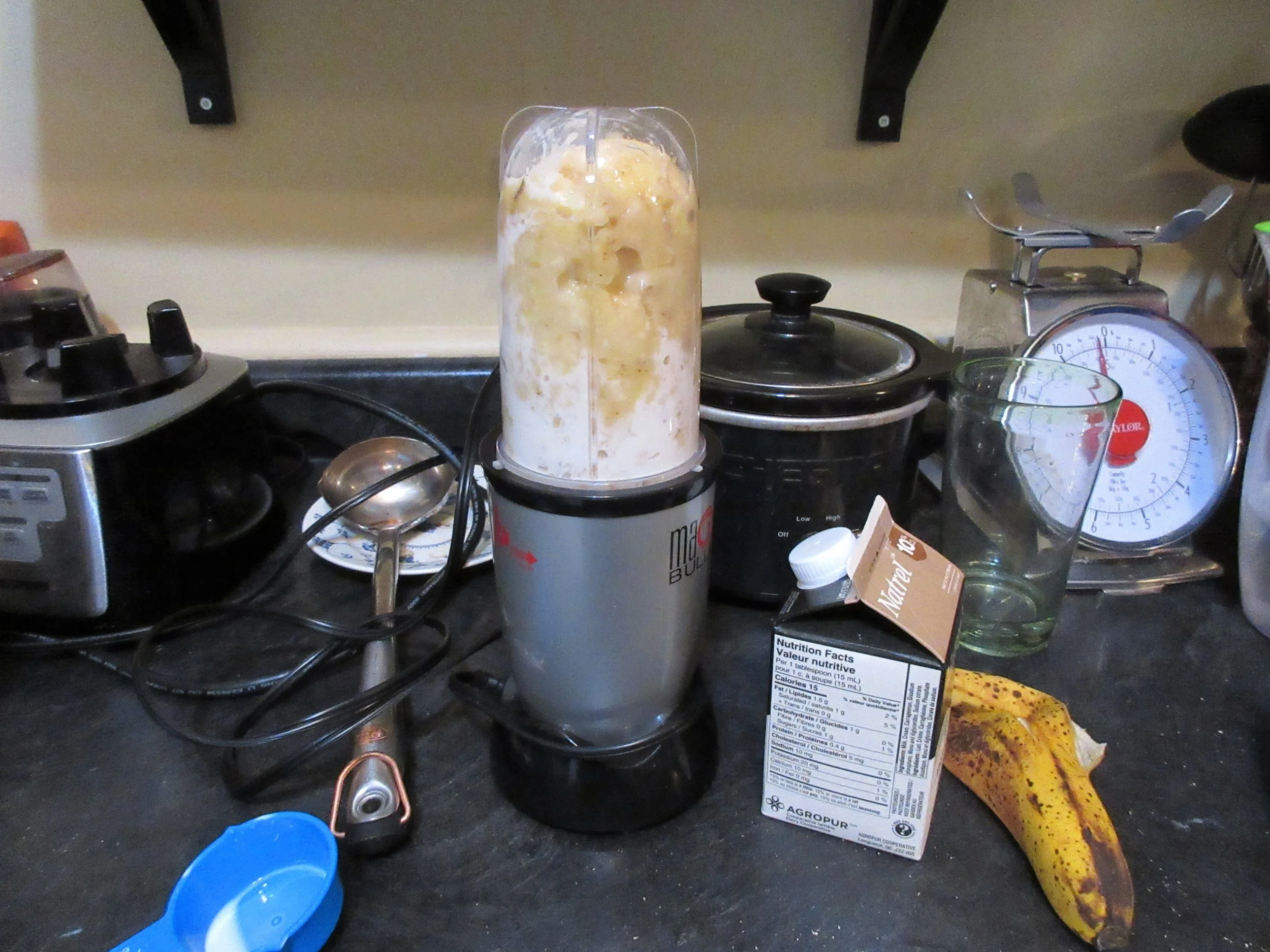
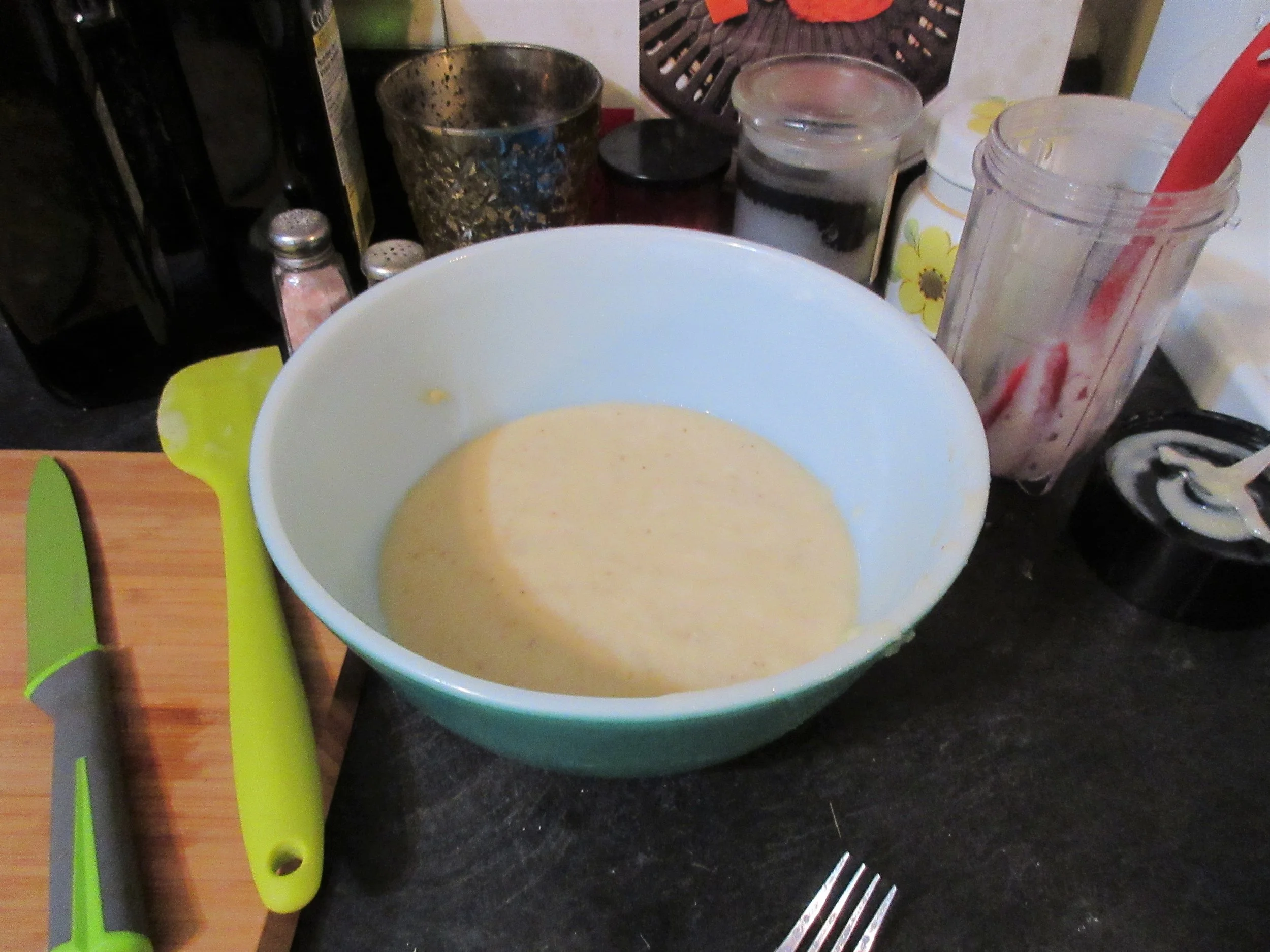
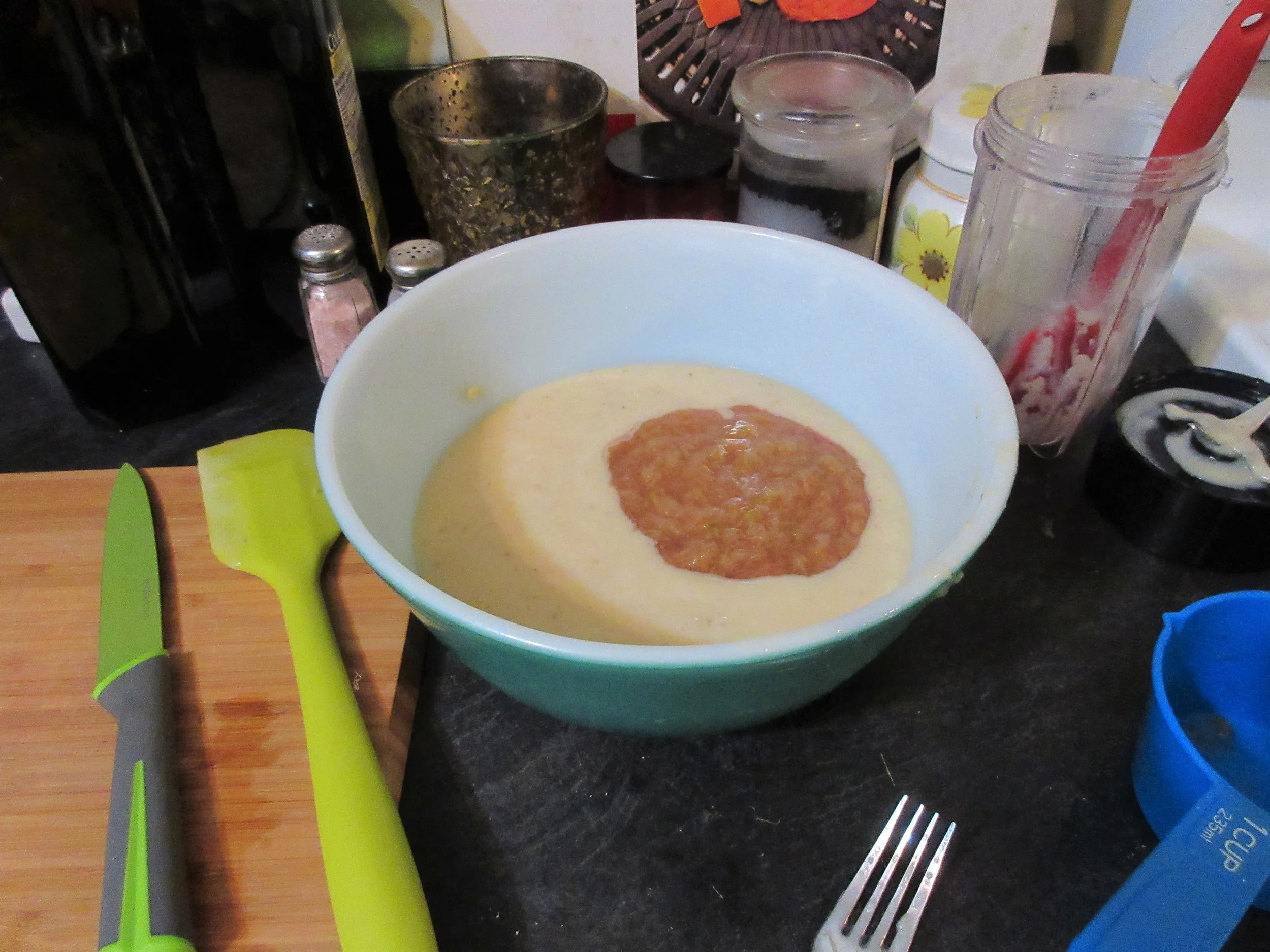
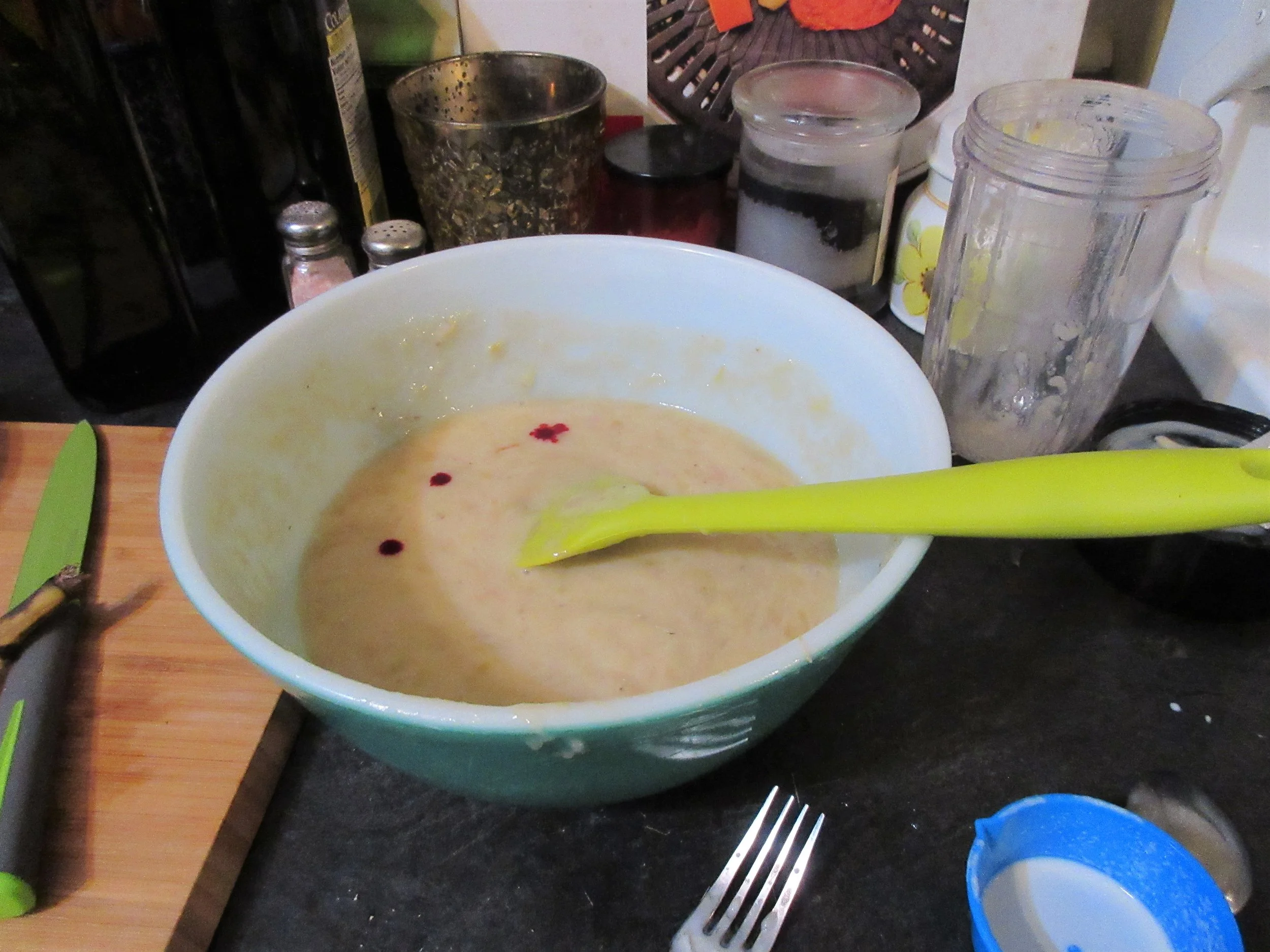
2) Transfer the banana mush to a blender, add the cream and buzz the two ingredients together. Put the banana and cream mixture back into the bowl and stir in the stewed rhubarb and a few drops red food colouring (optional). Stir in sugar to taste. I added ¼ cup, but you might find that it’s already sweet enough for your palate.
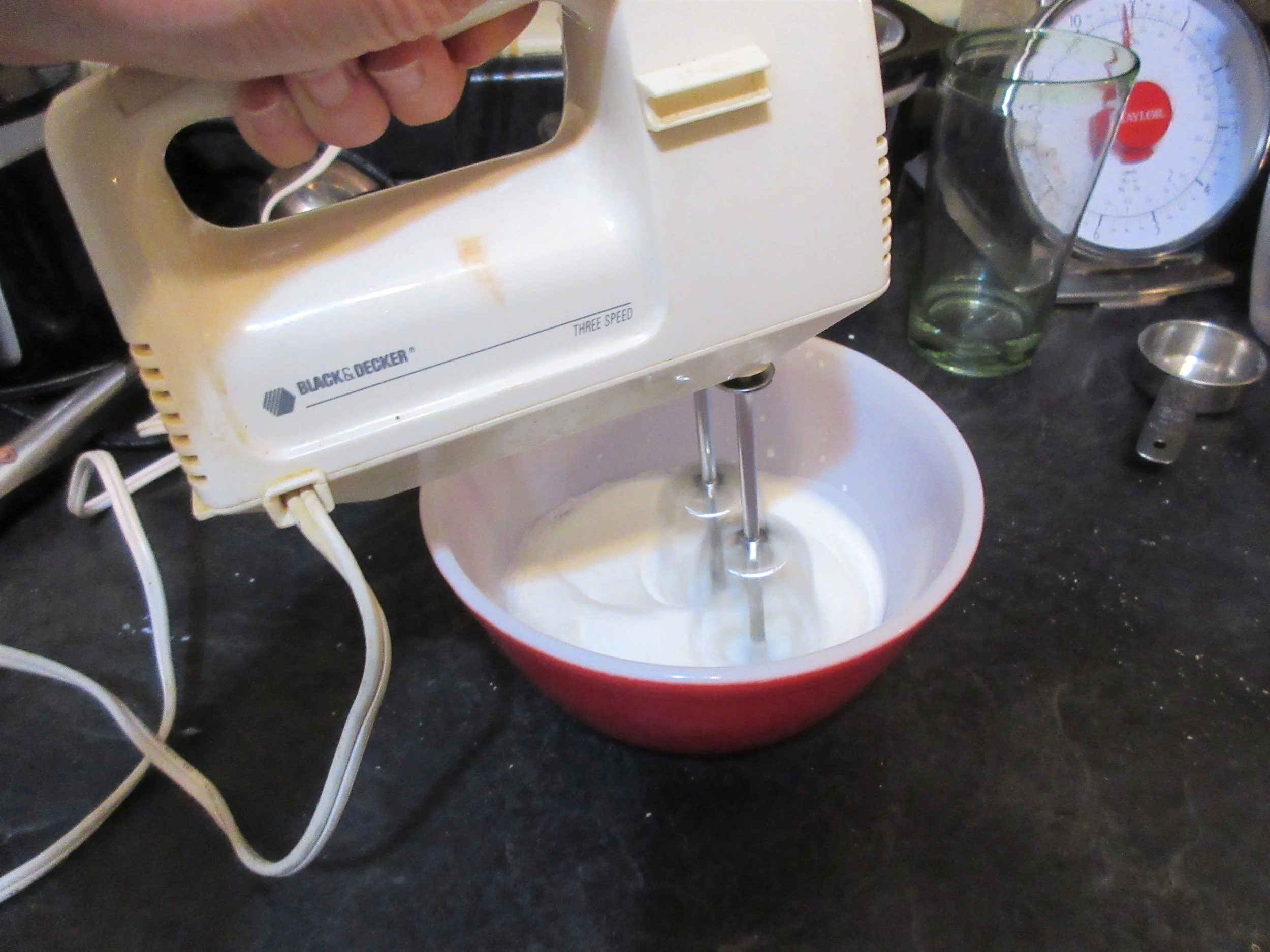
3) Whip the whipping cream until stiff. I whipped about 1 cup (236 mL) of 35% whipping cream and it created enough whipped cream to top three Rhubarb and Banana Fools in glasses.
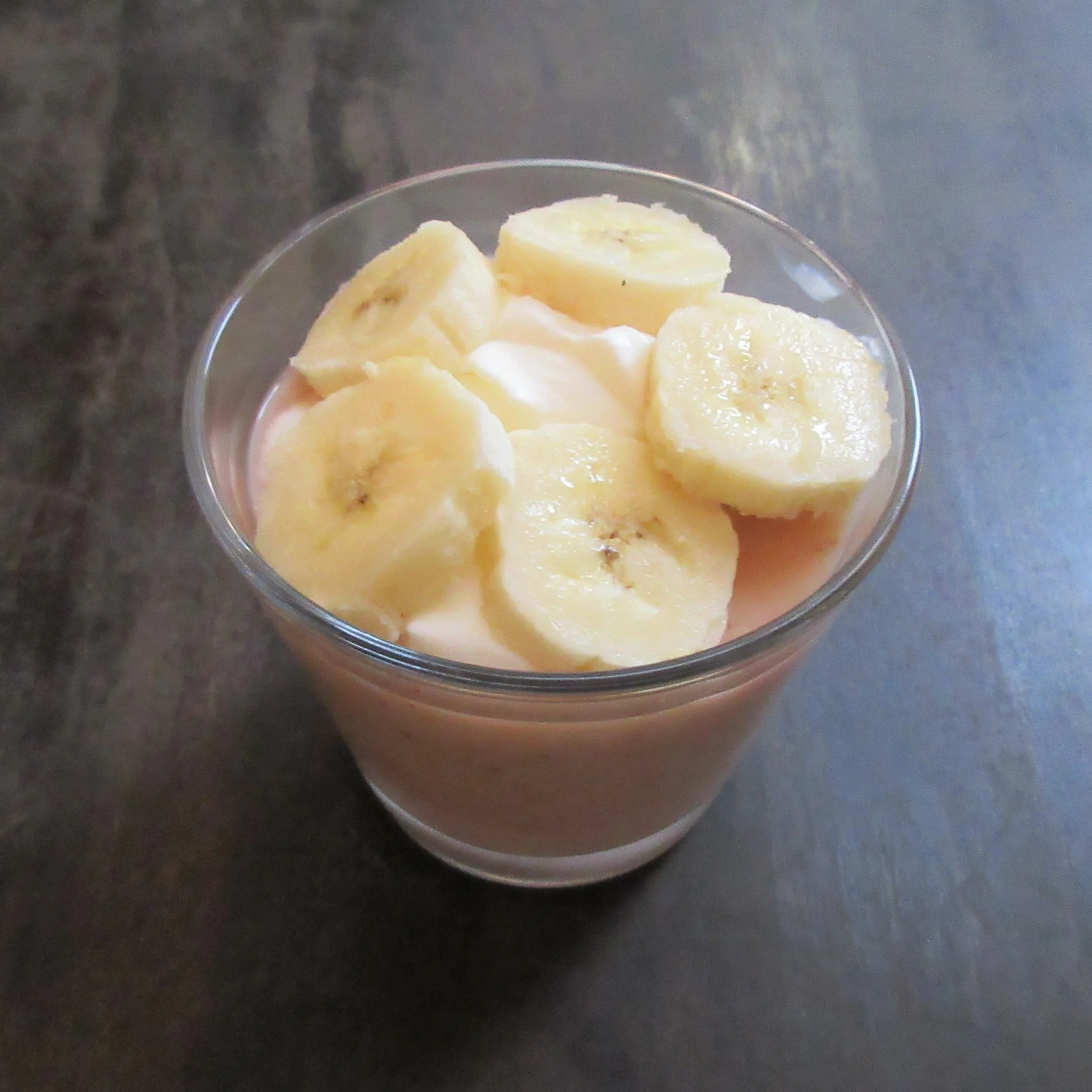
4) Pour the Fool into glasses or bowls and top with whipped cream and banana slices.
My experience:
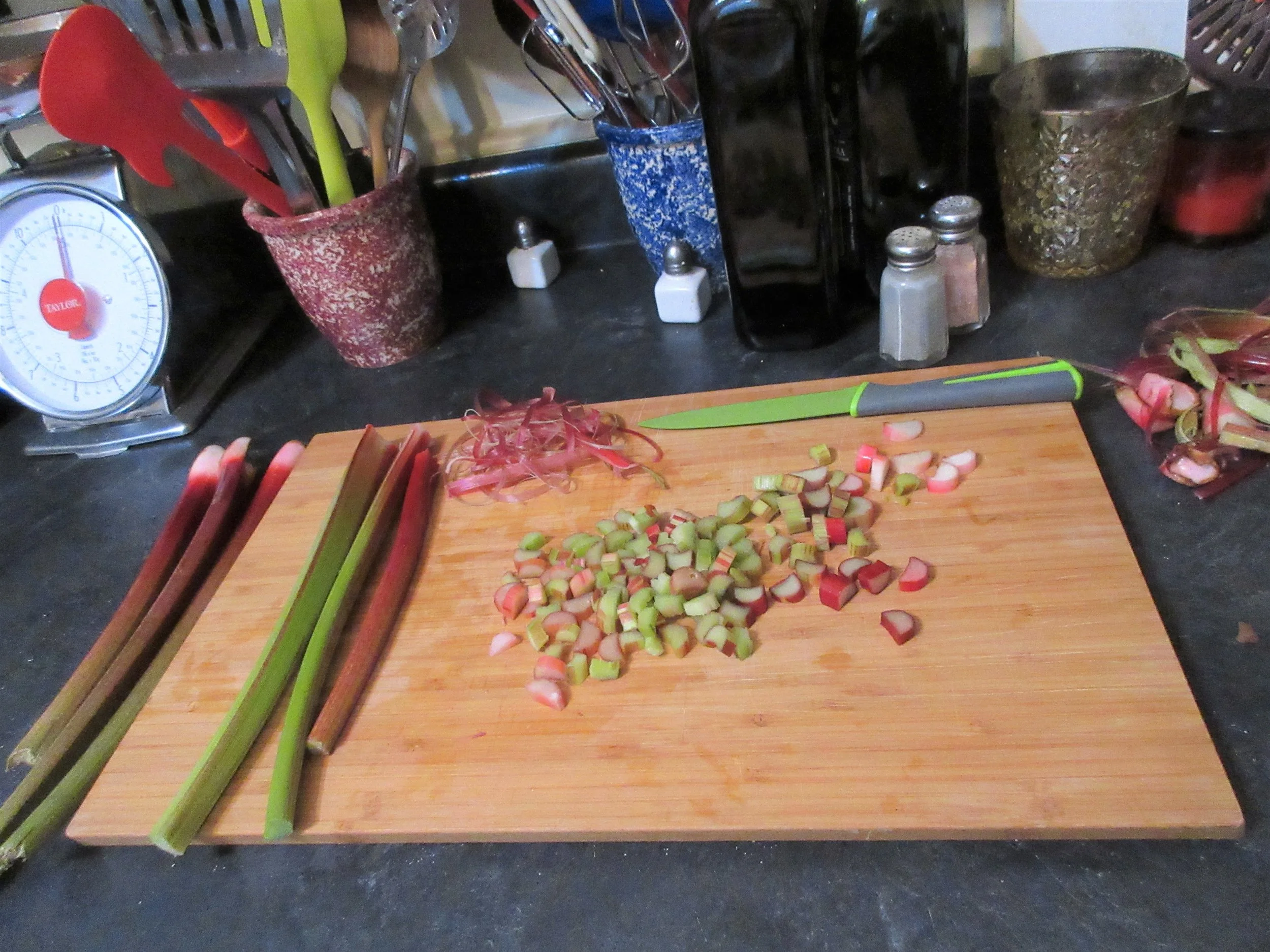
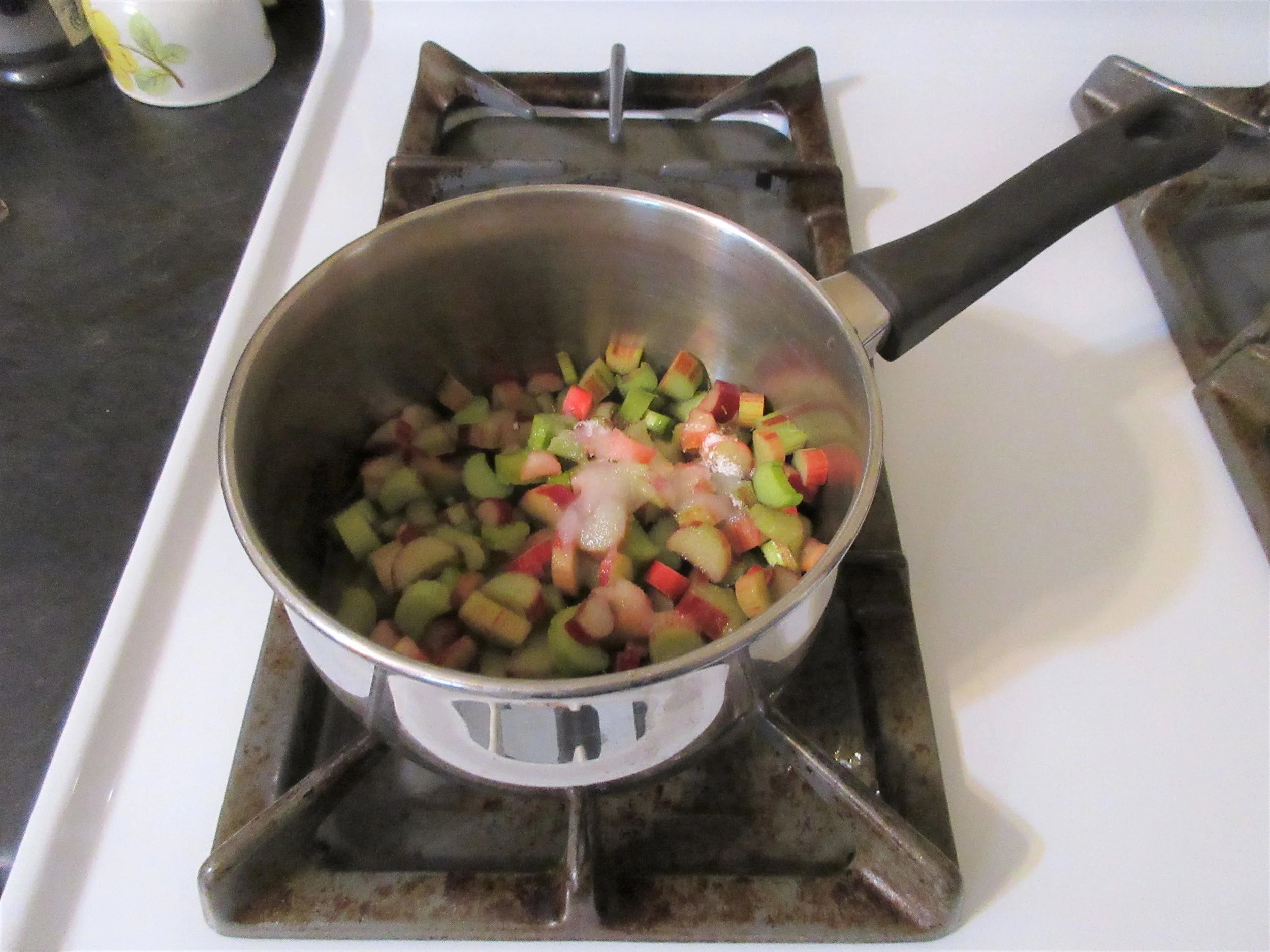
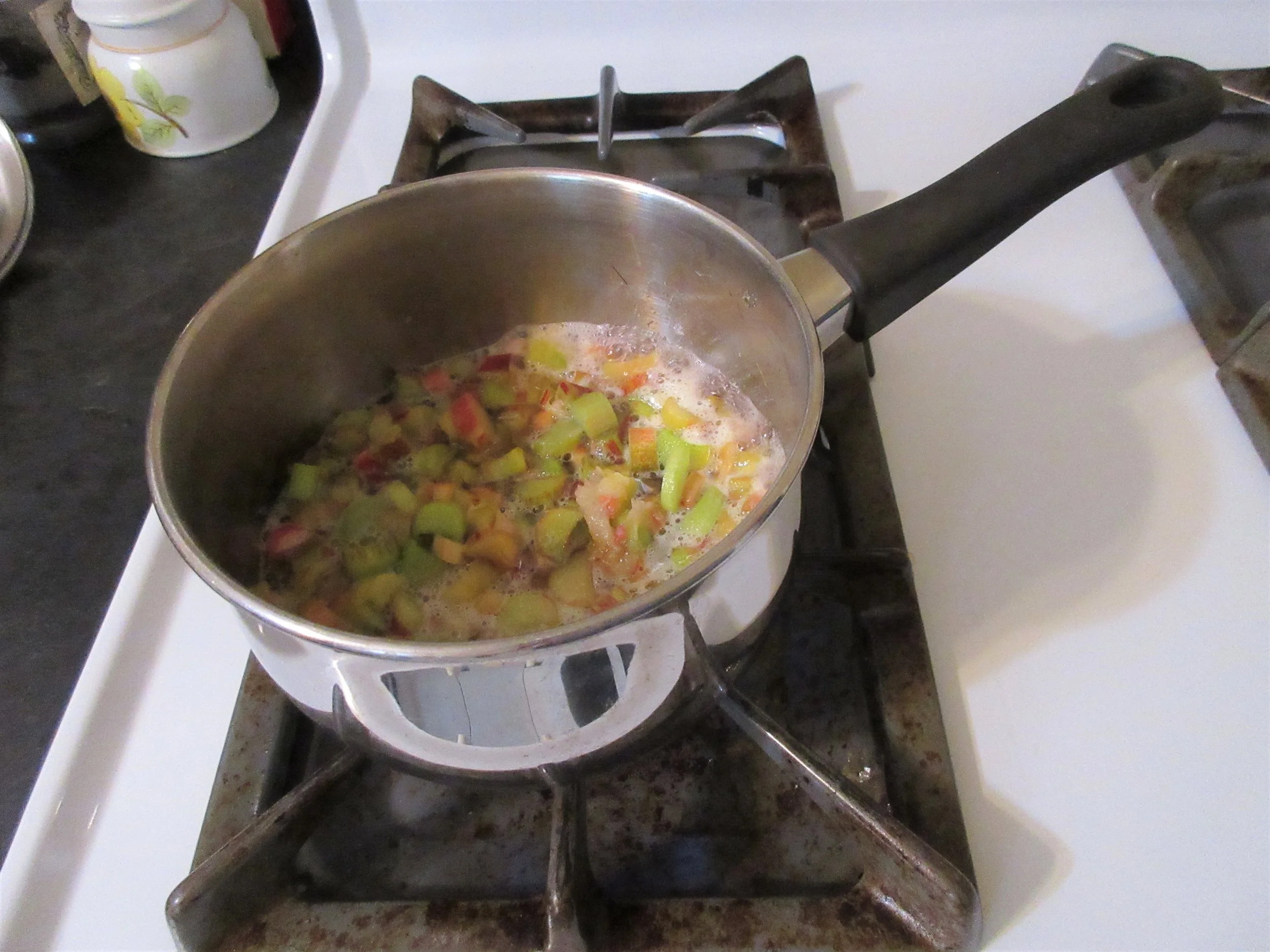
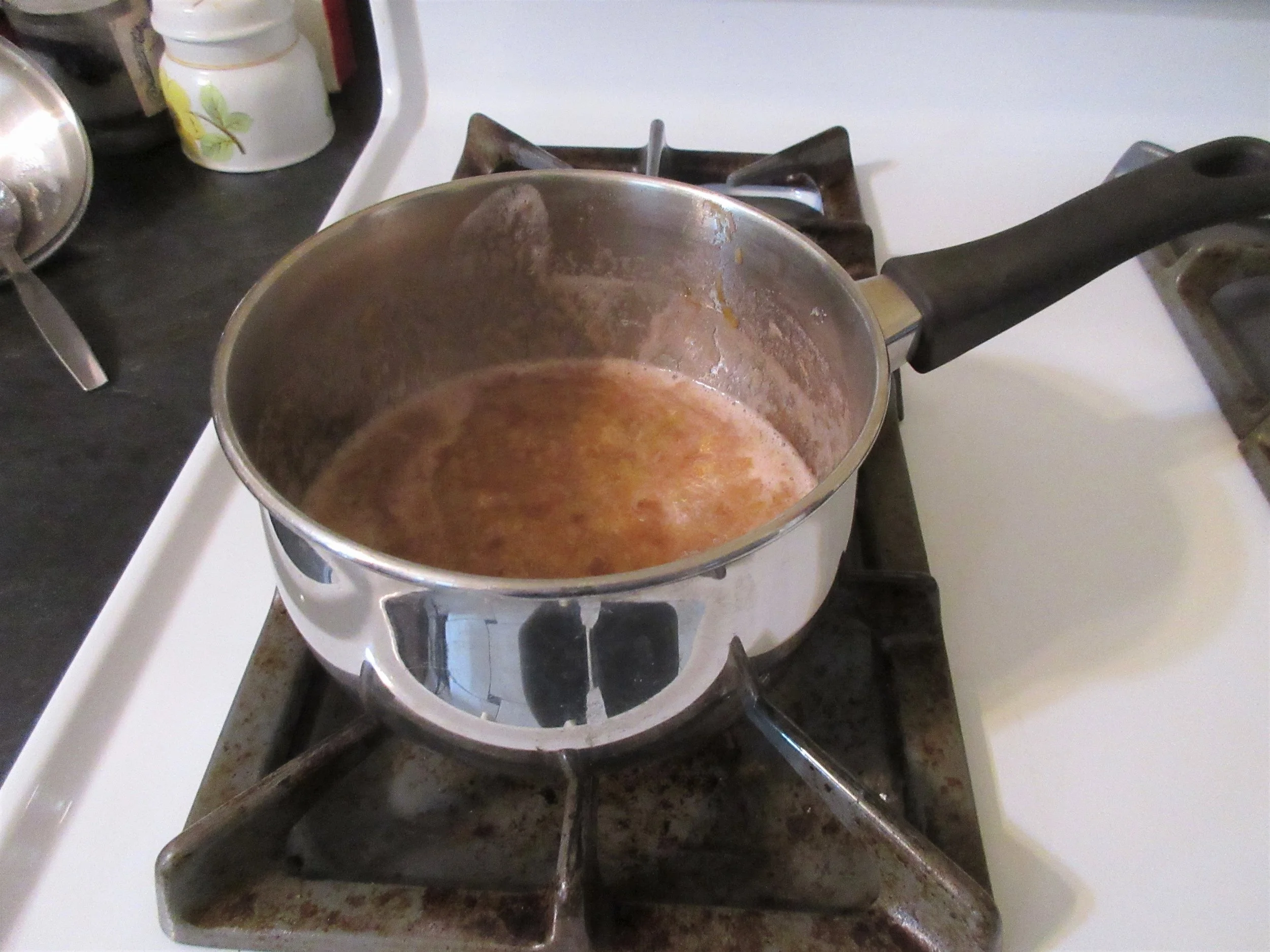
I ended up having ¾ lb (340 g), which amounted to roughly 3 cups chopped rhubarb. Since the historic recipe calls for 1 lb of fruit, I reduced the ingredient amounts by ¾. I added ½ cup (85 g) of sugar and ¾ cup (175 mL) of water to the pot. I guess I didn’t read the directions closely enough and I didn’t bring the water and sugar to a boil before I added the rhubarb, but it turned out just fine. I let it bubble for about 10-15 minutes and ended up with 1 ¾ cups (415 mL) of stewed rhubarb.
One evening recently, I found myself driving home from visiting my Mom with a small harvest of fresh rhubarb from her garden in the passenger seat. Basically as soon as I set foot in my door, I searched for a historic rhubarb recipe that wasn’t Rhubarb Jam, Stewed Rhubarb or Rhubarb Pie (the things I do for fun!). Rhubarb and Banana Fool, from the 1900 cookbook Mrs. Beeton’s Cold Sweets, was the most intriguing to me. A good description of this recipe in today’s terms would be a low-sugar banana and rhubarb smoothie, with a suggested whipped cream topping.
This recipe got me to start thinking about a few things: what immediately sprang to mind was one of my Father-in-Law’s favourite stories to tell first time he ate a banana in the 1950s. It’s a funny tale, so be sure to keep reading for a chuckle.
Discovering the Rhubarb and Banana Fool recipe also made me wonder: “When did people start eating bananas in North America?”, so I delve into answering that question by having a look at American and Canadian cookbooks. You’ll also find a bit of bonus info about Cochineal, an insect used as a red dye. At the end, I briefly run over the beginnings of the banana growing industry in the Americas, and the grave injustice of the more-delicious Gros Michel banana becoming almost wiped out by disease, to be replaced by our less-tasty Cavendish bananas that we eat today.
Gaston and his Big Bag of Bananas
My Father-in-Law Gaston was born and raised in Oslow, Norway and he remembers the German Nazi Occupation as being a regular part of life during his childhood. At the age of 15, he joined the Merchant Marines to travel, have adventures and see the world. For a few years, the ships he crewed on traveled to Africa, South America and Australia.
After he felt that time in his life had run its course, he settled in Toronto when he only knew how to say “Pie” and “Please” in English, but he got a full-time job pumping gas in the city and was able to afford to buy a new Jaguar. After a while, he worked for many years prospecting up north in Northern Ontario and in the Territories, often sleeping in a tent with one roommate and they would wake up in the morning, have breakfast and go off to do their own work solitarily, until that evening. Often his tent roommates were indigenous, so they were only able to communicate via signing and diagrams.
As fate would have it, he found himself in Toronto again once when he was on leave from work and he happened to be walking by a Salvation Army church when a service was happening and he chose to go inside. When the Officer at the service called up anyone who felt the calling to accept Jesus into his heart, Gaston felt the pull to step forward, even though he was raised and lived in a quite secular way up until that point. My partner’s Mother happened to be singing in the choir of that Salvation Army Citadel and the rest is history.
Gaston has a great story about being chased up a tree by a moose once when he was prospecting, but another favourite yarn of his to regale listeners happened when he was a young Deck Hand in his late teens. Part of his job was to “swab the deck”, and on this particular day, he was cleaning the floors directly outside of the shower area. I am not sure if he accidentally used extra soap on that day, or if he forgot to rinse the floor or just didn’t rinse it enough. But Gaston could not suppress a giggle whenever he told the story of watching big, burly Merchant Marines leaving the shower area in their towels, loosing their footing as the ship swayed back and forth and being knocked clear on their backs. I don’t remember him ever telling us what happened to him after this incident, but what I do know is that nobody was pleased with him at all or found it to be as funny as he did!
But, let’s get back to bananas. I imagine the Nazi occupation of Norway delayed bananas reaching Oslo, so Gaston had never seen or ate a banana while he was working on the Merchant Ships. At some point in his travels to the southern hemisphere, however, he got his hands on a massive bag on bananas. And he set out to eat them. But, he didn’t parcel out eating the bananas a few at a time. He sat down and ATE THE ENTIRE BAG. Now Gaston didn’t go into full detail about the upset that this choice cost his entire body, but he assured us that it was not a fun experience. But he enjoyed eating bananas for his entire life and assured us that once the digestive upset left his body on that ship, he couldn’t wait to eat his next banana.
Cochineal and Red Food & Textile Dye
If you didn’t notice any mention of bugs in the historic Rhubarb and Banana Fool recipe, have another read. The anonymous recipe author (Isabella Beeton passed away 35 years before Mrs. Beeton’s Cold Sweets was published in 1900) suggests that we “colour with a little cochineal”. Being fresh out of cochineal in my kitchen, I substituted in red food colouring instead.
If you aren’t familiar with cochineal, they are indeed insects. They are small, red, round and usually female insects that are native to Mexico and Southwestern America and live on prickly pear cacti. The Maya and Aztecs used dried and ground cochineal as a dye and after European contact, the demand for cochineal’s brilliant red grew.
Cochineal’s popularity declined in the nineteenth-century with the advent of chemical dyes, but it is experiencing a renaissance thanks to interest in using natural dyes in food and make-up. You might find cochineal in your ingredient list as cochineal extract, carminic acid, carmine, crimson lake, natural red 4 or E120.
Read more about Cochineal in SMITHSONIAN MAGAZINE:
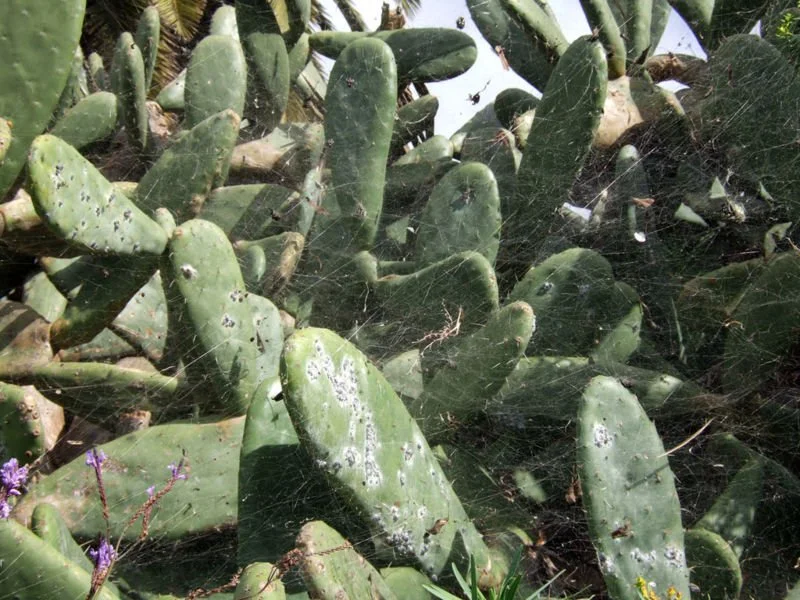
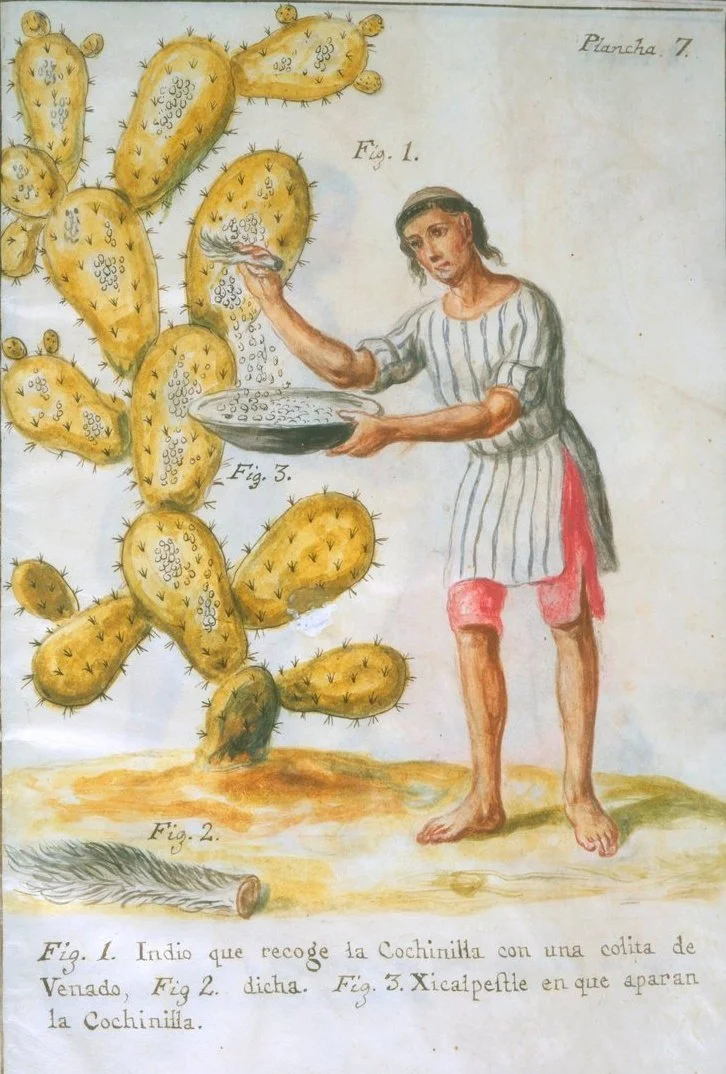
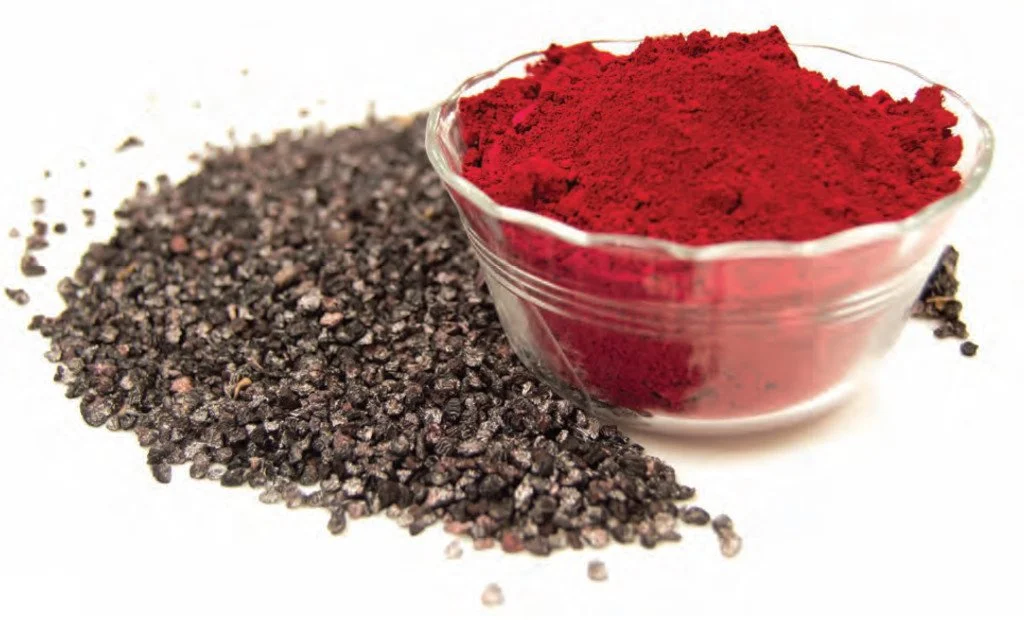
Left to right: cochineal on prickly pear cacti, Mexican Indian Collecting Cochineal with a Deer Tail by José Anotonio de Alzate y Ramírez (1777), dried and ground cochineal
Orange you glad I didn’t say Banana?
(Or, the history of eating, cooking and baking bananas in the United States)
And now to have a look at when North Americans began to eat bananas. First, I turned to Michigan State University’s Feeding America, The Historic American Cookbook Project, and I did an ingredient search for bananas. The earliest banana recipe I found in an American cookbook was from 1844. The Complete Confectioner by Eleanor Parkinson, published in Philadelphia, features a recipe for Banana Bread and also suggests eating bananas “undressed” or raw and also “fried in slices like fritters”.
Then it seems like there may have been a 23 year drought for banana recipes in an American cookbook.
Buckeye Cookery by Estelle Woods Wilcox was published in 1877 in Minneapolis and this cookbook showcases 7 banana recipes. Woods Wilcox notes that “The banana is the most nutritious of all fruits, and is becoming more popular every year”.
Not quite every year, it seems. The next banana recipe I could find is in Miss Parloa’s New Cook Book and Marketing Guide, which was published in Boston in 1880 and has a recipe for Banana Ice Cream. I could locate 3 other cookbooks from that decade that have 2 to 5 banana recipes and one in the early 1890s with a Banana Ice Cream recipe. Then in 1896, the very popular The Boston Cooking-School Cook Book was published. This cookbook, written by Fanny Farmer, has 9 recipes with bananas listed as an ingredient. After the year 1900, it seems that banana recipes become commonplace in American cookbooks.
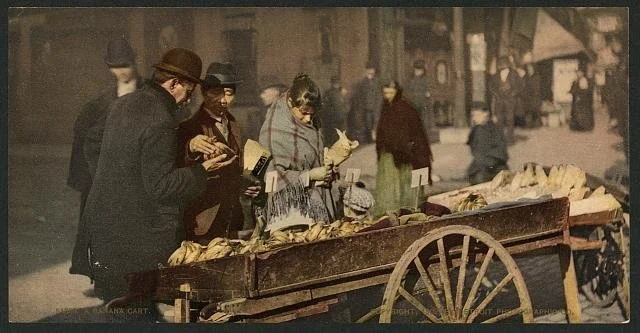
A photograph taken in 1902 of a banana cart in Detroit, from the Library of Congress
How about Canadian Cookbooks? When did us Canuks start cooking and baking with bananas?
For Canadian cookbooks, there isn’t an equivalent website like Feeding America where I can do a simple search, but we do have Liz Driver’s book Culinary Landmarks: A Bibliography of Canadian Cookbook, 1825 – 1949. It took me much longer to look into the Canadian cookbooks of the same era, but it seems that Canadians were slower to jump on the Banana Train when you compare Canadian cookbooks to their American counterparts. Is it because of the extra distance from where bananas are grown? That could be the explanation for many parts of Canada, but I only live about 110 km (70 miles) from Buffalo, New York. Perhaps trade agreements are also to blame.
Keep in mind that my search of Canadian cookbooks from the late 19th-century was certainly not all-encompassing. I couldn’t locate scans of quite a few of the cookbooks online and human error may have factored in as well. I was able to locate 4 Canadian cookbooks during that time period with banana recipes. If you know of any that I’ve missed, please comment and share your knowledge!
The first Canadian cookbook that I found to mention bananas is The Dinner Year Bookby Marion Harland, published in Toronto in 1879. The Dinner Year Book features a recipe for Tropical Snow, which is a fruit salad recipe made of red bananas, oranges, coconut, sugar and sherry. There were very similar recipes for Tropical Snow in a few of the American cookbooks I found.
Next up is The Church of England Institute Receipt Book, edited by Mrs. William Lawson and Miss Alice Jones and published in Halifax in 1888, with a Banana Pudding recipe. Fast forward to about the year 1895, with the Silico Standard Cook Book, published probably somewhere in Ontario. This book promotes Silico Abrasive Soap and probably features more testimonials about Silico Soap than it does recipes, but there’s a Banana Fritter recipe nestled amongst the accolades.
The last banana-mentioning Canadian cookbook from the 19th-century that I could locate is The New Galt Cook Book, a community cookbook published in 1898 in Cambridge, Ontario. I’m quite familiar with this cookbook because I prepared 10 recipes from it last May at a Victorian Tea event put on by the Fashion History Museum in Cambridge. I’ve also made three recipes from The New Galt Cook Book here on my blog: Scalloped Turnips, Ammonia Cakes and Icing for Cake. I’ve never made a banana recipe from this cookbook, though, and there are two: Banana Cream and Baked Bananas.
The Beginnings of the Banana Industry in the Americas and the Caribbean Islands
Except for one errant 1844 banana bread recipe, both Canadian and American cookbooks began incorporating a banana recipe or two at the end of the 1870s, and the frequency of banana recipes increased in America especially during the last two decades of that century. Refrigeration, steam ships, unscrupulousness and ambition seem to be the reasons why bananas became more popular and available during that time period. Let’s have a look at the early years of the company that we know today as Chiquita.
The three main characters in this story are as follows: in the early 1870s, American businessman, cattle rancher and railroad tycoon Minor Keith began planting bananas beside the railroad tracks of the National Railroad of Costa Rica that was under construction at that time. During that decade, Captain Lorenzo Baker began importing bananas to the United States via schooners and the bananas that made their way to Boston were sometimes distributed by Andrew Preston.
In 1882, Andrew Preston, Captain Lorenzo Baker and a handful of investors established the Boston Fruit Company. The company began establishing banana plantations in Jamaica. The variety of banana that was cultivated in this era was mostly the Gros Michel banana, which looks similar to our bananas today, but had a sweeter taste. The Gros Michel variety of banana became mostly extinct by the 1950s because of Panama Disease, a fungus that lives in the soil. The Cavendish banana, which is the banana we eat today, was found to be immune to Panama Disease and was planted on the same land where Gros Michel was previously grown. In recent years, however, a mutation of this fungus has begun to infect the Cavendish banana.
Back to the Boston Fruit Company. In 1883, steamships were added to the company’s fleet of schooners. The fleet was painted white to deflect the sun and eventually refrigerated steam ships, refrigerated railroad box cars and a network of refrigerated warehouses contributed to the banana’s enlarged distribution reach.
Meanwhile in Costa Rica, the railroad network was completed in 1890 and at some point Minor Keith created the Tropical Trading and Transport Company, shipping his bananas via steamboat to New Orleans. He also expanded his banana trade into Columbia and Panama. In 1899, Keith lost $1.5 million when the broker corporation Hoadley and Company declared bankruptcy, which was a big factor leading to merger discussions with the Boston Fruit Company.
In 1899, the Tropical Trading Company joined forces with the Boston Fruit Company to form the United Fruit Company, which later became known as Chiquita.
What I’ve written here is just the tip of the ice berg. I haven’t even touched upon the unscrupulousness I hinted at, or the banana “propaganda” that was produced during this time period. If I’ve wet your appetite, here’s some suggested further reading:
VOX: The Improbable Rise of the Banana, America’s Most Popular Fruit
WIRED: Humans Made the Banana Perfect – But Soon, It’ll Be Gone
I don’t think we all should feel sad because we are missing out on eating Gros Michel bananas, though. Since finding out about the near extinction of the Gros Michel banana because of Panama Disease, I have been asking the senior citizens in my life if they remember that the bananas of their childhood tasted better or even just different, and not one person remembered that they did.
It is still possible to purchase a Gros Michel banana at an exorbitant price. Recently, Hank Green did just that and made a YouTube video about it. I’ll link it below!
Read Mrs. Beeton’s Cold Sweets (1900) online: