
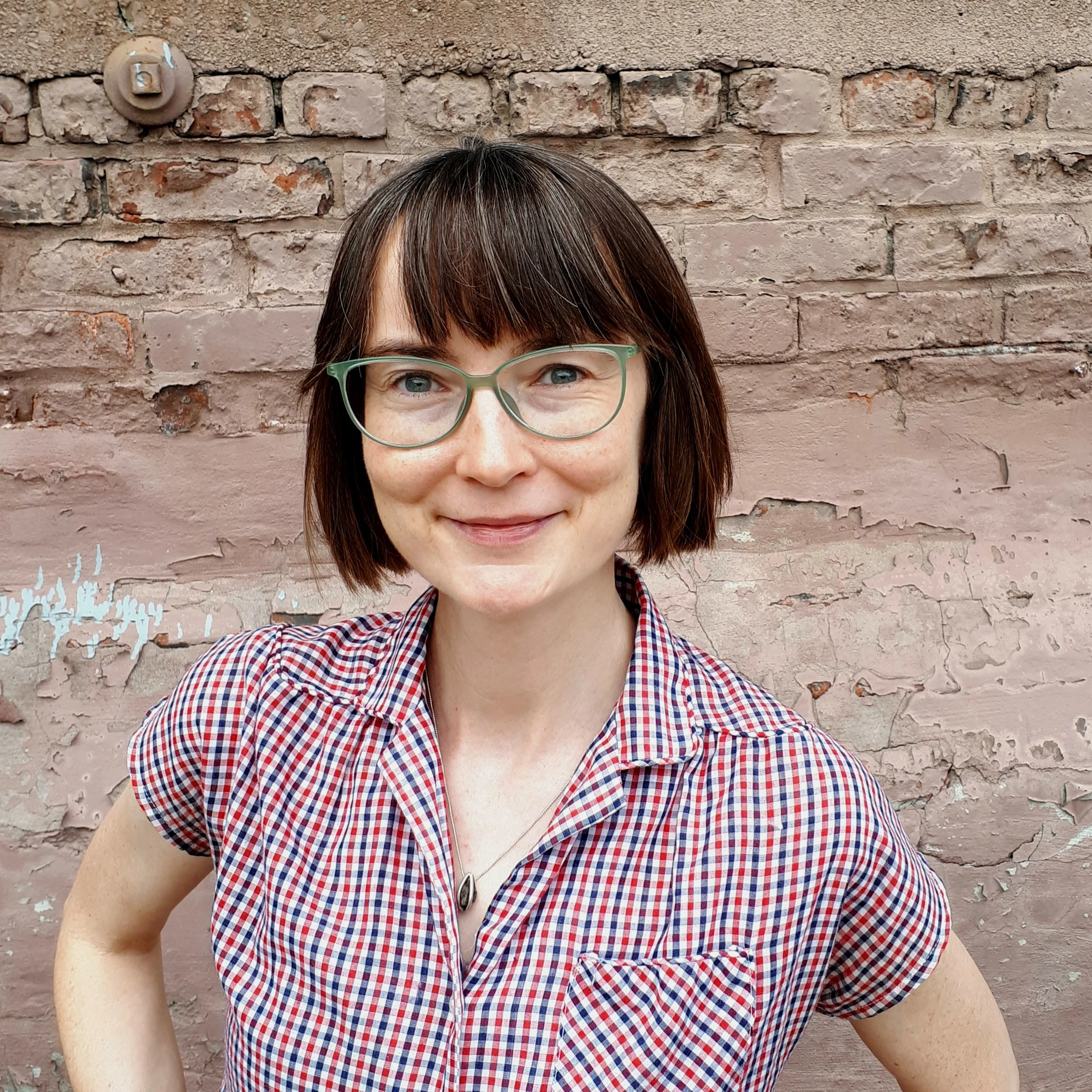
About Julia Baird:
I am fascinated by the everyday history of how people lived their day-to-day lives, because I believe that if we contemplate & understand the past, we can shape a better future.
I've worked as a Historical Interpreter in Canadian historic house museums with a culinary focus for almost two decades, from cooking over an open hearth and with a brick oven at a farm house at Gibson House Museum in Toronto, to cooking and baking below the stairs with a large wood-fired range at Dundurn National Historic Site, an Italianate villa in Hamilton, Ontario.
My longest stint working as a Historic Cook was at Sir Allan MacNab's Dundurn National Historic Site, an Italianate villa in Hamilton, Ontario. There, I cooked and baked with a sizable wood-fired range complete with two large ovens. The basement kitchen also features a working gasolier, water pump, a row of servant's bells and a non-functional dumbwaiter and open hearth. Dundurn Castle also brags a 2 acre kitchen garden on the same footprint as Sir Allan's kitchen garden that blooms with historic fruit, vegetables, flowers and herbs during the warm season.
Each day at Dundurn, I prepared seasonal food (often from the kitchen garden) to serve to school children and tour group and special event visitors. I made preserves during harvest season and made thousands of cookies, cakes and puddings to prepare for the busy Christmas season. I must have made the recipe locally known as "Dundurn Castle Shortbread" 10, 000 times! Dundurn National Historic Site is also where I got my start teaching historic cooking classes and I've taught classes to adults on the topics of Christmas Baking, Pastry, Soup, Victorian Tea, Anglo-Indian Cuisine, Victorian Tea, Tomatoes, Strawberries, and just random Seasonal Recipe Cookery Classes during the harvest season
Teaching historic cooking classes and preparing food to serve to visitors is where my love for Food History was conceived, while cooking, baking & preserving with an open hearth, brick oven and wood-fired range. All the while, seeking out recipes from Victorian cookbooks that made use of seasonal and heirloom vegetables, herbs, fruits, and other garden produce. I always have enjoyed the challenge of interpreting the often hard to follow recipes that frequently hold assumed knowledge and obsolete measurements
After a while, this passion started to leak into my personal life and I began to read and do research about culinary history on my own time for fun! If I am in a thrift store or second hand book store, I always make a beeline to the cookbook section first to see what old treasures I can find. I need to buy a bigger bookshelf.
And so I've begun this Food History blog, and I'll be following along wherever my curiosity leads me. Since a cookbook is history as soon as its published, I've arbitrarily decided to focus on cookbooks and recipes that are older than me, so you'll find recipes from the beginnings of written communication to 1975.
Right about when I was beginning this blog, Nelles Manor Museum in Grimbsy, Ontario was searching for a teacher to show the community how to cook and bake using the original open hearth from the 1780s or 1790s. And so I taught 5 sold out open hearth cookery classes, complete with a full meal prepared by the participants. Unfortunately, the day I did the recipe testing for the last baking class was the first day that toilet paper and other essentials were disappearing from the grocery store shelves in early April 2020, and the class was never rescheduled.
If you'd like to learn more about preparing food using an open hearth, a search for Open Hearth Cookery or a click on that tag will bring you to explanations for all my recipe testing and use of a reflector oven, dutch oven, frying pan & trivet and griddle & crane at Nelles Manor Museum.
Recently, I have had the privelege to work as an Interpretive "Park Ranger" with Parks Canada for 3 summer seasons in the Banff area. For the first two seasons, I worked in the north end of Banff National Park in Alberta around Lake Louise, Moraine Lake and along the Icefields Parkway that leads to Jasper as well as Yoho National Park in British Columbia.
There, I did teach some local history such as railroad history at the Spiral Tunnels in Yoho and the history of the Swiss Guides who, starting in the late 19-century, came to Canada to guide and keep wealthy would-be mountaineers safe when visiting the Chateau Lake Louise and other Canadian Pacific Railway-owned hotels.
But mostly, I educated national park visitors about respectful and safe wildlife interactions, bear safety, species at risk such as Wolverines, invasive species (especially aquatic invasive species and invasive tree diseases), wildfires & prescribed burns and at-risk animal species. I also had the privelege of teaching about paleontolgy because the Burgess Shale in Yoho National Park is a gold mine of Cambrian Period fossils! We even had our own set a 506 million year old fossils in our Interpretation office. I had the opportunity to present theatrical and musical (sometimes with puppets!) campground amphiteatre shows, as well as game-based activity tables or displays of bear pelts or horns and antlers. I count myself as being very fortunately to have the opportunity to spend three summers living and working surrounded by some of the most beautiful scenery on planet Earth.
On top of explaining who I am, I should probably also explain who I am not.
I'm not John Lennon's half sister Julia Baird – you'll find her online at http://juliabaird.eu/
I'm also not Julia Baird, Australian journalist and author – her website is http://juliabaird.me/