Spinach and Ricotta Dumplings
You’ll find this recipe in:
By Craig Clariborne
New York, 1961
Original Recipe:
Julia’s Warning
I actually don’t recommend making this recipe. I had to make the recipe twice and change the cooking method from the original recipe from boiling to frying to end up with something edible. If you choose to try making these Spinach and Ricotta Dumplings, do yourself a favour, ignore the original recipe and follow my interpretation of the recipe.
SPINACH AND RICOTTA DUMPLINGS
4 servings
1 pound spinach, chopped
¾ pound ricotta or cottage cheese
½ teaspoon salt
2 egg yolks
5 tablespoons grated Parmesan cheese
Flour
¼ cup butter, melted
1. Cook the spinach until just tender. Drain well and press through a sieve.
2. Mix the spinach, ricotta cheese, salt, egg yolks and three tablespoons of the Parmesan cheese.
3. Drop the mixture from a spoon into flour and shape into small balls. Cook in a deep kettle of simmering water about five minutes. Remove with a perforated spoon to a hot platter. (Julia’s warning – this cooking method didn’t turn out well for me! I ended up frying my dumplings. Follow my recipe below instead of the original recipe.)
4. Sprinkle the dumplings with butter and the remaining Parmesan cheese.
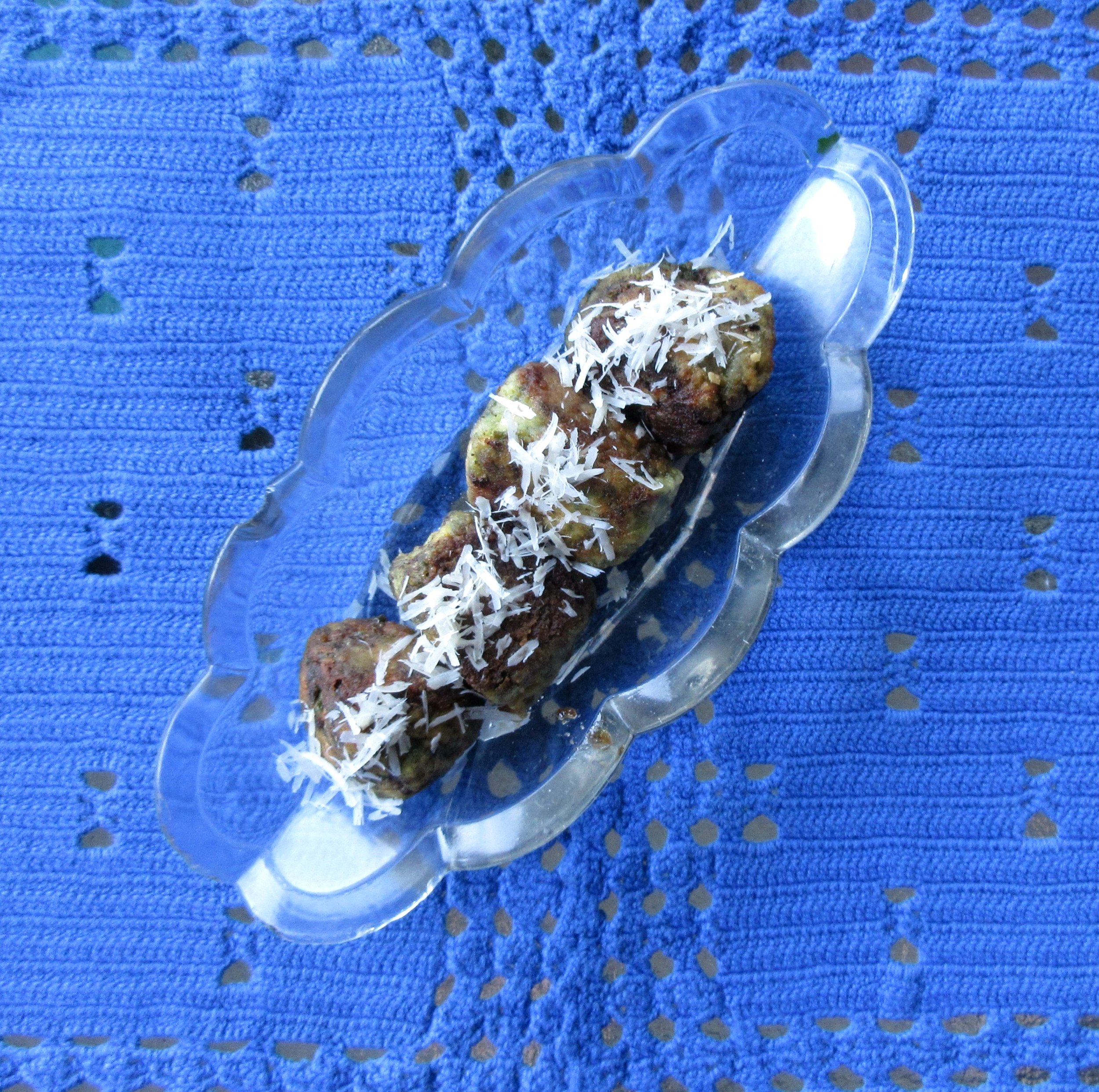
My Recipe:
1 lb spinach, chopped – 454 g
1 ½ cups ricotta or cottage cheese – 340 g
½ teaspoon salt
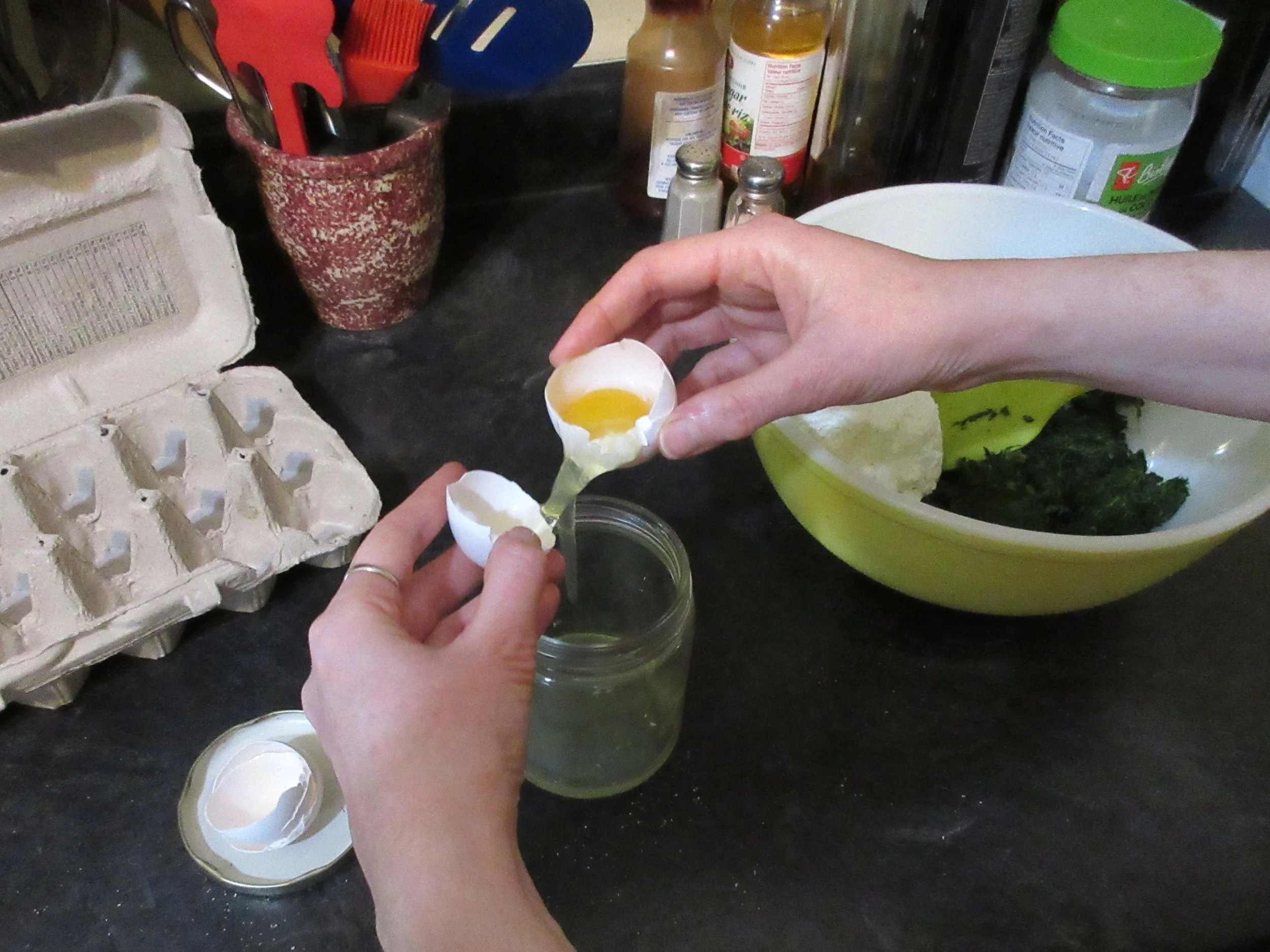
2 egg yolks
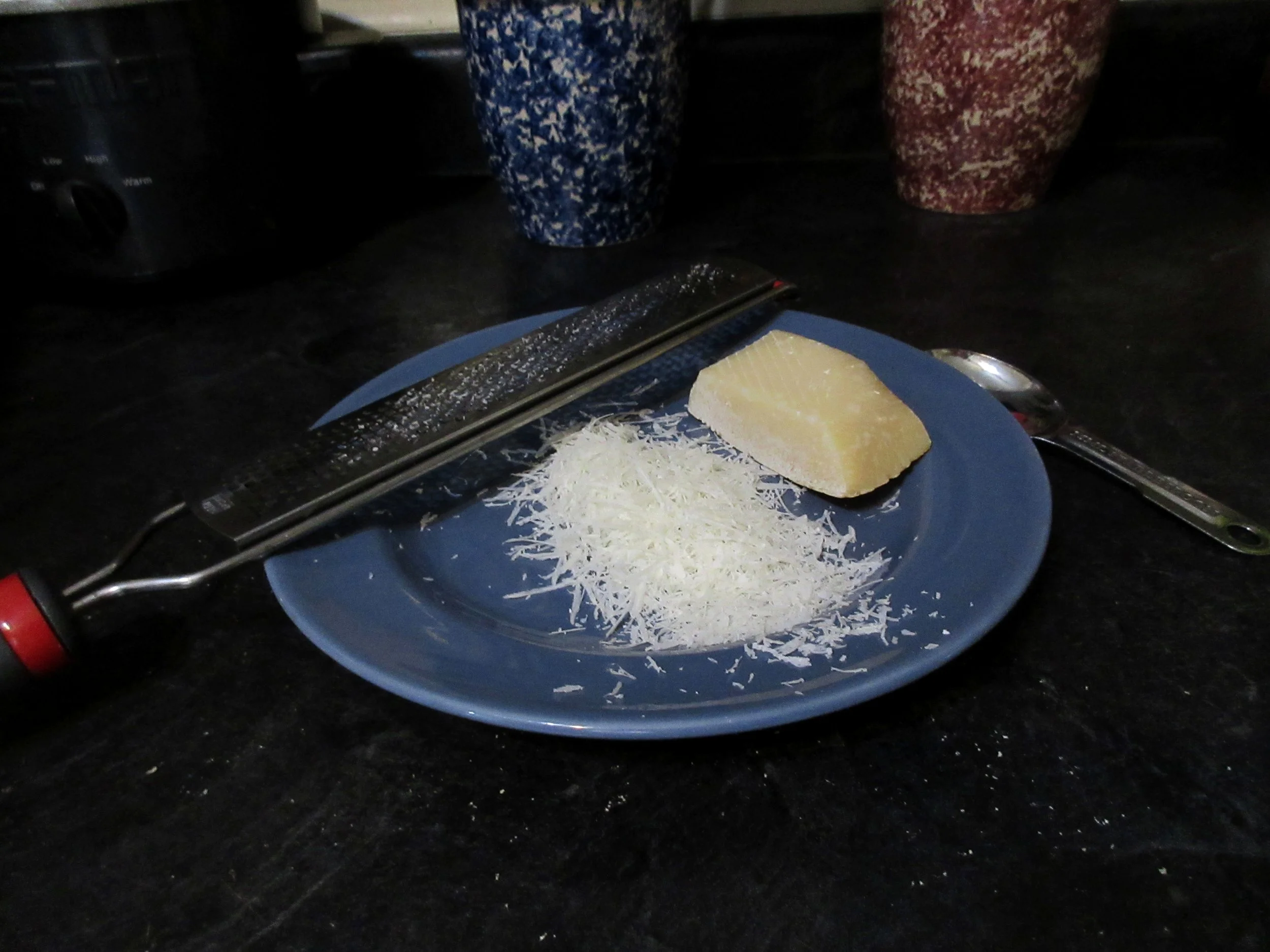
3 tbsp grated Parmesan cheese, and more for serving
Flour (about ¼ cup)
Butter for frying
Optional suggestion: add finely chopped onions, garlic or black pepper for more flavour
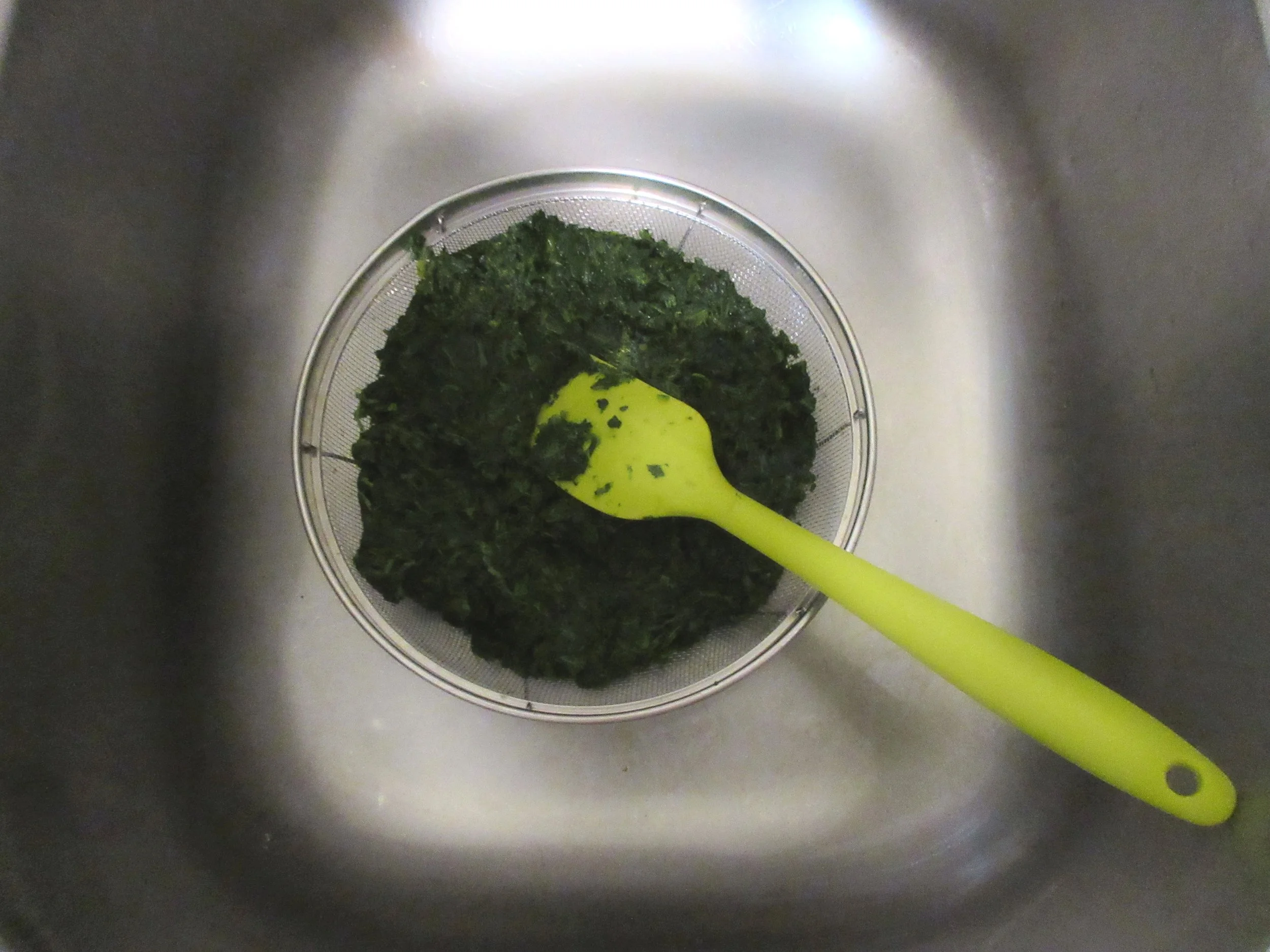
1. Steam the spinach in water until just tender, or open a package of chopped frozen spinach (I used a 500 g package). Press the spinach through a sieve with a spatula or wooden spoon until you’ve removed all the water.
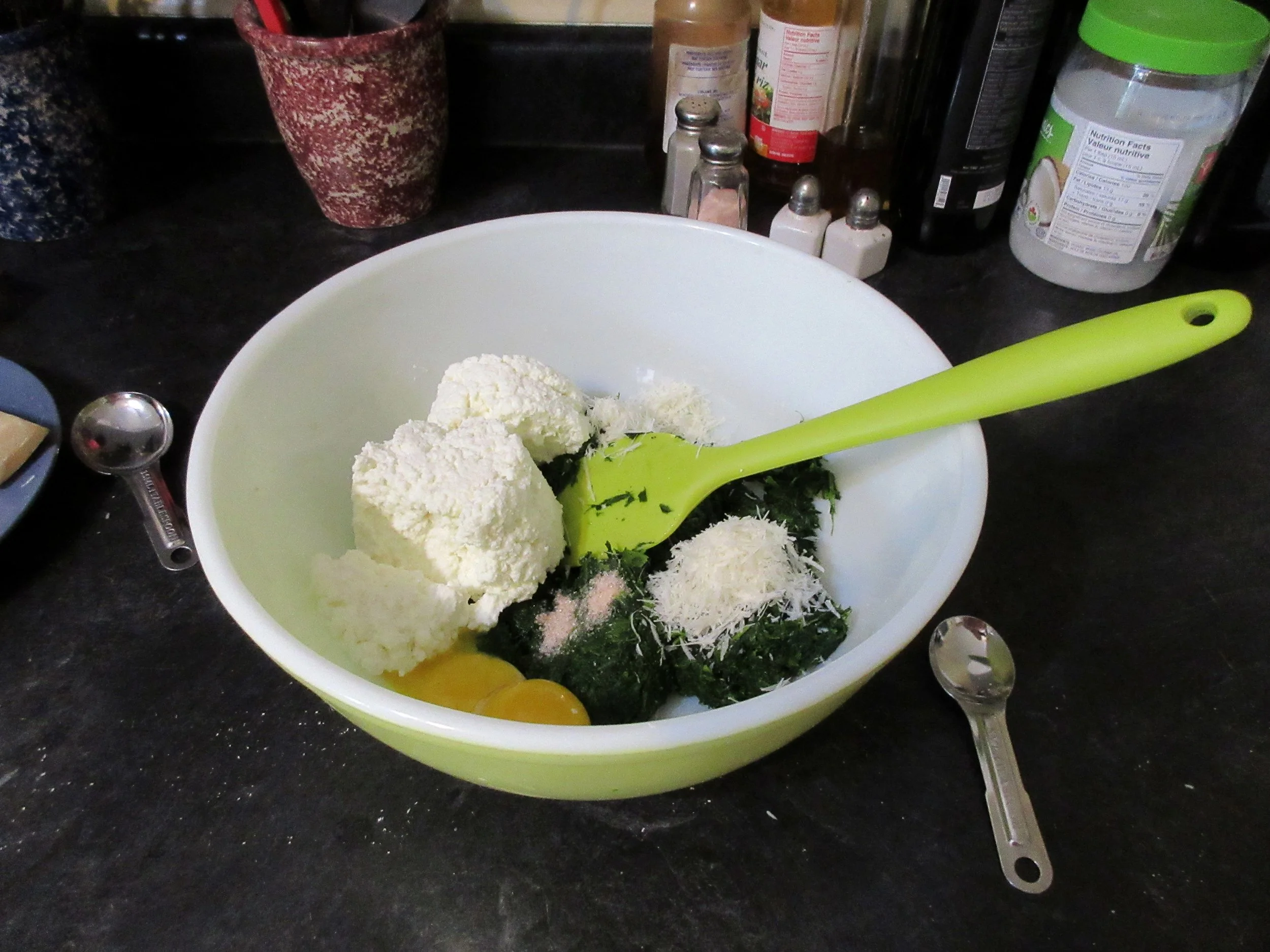
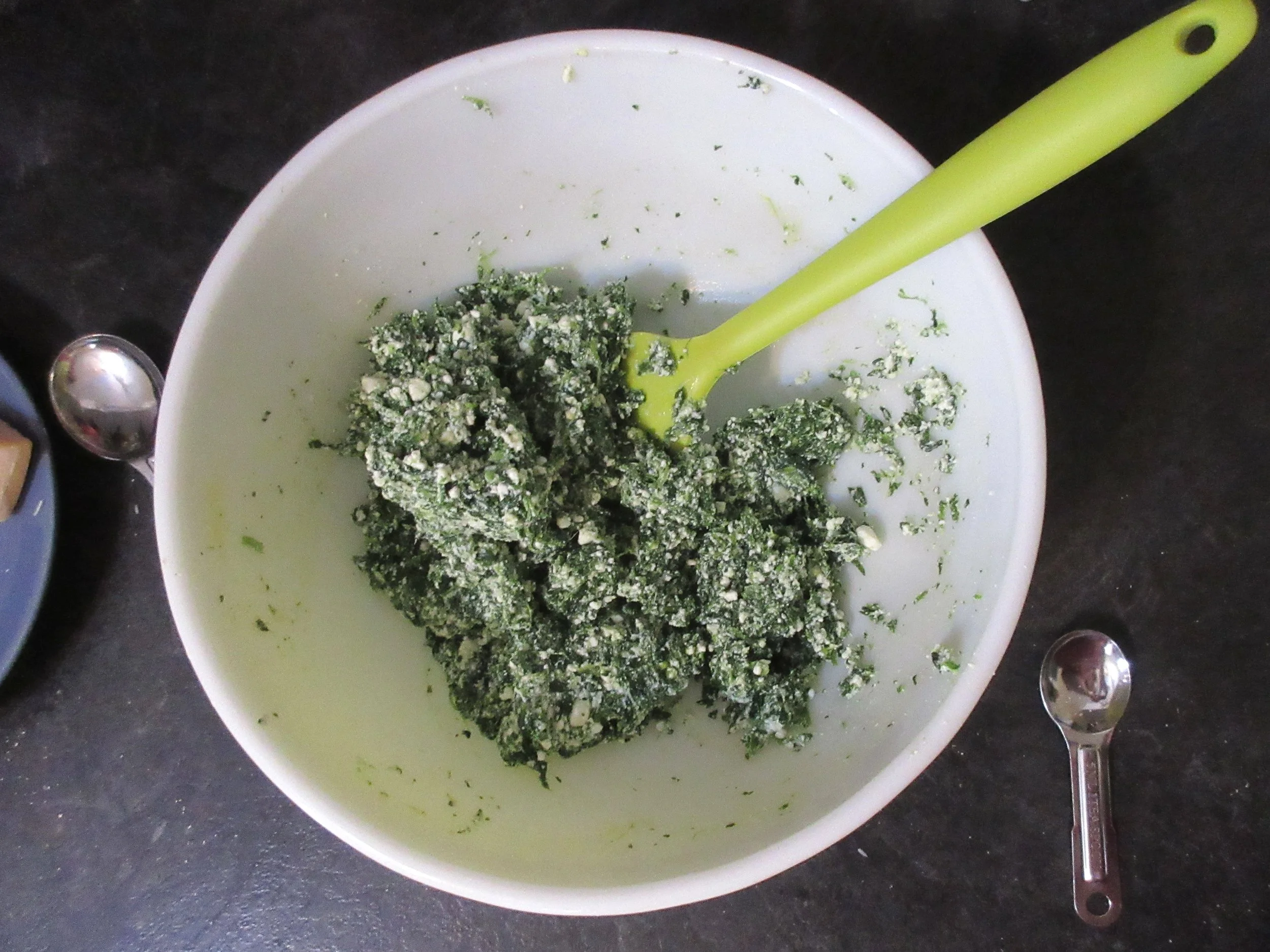
2. Mix the spinach, ricotta cheese, salt, egg yolks and the Parmesan cheese.
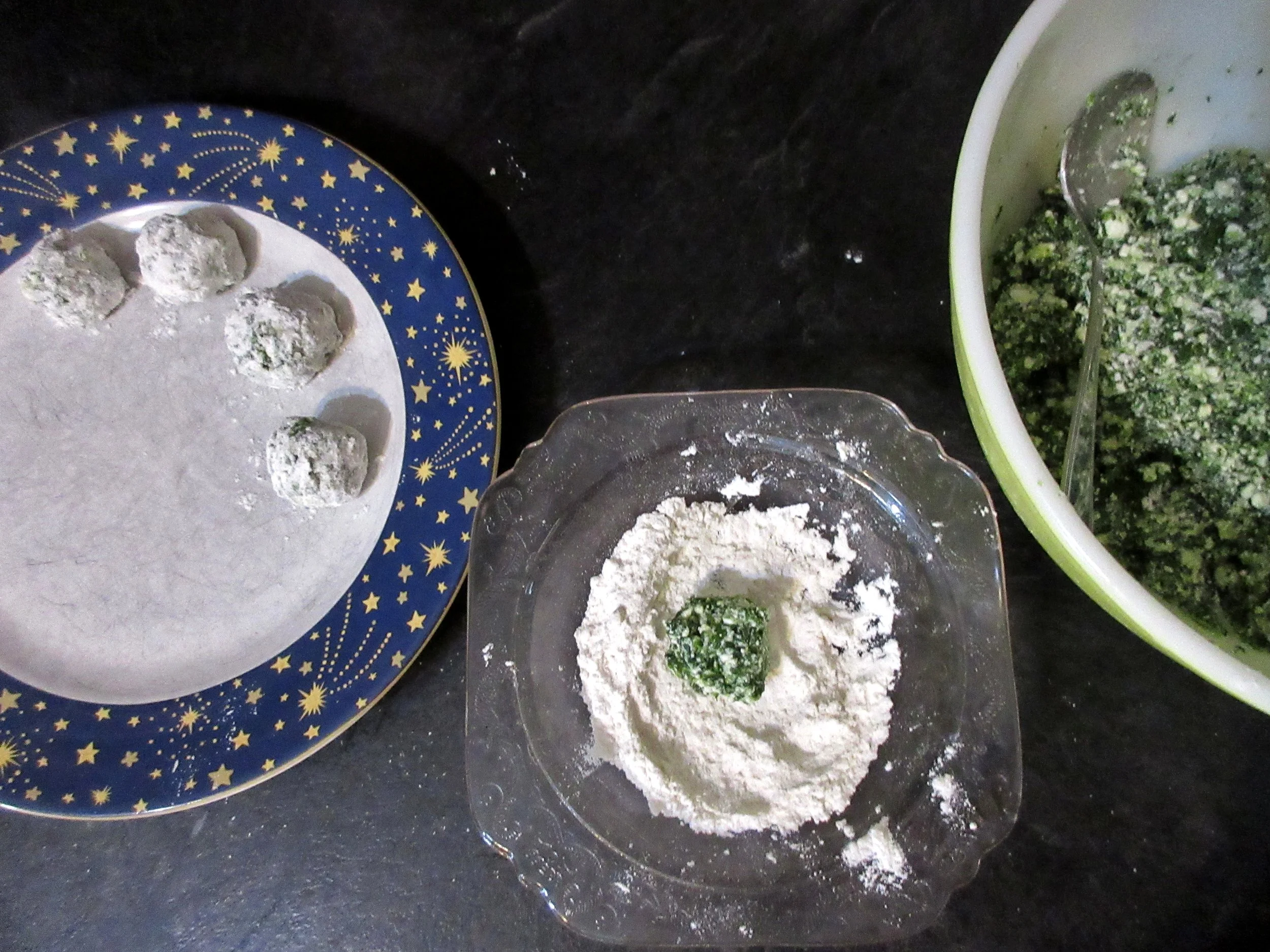
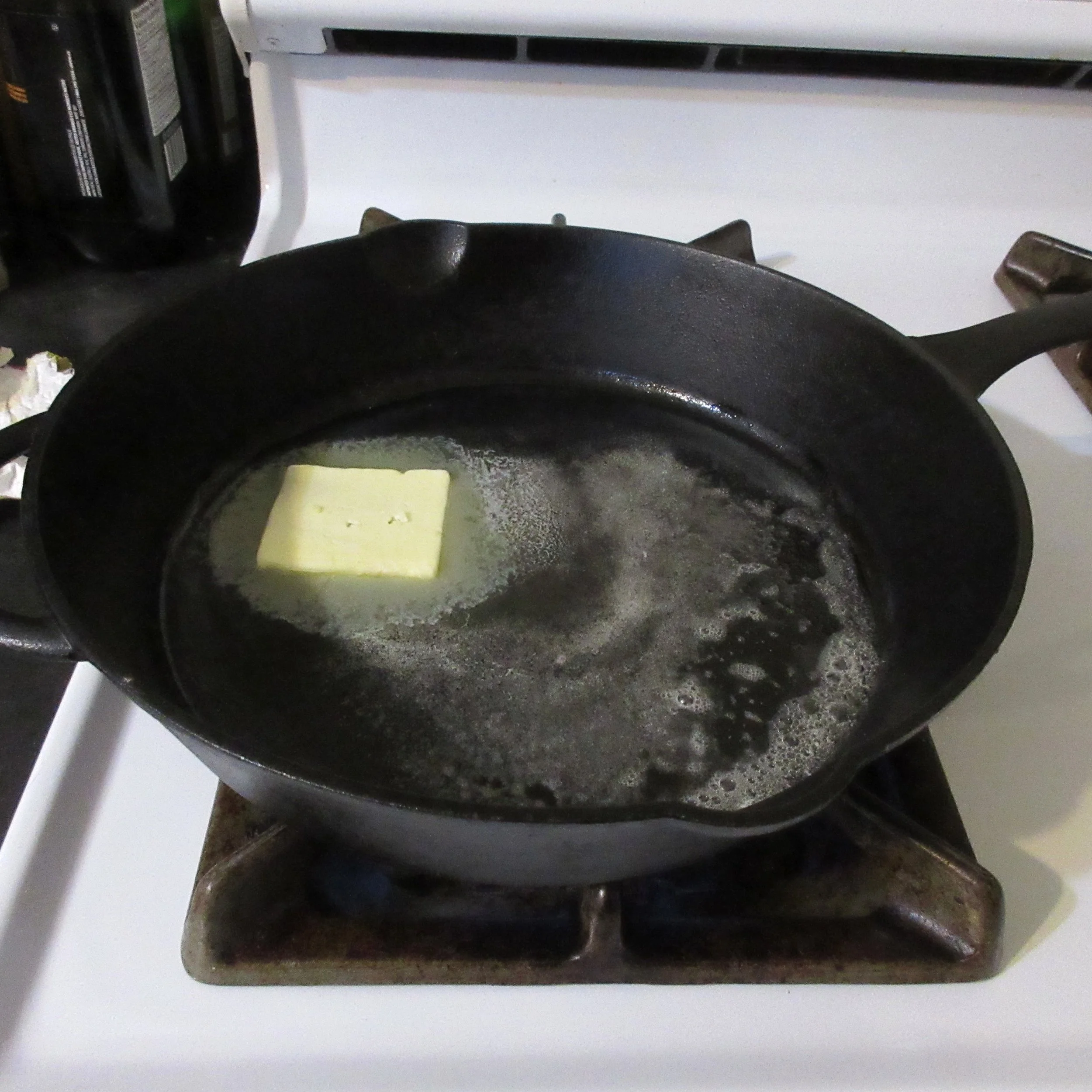
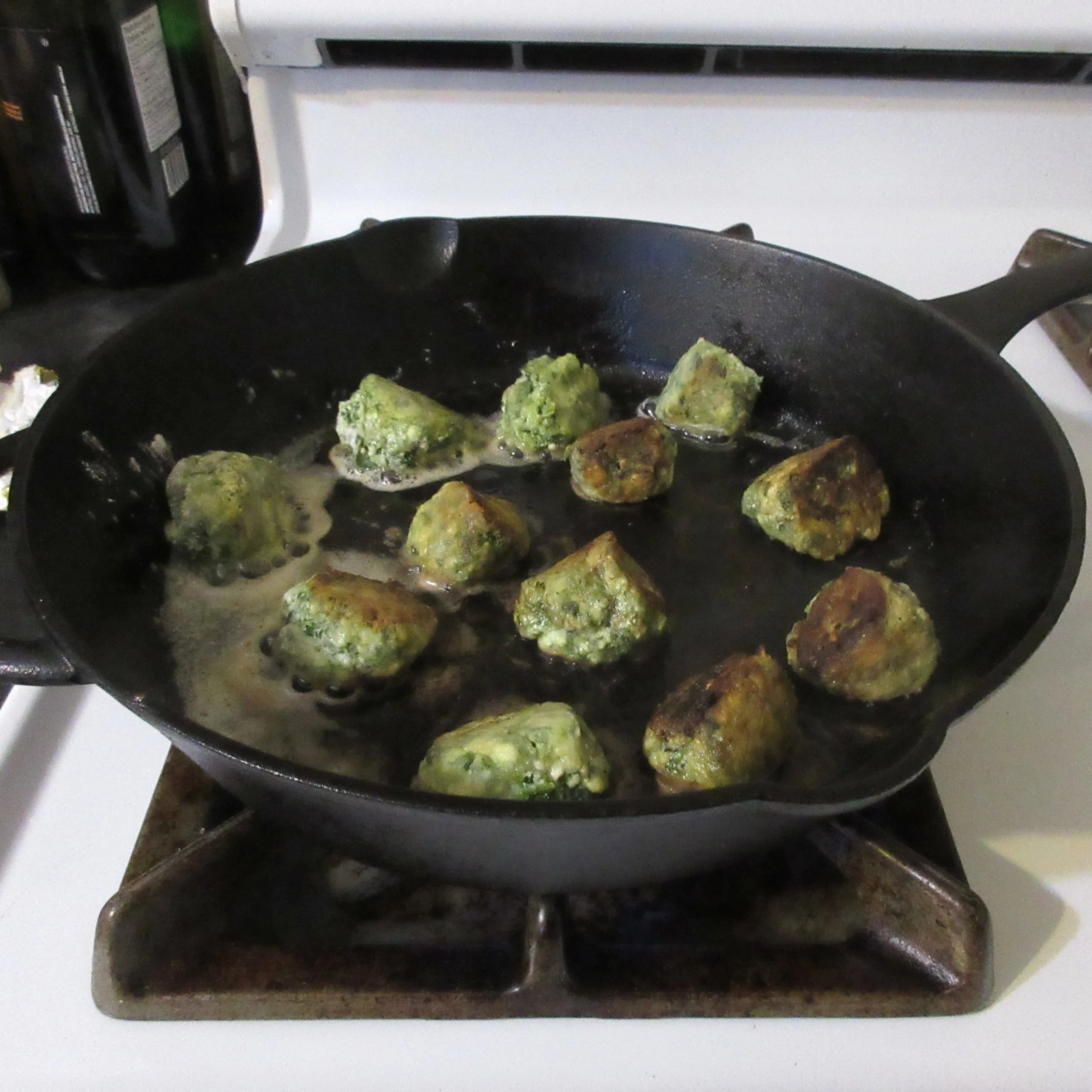
3. Form the mixture into small balls and roll in flour. Melt butter in a frying pan and fry the dumplings until browned on all sides. Sprinkle with Parmesan cheese before serving.
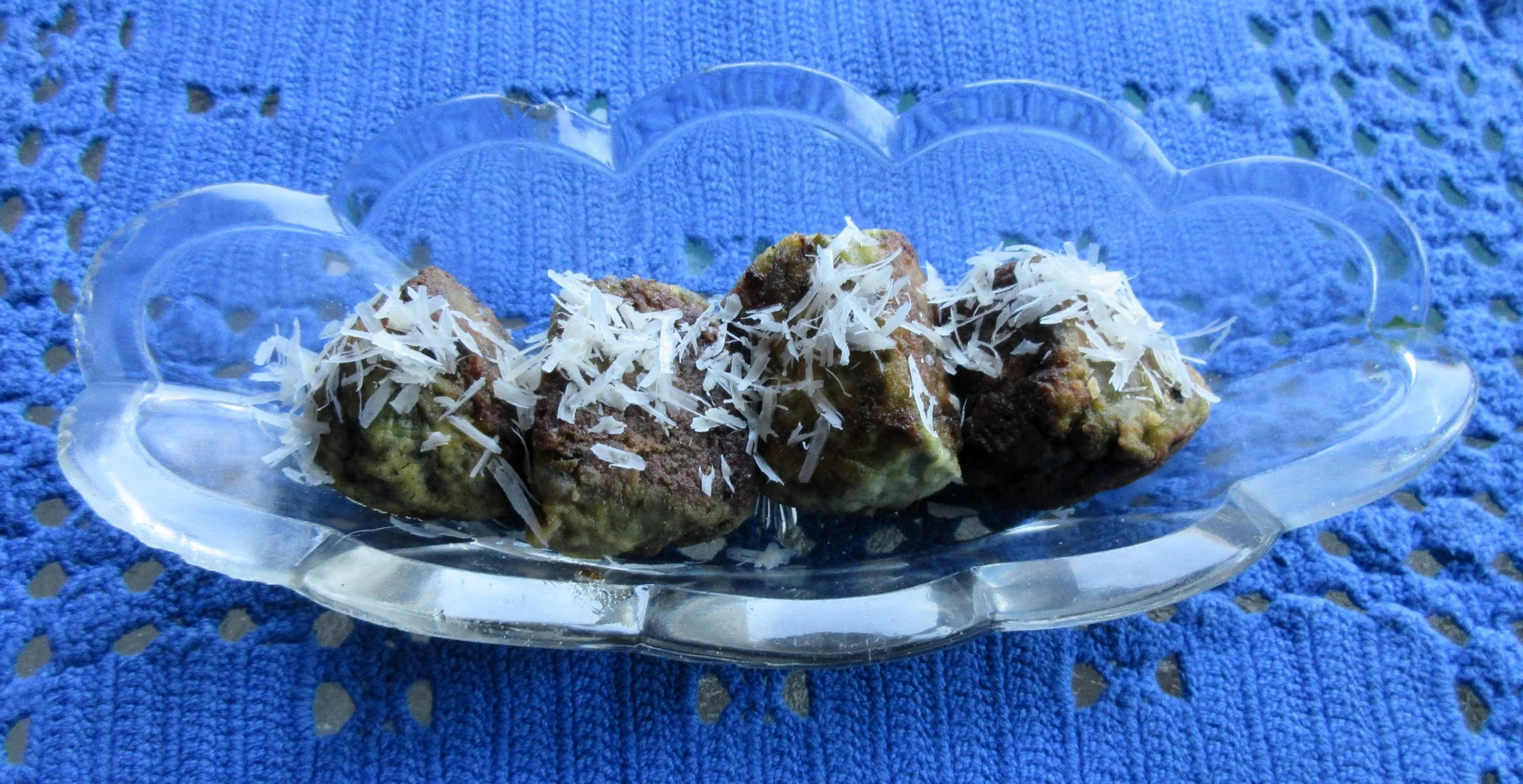
This recipe makes a bit more than 30 Timbit-sized dumplings (3-4 cm or 1¼ – 1½ inches in diameter)
Let’s get into some Canadiana…
As I’ve already mentioned, when the dumpling recipe instructed us to “shape into small balls”, my first instinct was to make the balls Timbit-sized (how Canadian of me). Afterwards, I took a moment to think about my readers and realized that most of you don’t live in Canada and might not have any idea what I’m talking about!
You might call Timbits “Donut Holes” where you live, but I can tell you that not one Canadian will call them that. They are Timbits. However, what they actually are...is doughnut holes: a bite-sized doughnut fashioned out of the center cut out of the donut ring. The size varies a bit, but Timbits are roughly 3-4 cm or 1¼ – 1½ inches in diameter.
Timbits are called Timbits because they are served at Tim Hortons, which is THE most prevalent coffee and doughnut shop in Canada. Tim Hortons restaurants are everywhere, especially in Ontario. I know of several instances where there are two Tim Hortons directly across the street from one another, but both restaurants are busy. In Hamilton, Ontario, I could walk to 15 different Tim Hortons restaurants that are located 2 km (1 ¼ miles) or less from my house.
I took the opportunity to grab a 10 Pack of Timbits to photograph for you, and I decided to venture a little bit farther than 2 km from my house to get them. That’s because about 4 km (2 ½ miles) away from where I live is the location of the very first Tim Horton’s restaurant!
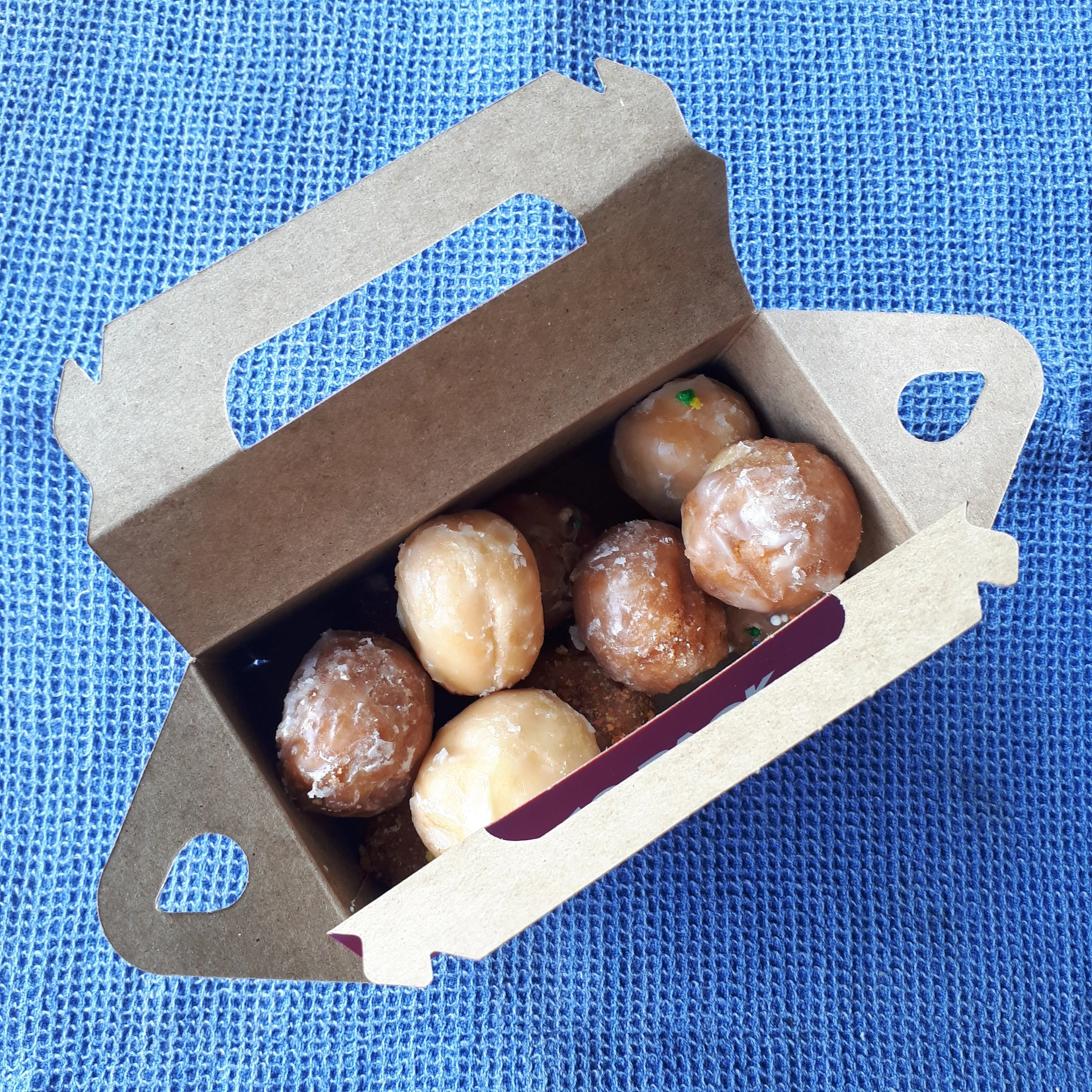

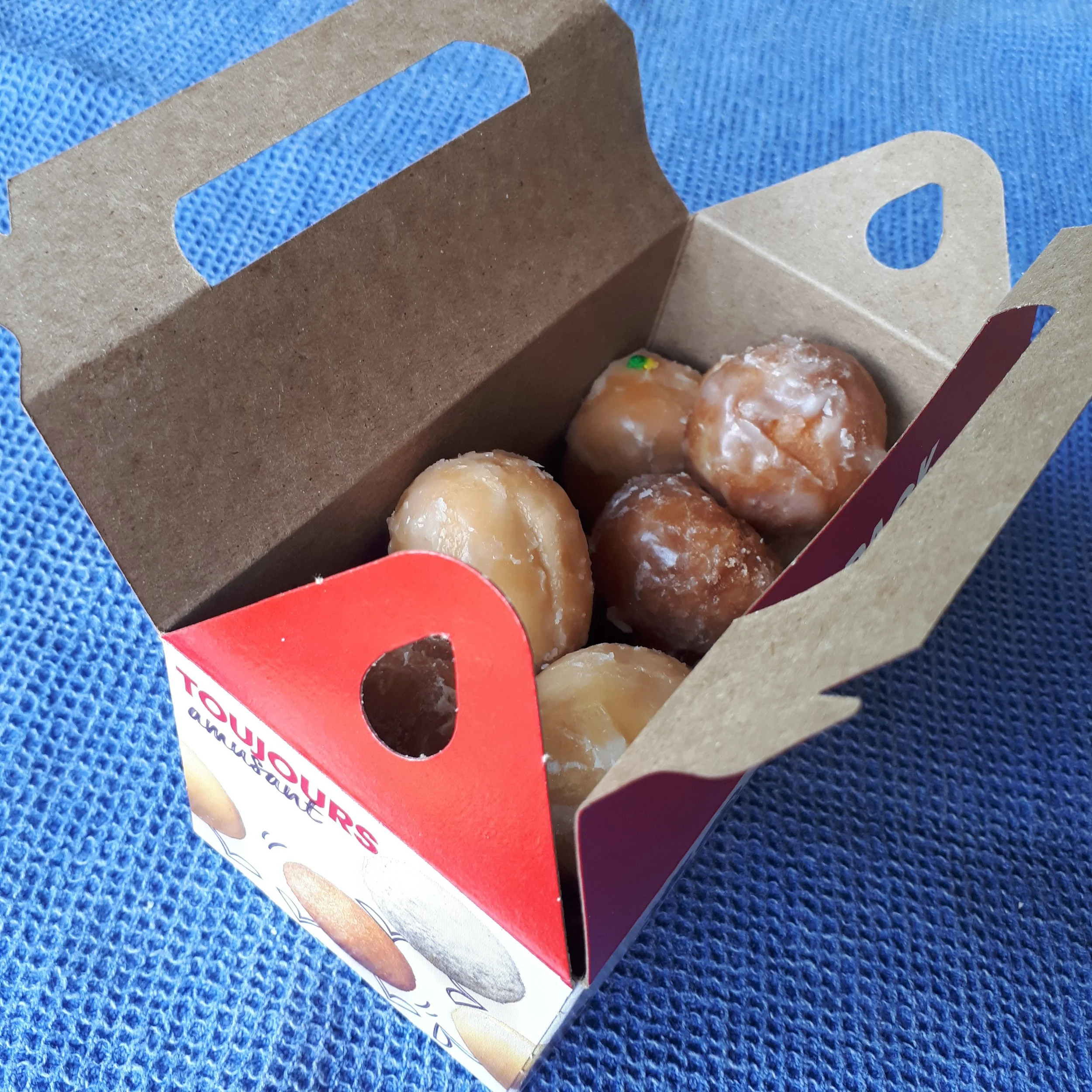
The First Tim Horton’s Restaurant
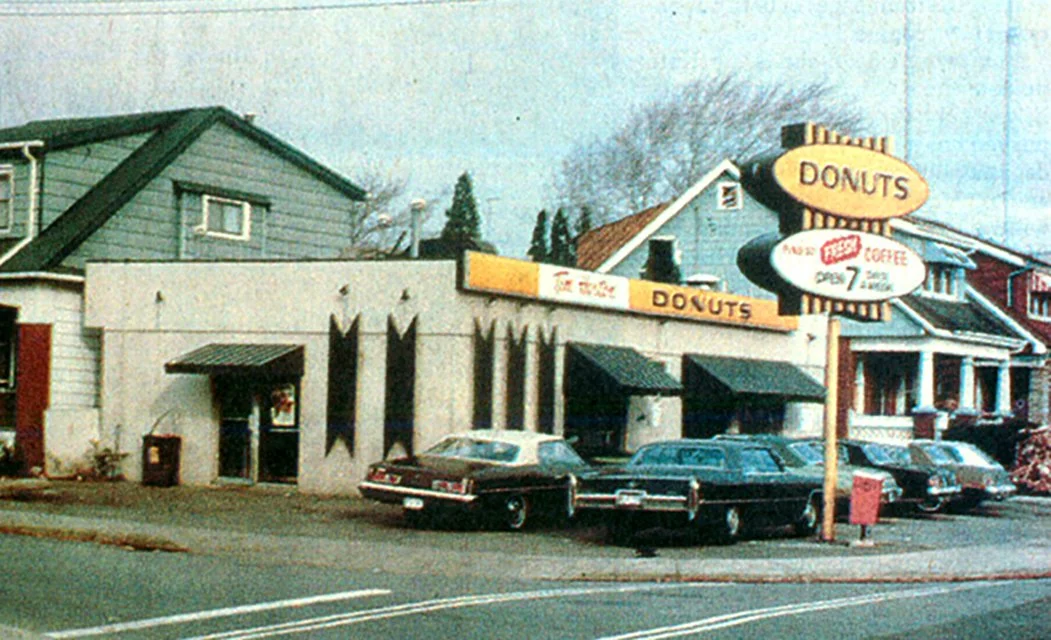
The First Tim Horton’s restaurant is here in my hometown of Hamilton, Ontario at 65 Ottawa Street North and it was opened on May 17, 1964 by Tim Horton and his business partner Jim Charade. Tim Horton was a professional hockey player in the National Hockey League, who played for the Toronto Maple Leafs from 1952 – 1970. At the end of his career, he played for the New York Rangers, Pittsburgh Penguins and Buffalo Sabres before his untimely death from a car accident in 1974.
During Tim Horton’s career, compensation for hockey players in the NHL was not nearly as lucrative as it is today, so the coffee & doughnut shop was opened to supplement his income in the off-season. He had launched less-successful business ventures (a burger restaurant and a car dealership) before this restaurant, but he struck gold with this concept! This photograph shows what the first Tim Horton’s restaurant on Ottawa Street in Hamilton looked like in its early years (photo courtesy of Hamilton Public Library Local History & Archives https://lha.hpl.ca/historical-images).
When I went to buy the Timbits, I snapped some photos of what the First Tim Horton’s restaurant looks like today. Out front, there’s a statue of Tim Horton shooting a puck in his Toronto Maple Leafs jersey. Tim was into current events and wore a face mask to protect patrons visiting his restaurant in case he was an asymptomatic carrier of COVID-19.
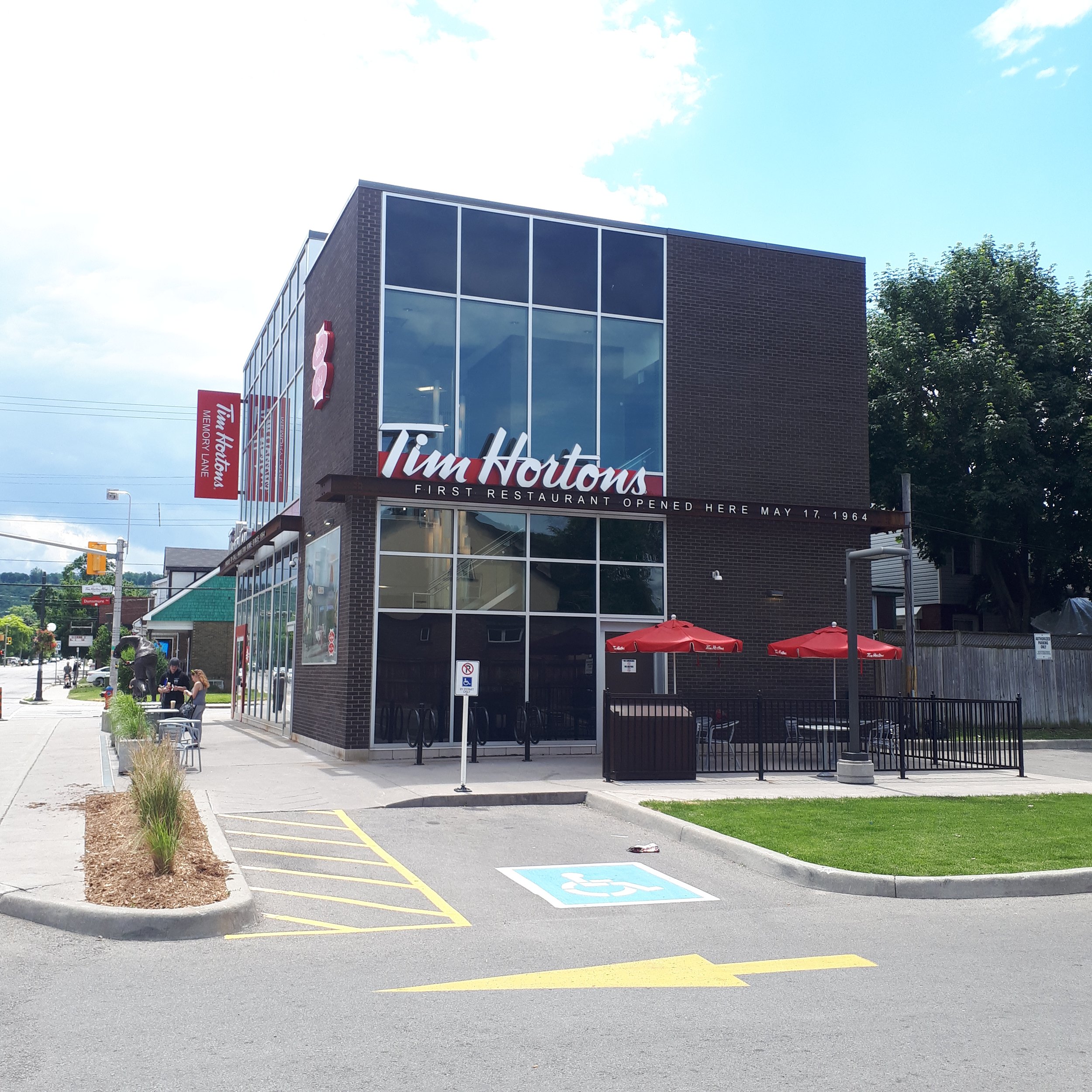
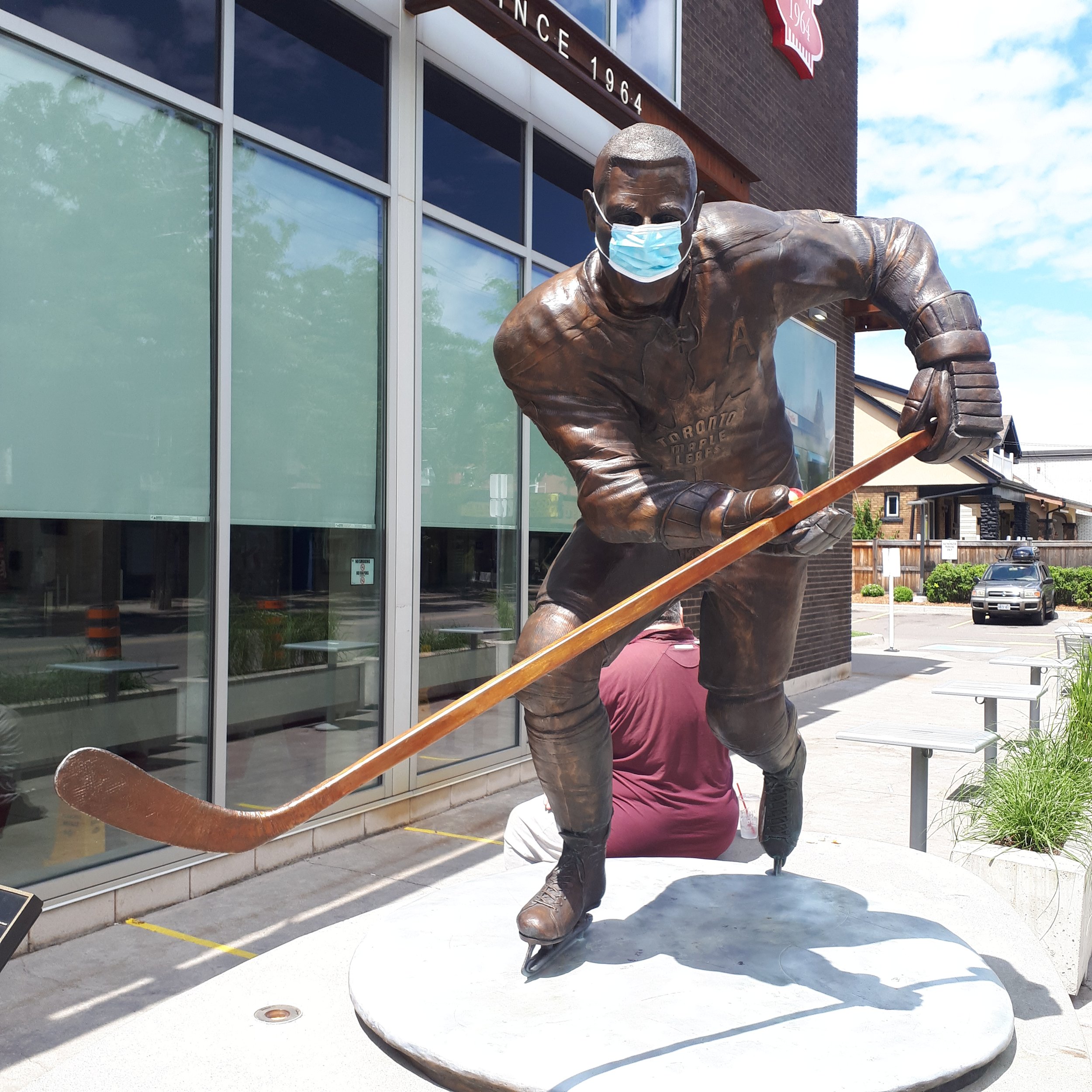
When I went to buy the Timbits, I snapped some photos of what the First Tim Horton’s restaurant looks like today. Out front, there’s a statue of Tim Horton shooting a puck in his Toronto Maple Leafs jersey. Tim was into current events and wore a face mask to protect patrons visiting his restaurant in case he was an asymptomatic carrier of COVID-19.
If you ever visit the Tim Hortons on Ottawa Street North in Hamilton, you can order yourself some food and also check out a small museum on the second floor. BUT If you’re reading this when COVID-19 is still a concern, you may not be able to go up to the second floor to see the museum displays (that part of the restaurant was closed when I was there).
Since I can’t get up to the museum on the top floor these days, here’s a couple of previously-taken pictures of the replica 1960s Tim Horton’s counter you’ll find up there. If you have a look at the menu, you’ll notice that a dozen doughnuts cost $1.25, but there’s no Timbits on the menu. That’s because Timbits were introduced in 1976.
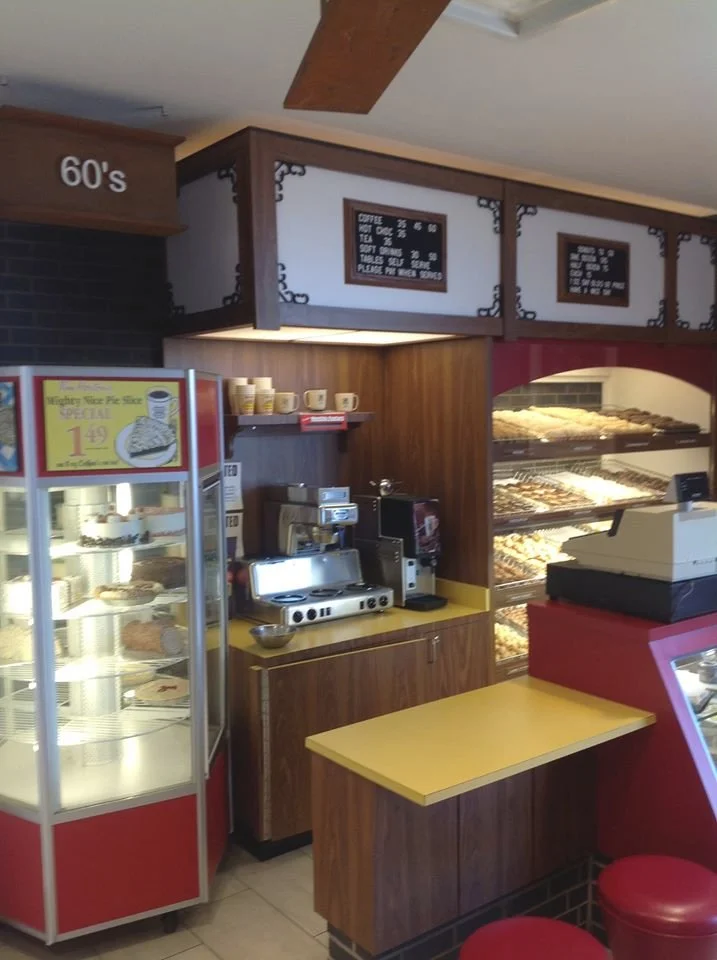
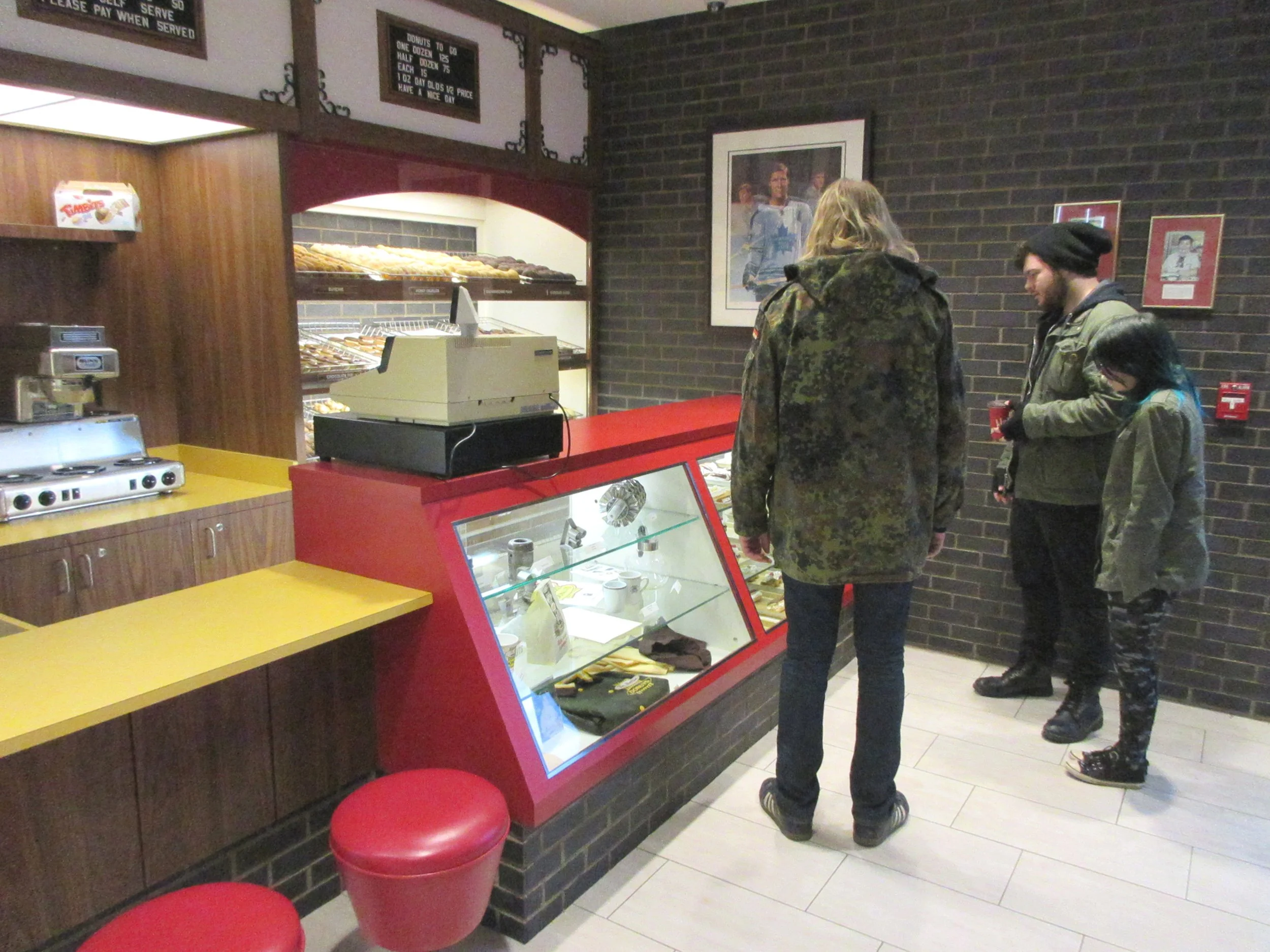
The counter is not all you’ll see if you visit the museum space. There is also a display wall with uniforms, packaging, marketing materials and other artifacts & ephemera. Fun fact: you may have noticed that I’ve been writing both Tim Horton’s and Tim Hortons, depending on the time period. The apostrophe was dropped from the restaurant name in the 1990s. Although Tim Horton’s is grammatically correct in English, the apostrophe was deemed to violate Quebec’s French language laws for signs and the restaurant name is Tim Hortons for everyone now.
We’re living in a very interesting time in history right now… Since I used the very Canadian measurement of a Timbit in this recipe, I thought I’d end off with some other very Canadian measurements used in this time of COVID-19. Let’s have a look at some public social distancing signs in Hamilton and Toronto, Ontario.
Officially, Canadians use the metric system, but in actuality, we use a very strange mixture of metric & imperial. I took the first picture last night when I went for a walk last night here in Hamilton. The City of Hamilton described the recommended space between you and a stranger as both 2m or 6 feet. Considering how people measure distance here, it really is necessary to list both metric and imperial.
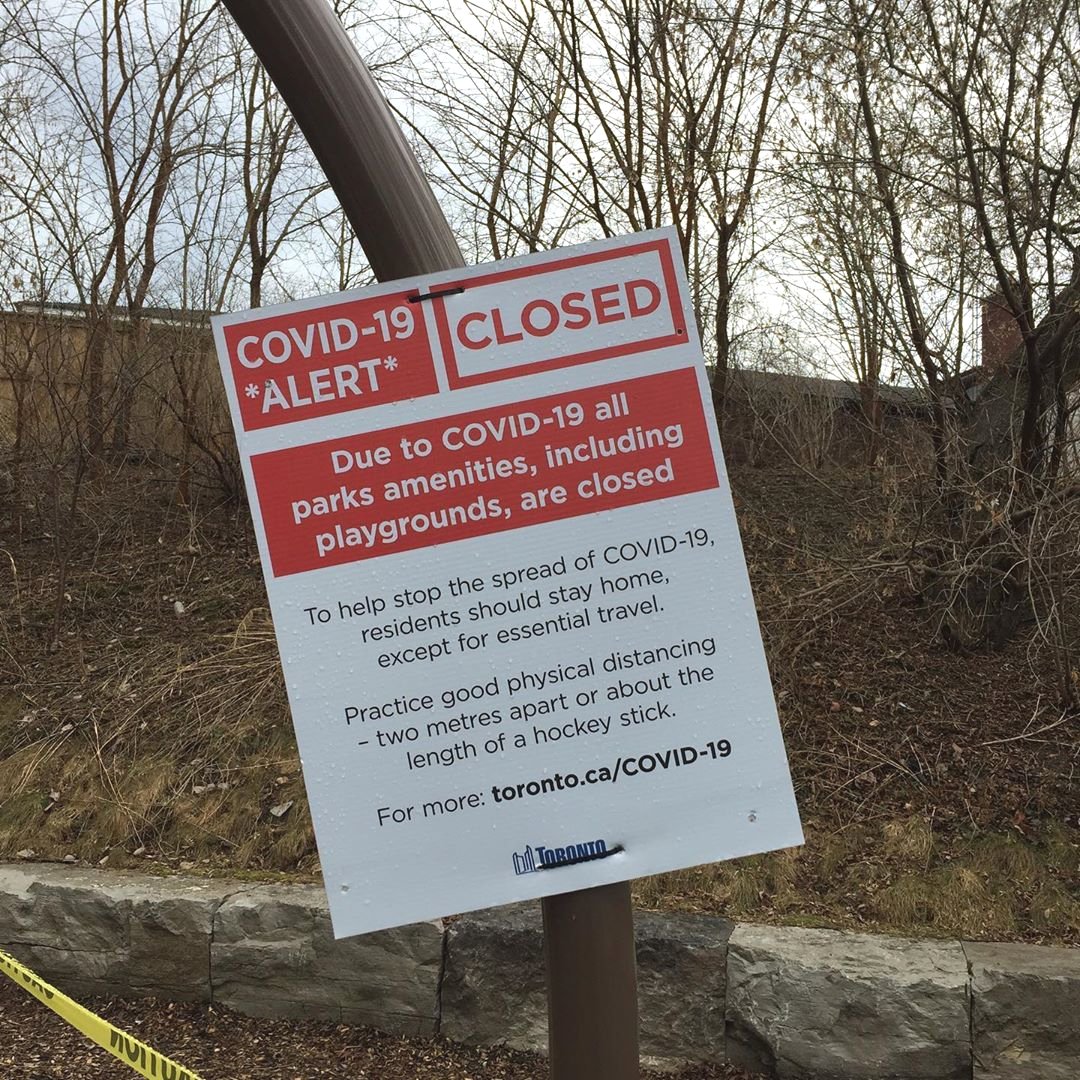
The City of Toronto took the opportunity to get creative with their social distancing signs and two of the signs that I’ve seen are on par with Timbits on the Canadiana-measurement scale! Picture #2 below was taken by Genevieve earlier in the year when all parks were closed and social distancing was measured on this sign as 2m or about the length of a hockey stick. Canadian.
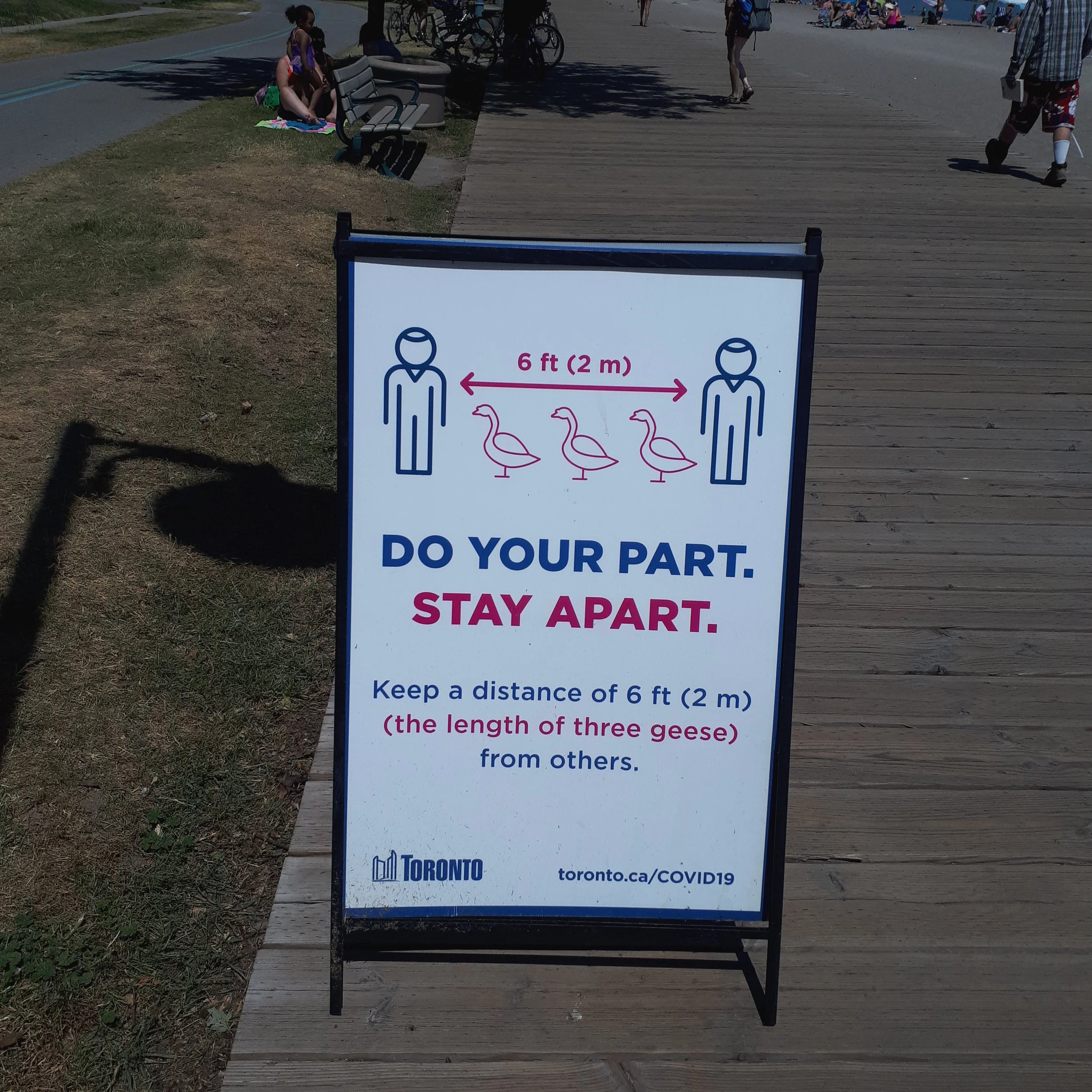
I took the 3rd picture at one of Toronto’s beaches, which have just been opened. This social distancing sign measures the correct space as 6 feet, 2m or the length of 3 Canada Geese. Canada Geese are very very commonly found in my part of Canada next to the Great Lakes and using them to describe staying away from someone is quite apt. When they are mating and are rearing their young, it isn’t uncommon for a Canada Goose to aggressively charge a person while hissing. Likely, the worst that will happen is that they’ll pinch you with their bill, but wise people keep their distance from Canada Geese when they are in family mode. Canadian.
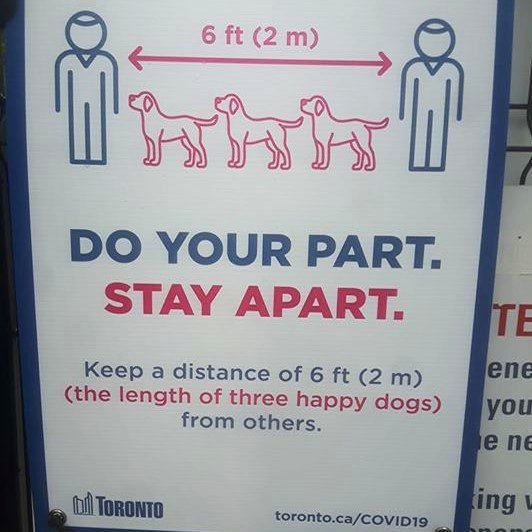
Maggie sent me the 4th picture from the City of Toronto. These are the signs that have been posted at Toronto’s off-leash dog parks and the distance between people is described as 6 feet, 2m or “the length of three happy dogs”. This is by far the cutest social distancing measurement that I’ve come across, but also the least accurate!
Are there interesting COVID-19 social distancing signs in your part of the world? Leave a comment and describe what’s happening in your neck of the woods - I’d love to hear it