Marshmallow Mint Sauce
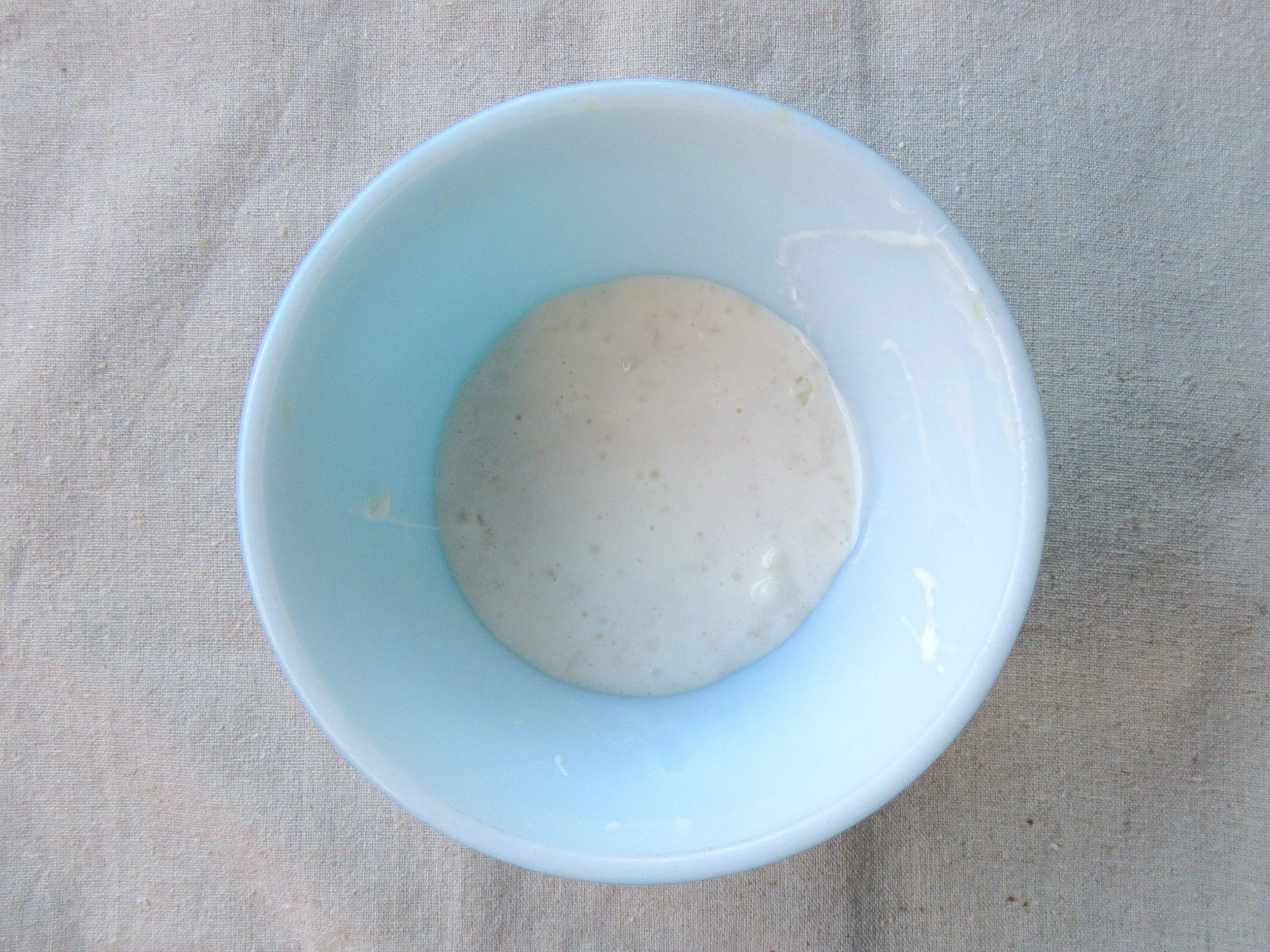
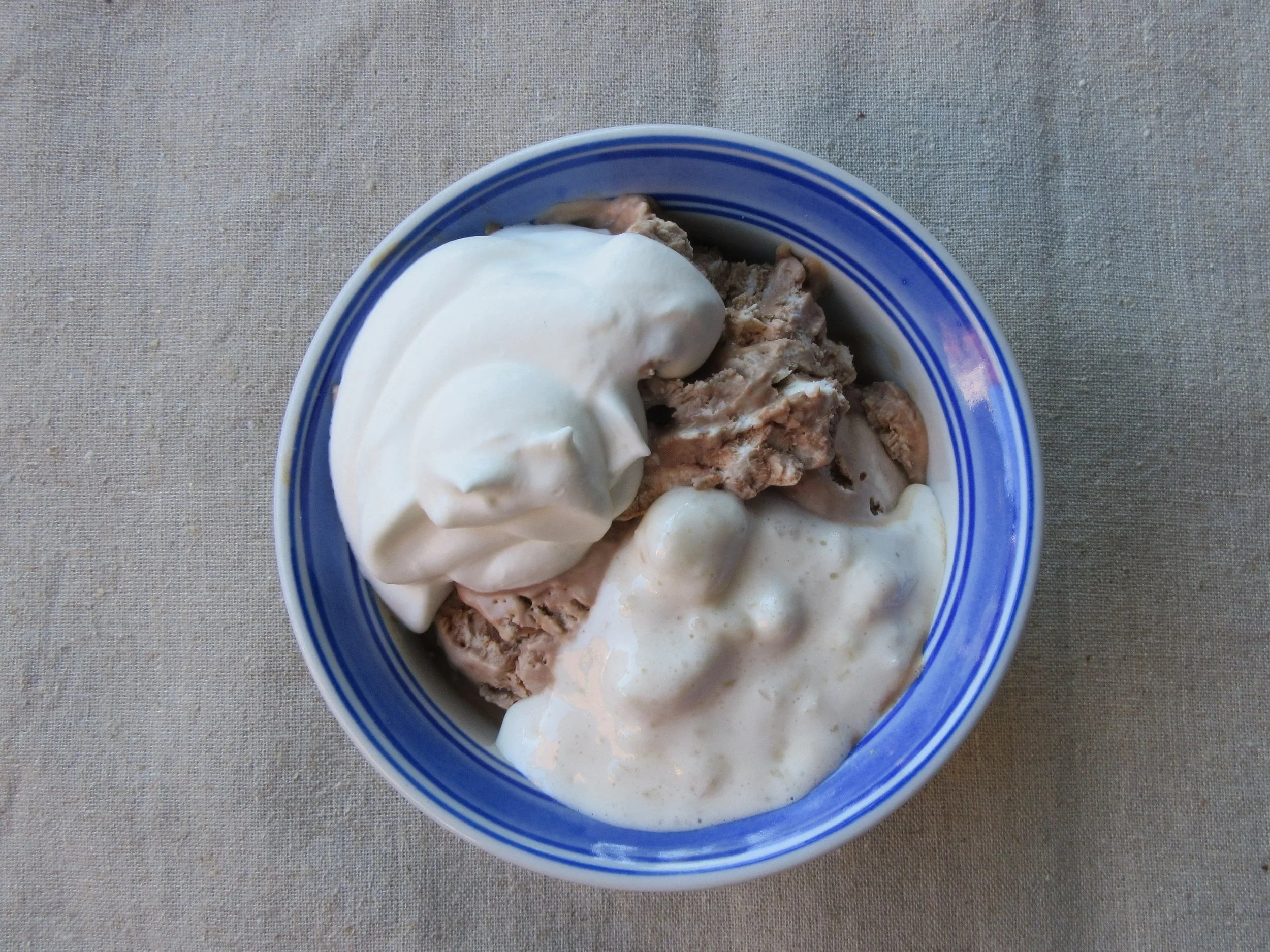
You’ll find this recipe in:
Electric Refrigerator Recipes and Menus
Recipes prepared especially for the General Electric Refrigerator
By: Miss Alice Bradley
Cleveland, 1929
Historic Recipe:
Marshmallow Mint Sauce – No. 63
Put
½ cup sugar and
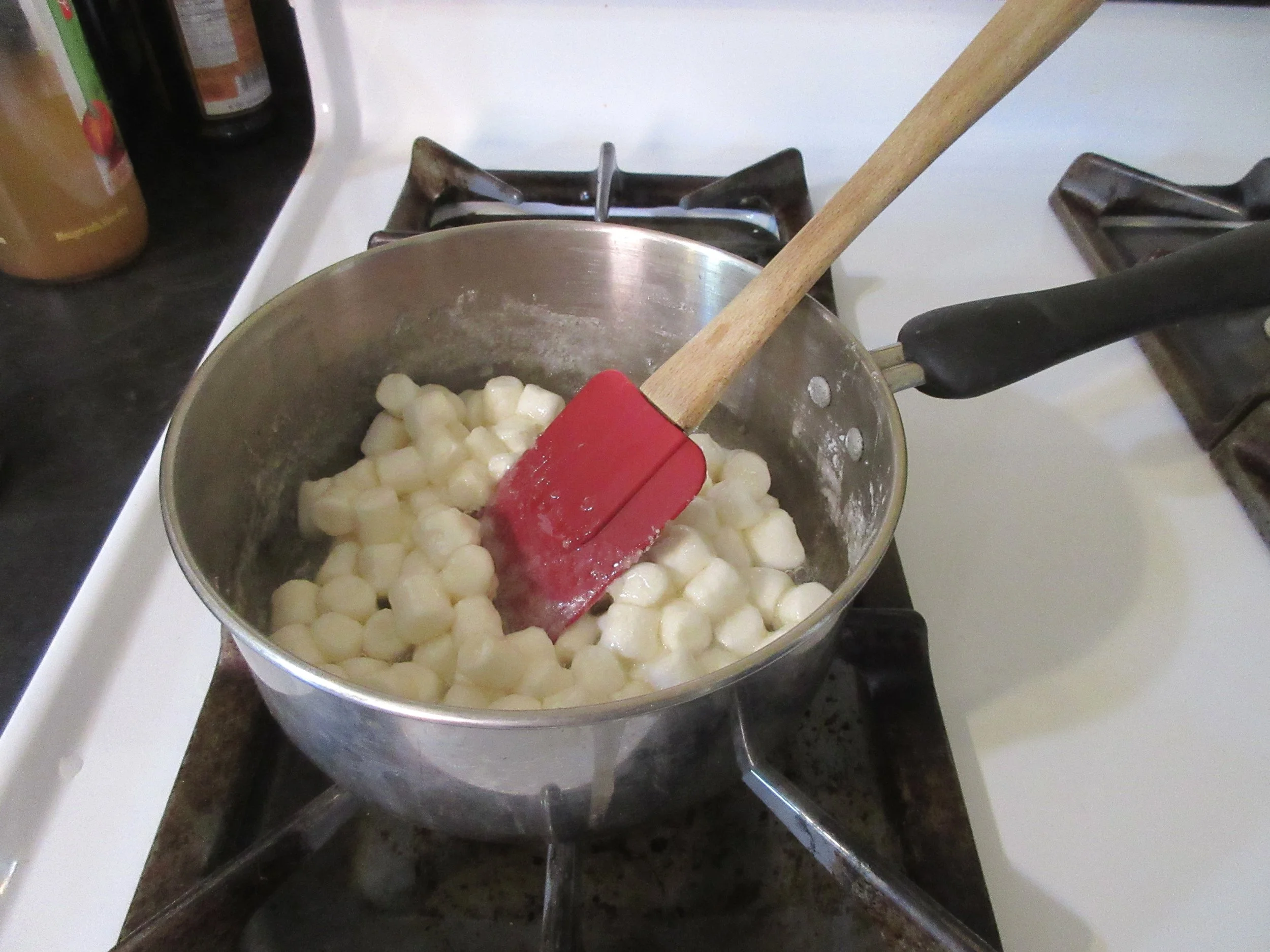
¼ cup water in saucepan and boil 5 minutes. Add
8 marshmallows cut in pieces. Let stand 2 minutes
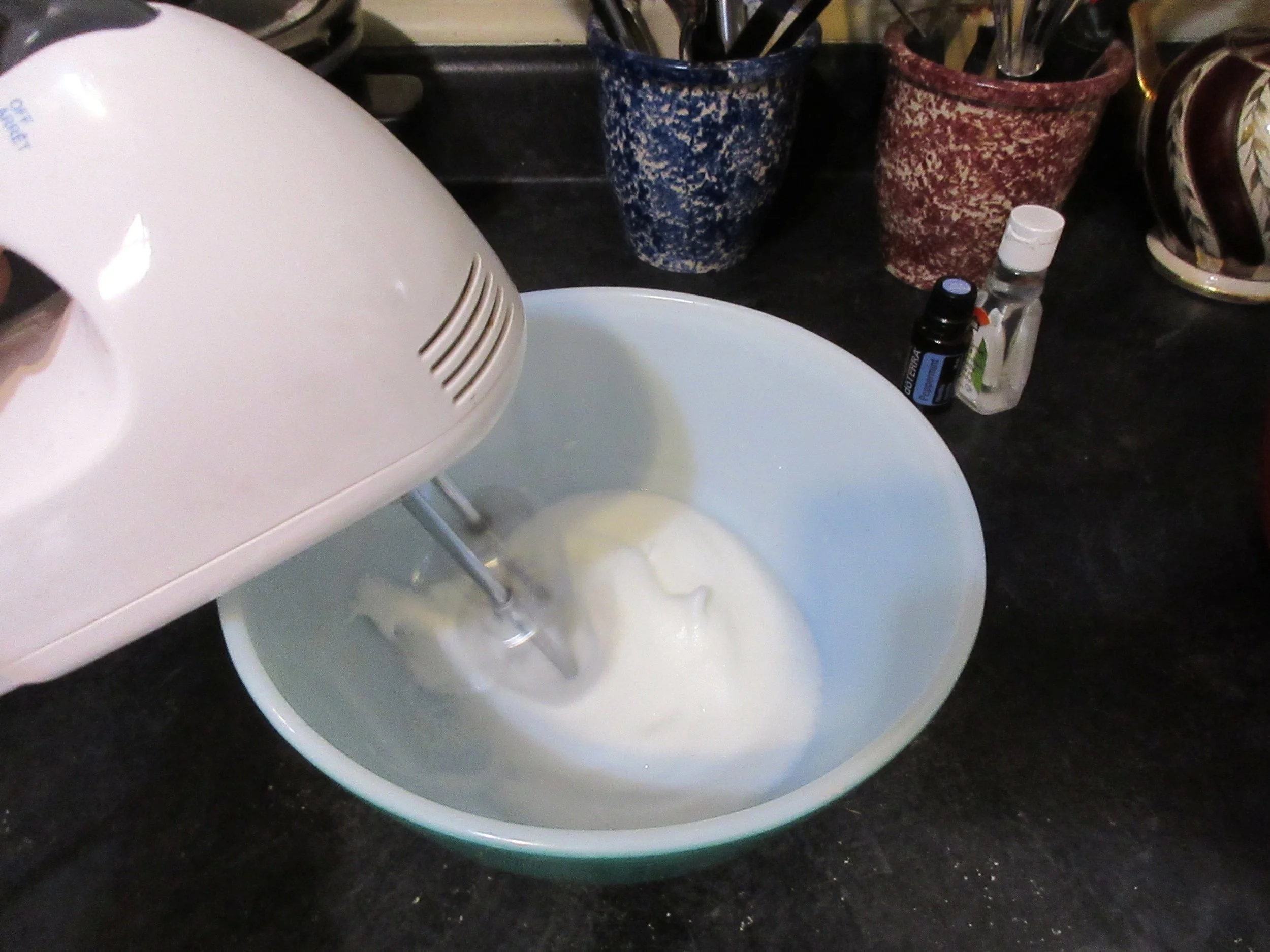
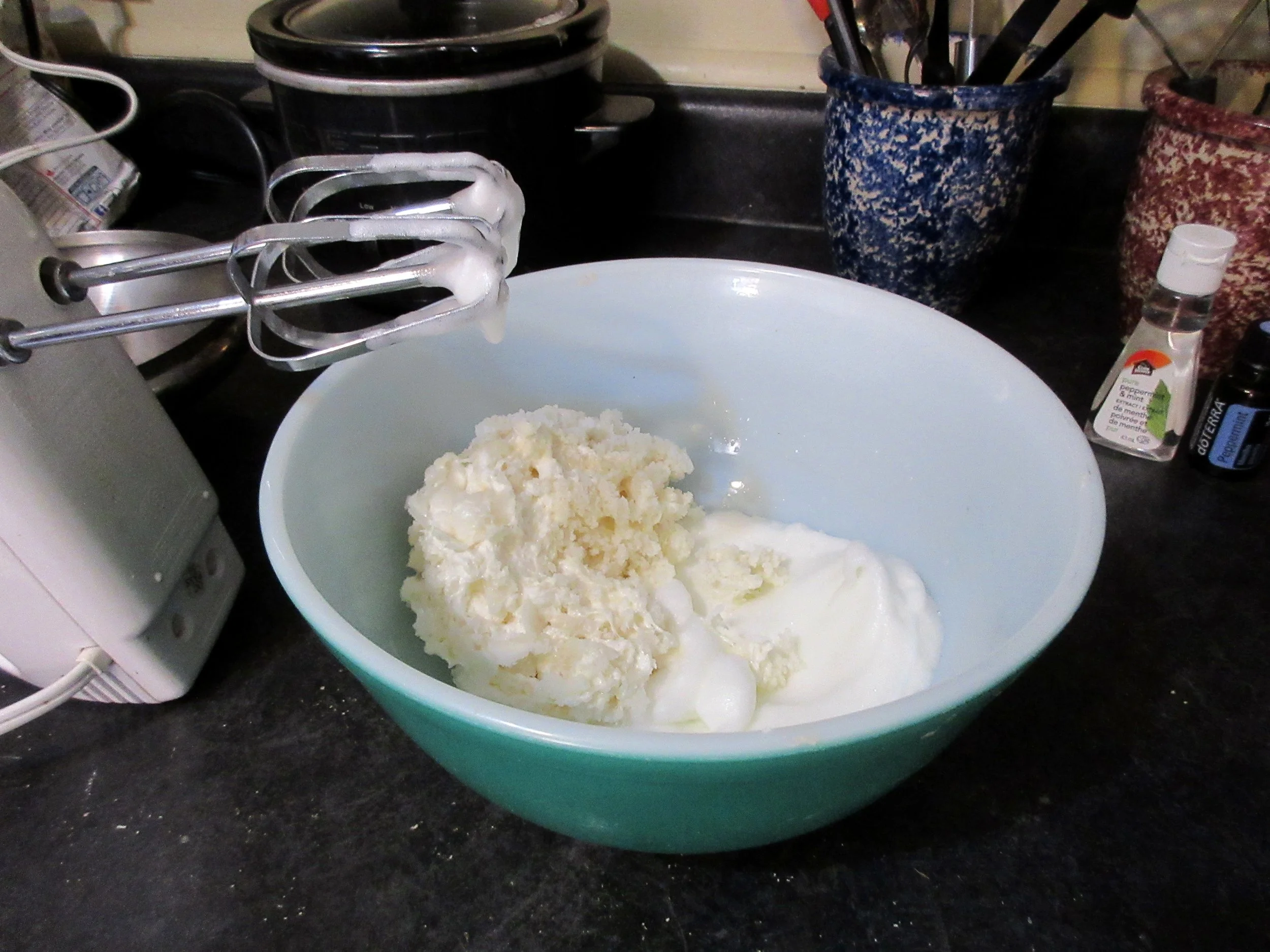
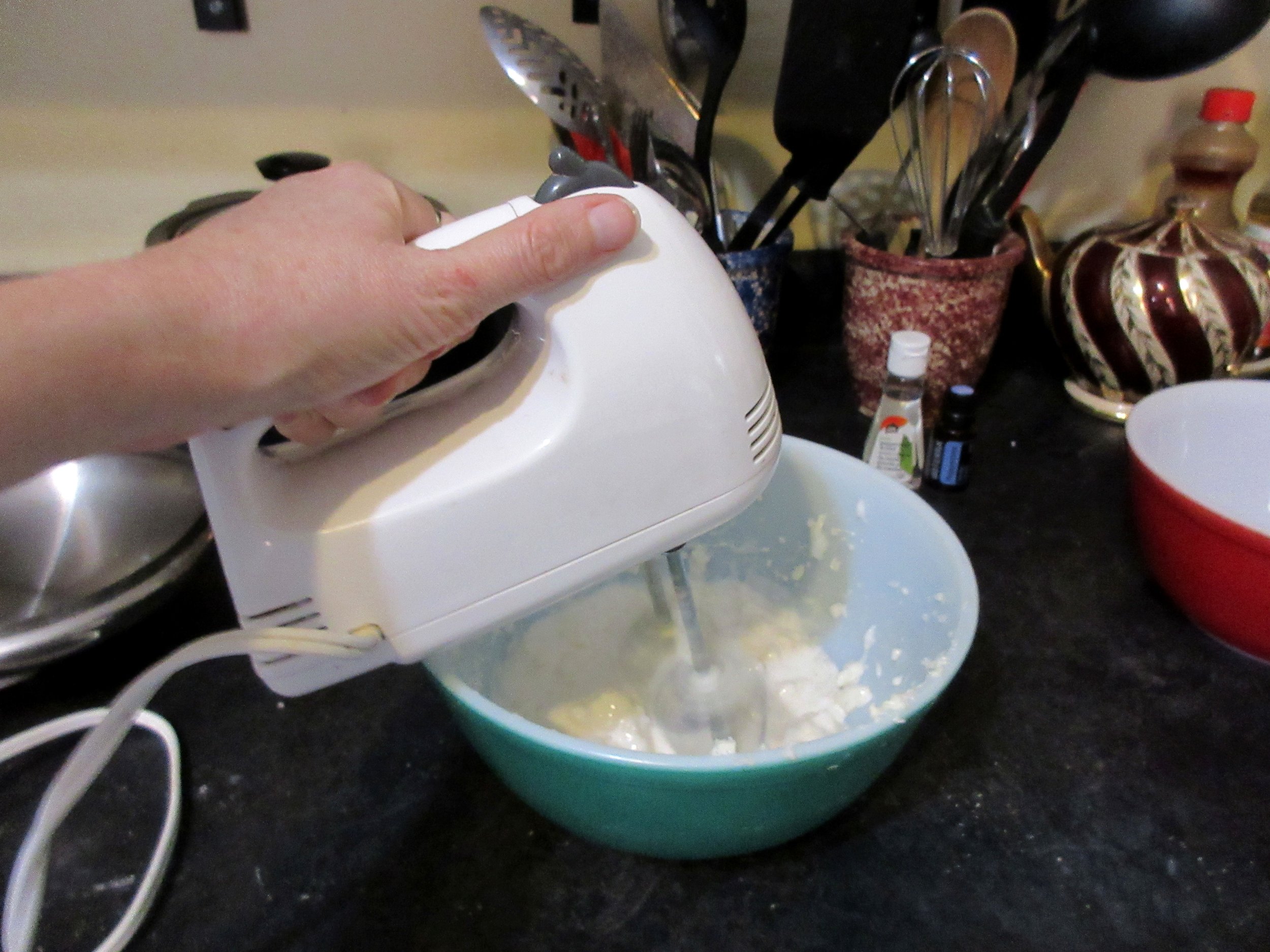
away from the fire and pour slowly over
1 egg white beaten stiff, continuing the beating. Flavor
with
1 drop oil of peppermint or with
½ teaspoon peppermint extract. Serve with
Chocolate Mousse – No. 40.
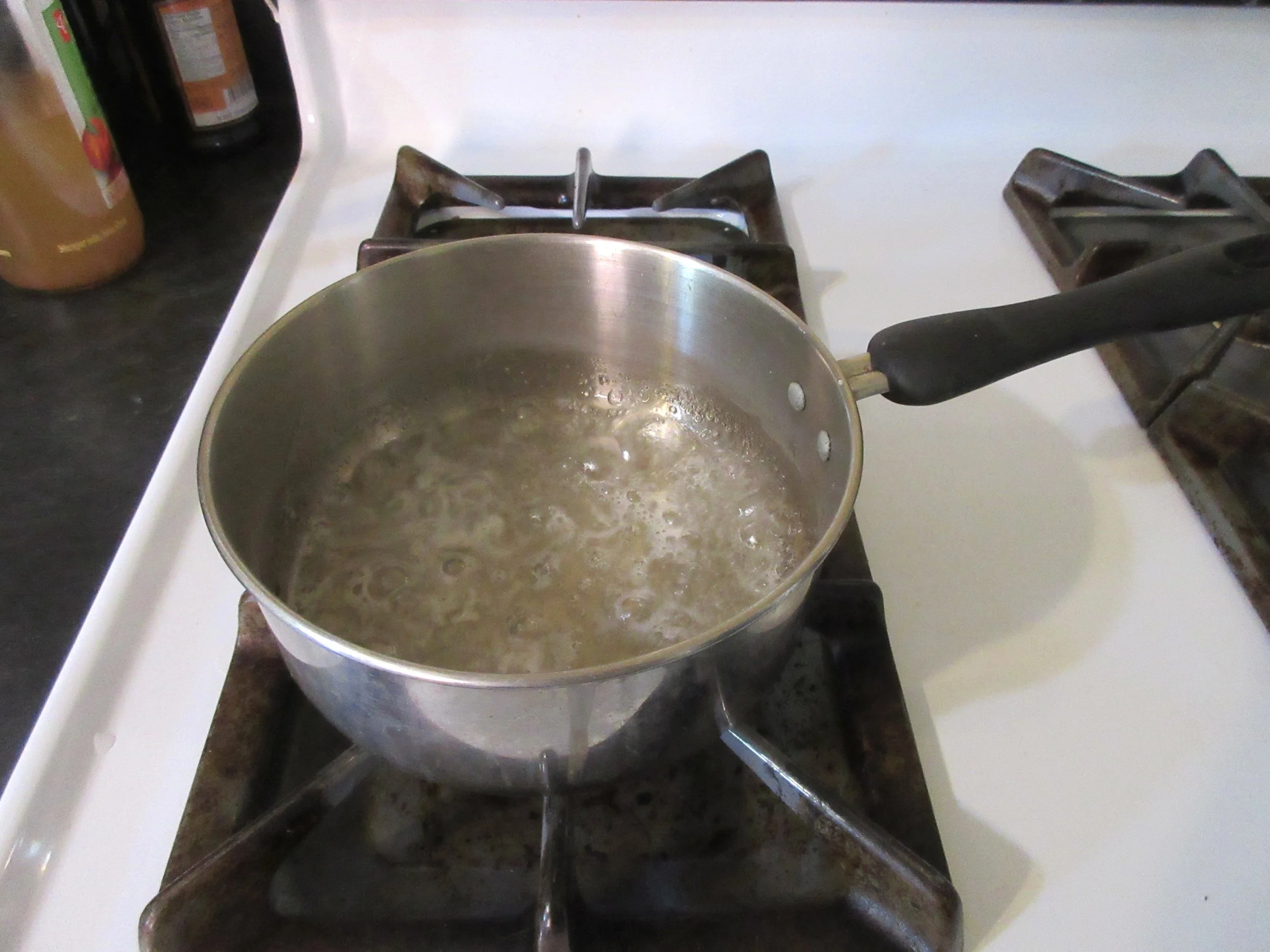
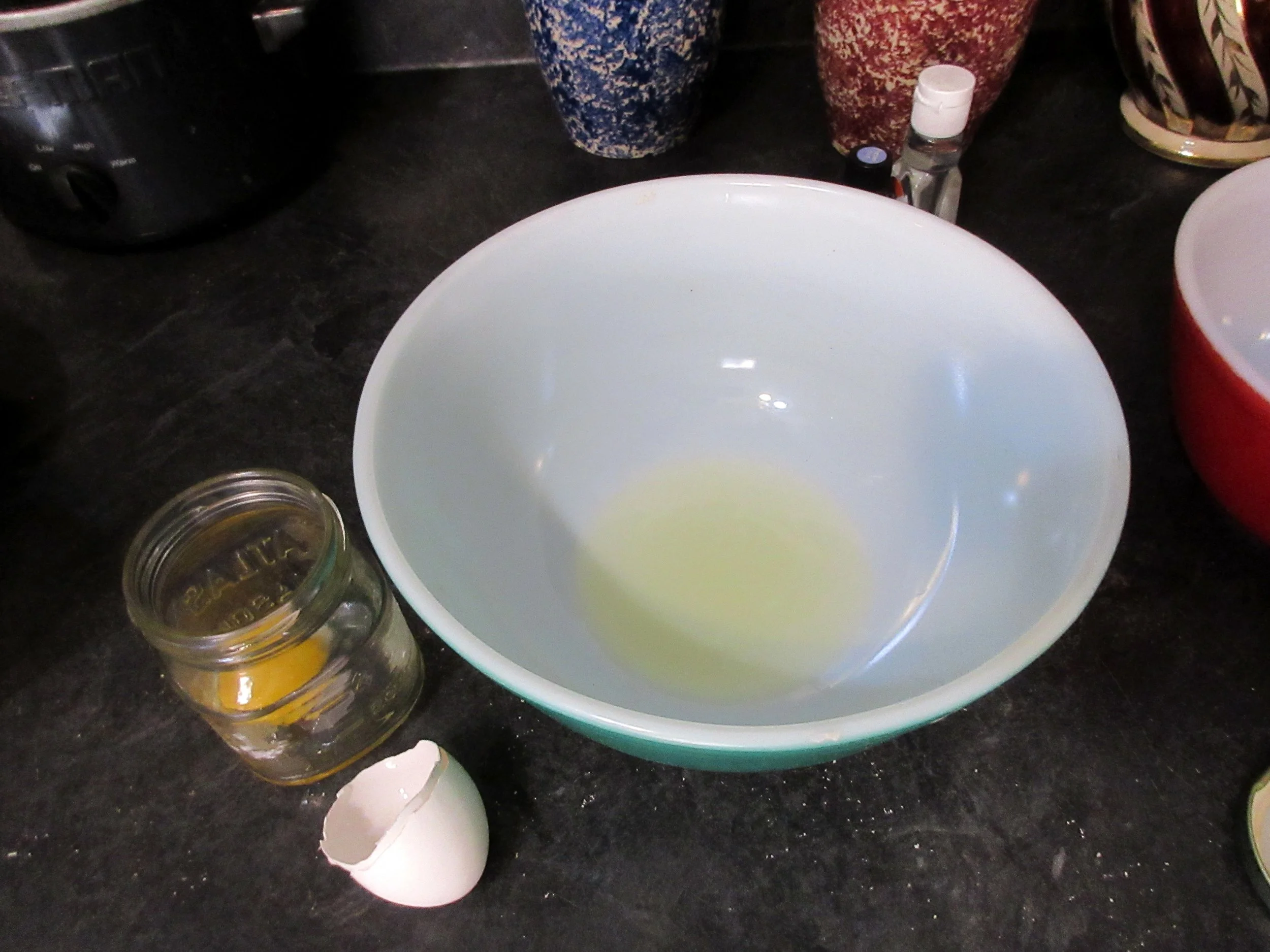
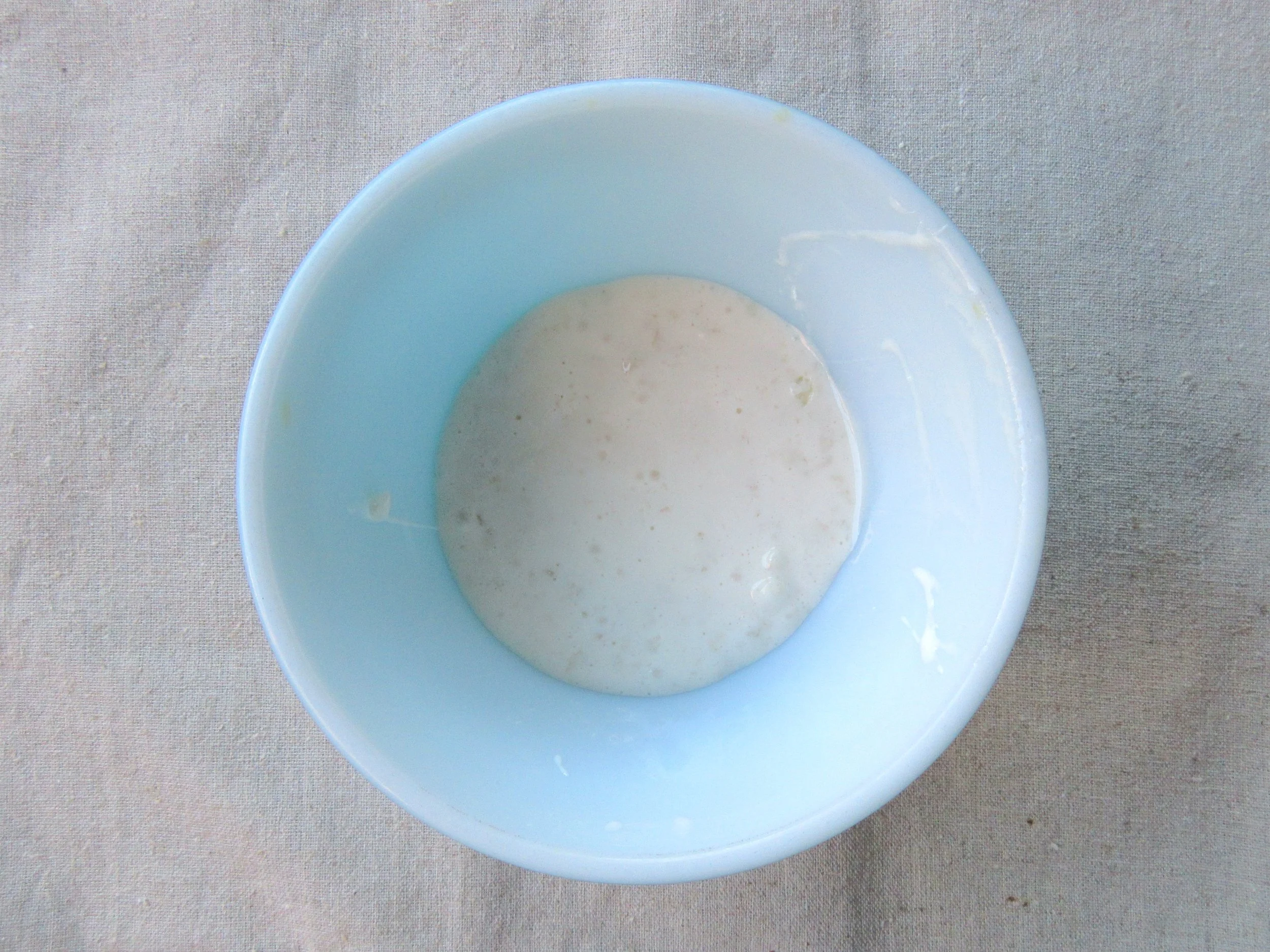
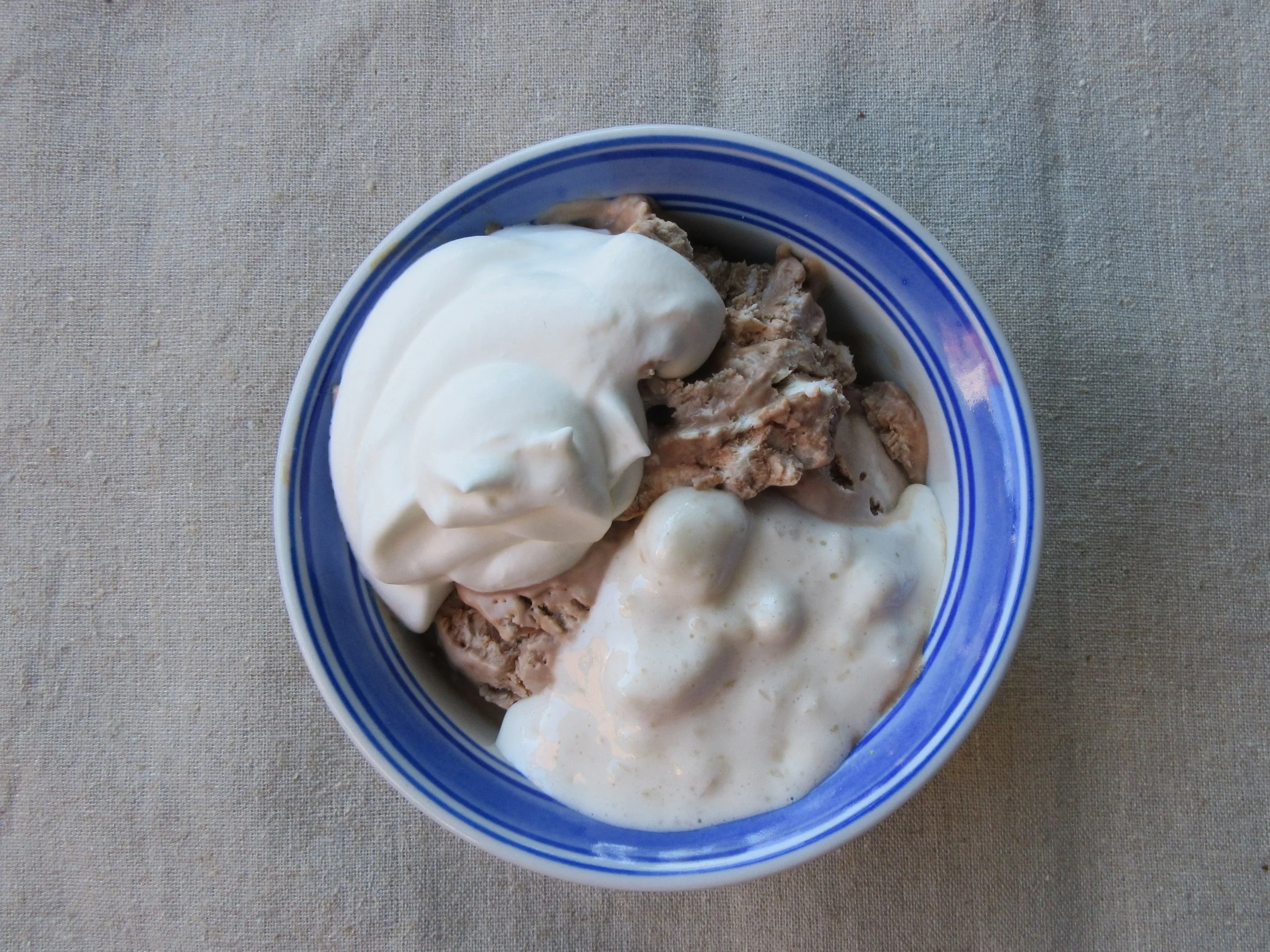
My thoughts on the recipe:
½ cup sugar = 100 g
If you only have mini marshmallows like me, 8 large marshmallows is equal to 1 cup or 60 g of mini marshmallows
1 cup – 2 ounces – mini marshmallows = 8 large marshmallows
Add Peppermint Extract to taste.
Marshmallow Mint Sauce is found in the Ice Cream Sauces chapter of the 1929 cookbook Electric Refrigerator Recipes and Menus, which contained “Recipes prepared especially for the General Electric Refrigerator”. It’s a homemade peppermint-flavoured, albeit less fluffy, marshmallow fluff meant to top the Chocolate Mousse recipe from the same cookbook. It has a very sweet and candy-like flavour that I really enjoyed despite not having much of a sweet tooth.
I’m making three recipes from Electric Refrigerator Recipes and Menus in quick succession: Chocolate Mousse and two minty options for toppings, Peppermint Whipped Cream (coming soon) and the Marshmallow Mint Sauce recipe featured in this post.
Keep reading to discover more about the history of the Marshmallow, head over to the Peppermint Whipped Cream blog post to learn some more history about this cookbook and go to Chocolate Mousse to find out what a refrigerator pan is and read all about the 2013 baker’s chocolate square resizing fiasco.
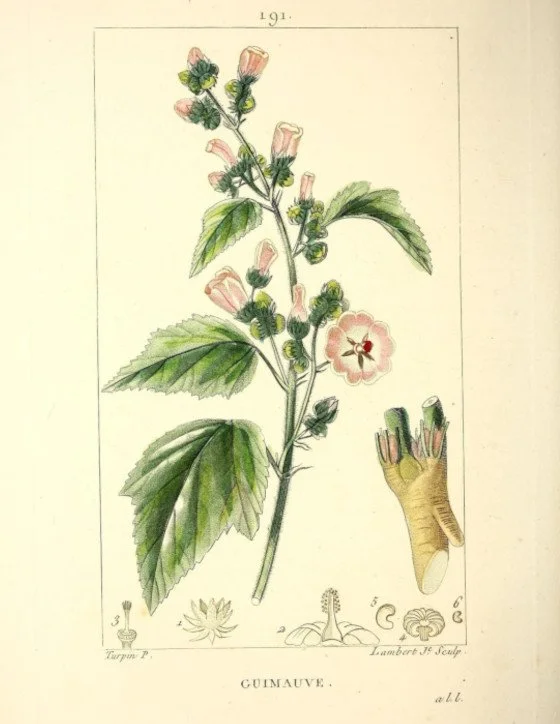
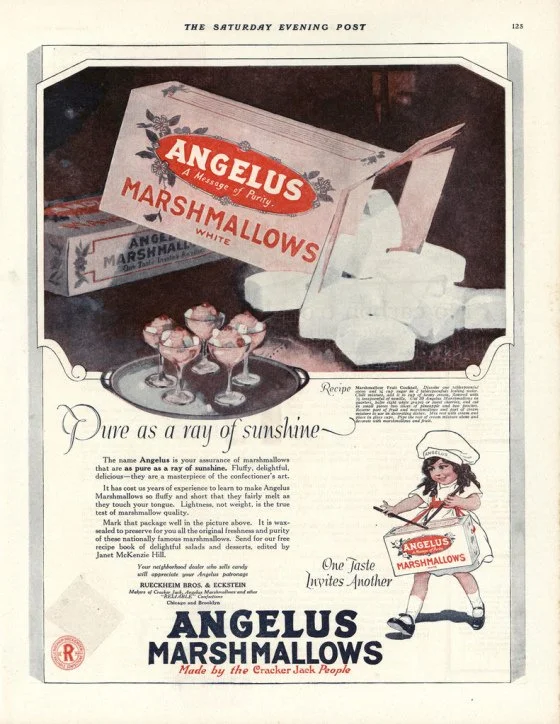
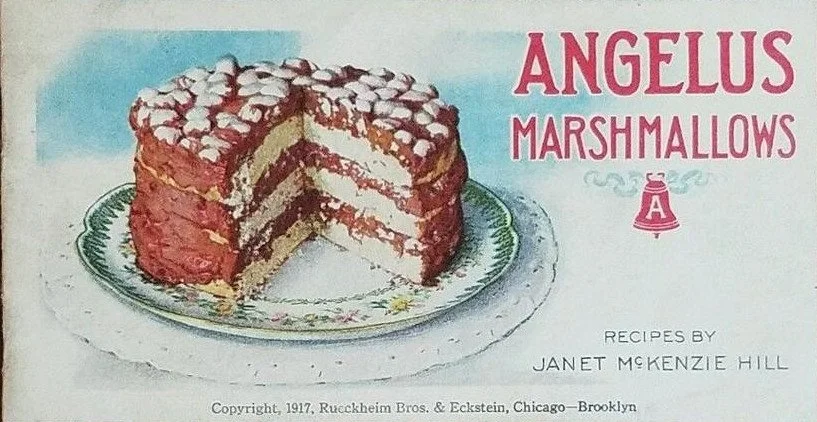
This Marshmallow Plant illustration is from the 1833 book Flore médicale, courtesy of the Biodiversity Heritage Library and Angelus Marshmallow advertisements, circa 1917. The “free recipe book of delightful salads and desserts, edited by Janet McKenzie Hill” mentioned in the ad contains the first recipe for Sweet Potato Casserole with a marshmallow topping.
The mushy history of marshmallows
A Marshmallow is a fluffy and gooey white candy tube, but a Marsh Mallow is a plant. Althaea officinalis is a tall plant with light pink flowers in the mallow family and it grows in...you guessed it...marshy areas. The roots and stem of the marsh mallow contain a thick, white & sticky substance that is high in starches, mucilage and pectin.
The Ancient Egyptians created a treat with marsh mallow root and honey, served only to the high echelons. In many areas of the world, the root, stem, leaves and flowers of the marsh mallow plant have been used for medicinal benefits, from healing wounds, reducing swelling, calming digestive upset, curing tooth aches to soothing sore throats and coughs.
It wasn’t until the mid-1700s in France that confectioners started to make pâté de guimauve, which bears a resemblance to our marshmallows of today. Dried marsh mallow root was whipped with sugar, egg whites and flavouring to create a fluffy and sweet lozenge created to soothe sore throats. Between a long drying time and shaping each piece by hand, making pâté de guimauve wasn’t a speedy process. Gum arabic began to be commonly added to pâté de guimauve to provide additional stability to the recipe. After the advent of powdered gelatins in the 1845, it became common to use gelatin instead of the marsh mallow root, which cut down on the required drying time and was cheaper and easier to procure.
In 1895, Joseph B. Demerath began producing marshmallows on a commerical scale in Rochester, New York at the aptly named Rochester Marshmallow Works. Soon other companies began producing marshmallows as well, but these early commercial marshmallows were square or rectangular like the marshmallows in the Angelus Marshmallows advertisement above.
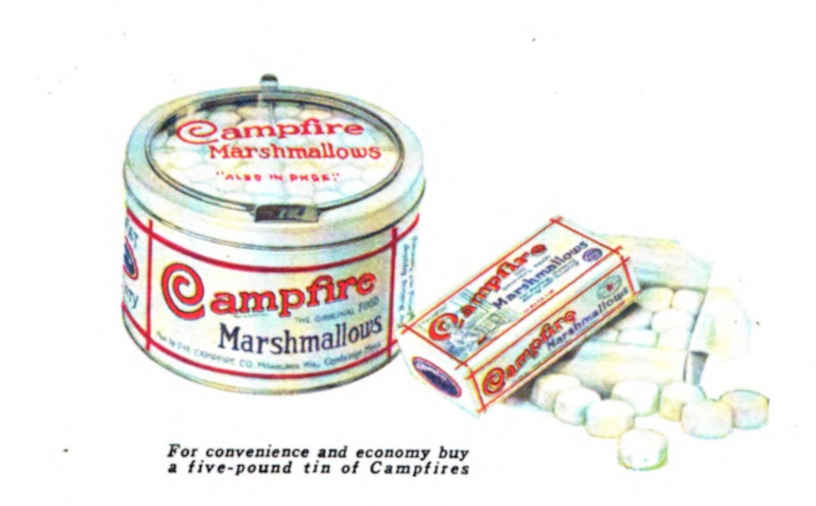
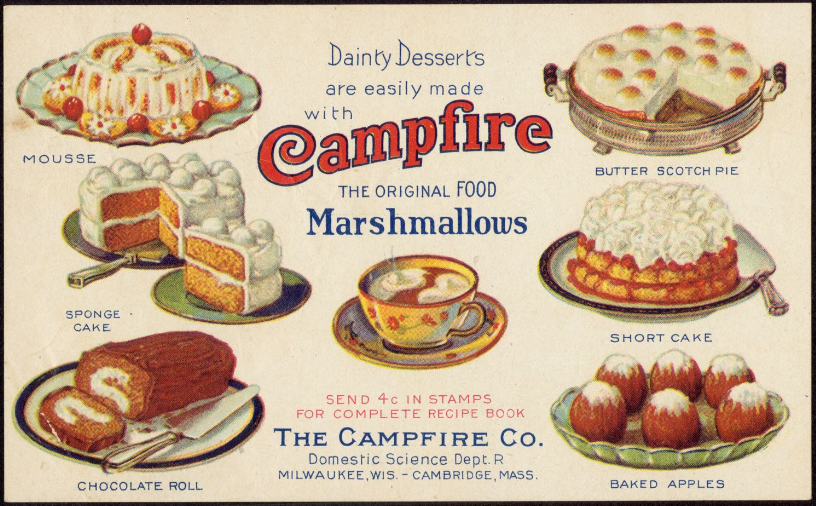
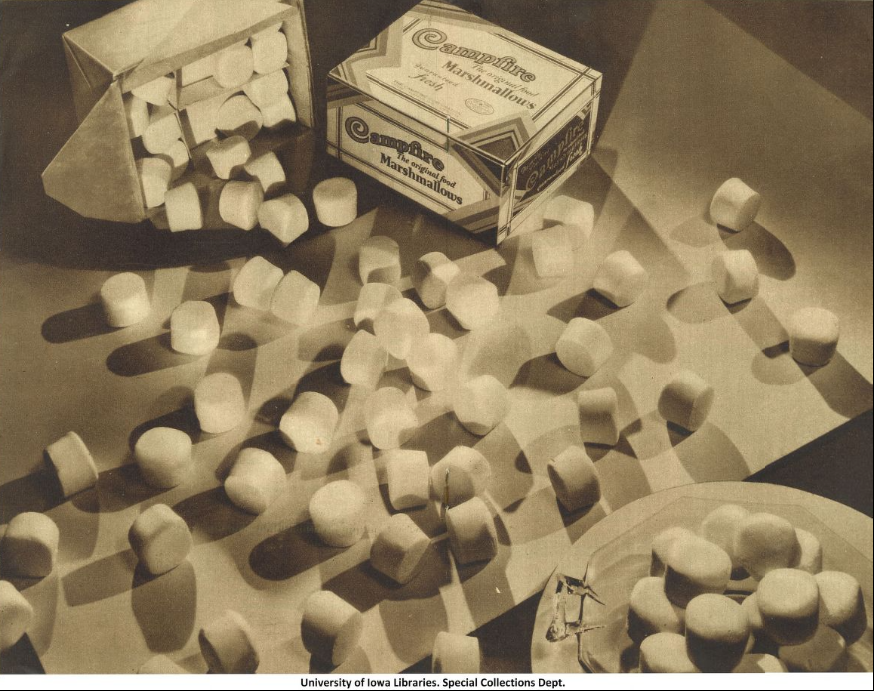
The Campfire brand of marshmallows was launched in 1917 and two years later, the company changed the shape of their product to the rounded short tube we’re used to today. Campfire Marshmallows also introduces a larger package size at the same time. You can see both of these changes in the illustration down below. Campfire Marshmallows put out a variety of free cookbooks as well and Alice Bradley, the author of Electric Refrigerator Recipes and Menus, also worked on recipe booklets for Campfire Marshmallows at about the same time.
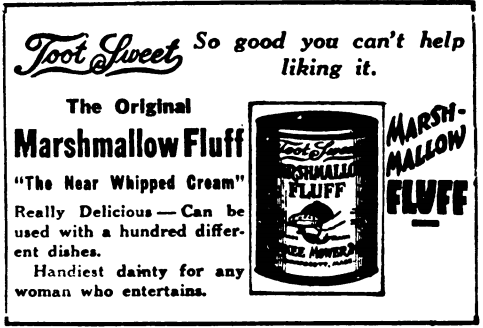
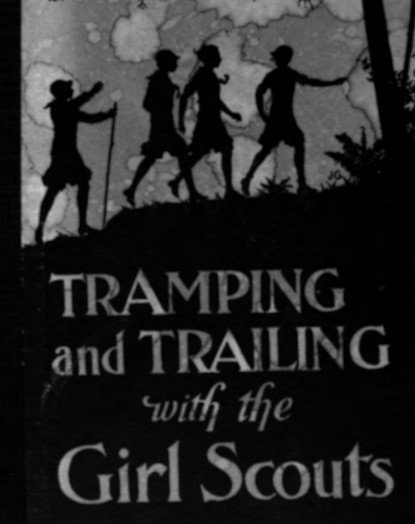
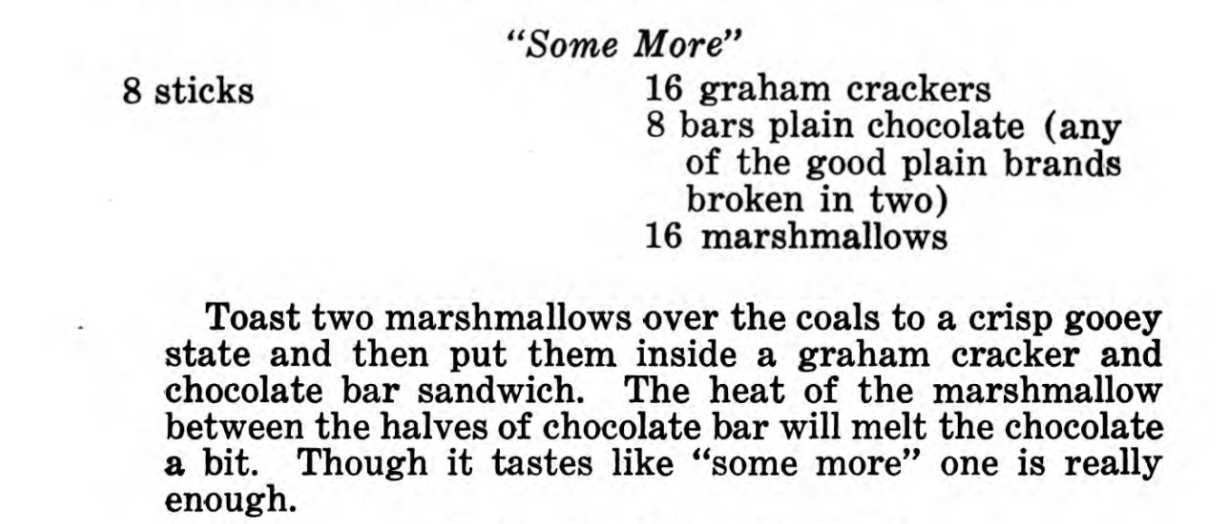
And last, probably the most ubiquitous marshmallow recipe has got to be S’mores. We’ve got the Girls Scouts to thank for this campfire treat. It first appeared as a recipe called Some More in the 1927 book Tramping and Trailing with the Girl Scouts and it ends with the questionable advice of “Though it tastes like ‘some more’ one is really enough.”
Images above: Campfire Marshmallow illustration from A Book of 150 Recipes Prepared with Campfire the Original Food Marshmallows, courtesy of Hathi Trust; Promotional Cards for the recipe booklet Dainty Desserts Made with Campfire the Original Food Marshmallows by Alice Bradley, found in the Boston Public Library
https://babel.hathitrust.org/cgi/pt?id=uc1.31822031036296&view=1up&seq=1
https://www.digitalcommonwealth.org/search/commonwealth:gq67k072p
Images below: Tramping and Trailing with the Girl Scouts, courtesy of Hathi Trust. This 1927 cookbook contained the first written recipe for Some More, later shortened to S’Mores https://babel.hathitrust.org/cgi/pt?id=wu.89017190521&view=image&seq=75