Fillets of Chickens, with Bechamel-ſauce and Bread-crumbs
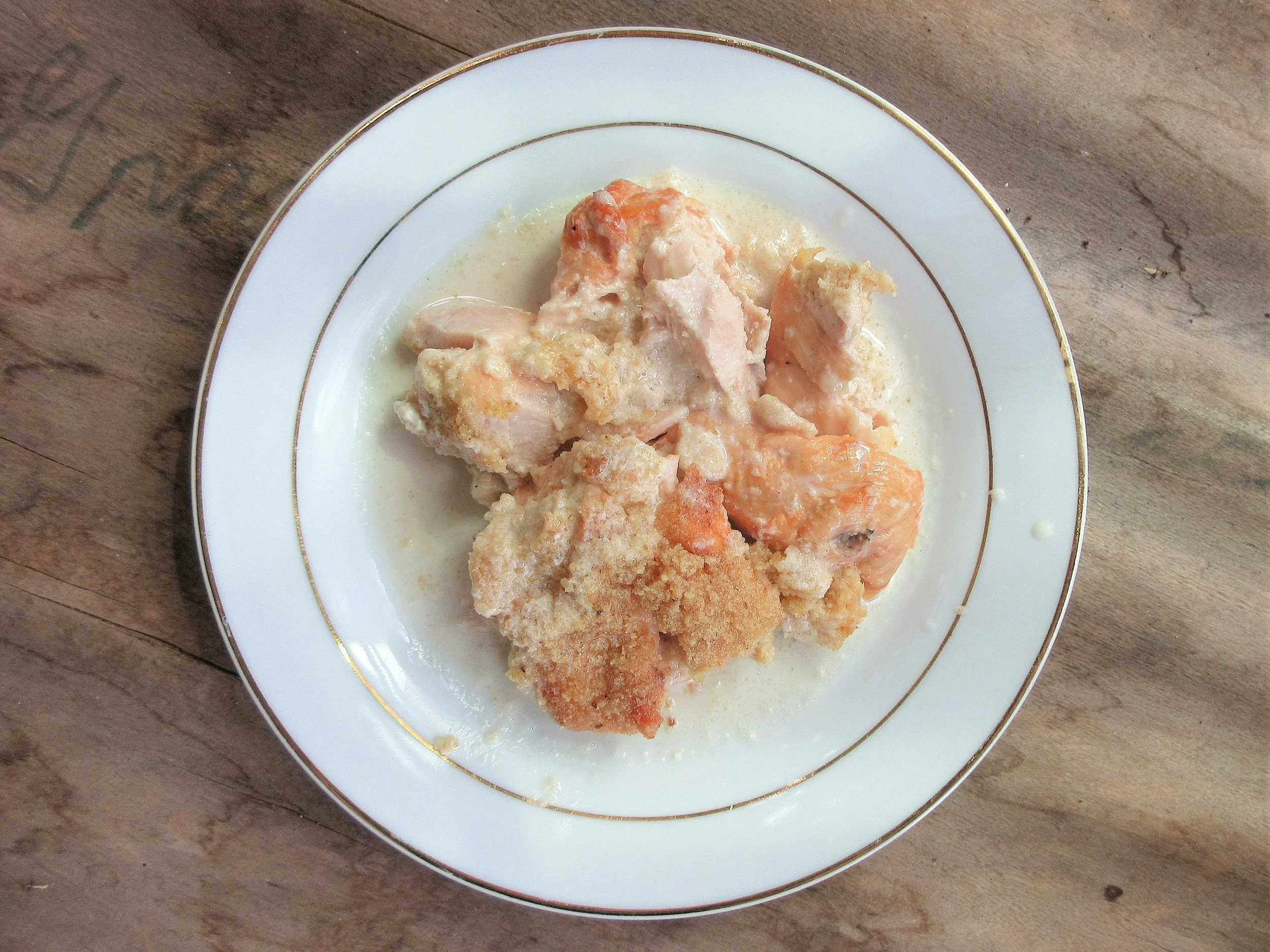
You’ll find this recipe in:
The Practice of Modern Cookery
By: George Dalrymple
Edinburgh, 1781
Historic Recipes:
Filets des Poulettes á la Bechamel pannée.
Fillets of Chickens, with Bechamel-ſauce and Bread-crumbs.
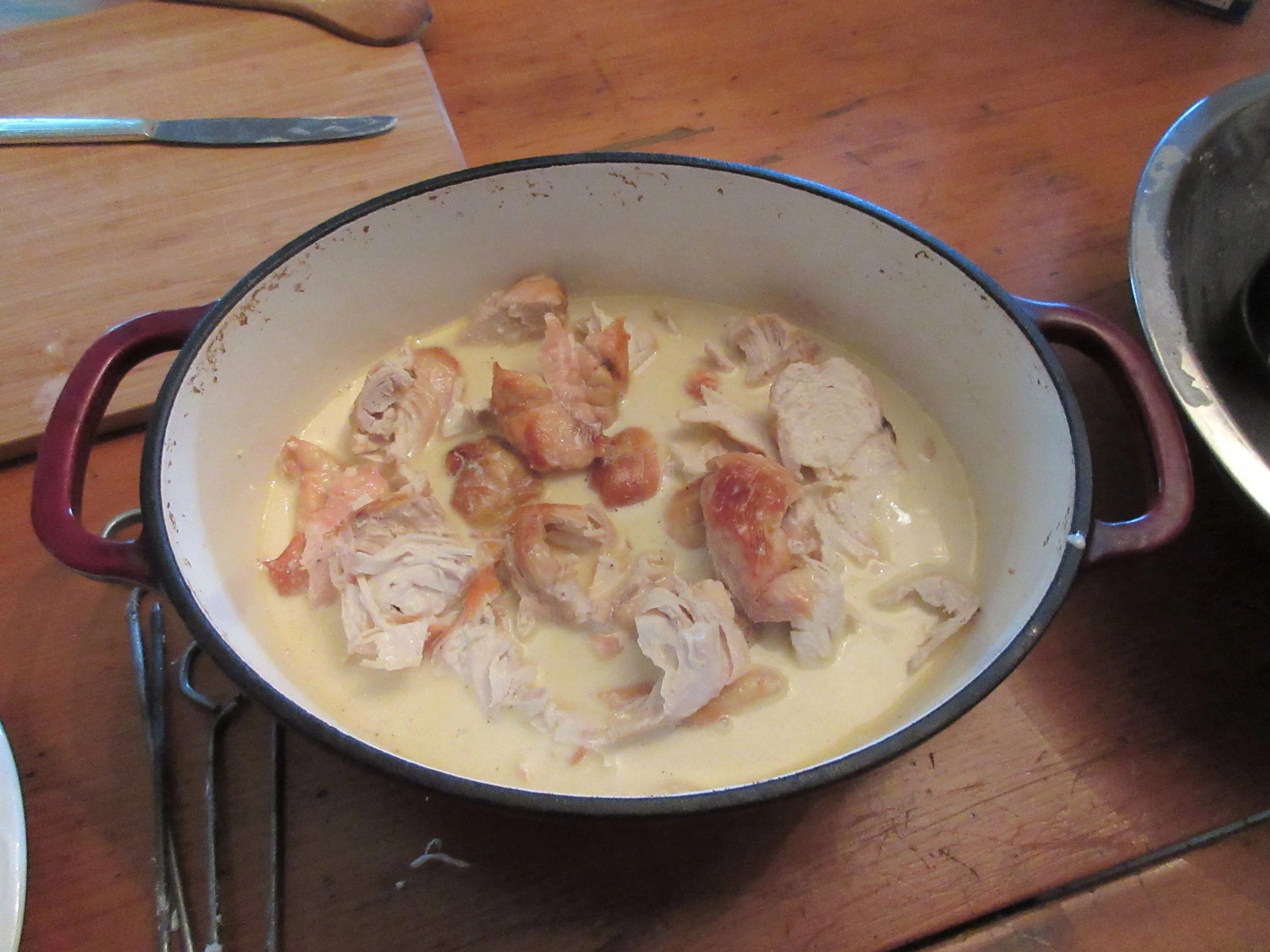
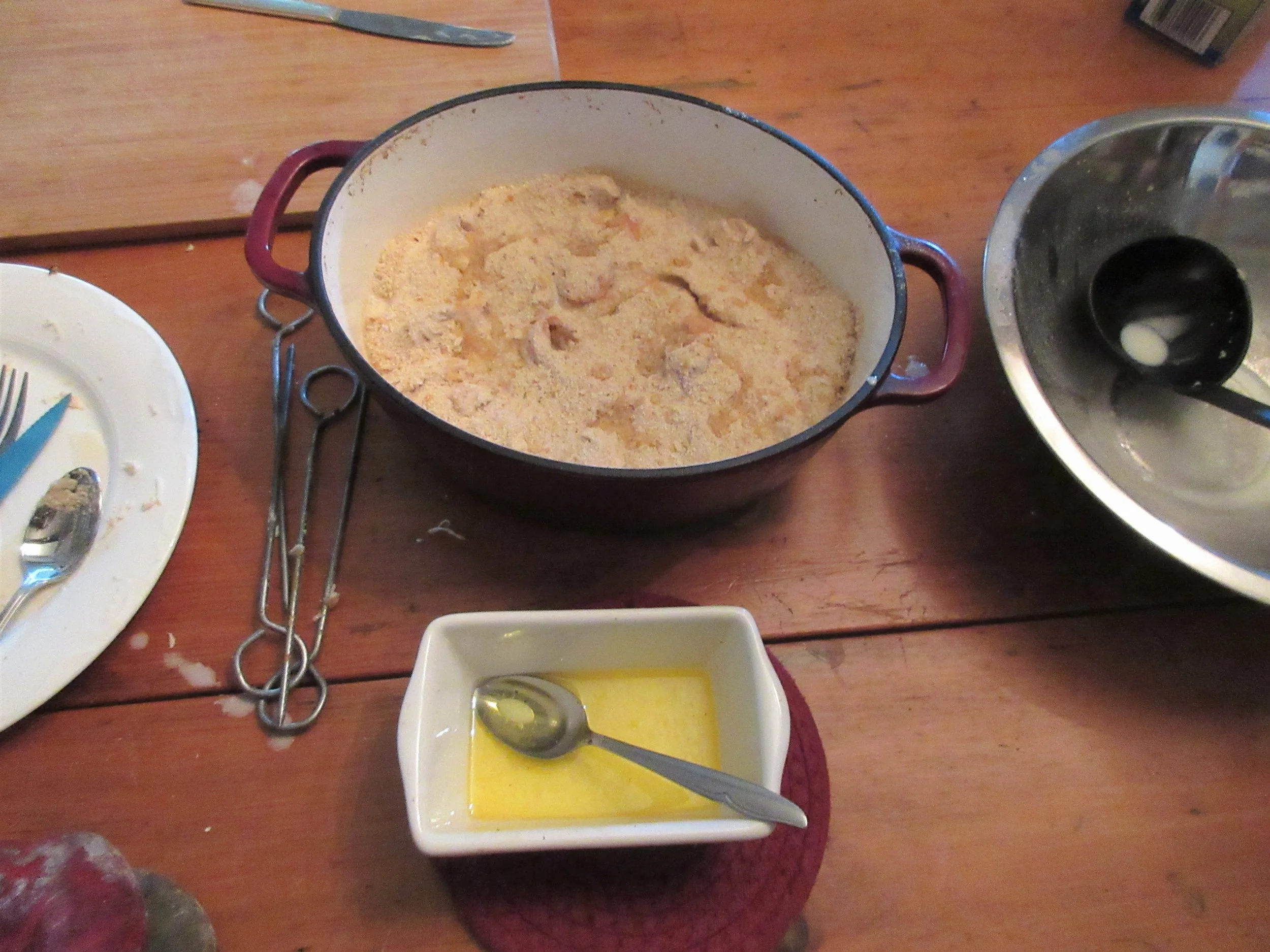
CUT the hind part of two or three chickens off, meaning the legs and the rumps, they will ſerve for another diſh; roaſt the breaſts; when done and cold, cut the meat in fillets, mix them with a bechamel ſauce, and put it in the diſh that you intend for table; ſtrew bread-crumbs over it; baſte with a little melted butter, and give it a colour in a oven or with a ſalamander. You will find the ſauce in Sauce-articles. The breaſts of cold roaſted chickens, fowls, capons, or turkies, will anſwer the ſame.
Sauce à la Bechamel.
Begamel Sauce.
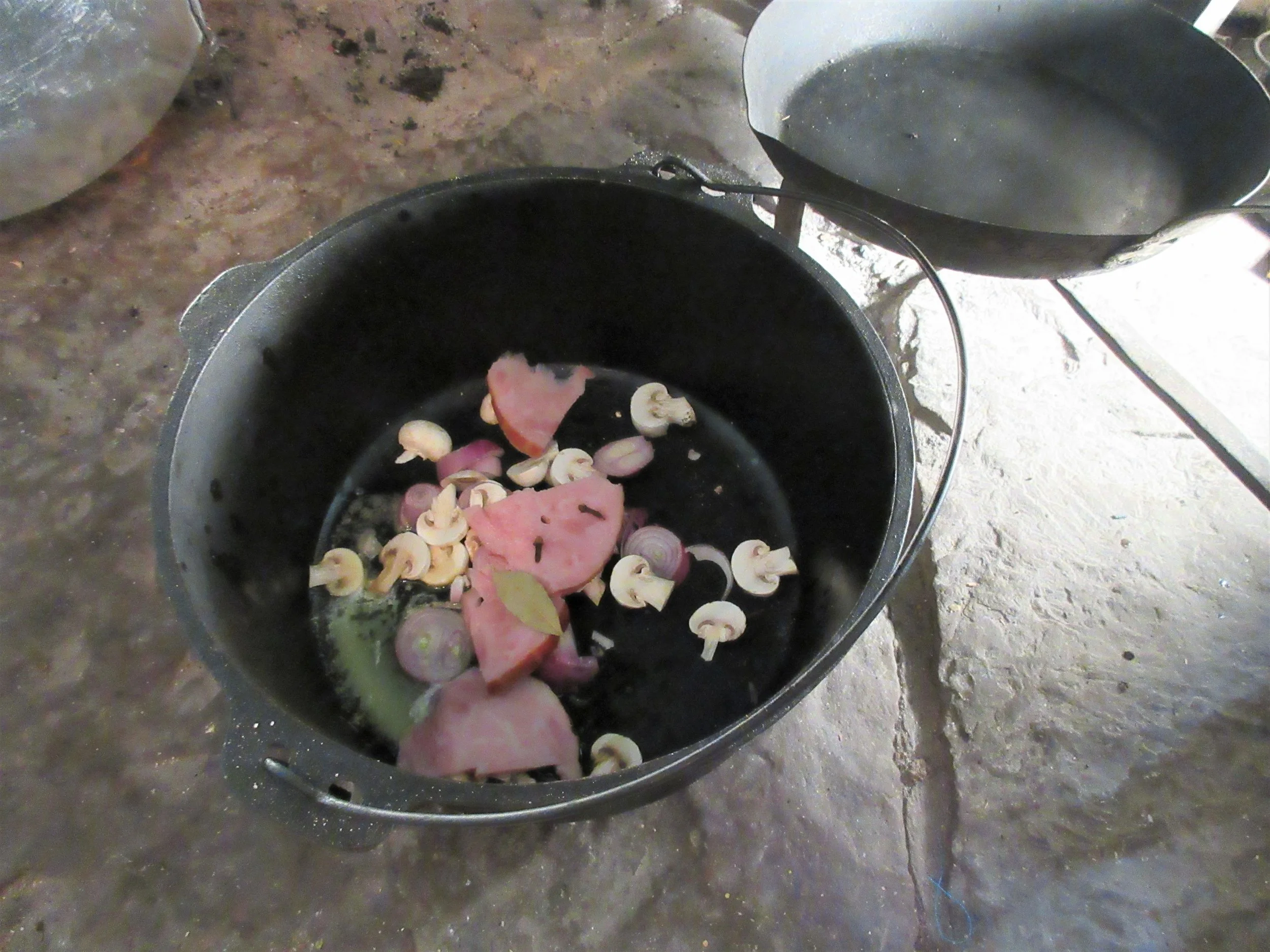
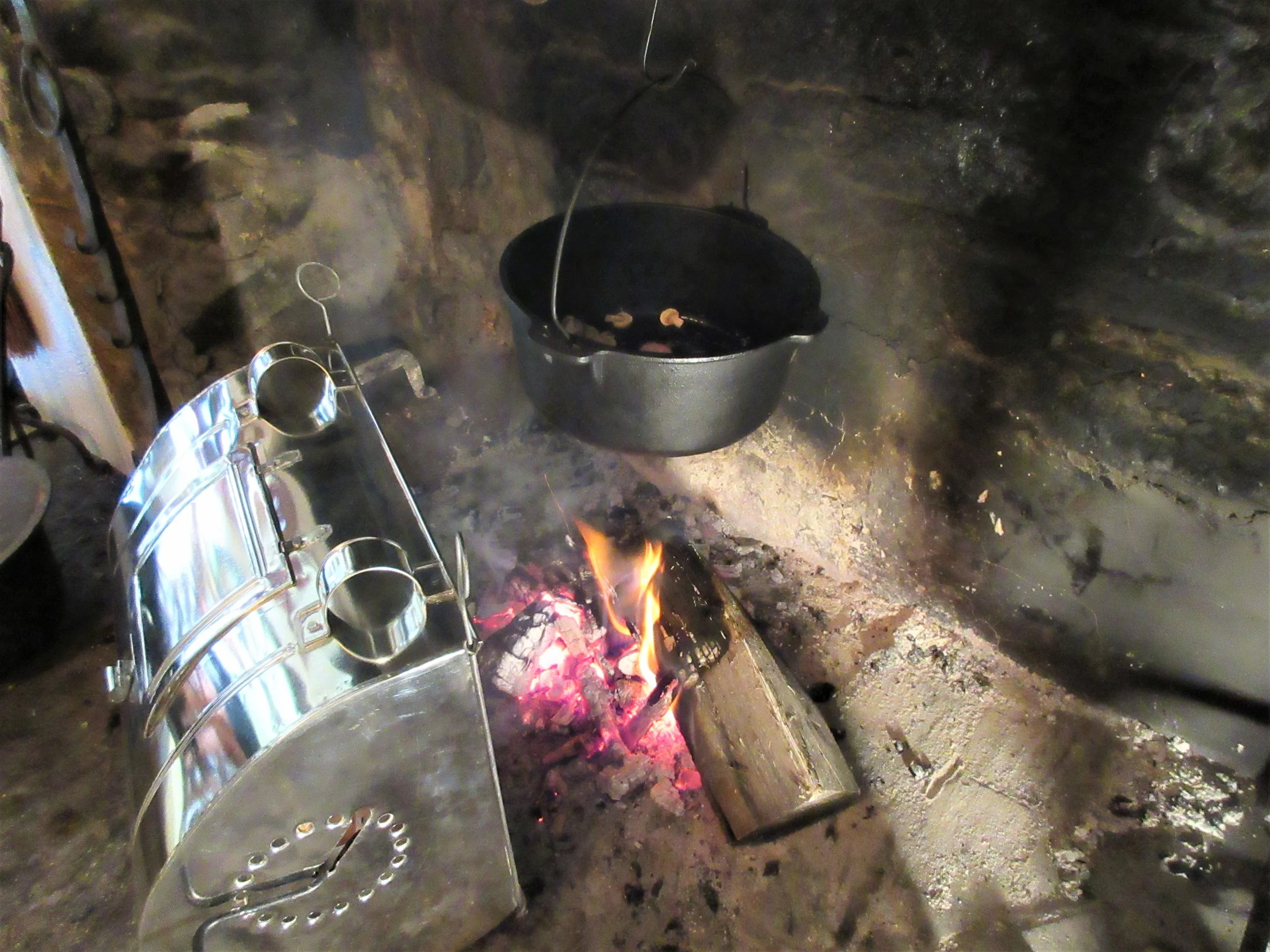
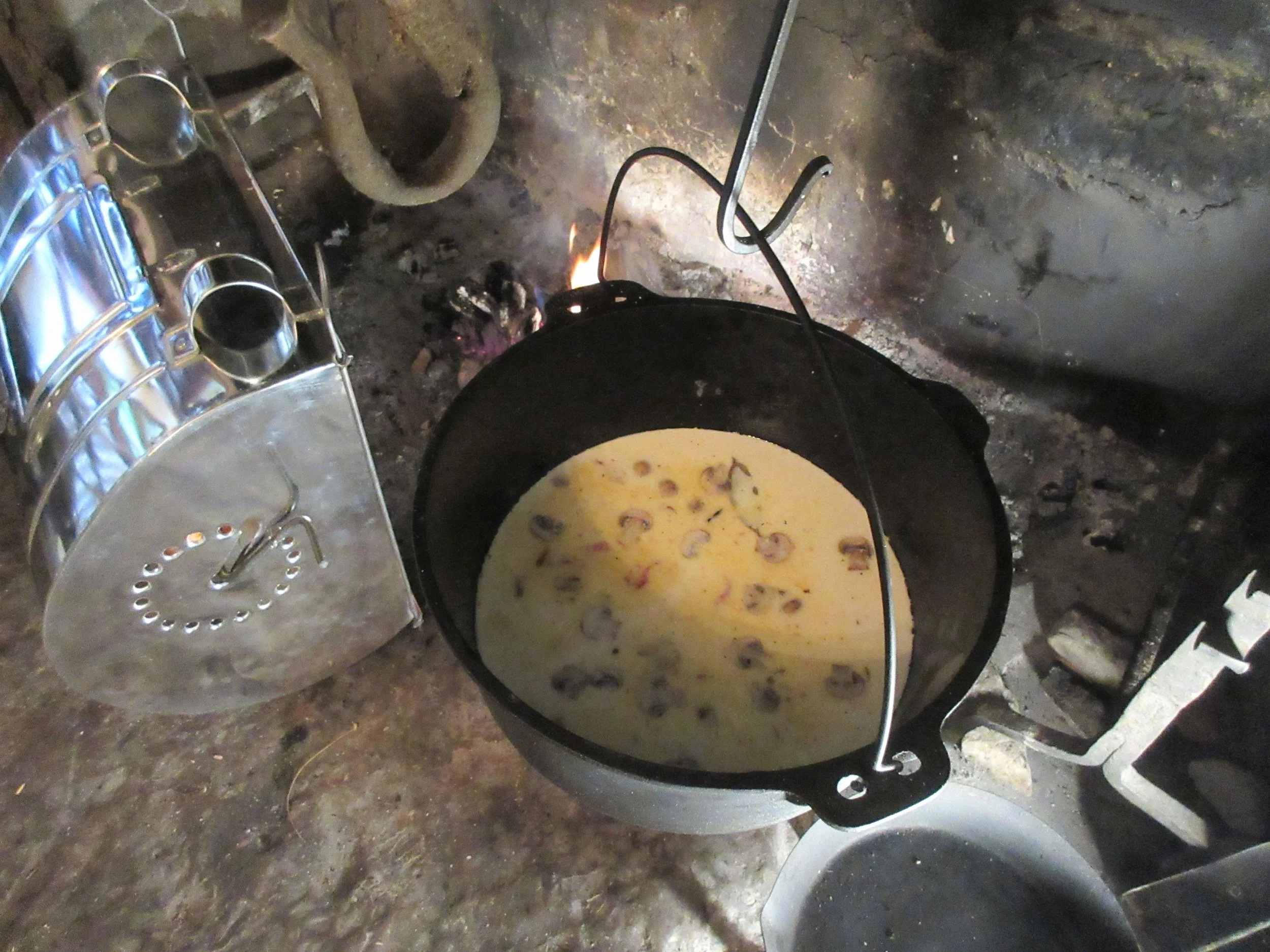
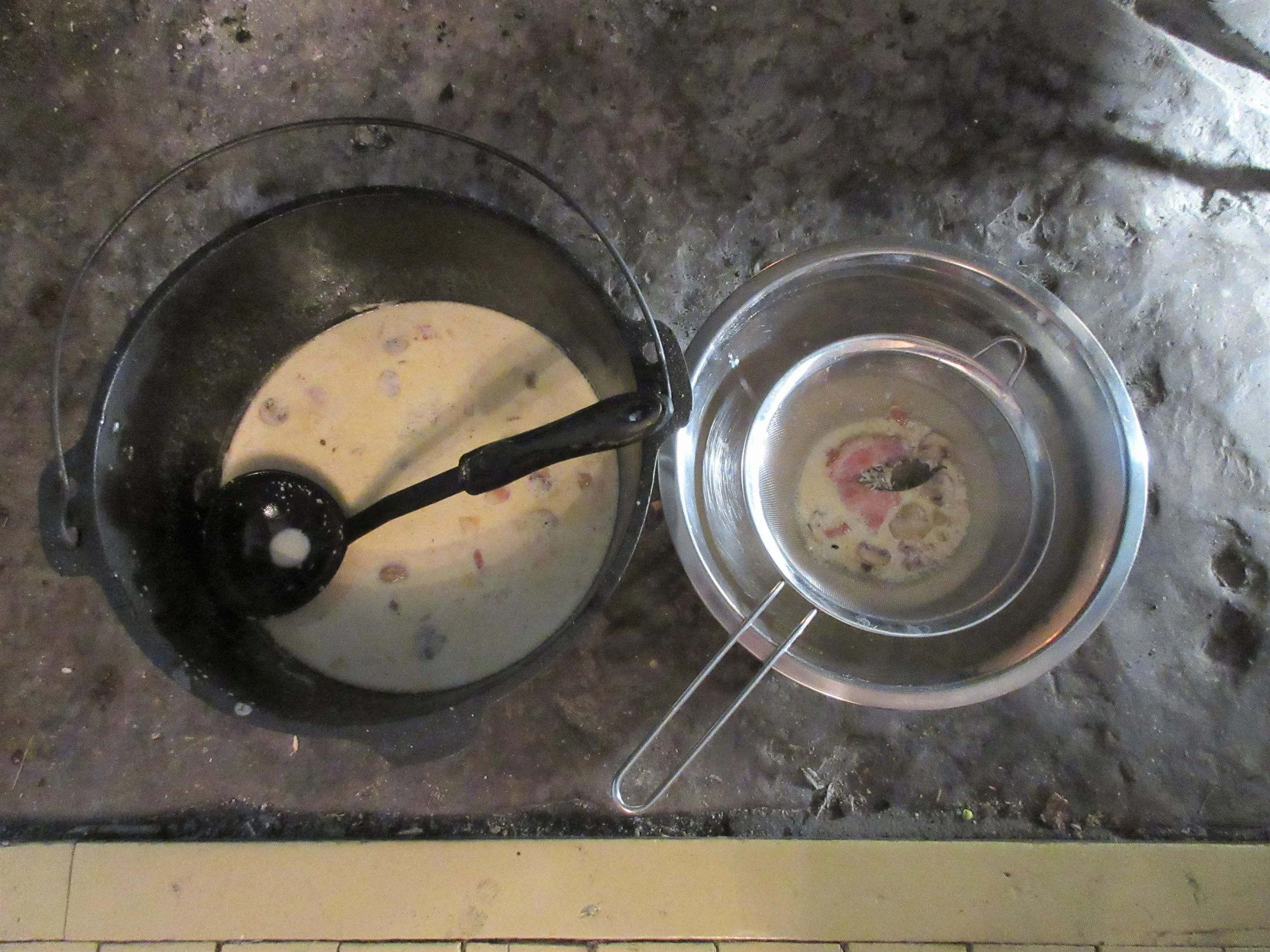
PUT in a ſtew-pan a few ſlices of veal, ham, a few muſhrooms and ſhallots, two cloves, a laurel-leaf, a little good butter; ſoak all together without letting it take colour; add a little good broth and cream, according to the quantity of ſauce you want; ſimmer it half an hour, and ſift it through a ſieve; you may add ſcalded parſley chopped very fine.
You may have wondered 1 things when reading the historic recipe:
1) What is that unusual letter that appears where an ‘S’ should be?
It is the Long S or Descending S, a letter of the Latin alphabet that fell out of use around the turn of the 19th-century. If you’d like to read more about the Long S, you’ll find a brief history in my To Boil Green Peas blog post. https://www.juliabaird.com/blog/to-boil-green-peas
My Recipe:
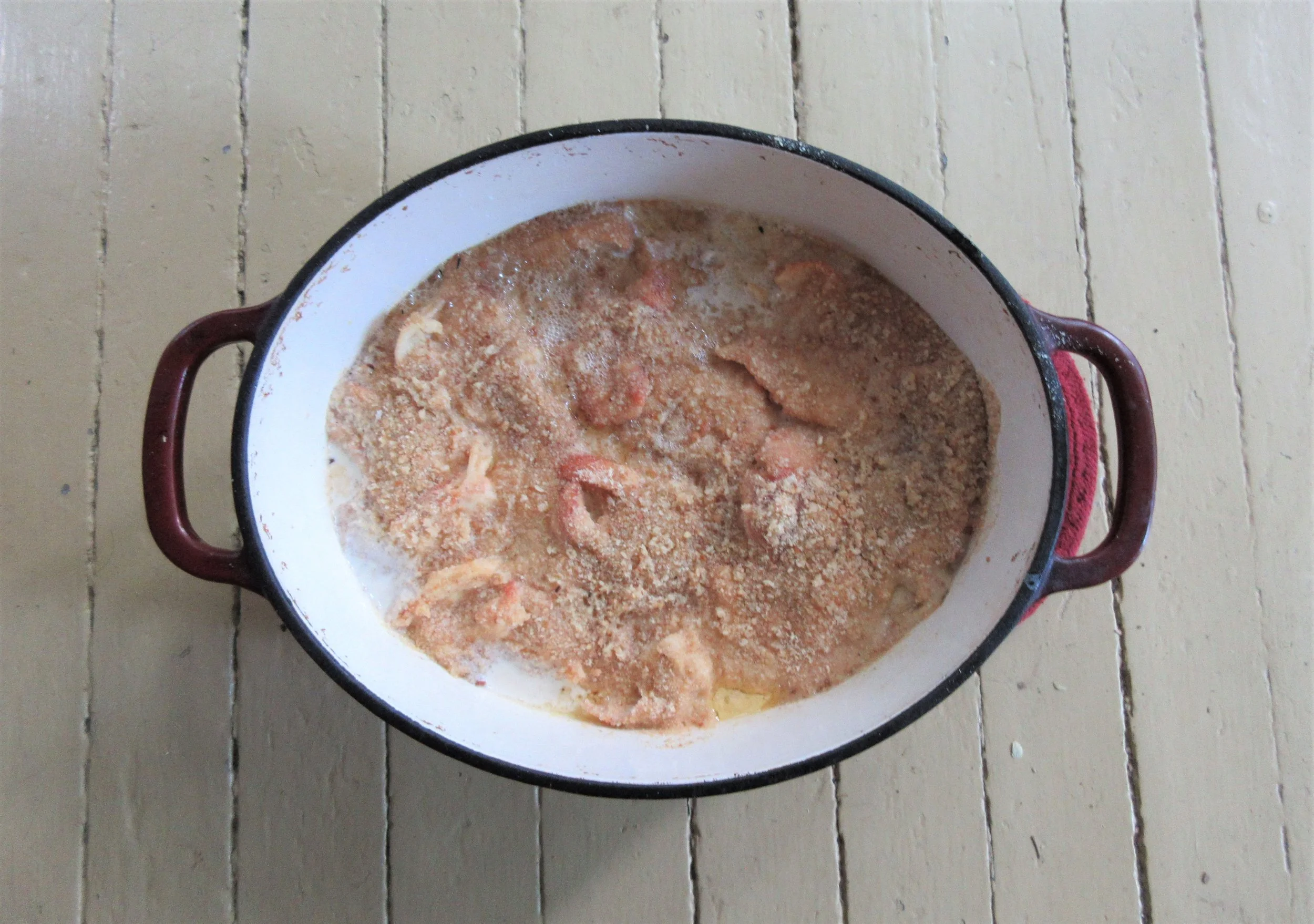
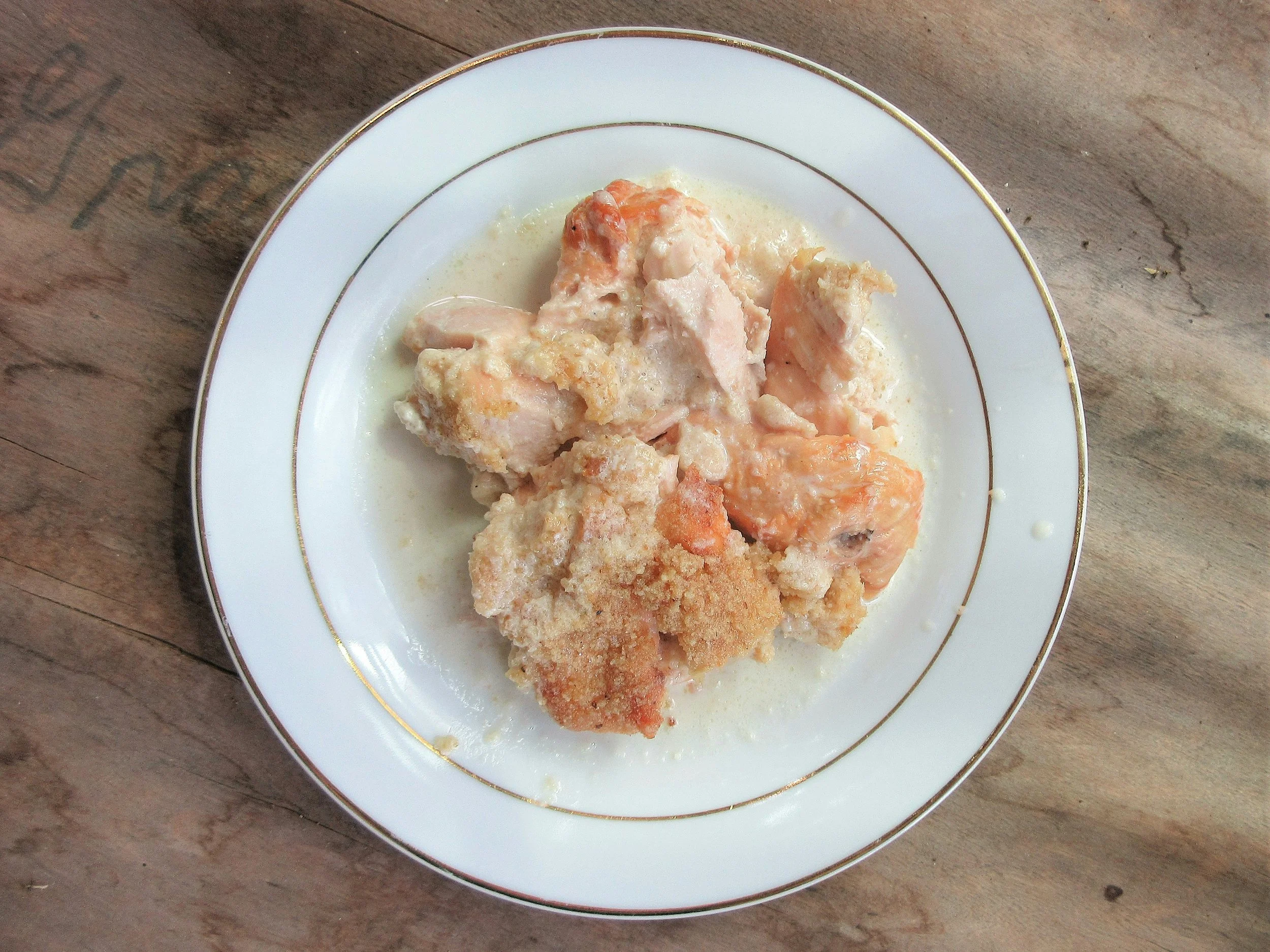
Chicken Fillets with Bechamel Sauce and Breadcrumbs
5 chicken breasts (or leftover chicken or turkey)
2 or 3 slices of ham or veal
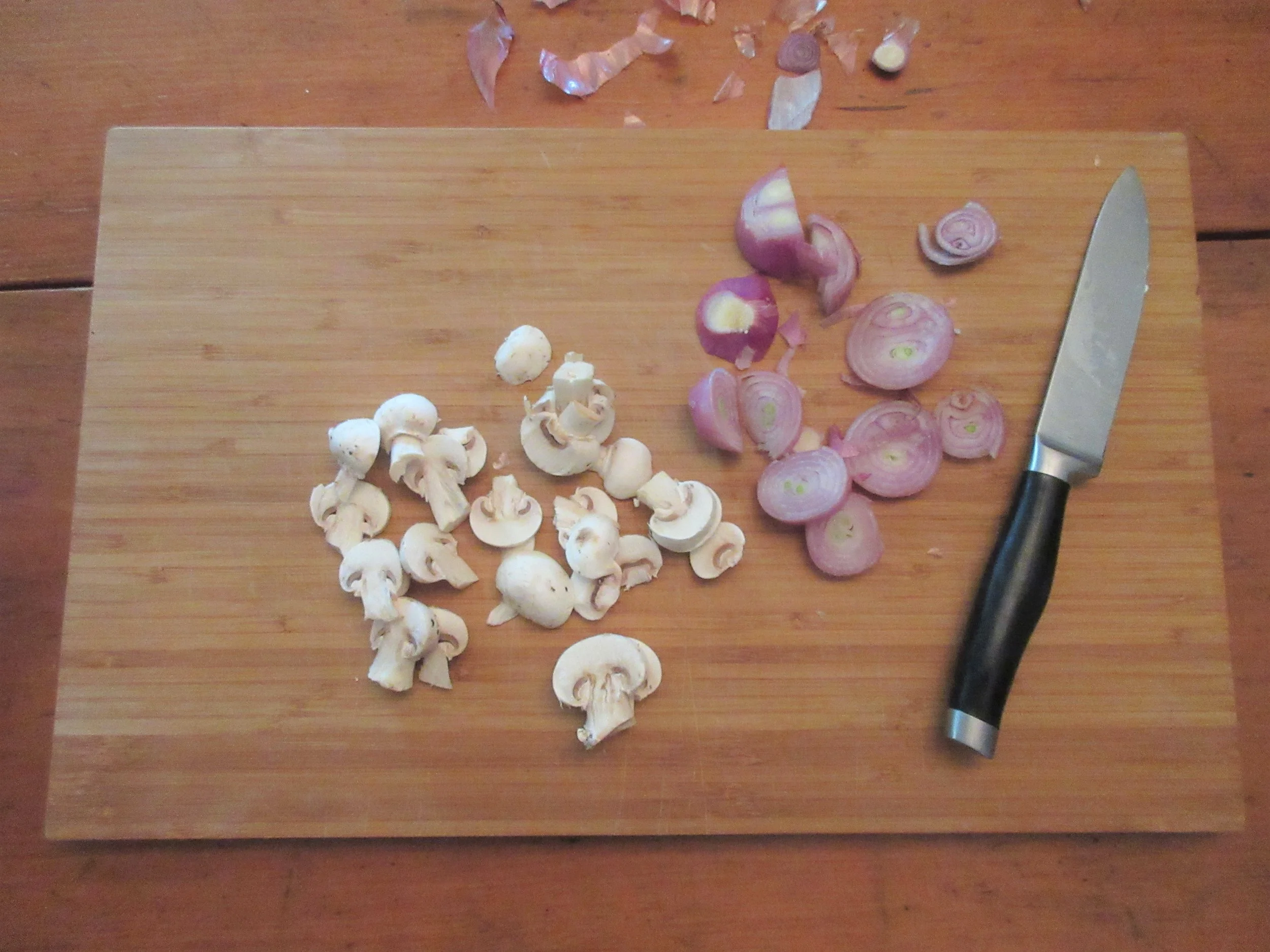
4 or 5 mushrooms
1 or 2 shallots
2 whole clove buds
1 bay leaf
1/3 cup butter – 75 g
3 cups cream – 710 mL
3 cups broth – 710 mL
1 cup breadcrumbs – 125 g
A handful of fresh parsley
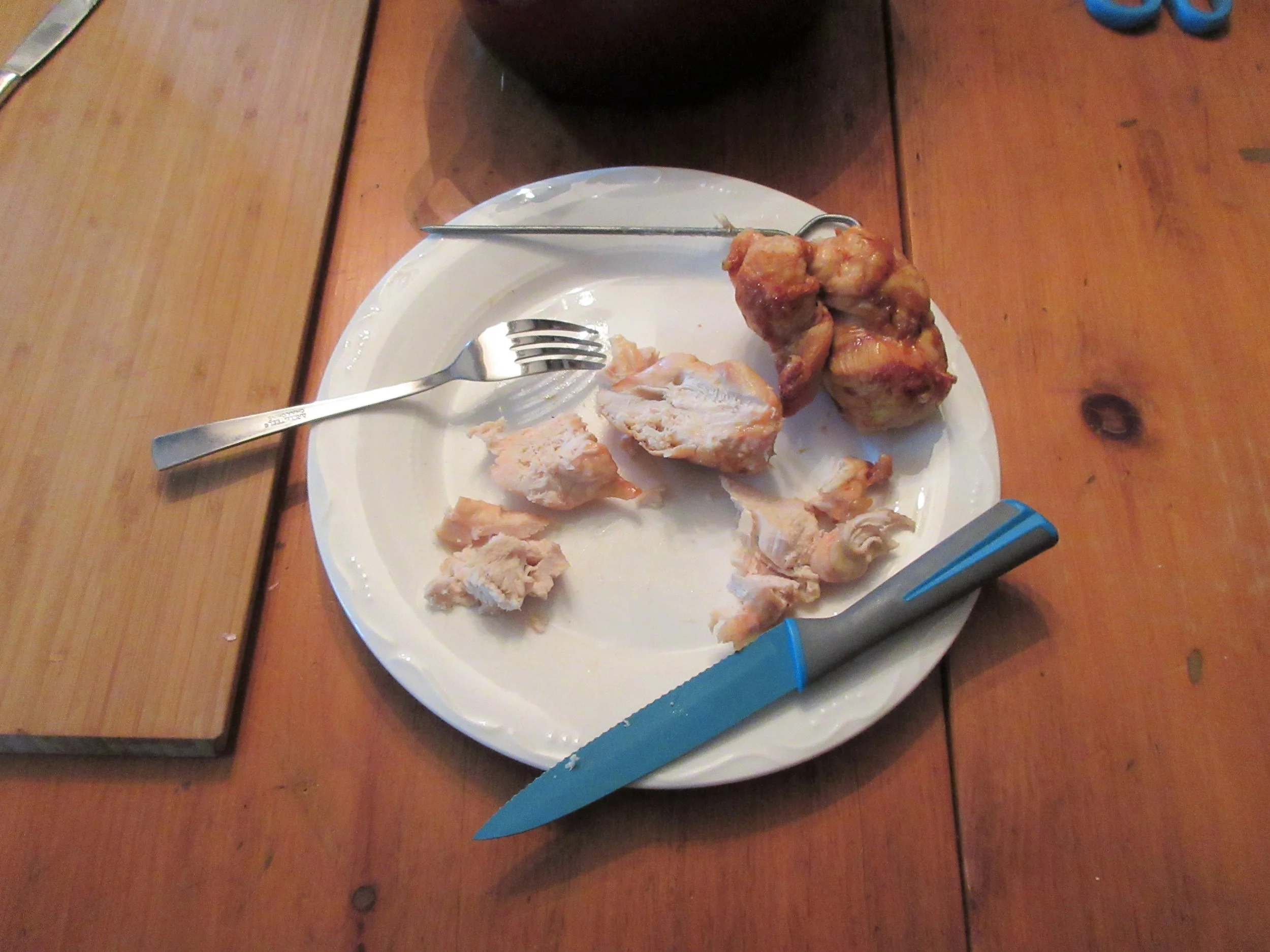
1) Roast the chicken breast or use leftover chicken or turkey in this recipe. Slice into fillets, place in your serving dish and set aside until you’ve made the sauce.
2) While roasting the chicken, slice the veal, ham, mushrooms and shallots. Melt 2 tablespoons of the butter in a large sauce pan and add the veal, ham, mushrooms, shallots, cloves and bay leaf. Simmer gently over low heat until the shallots and mushrooms are soft.
3) Add the cream and broth to the sauce pan and turn the heat up to medium. Allow it to bubble away for about 30 minutes to reduce and allow the flavours to mix. Chop a handful of fresh parsley and melt the remainder of the butter.
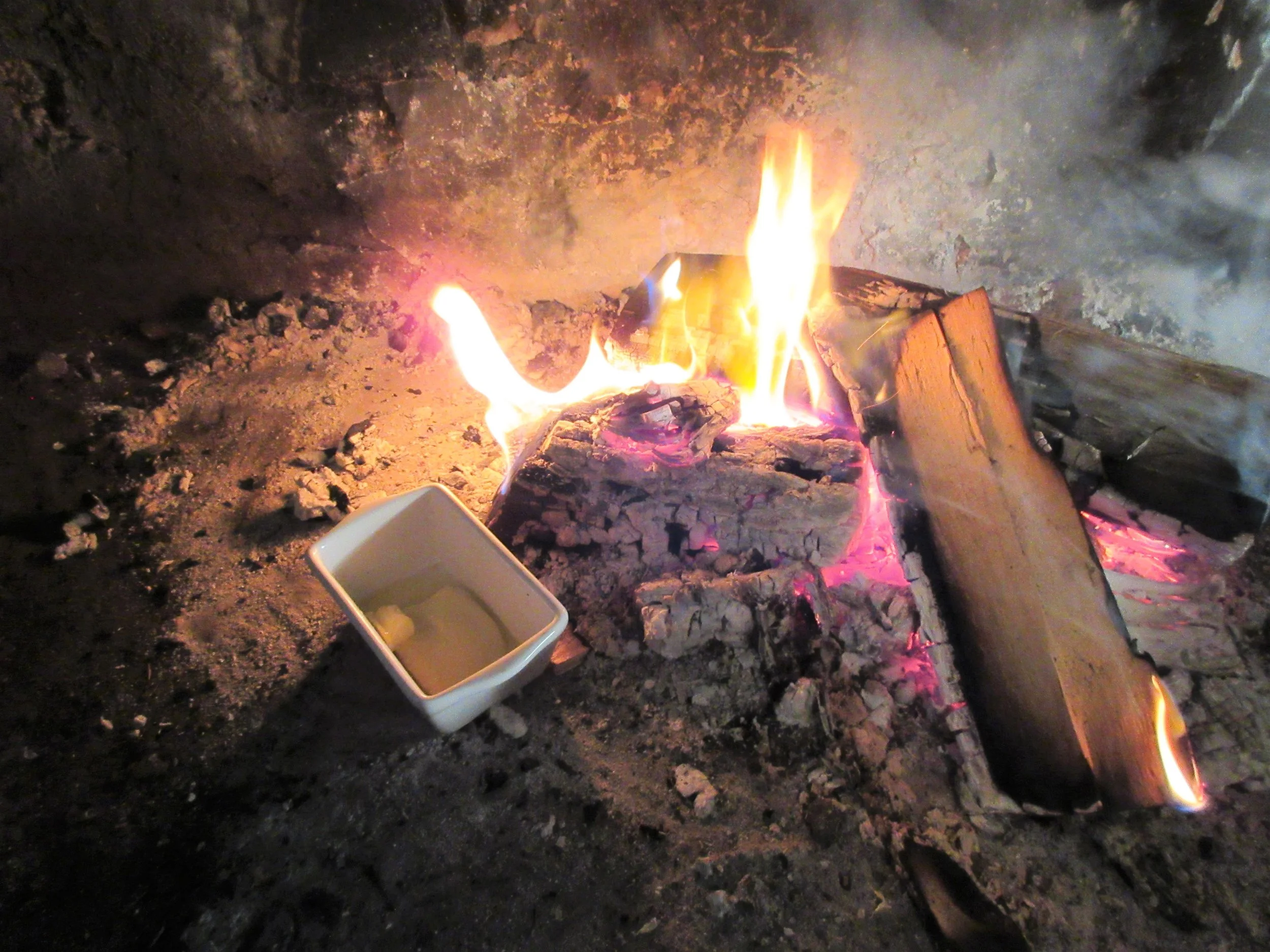
4) Strain the sauce through a sieve into the serving dish with the meat, then add the chopped parsley. Mix the melted butter with the breadcrumbs and layer on top of the sauce and chicken.
5) If your chicken is still warm from roasting, you may broil in the oven until the breadcrumbs are brown (or if you have a salamander, you can use that to brown the top). If your meat is cold, bake uncovered at 350F or 175C for 20-30 minutes. Switch to broil at the end to brown the breadcrumbs if needed.
6) Slice the ham or veal into small pieces and remove the cloves and bay leaf. The ham, veal, mushrooms and shallots are tasty as a side dish or as a garnish with this dish.
It’s been a while since I made Fillets of Chickens, with Bechamel-ſauce and Bread-crumbs at Nelles Manor Museum. I made it twice in the summer of 2019, which was the last time that I was able to teach an open hearth cooking class there. The recipe’s from the 1781 cookbook The Practice of Modern Cookery by George Dalrymple and at this class, we made recipes that would have been popular when the house was newly constructed using fresh garden produce and we used some open hearth cooking implements that were newly purchased by Nelles Manor.
If you’re curious about cooking with fire, keep reading to learn about some open hearth cookery techniques using a salamander and a couple of different styles of reflector ovens.
Reflector ovens
Reflector Ovens are sometimes also called Hastening Ovens or Tin Kitchens and they are metal containers, traditionally made out of tin, meant for roasting and baking in front of a fire. Tin Kitchens amplify, focus and reflect the heat from the fire in Open Hearth Cooking.
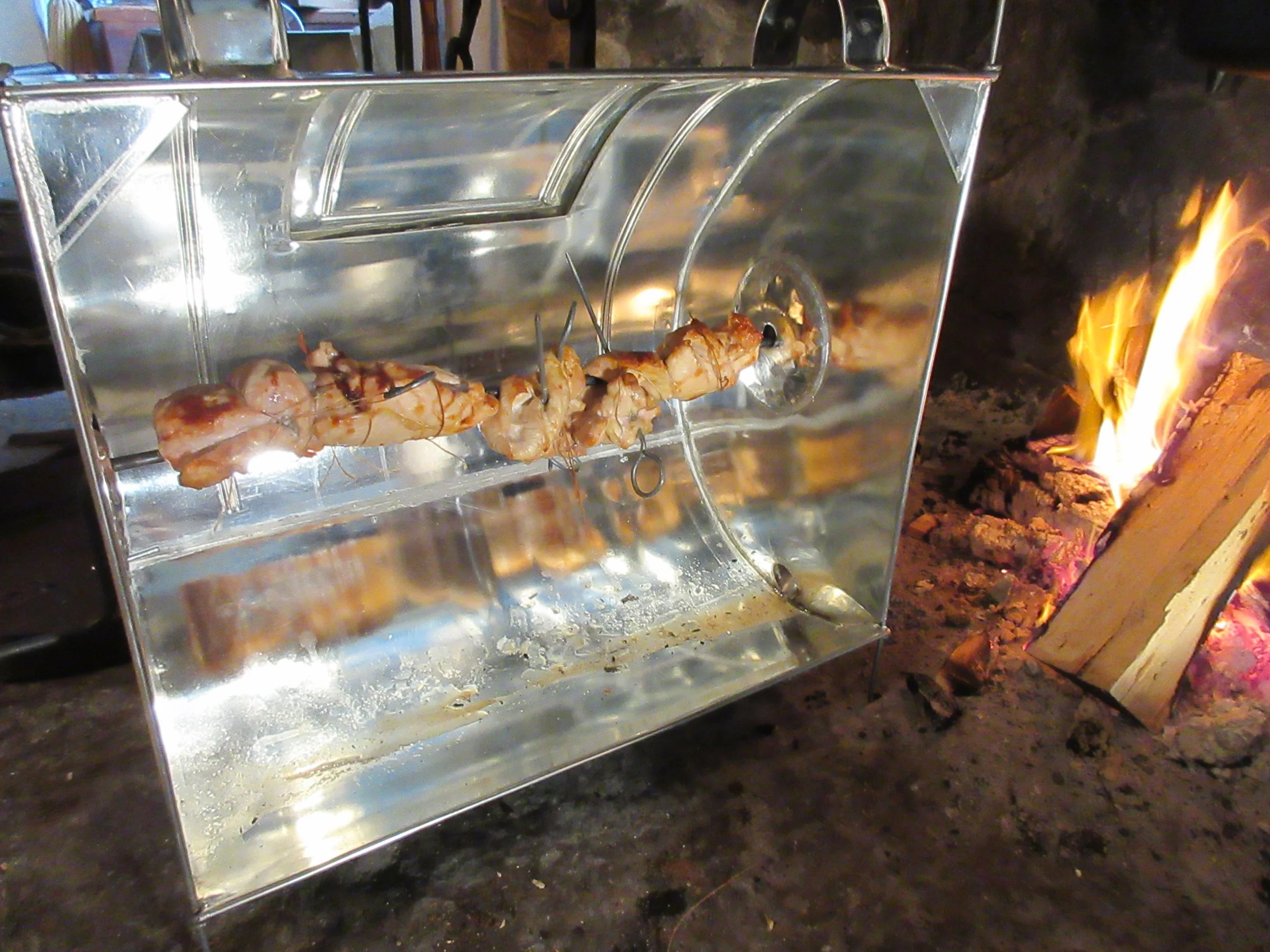
I used two types of reflectors to prepare Fillets of Chickens. To roast my chicken breasts, I trussed them up to a Reflector Oven with a spit and at the end of the recipe, which you will see in the photographs below.
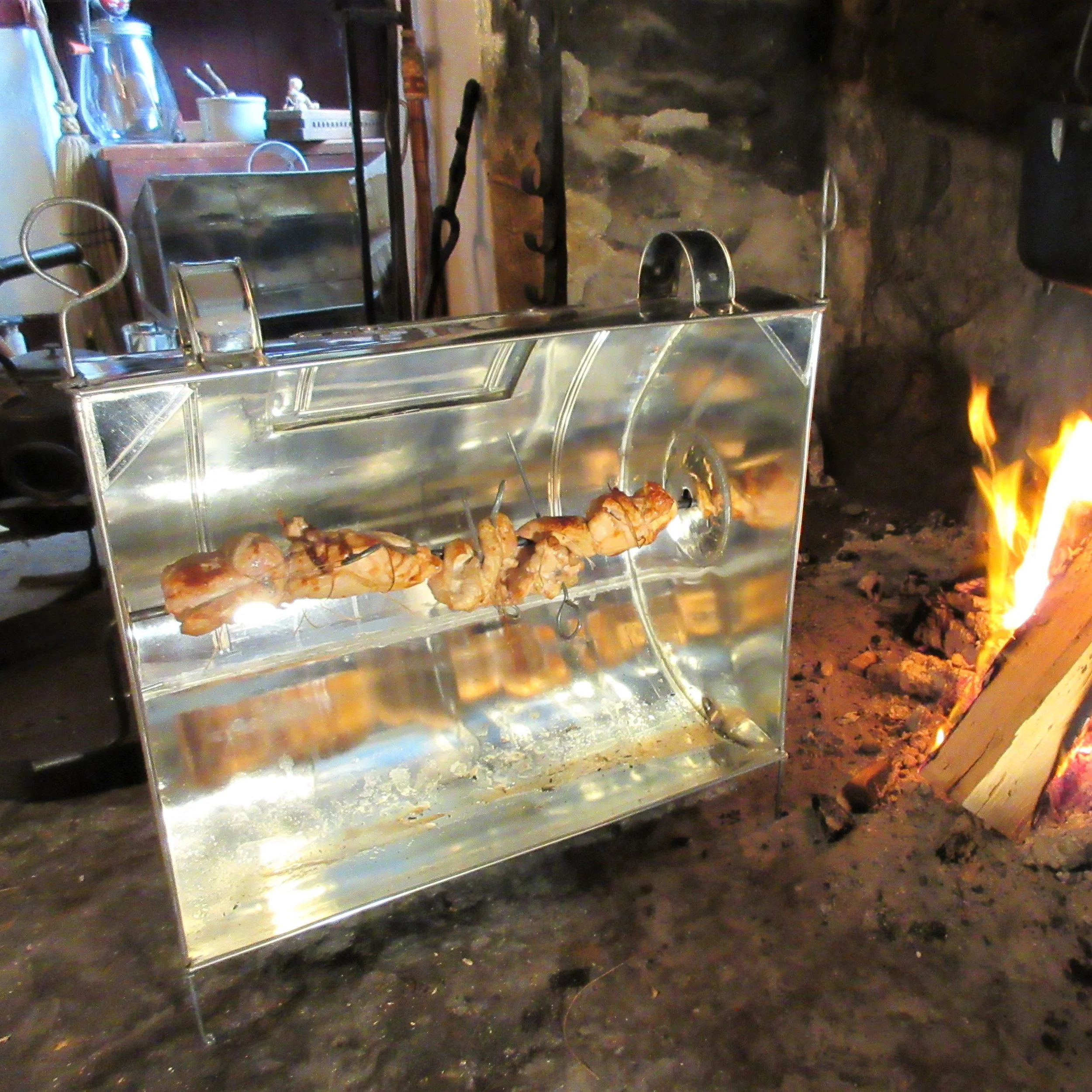
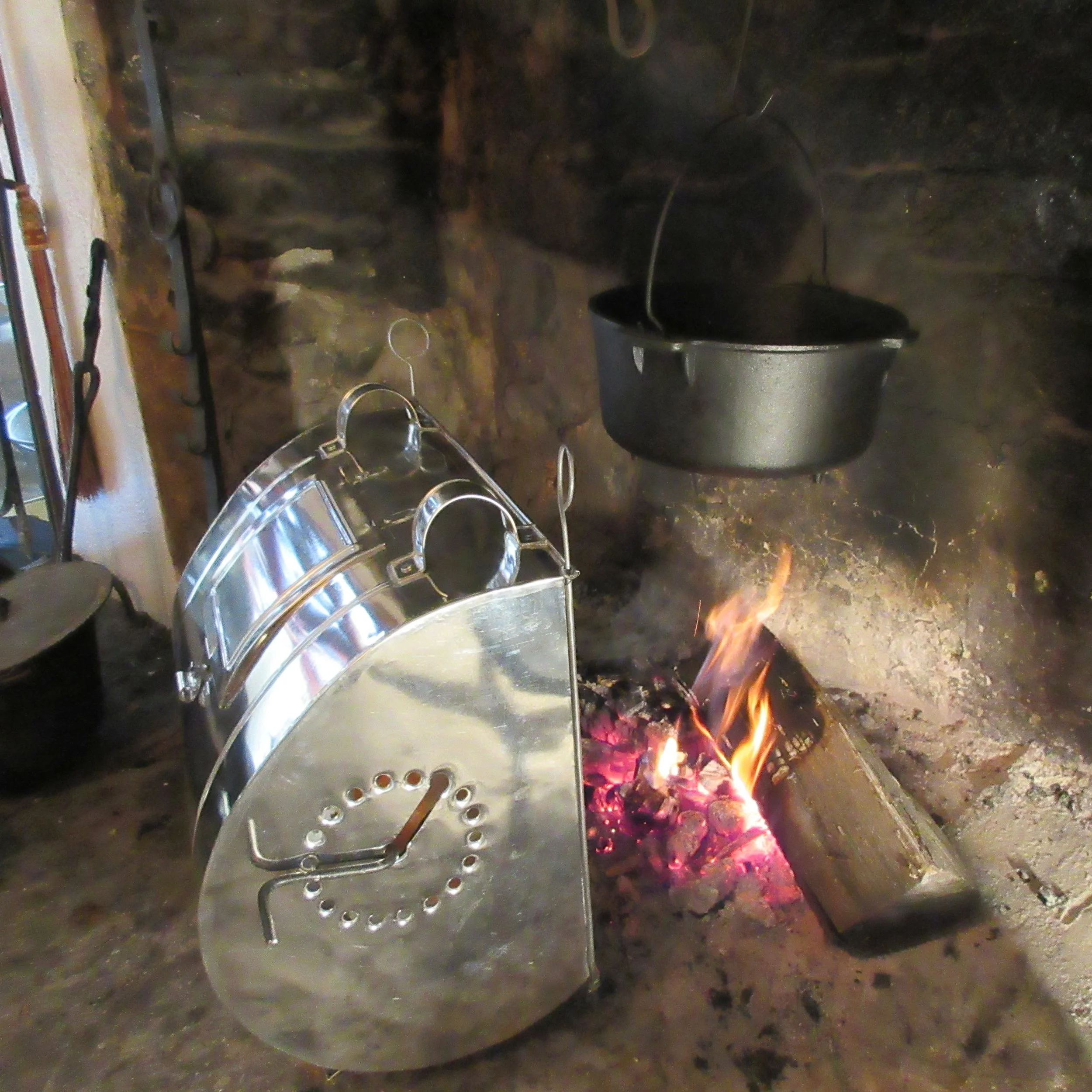
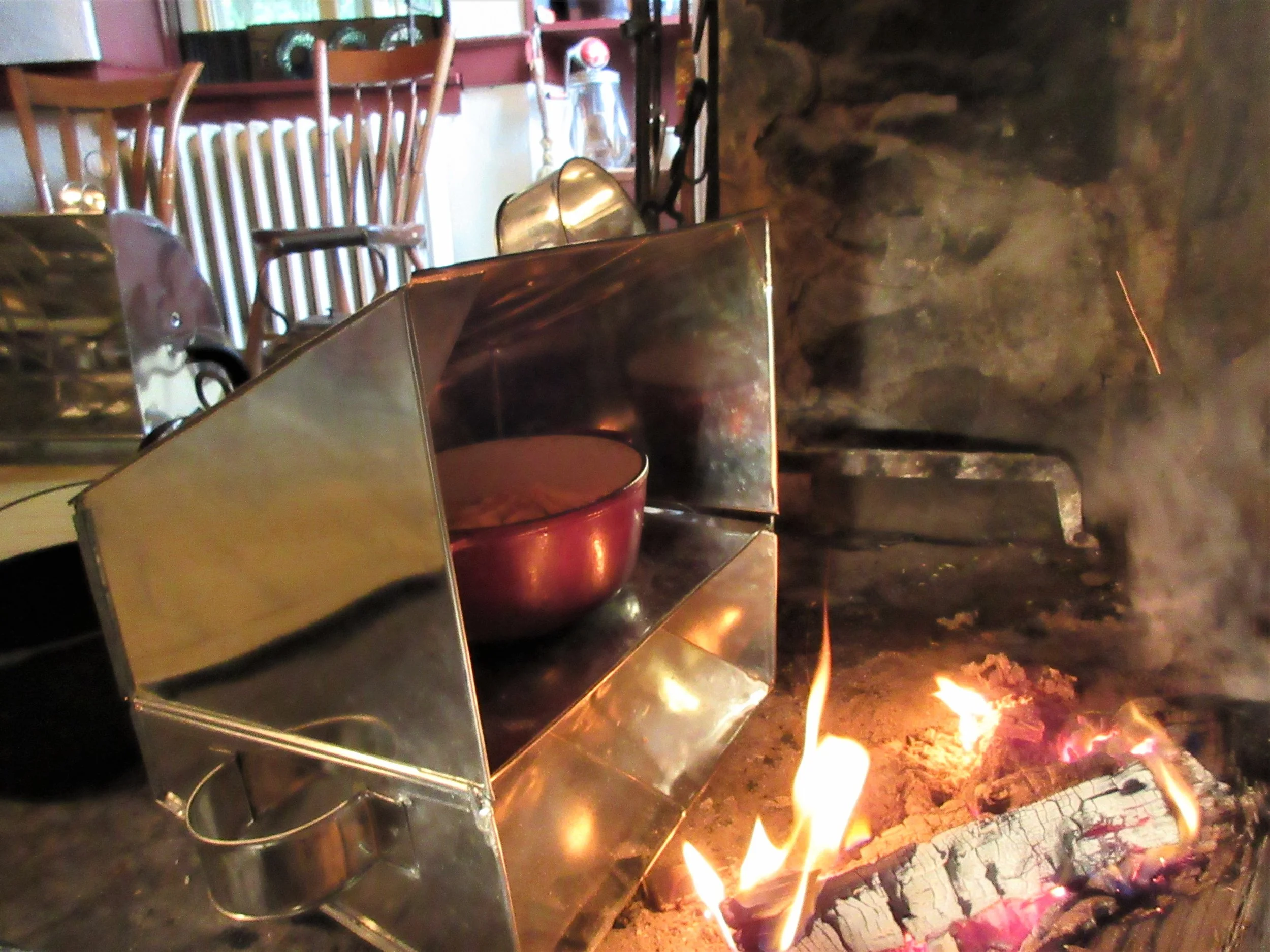
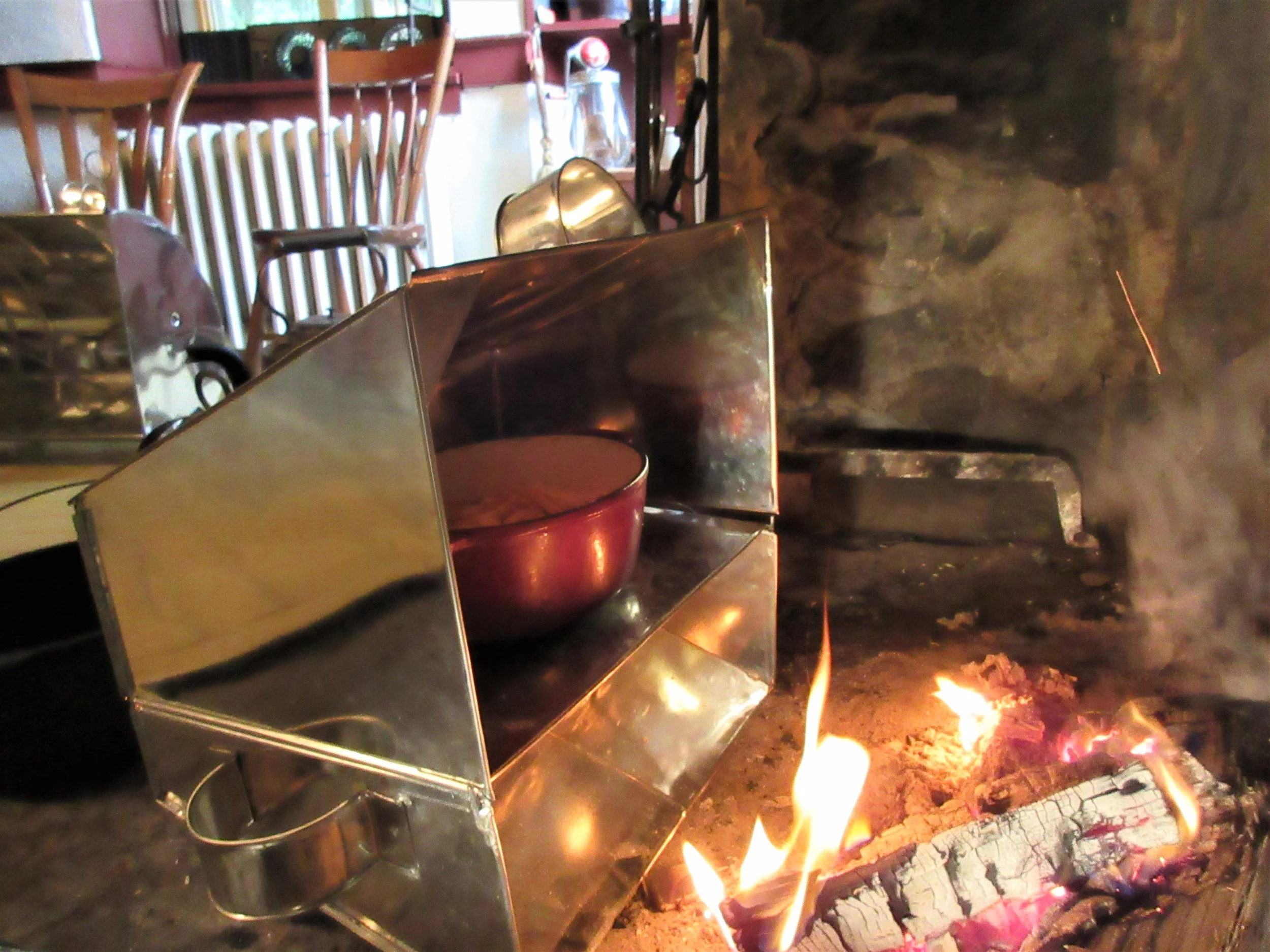
To brown the breadcrumb topping, I used the more box-like Hastening or Reflector Oven, which is pictured on the below. If the museum didn’t have a Rotisserie Reflector Oven, I would have still been able to roast my chicken breast in a dish or pan in the box Reflector Oven.
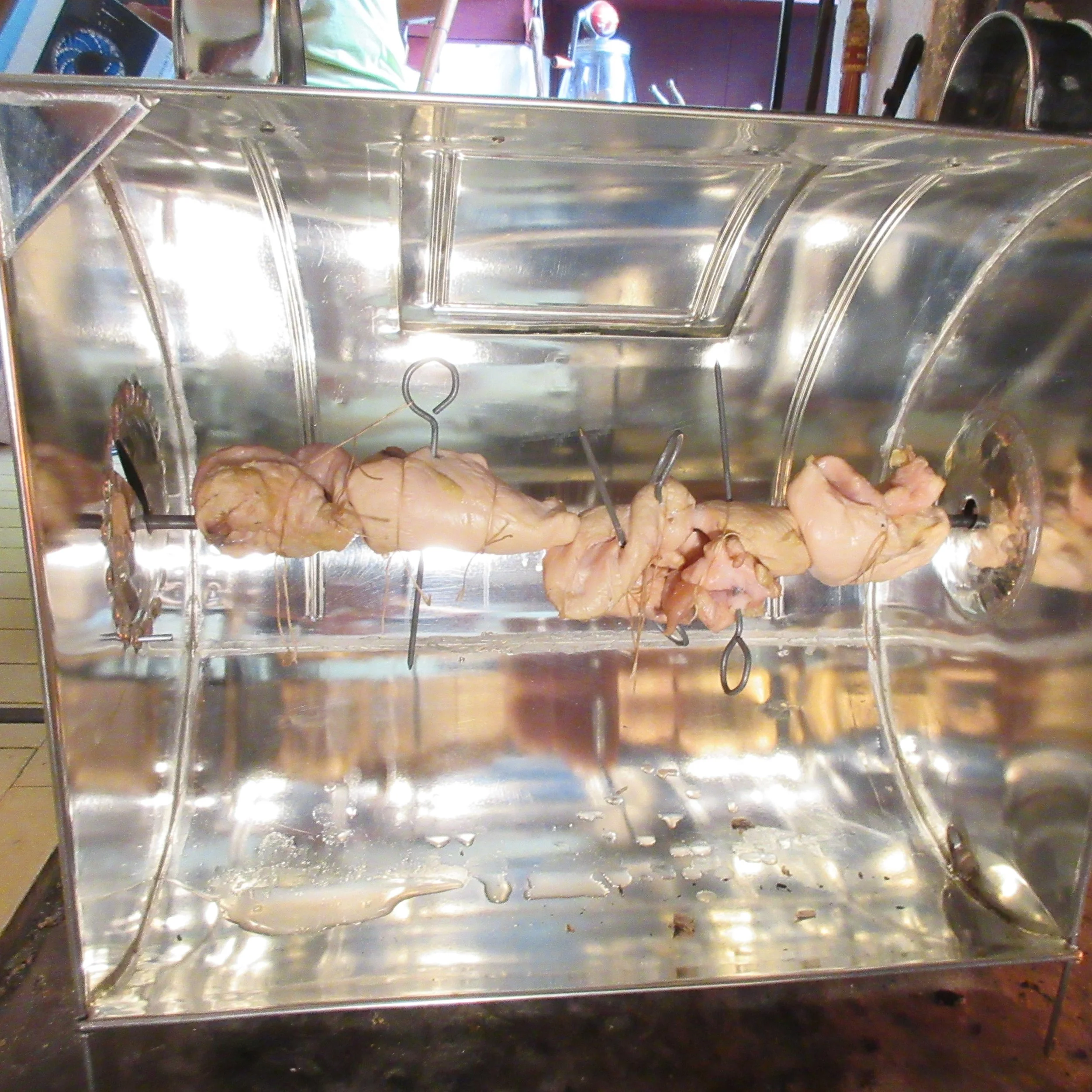
The key to trussing up your meat, vegetable or whatever you’re roasting is to securely attach it to the spit with string. It’s important that when you’re turning the rotisserie, the food you’re roasting turns with the spit. For even roasting, it’s not great if the spit turns inside the meat and the meat stays in the same position. It’s helpful to have an extra set of hands, tight knots and some good sturdy string to get the job done.
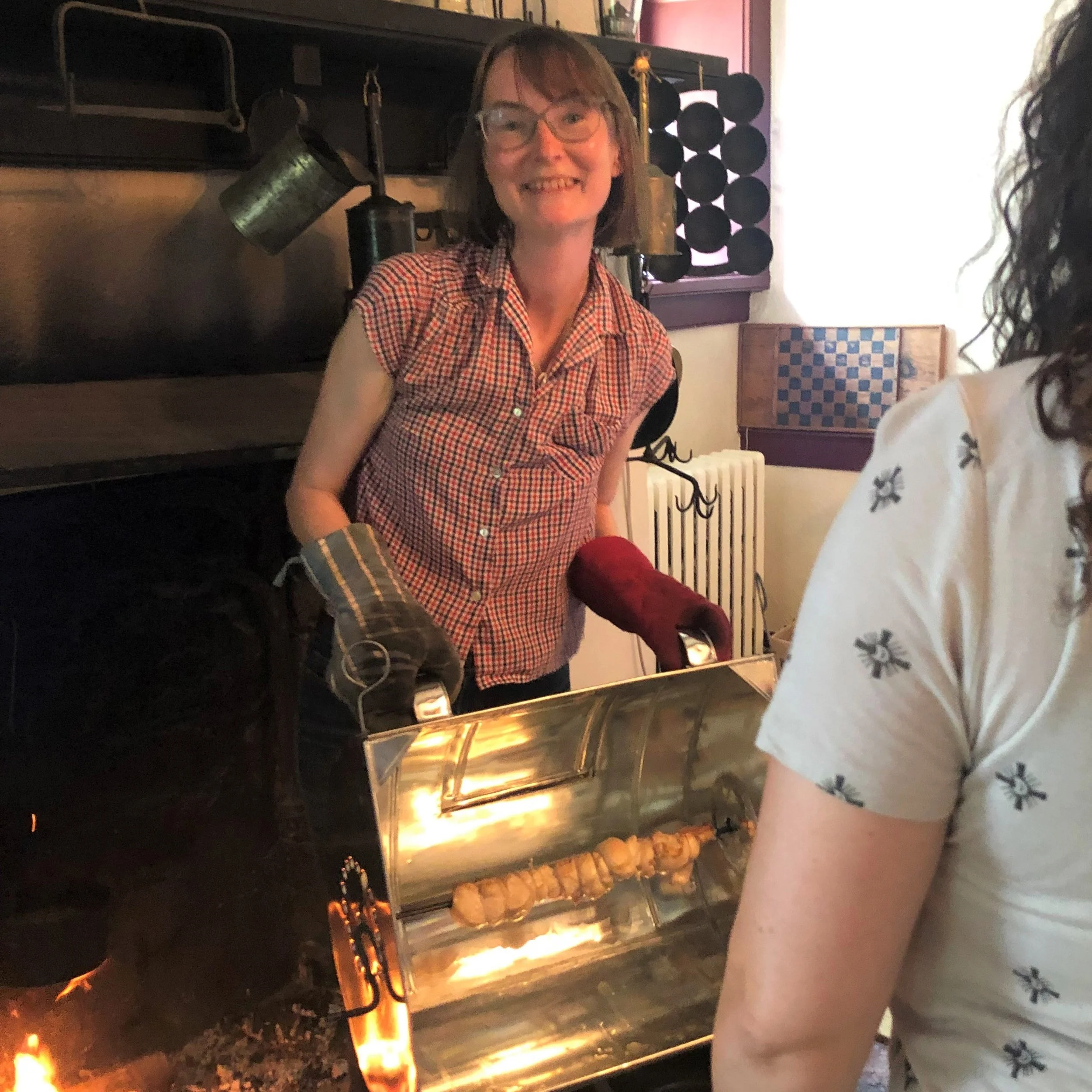
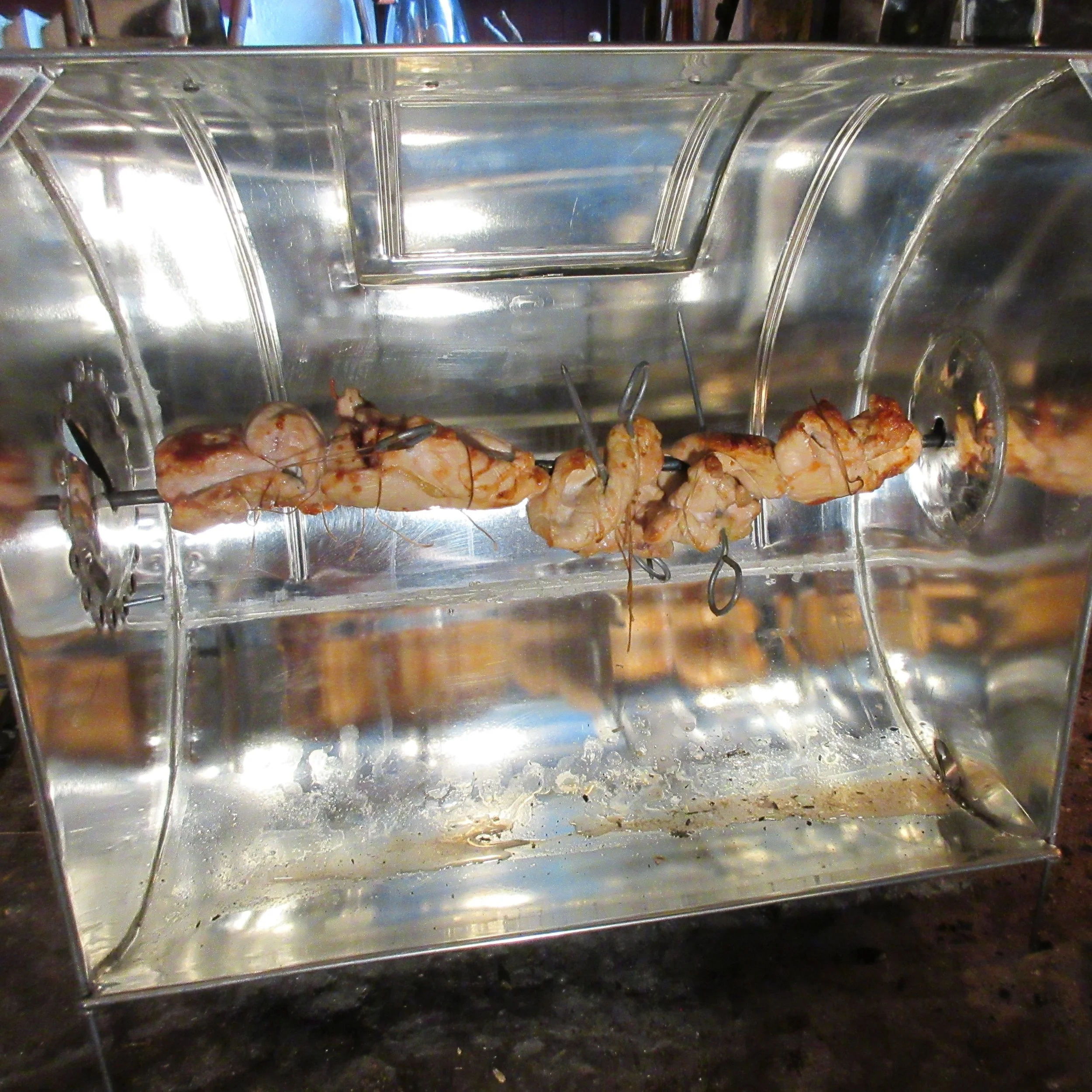
The picture in the middle of me holding the reflector oven was taken on the day of our open hearth cooking class. I wanted to show off what a wonderful job the class participants did of tying those chicken breasts to the spit! If you ever try this out for yourself, aim for what you see in the picture on the right.
Features of a Rotisserie-Style Reflector Oven
How to adjust the temperature
1) Adjusting the fire.
You’re able to adjust the temperature of a reflector oven by either making adjustments to heat of the fire by adding more wood or redistributing the wood in the fire.
2) Moving the reflector oven.
You can adjust how hot and cold your food will roast simply by moving the reflector oven further or closer to the fire. There are handles on top to help you to move the reflector oven around. You can also use these handles to hang the reflector oven should you want to.
Other Aspects of a Reflector Oven with a Spit
3) The little door on the back of the reflector oven.
You’ll see that there often is a little door on the back of the reflector. This allows you peek inside to check your food’s progress, helping you to decide when you’d like to rotate the position of the spit.
4) The food will roast the fastest on the side away from the fire.
The extra metal on the opposite side is providing another surface to reflect the heat, so keep that in mind when you check to see if you need to turn the spit.
5) You don’t need to continuously turn the spit.
On the side, there’s many holes in a clock-like formation where you can turn a handle and slip in a little notch on the end of the spit. Depending on the temperature of the fire, you may choose to leave the meat in one position for 5 to 10 minutes before rotating the notch to the next slot.
6) Collecting the juices.
These rotisserie reflector ovens are roughly half cylinders in shape, which helps to collect the juices that drip from the meat. If you look closely, you’ll see that there is a little hole that lines up perfectly with the bottom of the cylinder. That hole leads to a little spout that can be used to pour the juices out of the reflector oven so they can be used to make gravies and sauces.
Box Reflector Ovens
I used the box-style reflector oven to brown the breadcrumbs on top of Fillets of Chickens. This reflector is box-like in shape and can be used more like a traditional oven. You may use baking dishes or place food directly on the tin surface, but remember to grease the surface first.
Adjusting the temperature of a Box Reflector Oven
Simply adjust the temperature of this style of Reflector Oven exactly the same as the Rotisserie Reflector Oven: adjusting your fire, or moving the oven closer to or further from the fire.
I’ve also included a picture that I took when I baked some coconut macaroons on another recipe testing day at Nelles Manor Museum.
This reflector oven also features handles on the top and the side so you can move it closer to or further from the fire to adjust the temperature. Be careful about using the handle on the top, though! As you can see from the picture, the entire top of this oven flips back so that you can easily monitor, rearrange and flip your food.